Choose the treatment outcome before the equipment
Industrial effluent treatment in Nauru generally requires a defined treatment train rather than an unqualified reverse osmosis plant. RO can remove dissolved salts, metals and other contaminants, with industrial systems typically rejecting 95–99% of dissolved solids depending on design and feed quality, according to Kurita America’s reverse osmosis guide, “What Is Reverse Osmosis?” The correct choice depends on suspended solids, organic load, salinity, scaling risk, required reuse quality and concentrate handling. The supplied sources establish general process principles but do not verify Nauru-specific discharge limits, costs or water analysis.
Define the required result—such as process-water reuse, equipment protection, specified discharge quality, or preparation for another treatment stage—before selecting hardware. These are distinct RO use cases identified in the supplied research. A buyer comparing quotations should record daily flow, peak demand, source-water analysis, current reuse rate and applicable local permit conditions before requesting equipment.
Do not treat a recovery percentage as a complete project specification. HydropureWater’s verified product catalogue states that its industrial reverse osmosis plant operates at recovery rates up to 95%, but recovery remains dependent on feed chemistry and system design. The supplier must define the feed-water envelope, recovery calculation basis and resulting concentrate quality.
| Procurement field | Record before quotation | Why it changes the selection |
|---|---|---|
| Required outcome | Reuse application, discharge requirement or downstream process | Determines whether dissolved-solids removal is necessary |
| Hydraulic basis | Daily flow, peak demand and operating profile | Sets treatment capacity and storage requirements |
| Feed-water analysis | Suspended solids, organics, salinity, hardness, scaling ions and contaminants of concern | Defines pretreatment and membrane duty |
| Recovery and concentrate | Target recovery, concentrate composition and proposed disposal or recovery route | Prevents an unbalanced water balance |
| Local compliance | Applicable Nauru permit conditions and receiving environment | Must be verified locally; no verified limit is provided in the supplied sources |
Match the effluent to the treatment train
Raw industrial effluent should not be sent directly to RO when it contains suspended solids, colloids, oil and grease. Kurita America identifies inadequate pretreatment as a common cause of membrane fouling and shortened membrane life, while the HydropureWater product catalogue positions dissolved air flotation for suspended solids, FOG, oil and grease and colloidal matter. Physical treatment removes material that can obstruct or foul the RO membrane; it does not replace RO where dissolved-solids control is required.
Use ultrafiltration where finer solids, colloids or microbial protection for downstream RO is required. The HydropureWater catalogue describes 0.03 micron PVDF membranes, automatic backwash and air scour for its UF pretreatment system. UF is not a substitute for RO when the target includes dissolved salts, as Kurita America distinguishes UF as a barrier to bacteria, viruses and larger particles rather than a dissolved-solids removal process.
Before RO, evaluate sediment filtration, carbon filtration, scale inhibition or softening against the actual feed chemistry. A softener may be relevant where hardness and scale formation threaten the membranes, but it does not remove all dissolved solids. Condorchem Envitech’s industrial wastewater RO guide recommends feed pretreatment, often filtration followed by UF, and links fouling to salt precipitation, colloidal sediment and biofilm growth.
RO produces two streams: purified permeate and a more concentrated reject stream. ENCON’s reverse osmosis wastewater treatment page confirms this separation and identifies reuse, discharge, downstream treatment and zero-liquid-discharge preparation as possible applications. Neither permeate quality nor recovery should be accepted without feed-specific design data. A comparison of an industrial wastewater treatment plant option with an RO-based train should therefore compare the complete water balance, not just the final membrane.
| If the effluent contains | Evaluate first | RO duty | Key design question |
|---|---|---|---|
| Suspended solids, colloids, oil or grease | DAF and appropriate filtration | May be unsuitable without physical pretreatment | What solids and oily material will reach the membrane? |
| Fine particulates or microbial contamination | UF pretreatment | Protect downstream membranes | What backwash and air-scour controls are required? |
| Hardness or scale-forming ions | Softening, scale inhibition or another chemistry-specific method | Control precipitation risk | Which fouling mechanism is expected? |
| Dissolved salts and contaminants requiring removal | Feed-specific pretreatment | Separate permeate from concentrate | What permeate quality and recovery are required? |
Set the operating and fouling-control requirements
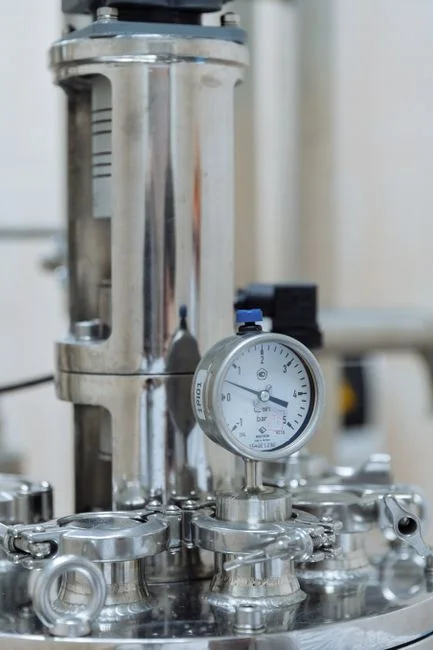
RO operating pressure must be specified against the separation duty rather than copied from a catalogue. Condorchem Envitech’s industrial wastewater guide describes medium-pressure membranes at 20–40 bar for separation and concentration processes and seawater desalination membranes at 50–80 bar. These figures are membrane-class descriptions from the cited source, not a design pressure for a Nauru installation. The supplier must calculate pressure from the feed chemistry, recovery, membrane element and system configuration.
Request a cleaning and maintenance programme because membrane fouling reduces efficiency, increases operating pressure and raises energy costs. Condorchem Envitech states that cleaning chemicals and methods depend on the foulant and membrane type. The programme should identify the likely mechanism, monitoring signals, trigger conditions, chemicals, frequency basis, membrane replacement criteria and operator responsibilities.
Ask suppliers to address three fouling mechanisms described in the industrial RO research: salt precipitation, suspended colloids and biofilm growth. For each, request a specific control. For example, feed analysis and antiscalant dosing may address precipitation risk; filtration or UF may reduce suspended material; and membrane hygiene, monitoring and cleaning may address biological growth. The applicable response depends on the effluent and must not be presented as universal.
The supplier schedule should include permeate and concentrate flow, conductivity monitoring, normalized operating pressure, cleaning frequency, membrane replacement provisions and PLC controls. HydropureWater’s catalogue describes automated PLC-controlled operation for its industrial RO systems, but a control philosophy must be matched to staffing, power supply and local service access. Review the relevant RO and UF membrane elements and treatment valves, filters and media against the proposed process rather than accepting them as generic inclusions.
| RFQ response item | Required information | Acceptance basis |
|---|---|---|
| Hydraulic performance | Feed, permeate and concentrate flows at design and peak conditions | Agreed feed-water envelope and operating profile |
| Water quality | Permeate and concentrate parameters | Tied to the required reuse or discharge outcome |
| Operating conditions | Pressure, recovery and normalized operating data | Specific to feed chemistry and membrane selection |
| Fouling control | Monitoring, cleaning trigger, method and replacement criteria | Mapped to identified feed contaminants |
| Controls | PLC inputs, outputs, alarms, data logging and interlocks | Compatible with operating and maintenance capability |
| Recovery route | Concentrate destination and pretreatment-waste handling | Complete mass balance and permitted route |
Turn the selection into a supplier-ready brief
A comparable supplier brief requires each bidder to state the design flow, feed-water ranges, treated-water targets, recovery basis, membrane type, operating pressure, pretreatment, controls and concentrate route. The buyer should attach the source-water analysis and identify which values are measured, which are design assumptions and which remain to be verified. This prevents a generic equipment quotation from being compared with a complete treatment proposal.
Require a mass balance covering feedwater, permeate, concentrate and sludge or pretreatment waste. ENCON and Condorchem Envitech both document separate permeate and concentrate streams from RO. The bidder must also identify whether the concentrate will be discharged, further treated, evaporated, crystallised or otherwise recovered. For higher-recovery concepts, the plant-level water and energy balance should be assessed rather than assuming that RO alone closes the water loop.
Ask for a performance guarantee tied to the agreed feed-water envelope and require a membrane-fouling and cleaning plan. A generic rejection percentage is not a sufficient guarantee because it does not specify the feed conditions, permeate target or test method. The high-recovery RO assessment for an industrial facility illustrates why recovery decisions must be tied to the facility’s water balance.
Mark Nauru-specific discharge limits, marine or coastal corrosion requirements, freight, installation constraints, power supply and service access as local-verification items. The supplied sources do not establish these conditions. Where a zero-liquid-discharge route is being considered, use a separate comparison of UF/RO reuse and ZLD treatment routes to test the required solids removal, energy demand and residual-management route.
| Supplier brief section | Fillable requirement | Status before award |
|---|---|---|
| Outcome | State reuse, discharge, equipment-protection or downstream-treatment objective | Buyer confirmation required |
| Feed and flow | Attach analysis; state design flow, peak flow and feed ranges | Data collection or supplier assumption required |
| Process | List every pretreatment, RO and post-treatment stage | Bidder response required |
| Performance | Define permeate quality, recovery basis and guarantee conditions | Agreed acceptance criteria required |
| Mass balance | Quantify feed, permeate, concentrate and treatment waste | Bidder calculation required |
| Operations | Provide fouling controls, cleaning, instrumentation, PLC and spare parts | Technical review required |
| Nauru delivery | Address permits, receiving environment, corrosion, power, freight, installation and service access | Local verification required |
Frequently Asked Questions
How much does an industrial effluent treatment and reverse osmosis plant in Nauru cost?
No Nauru price is supported by the supplied evidence. Request an itemised quotation separating wastewater pretreatment, the RO membrane system, controls, membranes, installation, commissioning, freight and concentrate disposal. Require assumptions for feed chemistry, flow, recovery and permeate quality so that scope gaps are visible rather than hidden in a lump sum.
How should the equipment be sized?
Base sizing on design flow, peak demand, feed-water analysis, recovery target and required permeate quality—not one flow number. The bidder should identify the design feed-water envelope and state how the system responds outside it. Include pretreatment and storage duties, because those constraints can determine whether the RO train can meet the required operating profile.
What should buyers check when selecting a supplier?
Require a feed-specific process description, a complete mass balance and a performance guarantee tied to the agreed feed conditions. Also request membrane warranty terms, a spare-parts plan and evidence of commissioning or service support. A generic rejection rate or recovery figure does not demonstrate that the proposed train will remain stable with the actual effluent.
Which discharge or reuse conditions need local confirmation in Nauru?
Confirm the receiving environment, discharge route, current permit conditions and any reuse specification with the relevant Nauru authority. The supplied research contains no verified Nauru-specific discharge limit. Coastal exposure, power availability, installation access, freight and concentrate disposal also need local confirmation before selecting equipment or accepting a performance guarantee.