Identify the Controlling Discharge Requirement
Mining and metals plants near Olive Hill meet pretreatment limits by treating wastewater under the controlling POTW sewer-use ordinance before it enters the municipal sewer. Federal rules at 40 CFR Part 403 establish the framework, while Part 437 applies to ore mining and Part 433 may apply to metal finishing. A practical train usually combines equalization, pH-controlled precipitation, DAF or lamella clarification, filtration, monitoring and sludge dewatering. Choose DAF for oily or colloidal streams and lamella for high-flow metal-hydroxide sludge. Confirm the actual POTW limits before sizing because no Olive Hill-specific ordinance was identified in the supplied research.
The first procurement task is to identify the discharge pathway and controlling authority. An NPDES permit governs direct surface-water discharge under Clean Water Act §402. A sewer discharge to a POTW is instead governed through Clean Water Act §307(b) and 40 CFR Part 403, with local pretreatment requirements administered through the POTW. The California State Water Resources Control Board’s pretreatment program guidance explains that the General Pretreatment Regulations assign responsibilities to agencies and industrial users to control pollutants entering POTWs.
Determine whether the facility is an ore mining and dressing operation subject to 40 CFR Part 437, a metal-finishing operation subject to 40 CFR Part 433, or both. The operation’s actual processes—not merely its corporate description—should determine that classification. Request the current POTW sewer-use ordinance, discharge permit, monitoring frequency, prohibited-discharge list, force-main or disinfection requirements, local limits and any applicable mass-loading limits. The supplied research does not identify a specific Olive Hill POTW or establish a local ordinance.
Use representative 2026 POTW figures only to screen preliminary concepts, not to design or bid: the research reports zinc at 0.3–1.0 mg/L monthly average and copper at 0.3–0.5 mg/L monthly average. The regional mining pretreatment comparison provides a broader framework, but the permit and ordinance for the actual receiving POTW must control the design basis.
| Decision item | Document or verification required | How it affects the treatment train |
|---|---|---|
| Discharge pathway | NPDES permit and POTW sewer-use ordinance | Separates surface-water discharge requirements from sewer pretreatment. |
| Categorical applicability | Process description and 40 CFR Part 437 or 433 applicability | Sets the applicable federal baseline. |
| Local limits | Current ordinance, discharge permit and written interpretations from the control authority | Usually governs final equipment sizing and acceptance criteria. |
| Monitoring and sampling | Parameter list, frequency, averaging period and compliance-point definition | Determines instruments, sample points and controls. |
| Collection-system conditions | Force-main, siphon, disinfection and prohibited-discharge requirements | May require disinfection or additional pretreatment barriers. |
| Preliminary screening only | Representative 2026 POTW values reported by HydropureWater: zinc 0.3–1.0 mg/L monthly average; copper 0.3–0.5 mg/L monthly average | Use to frame risk; replace with confirmed local values before design. |
Build the Wastewater and Hydraulic Basis
Equipment selection should begin with a measured operating envelope, not a catalog capacity. HydropureWater’s commercial pretreatment review, published in 2026, characterizes raw acid mine drainage and spent process solutions as commonly having pH of 2–4, TSS in the hundreds to several thousand mg/L, and elevated sulfate and TDS in runoff and brine streams. It also identifies Pb, Cu, Zn, Cd, Ni and As as metals that may need characterization. These values describe the source’s reported sector profile; they are not automatically the site’s discharge limits or design loads.
Obtain average flow, peak two-hour flow, batch-dump or leach-cycle volumes, operating shifts and anticipated turndown. The same 2026 source specifies design for peak two-hour flow with 20–30% turndown capacity. Size the equalization basin from the operating profile rather than average flow alone; the source recommends 8–24 hours of average daily flow to damp shift changes, dump-leach cycles and mill clean-outs.
Collect or request parameter-specific influent data at the frequencies needed to characterize variability: pH, TSS, the metals relevant to the confirmed permit, sulfate, TDS, oil and grease where present, and any constituents that affect chemical demand or sludge generation. For batch streams, include start-up, maximum dump and clean-out conditions. An automatic chemical dosing system should receive defined flow, pH and metal inputs, but its control setpoint cannot be fixed before testing.
Use jar testing to establish the precipitation window for each target metal. The 2026 source notes that each pH unit away from the metals-precipitation optimum can reduce removal efficiency by an order of magnitude. Record reagent dose, pH, mixing conditions, settling behavior, residual dissolved metal and resulting sludge volume. Repeat testing across representative low-, normal- and high-strength batches so the final sizing basis includes variability.
| Fillable field | Site value or document reference | Selection use |
|---|---|---|
| Controlling sewer limit and averaging period | Final effluent target and monitoring design. | |
| Raw pH | Acid or alkali demand and precipitation range. | |
| TSS | Solids separation and polishing load. | |
| Pb, Cu, Zn, Cd, Ni and As | Precipitation, polishing and sludge generation. | |
| Sulfate and TDS | Reagent selection, sludge yield and filtrate return assessment. | |
| Oil and grease, if present | DAF selection and pretreatment requirement. | |
| Average flow | Equalization and base equipment sizing. | |
| Peak two-hour flow | Clarifier, filter and piping hydraulic basis. | |
| Batch dump or leach-cycle volume | Equalization residence time and turndown checks. | |
| Turndown range | Low-flow equipment operation; 20–30% turndown is specified by the 2026 source. | |
| Jar-test result | Reagent dose, pH setpoint and residual-metal criteria. |
Select DAF or Lamella for the Actual Stream
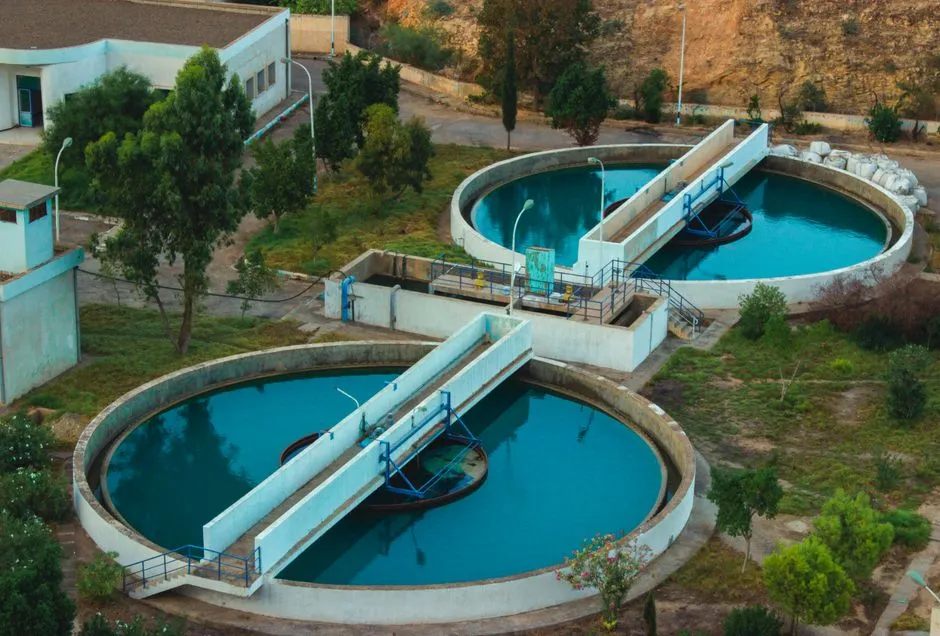
DAF is the better primary separator when oil, grease or fine colloidal metals are present; lamella is usually stronger for concentrated metal-hydroxide sludge at high flow or where footprint is constrained. HydropureWater’s 2026 review reports DAF hydraulic loading of 5–25 m/h, TSS removal of 90–98% and oil-and-grease removal of 85–95% in mining and metal-finishing service. The same source reports lamella surface loading of 20–40 m/h and identifies it as effective for heavy metal-hydroxide flocs.
Apply the decision rule to the stream that reaches the separator. Use a dissolved air flotation system when the wastewater contains free oil, grease, fine colloids or particles that need flotation. Use a lamella clarifier when precipitation has produced predominantly settleable metal-hydroxide sludge, flow exceeds the stated 100 m³/h selection threshold, or available area is limited.
For a standard DAF, the 2026 source describes a 4–300 m³/h range across 13 models. It also indicates that parallel DAF trains or a lamella clarifier typically become more economical above 100 m³/h. These figures support preliminary equipment screening; final selection must follow the confirmed peak two-hour flow, operating profile, sludge properties and site arrangement.
Neither clarifier should be credited as the primary dissolved-metals removal step. Hydroxide precipitation must convert dissolved metals to particulate hydroxides before solids separation, and sulfide polishing may be needed for tighter soluble-metal limits. Jar tests should verify both particulate settling or flotation and residual soluble-metal performance after filtration.
| Selection criterion | Favor DAF | Favor lamella |
|---|---|---|
| Dominant stream character | Oil-bearing, colloidal or finely dispersed solids | Predominantly metal-hydroxide sludge |
| 2026 source loading basis | 5–25 m/h hydraulic loading | 20–40 m/h surface loading |
| Reported separation performance | 90–98% TSS removal; 85–95% oil-and-grease removal in mining and metal-finishing service | Described as effective for heavy metal-hydroxide flocs |
| Flow and layout | Use within the reported 4–300 m³/h standard range; consider parallel trains above 100 m³/h | Consider when flow exceeds 100 m³/h or footprint is constrained |
| Chemical treatment | Precipitation upstream; add coagulant aid if jar tests show unstable flocs | Precipitation upstream; verify dense sludge blanket and carryover |
| Final check | Residual soluble metals after flotation and filtration | Residual soluble metals after settling and filtration |
Assemble Dosing, Polishing and Sludge Handling
Clarification only performs reliably when pH control, solids conditioning, polishing and sludge handling are designed as one train. Stage pH adjustment when influent swings exceed two pH units. The 2026 source gives 6.5–9.0 as a broad initial screening target, but also states that each pH unit away from the parameter-specific metals-precipitation optimum can cut removal efficiency by an order of magnitude. The jar-test result, not that broad range, should set the operating control band.
Hydroxide precipitation is the default route in the 2026 source. Sulfide polishing becomes relevant where residual metals must fall below 0.1 mg/L: the source reports hydroxide residuals of 0.5–2.0 mg/L and sulfide residuals of 0.01–0.05 mg/L for Cu, Zn, Cd and Ni. It also reports sulfide reagent cost at 2–4 times the hydroxide route and identifies sealed reactors with scrubbed vents as necessary controls. Permit requirements alone do not establish chemical compatibility, so verify reagent selection, off-gas control and residual handling with the process designer and POTW.
Add a polishing barrier where residual TSS control is required. The 2026 source states that multimedia filtration at 1–2 m/h can reduce residual TSS below 10 mg/L and recommends sizing the multimedia filtration equipment for its backwash cycle rather than average flow alone. Use the filter as a buffer against carryover and hydraulic surges, but confirm the required solids limit against the actual ordinance.
Plan for the resulting heavy metals sludge before selecting the main separator. Clarifier and DAF residues are regulated wastes, and the 2026 source describes plate-and-frame dewatering to 25–35% dry solids, with filtrate returned to the head of the plant. For equipment selection, see the guide to filter press selection for metals sludge. Specify solids yield, polymer demand, filtrate quality, cake handling and disposal assumptions in the bid package.
| Train component | Design basis | Required vendor information |
|---|---|---|
| pH adjustment | Parameter-specific optimum from jar testing; stage when influent swings exceed two pH units | Reagent demand, control range, probe location and fail-safe response |
| Hydroxide precipitation | Default route in the 2026 source | Mixing sequence, dose range, pH setpoint and expected sludge yield |
| Sulfide polishing | Consider when residual metals must fall below 0.1 mg/L | Sealed reactor, H₂S scrubber, reagent demand and residual-management details |
| DAF or lamella | Confirmed peak flow, stream character, footprint and sludge properties | Hydraulic calculation, loading basis, carryover analysis and guaranteed solids removal |
| Multimedia filter | 1–2 m/h filtration rate reported by the 2026 source; actual TSS limit from the ordinance | Backwash demand, treated-flow capacity and residual TSS guarantee |
| Filter press | 25–35% dry solids cake reported by the 2026 source | Sludge-yield calculation, polymer use, filtrate return and cake-disposal route |
Issue a Vendor Package with Acceptance Criteria
A comparable bid starts with one confirmed design basis. Give every bidder the POTW limits and averaging periods, wastewater characterization, average flow, peak two-hour flow, batch volumes, turndown range, required monitoring points and prohibited discharges. Include the jar-test results and identify which chemistry has been demonstrated at site conditions. Do not allow each vendor to select a different compliance target.
Require every proposal to include guaranteed effluent values, hydraulic calculations, chemical-consumption estimates, sludge-yield estimates, controls narrative, monitoring-point list and confirmation that the proposed train meets both the permit and sewer-use ordinance. Federal categorical limits alone are insufficient where the local requirements are more restrictive.
Before supplier selection, obtain the operating parameter set, alarm strategy, preventive-maintenance plan, available utilities, proof-testing protocol and performance-test procedure. The mining wastewater treatment comparison can support broader treatment discussions, but the purchasing decision should rest on the same compliance basis for every bidder. The categorical industrial user should also identify who owns sampling, laboratory reporting, calibration and permit correspondence.
Frequently Asked Questions
Should a mining plant near Olive Hill choose DAF, lamella or both?
Choose DAF when the stream contains oil, grease or fine colloidal particles; choose lamella when the stream is mainly metal-hydroxide sludge at high flow or has a footprint constraint. Use a combined train when treatment, filtration and soluble-metal polishing are all required; jar tests and confirmed limits should determine the split.
How do average flow and peak flow change equipment sizing?
Use average flow to establish the equalization basis and the peak two-hour flow to size clarification, filtration and piping. HydropureWater’s 2026 source recommends equalization at 8–24 hours of average daily flow, design for the peak two-hour flow and provide 20–30% turndown capacity.
How much should a pretreatment system cost near Olive Hill?
No supported quotation is available. Request itemized bids for equipment, reactors, chemical storage, instrumentation, equalization, filtration, sludge dewatering, controls, installation and startup. Also request reagent consumption, sludge-disposal cost and lifecycle assumptions so the proposals can be compared consistently.
Which documents should be obtained before ordering equipment?
Obtain the current POTW sewer-use ordinance, discharge permit, prohibited-discharge list, monitoring and sampling requirements, force-main or disinfection conditions, applicable categorical-standard determination and written confirmation of any local limit interpretation. Do not release an order based only on representative values until the control authority’s requirements are confirmed.
What supplier information is needed before selecting a treatment vendor?
Require guaranteed effluent values, hydraulic calculations, chemical and sludge-yield estimates, controls narrative, utilities, alarms, maintenance plan and a performance-test protocol. The vendor must confirm that the proposed train meets the controlling permit and sewer-use ordinance, not merely a federal categorical standard.
Related Equipment
- dissolved air flotation system — specifications, capacity range, and technical data