Confirm the wastewater fits the EGSB operating envelope
An EGSB reactor can be suitable for citric acid wastewater when the stream is predominantly soluble and biodegradable and the plant can control sulfate, calcium, pH and loading. Academic evidence confirms EGSB startup for citric acid production wastewater, while a 2026 commercial benchmark reports 85–92% COD removal at 35 °C for flows of 50–500 m³/day. The choice is conditional: EGSB is generally preferred above 50 m³/day or 20,000 mg/L COD; UASB may cost less below 50 m³/day, while IC may suit COD above 40,000 mg/L or severe space constraints. Sulfate, calcium, chloride, temperature and discharge limits must be tested before pricing.
Citric acid production effluent is not automatically a high-strength organic wastewater suitable for an expanded granular sludge bed. The academic record identifies high organics together with sulfate and calcium, and states that the stream is suitable for anaerobic biological treatment in high-rate reactors while remaining sensitive to those two constituents (Proceedings of the Water Environment Federation, source S1, academic evidence on EGSB startup). That makes water characterization the first procurement gate, not a formality.
Obtain representative samples across production and cleaning cycles. Request COD, BOD/COD, pH, temperature, sulfate, calcium, chloride, residual sugar and suspended solids. The design load should use measured influent characteristics and documented variability, rather than nominal production data or a single grab sample. If the stream contains coarse solids or colloids, identify whether hydrolysis and solids removal must occur before the reactor.
The 2026 commercial benchmark gives a screening envelope of COD 15,000–35,000 mg/L, BOD/COD 0.45–0.60, pH 3.5–4.5 and 50–70 °C (HydropureWater, 2026 EGSB Reactor for Citric Acid Wastewater Cost guide). These are screening references, not guaranteed design conditions. ScienceDirect’s EGSB overview separately notes that high upflow velocity makes entrapment and hydrolysis of coarse suspended particles and colloids inefficient, effectively limiting the reactor’s preferred application to essentially soluble wastewater (ScienceDirect, Granular Sludge Blanket Reactor overview, academic technical overview, source S5).
| Suitability screen | Buyer evidence required | Decision rule |
|---|---|---|
| Organic load and biodegradability | COD, BOD/COD and residual sugar across operating cycles | Use measured values; treat the 2026 envelope as a screening reference only |
| Acid condition | pH range, alkalinity and neutralizing demand | Confirm controlled neutralization and nutrient dosing |
| Temperature | Continuous or representative temperature profile | Use the proposed operating temperature in biological and material design |
| Soluble fraction | Suspended solids and colloid characterization | Include hydrolysis or solids removal if the feed is not predominantly soluble |
| Scale | Average, peak and minimum flow | Size hydraulic and organic loading from the complete duty, not nominal flow |
If the characterization is incomplete, the technical decision remains open. An automatic chemical dosing system can support pH control, but its duty must follow the measured alkalinity and nutrient balance.
Resolve sulfate, calcium and corrosion before reactor selection
Sulfate and calcium can move an EGSB project from a simple reactor purchase into a pretreatment and materials decision. The 2026 commercial benchmark identifies sulfate of 2,000–5,000 mg/L and calcium of 1,500–3,000 mg/L as major CAPEX and operability drivers; it recommends softening when calcium is above approximately 2,000 mg/L (HydropureWater, 2026 EGSB Reactor for Citric Acid Wastewater Cost guide). Those values are decision thresholds from that commercial source, not universal limits.
High sulfate and calcium make citrate effluent sensitive in anaerobic treatment (Proceedings of the Water Environment Federation, S1, academic EGSB startup evidence). Sulfate can contribute to sulfide stress in the gas and wet process areas, while calcium can promote mineral precipitation within the granular bed. The commercial benchmark links calcium-driven sludge mineralisation with higher sludge density, lower settling velocity and 12–18% unplanned downtime when EGSB is operated without softening (HydropureWater, 2026). Make granule condition, sulfide behavior, precipitation controls and waste-sludge characteristics part of commissioning acceptance.
For the reactor shell, require the supplier to document metallurgy against the complete analysis, including chloride and operating temperature. The 2026 benchmark specifies 2205 duplex for the EGSB shell and permits 316L only when chloride remains below 1,000 mg/L (HydropureWater, 2026). That selection should be checked against the supplier’s corrosion assessment; it is not a substitute for site chemistry.
Evaluate an industrial water softener system when the measured calcium concentration and precipitation analysis justify it. Separate softening, equalization, cooling and neutralization duties in the process and cost breakdown. An automatic chemical dosing system may cover pH adjustment and nutrient addition, but the supplier should size it from measured alkalinity, the selected neutralizing chemical and the nutrient balance—not from a generic package.
| Issue | Evidence to obtain | Contract response |
|---|---|---|
| Sulfate | Measured sulfate and expected sulfide profile | Wet-section materials, gas-system materials and monitoring provisions |
| Calcium | Measured calcium, hardness, alkalinity and precipitation assessment | Documented softening need, granule preservation controls and sludge disposal route |
| Chloride | Measured chloride at normal and maximum conditions | Alloy selection supported by the complete water analysis |
| pH and nutrients | Alkalinity, neutralizing demand and N/P balance | Dosing duty, control strategy, chemical storage and operating cost |
| Temperature | Temperature profile and required biological operating range | Cooling or heat-recovery scope and energy consumption |
Match EGSB, UASB or IC to flow, COD and site constraints
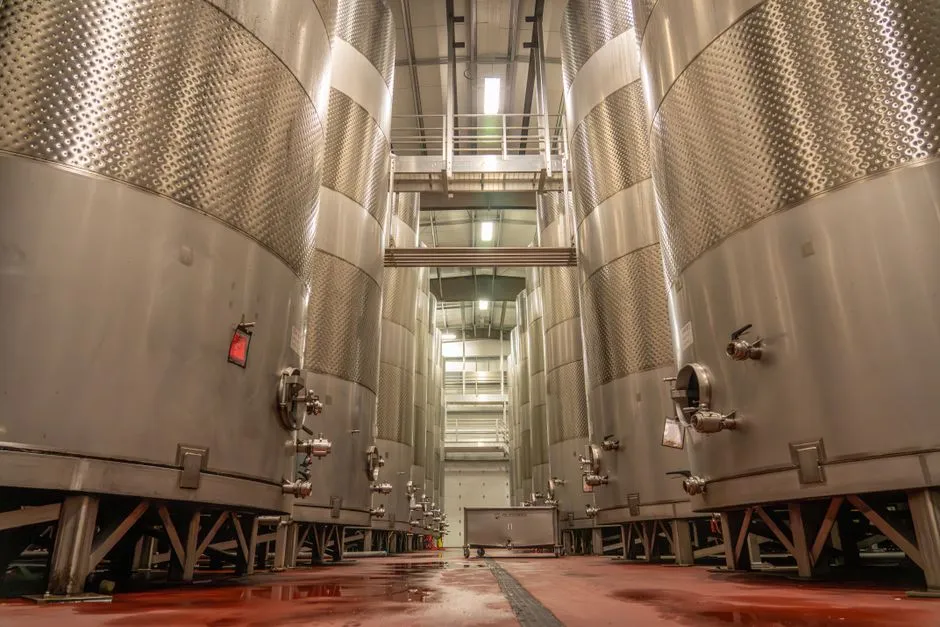
The reactor decision should follow flow, COD, soluble fraction and available plot area rather than a general preference for EGSB. The 2026 commercial framework favors UASB below 50 m³/day, EGSB for 50–800 m³/day with COD below 40,000 mg/L, and IC for COD above 40,000 mg/L or severely constrained sites (HydropureWater, 2026 EGSB Reactor for Citric Acid Wastewater Cost guide). These are selection thresholds from a commercial benchmark, so they require validation against measured wastewater, pilot evidence and the final equipment proposal.
For citrate feed, that source specifies 4–10 m/h superficial upflow velocity, a 6 m/h design target, an H/D ratio of 4:1–6:1 and effluent recirculation of 1:3–1:6 (HydropureWater, 2026). Effluent recirculation maintains the expanded granular bed and provides the hydraulic mixing that distinguishes EGSB from conventional UASB operation. The ScienceDirect overview independently identifies 4–10 m/h as characteristic EGSB operation and reports organic loadings up to 35 kg COD/m³/day (ScienceDirect, Granular Sludge Blanket Reactor overview, source S5).
That higher hydraulic regime also explains EGSB’s principal limitation for this feed: coarse suspended particles and colloids are not entrapped and hydrolyzed efficiently, so their presence requires upstream solids management or a different process arrangement. For comparison, the UASB reactor design guide provides a useful design reference for the lower-upflow alternative, while the EGSB reactor design guide for another high-strength industrial wastewater provides an example of applying the same process logic to a different feed.
The commercial source reports 85–92% COD removal for EGSB on citrate feed at 35 °C, compared with 70–80% for UASB, with the reported gap widening above 25,000 mg/L influent COD (HydropureWater, 2026). Because both figures come from the same commercial source, they are suitable for commercial screening but should not be accepted as guaranteed site performance.
| Condition | Conditional preference | Required validation |
|---|---|---|
| Flow below 50 m³/day | UASB may offer lower CAPEX | Compare reactor volume, removal performance, operator familiarity and installed cost |
| Flow 50–800 m³/day and COD below 40,000 mg/L | EGSB is the commercial benchmark’s principal fit | Confirm soluble feed, upflow velocity, recirculation, loading and pilot or reference evidence |
| COD above 40,000 mg/L | Evaluate IC rather than applying the EGSB case directly | Assess high-strength behavior, maintenance and site constraints |
| Severely constrained plot | Evaluate IC’s compact arrangement | Compare footprint, riser descaling exposure and lifecycle availability |
| Coarse solids or colloids are material | Provide pretreatment or reconsider the reactor | Measure solids, hydrolysis requirement and upstream separation performance |
Build the treatment train and compare lifecycle cost
The budget should cover the anaerobic reactor, pretreatment, gas handling, sludge removal and any required polishing as one treatment train. The 2026 commercial benchmark places EGSB CAPEX for 50–500 m³/day plants at $280,000–$2,400,000 and gives gross OPEX of $0.18–$0.42/m³, falling to $0.04–$0.18/m³ after its stated biogas credit (HydropureWater, 2026). These figures are benchmark values from the commercial source, not a quotation for a specific plant.
The same source reports 0.32–0.45 m³ methane per kg COD removed and a $0.08–$0.14/m³ biogas offset (HydropureWater, 2026). Do not book that credit in the approval case until measured gas flow, methane composition, the utilization route and the locally confirmed value are known. A flaring arrangement, CHP unit and export arrangement have different economic values and different operating obligations.
Define industrial wastewater polishing against the discharge or reuse specification. The benchmark reports that adding an MBR polishing reactor to a 100 m³/day plant adds $120,000–$260,000, while producing COD below 500 mg/L and TSS below 30 mg/L (HydropureWater, 2026). An MBR wastewater treatment system should therefore be included only when the required effluent quality justifies its cost; otherwise route EGSB effluent to a suitable existing polishing process. If sludge dewatering is required, the source identifies a plate-and-frame filter press as an option for downstream waste granular sludge.
The source’s illustrative 100 m³/day case uses mid-CAPEX of $600,000 and annual net savings of $135,000–$195,000 to calculate a 3.1–4.4 year payback (HydropureWater, 2026). Treat that as a commercial scenario, not a guaranteed project result. Rebuild the case with site flow, measured COD load, confirmed chemical and electrical prices, actual sludge route, permit basis, gas value and the selected polishing scope.
| Cost element | 2026 commercial benchmark | Buyer action |
|---|---|---|
| EGSB CAPEX, 50–500 m³/day | $280,000–$2,400,000 | Request a site-specific quotation with reactor, installation and commissioning defined |
| Gross OPEX | $0.18–$0.42/m³ | Price electricity, chemicals, nutrients, sludge, labor and maintenance |
| OPEX after stated biogas credit | $0.04–$0.18/m³ | Confirm gas flow, composition and utilization route before crediting value |
| MBR addition for 100 m³/day | $120,000–$260,000 | Include only against the required discharge or reuse specification |
| Illustrative 100 m³/day payback | 3.1–4.4 years | Replace benchmark assumptions with site-specific cash flows |
Use supplier acceptance criteria to protect the purchase
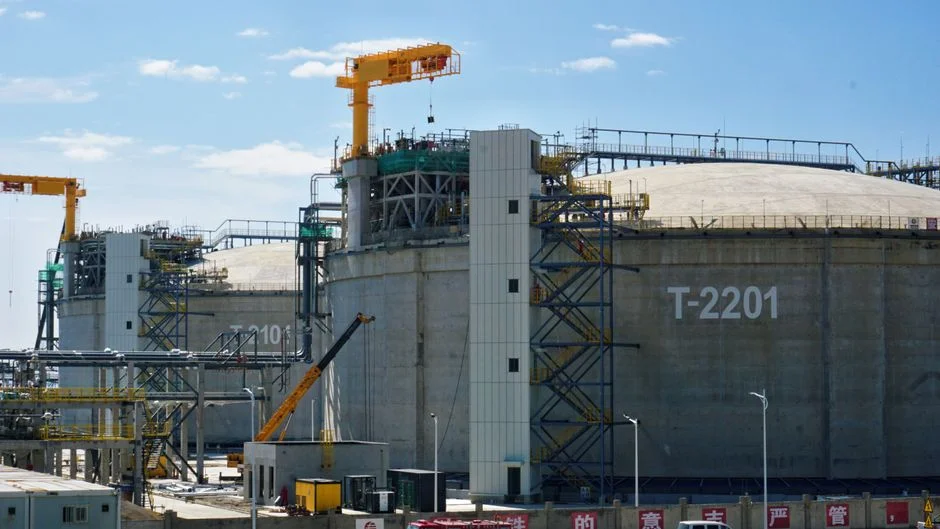
Technical acceptance and commercial acceptance should be separated in the purchase documents. The equipment can meet general design requirements while the project still fails if sulfate, calcium, pH, loading or polishing requirements were not transferred into enforceable guarantees.
Require at least three comparable citric acid or food-acid EGSB references with full contact details and an offered site visit. The 2026 supplier screen calls for 2205 duplex as the standard shell material, in-house PLC/SCADA commissioning, a COD-removal guarantee of at least 85%, six months of biological commissioning, a defined remote-monitoring response window and a comparable-scale biogas-utilization case (HydropureWater, 2026). For a 100 m³/day unit, the same screen specifies delivery within 14 weeks. Make the milestone consequential through acceptance testing and a defined delay remedy rather than relying on a quoted lead time.
Allocate every interface in writing: wastewater characterization, pilot evidence, civil work, electrical supply, chemicals, sludge disposal, biogas handling, operator training and performance testing. This prevents an EGSB price from hiding pretreatment or downstream costs. The 2026 wastewater equipment supplier buyer screen provides a broader structure for reference and interface checks.
| Acceptance item | Minimum contractual requirement | Evidence required |
|---|---|---|
| Comparable references | At least three citric acid or food-acid EGSB references | Full contact details and site-visit offer |
| Materials | 2205 duplex standard shell or documented alternative | Complete water analysis and corrosion assessment |
| Controls | In-house PLC/SCADA commissioning | Cause-and-effect, alarm, trend and access records |
| Performance | COD removal guarantee of at least 85% | Agreed influent basis, test period, sampling method and remedy |
| Commissioning | Six-month biological commissioning included | Milestones, acceptance criteria and training records |
| Delivery | 14 weeks for a 100 m³/day unit | Binding milestone, delay remedy and acceptance test |
| Support | Remote monitoring with a defined response window | Escalation procedure and response commitment |
| Scope | Clear allocation of civil, electrical, chemical, sludge and biogas interfaces | Included and excluded equipment lists |
Frequently Asked Questions
What is the 2026 EGSB reactor cost for citric acid wastewater?
The 2026 commercial benchmark gives $280,000–$2,400,000 CAPEX for plants with 50–500 m³/day capacity, with gross OPEX of $0.18–$0.42/m³ (HydropureWater, 2026). This is a market benchmark, not a site-specific quotation. Request a priced bill of quantities based on measured flow, COD, sulfate, calcium, chloride, pH, temperature, pretreatment, gas utilization and polishing requirements.
How much COD can an EGSB remove from citric acid wastewater?
The commercial benchmark reports 85–92% COD removal on citrate feed at 35 °C (HydropureWater, 2026). Treat this as an expected performance range for screening. The guarantee should use the actual wastewater, agreed operating conditions, influent COD range and a defined test method.
Is EGSB or UASB more suitable for a citric acid plant?
The 2026 framework points to UASB below 50 m³/day and EGSB for 50–800 m³/day when COD is below 40,000 mg/L (HydropureWater, 2026). Soluble wastewater favors EGSB, while substantial coarse solids or colloids require upstream treatment. Compare both proposals using measured wastewater and comparable-scale pilot or operating evidence.
What should a buyer check when selecting an EGSB supplier?
Check comparable references, metallurgy against the complete analysis, controls competence, biological commissioning, performance guarantees, delivery milestones, remote support and a comparable-scale biogas case. Wastewater testing, pilot evidence and the final equipment proposal should govern the design values; reject a supplier that bases sizing only on nominal production data or generic package ratings.