Submerged membrane bioreactors (MBRs) deliver near-reuse-quality effluent (<1 μm filtration) with 60% smaller footprint than conventional systems, making them ideal for industrial wastewater treatment. Key 2025 engineering specs include flux rates of 32–135 m³/day, transmembrane pressure (TMP) ranges of 0.1–0.5 bar, and energy consumption 10–20× lower than external cross-flow systems. Membrane types, specifically PVDF flat sheet versus hollow fiber, significantly impact CAPEX, OPEX, and maintenance—flat sheet modules offer 80–225 m² filtration area with integrated aeration for optimal fouling control.
Why Industrial Facilities Are Switching to Submerged MBRs
Submerged MBR systems reduce the physical footprint required for wastewater treatment by up to 60% compared to conventional activated sludge systems, offering a critical advantage for space-constrained industrial sites. Consider a food processing plant in Gujarat, India, facing new Pollution Control Board (PCB) effluent standards requiring BOD below 30 mg/L and COD below 250 mg/L. Traditional treatment methods demand extensive land for secondary clarifiers and aeration basins, which is often unavailable in densely built industrial zones. Submerged MBRs integrate biological treatment with membrane filtration, eliminating the need for secondary clarification and tertiary filtration stages. This compact design allows facilities to meet stringent discharge limits, often enabling treated water reuse for non-potable applications such as cooling tower makeup, boiler feed, or irrigation, thereby reducing freshwater consumption and discharge costs.
The core benefit of MBR technology lies in its ability to maintain a high concentration of biomass within the bioreactor, leading to enhanced biological treatment efficiency and superior effluent quality. By keeping sludge in the system for a longer time, MBRs achieve more complete degradation of organic pollutants and nitrification. Industries widely adopting submerged MBRs include food and beverage processing, pharmaceuticals, textiles, and petrochemicals, where consistent effluent quality and a reduced environmental footprint are paramount for operational sustainability and regulatory compliance.
Submerged MBR Engineering Specs: What You Need to Know Before Buying
Effective evaluation of submerged MBR systems hinges on understanding critical engineering specifications that directly influence performance, operational stability, and cost-effectiveness. A primary parameter is the flux rate, which represents the volume of treated water produced per unit of membrane area per day, typically measured in L/m²/hr or m³/day. For HydropureWater’s DF Series flat sheet modules, typical industrial flux rates range from 32–135 m³/day, depending on wastewater characteristics and temperature. A higher stable flux rate allows for smaller membrane area requirements, reducing both initial capital expenditure (CAPEX) and the overall system footprint.
Transmembrane pressure (TMP) is another crucial metric, defining the pressure difference across the membrane that drives the filtration process. Submerged MBRs typically operate at low TMP ranges, often between 0.1–0.5 bar (as observed in Alfa Laval systems), which minimizes fouling and reduces energy consumption for pumping. Maintaining low TMP is essential for extending membrane lifespan and reducing chemical cleaning frequency. Membrane types, such as PVDF (polyvinylidene fluoride) flat sheet membranes used in HydropureWater’s DF Series PVDF flat sheet membrane modules for submerged MBR applications, typically feature a pore size of 0.1 μm, offering robust physical separation. These membranes are known for their high chemical resistance and durability, making them suitable for challenging industrial wastewater. Hollow fiber membranes, also with similar pore sizes, offer different operational characteristics.
Aeration requirements are critical for both biological activity and membrane scouring. Integrated aeration boxes, common in flat sheet modules like the DF Series, provide coarse bubble aeration directly beneath the membranes, reducing fouling by up to 30% compared to systems relying solely on bulk aeration (per PCI Membranes observations). This localized scouring prevents cake layer formation and maintains flux. Sludge retention time (SRT) within the bioreactor directly impacts biological treatment efficiency; longer SRTs (typically 20-60 days in MBRs) allow for the growth of slow-growing microorganisms, enhancing nutrient removal and resilience to shock loads by keeping sludge in the system longer (per Morui Top 1 content).
Submerged MBR Key Engineering Specifications
| Parameter | Typical Range for Industrial Submerged MBRs | Impact on System |
|---|---|---|
| Membrane Pore Size | 0.05 – 0.4 µm (typically 0.1 µm for UF/MF) | Determines effluent quality, particle rejection, and filtration mechanism. |
| Flux Rate | 32 – 135 m³/day (for DF Series flat sheet modules) | System sizing, membrane area required, CAPEX. |
| Transmembrane Pressure (TMP) | 0.1 – 0.5 bar | Fouling rate, cleaning frequency, energy consumption. |
| Sludge Retention Time (SRT) | 20 – 60 days | Biological treatment efficiency, sludge age, nutrient removal. |
| Mixed Liquor Suspended Solids (MLSS) | 8,000 – 15,000 mg/L | Bioreactor efficiency, footprint, sludge production. |
| Aeration Intensity (Membrane Scouring) | 0.2 – 0.5 Nm³/hr/m² membrane area | Fouling control, energy consumption. |
Flat Sheet vs. Hollow Fiber Membranes: Performance, Cost, and Maintenance Compared
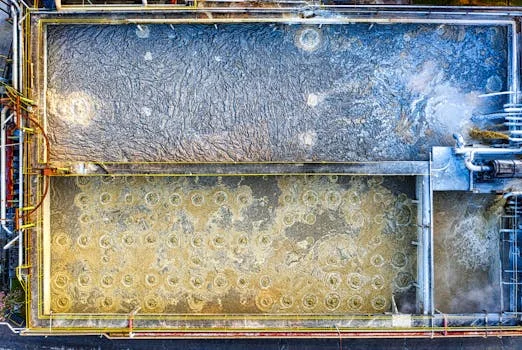
Selecting between flat sheet and hollow fiber membranes is a pivotal decision in designing a submerged MBR system, as each type presents distinct trade-offs in performance, cost, and maintenance. Flat sheet modules, such as HydropureWater’s DF Series, typically offer a filtration area of 80–225 m² per module, characterized by robust construction and a wider flow path. In contrast, hollow fiber modules can provide a higher packing density, with some offering 100–500 m² of filtration area per module (per PCI Membranes Top 3 content), potentially leading to a more compact system for certain applications.
Regarding CAPEX, flat sheet modules often entail a 15–20% higher upfront cost due to their more rigid design and individual element construction. However, this initial investment can be offset by operational savings. Flat sheet modules often require up to 30% less aeration energy for membrane scouring compared to hollow fiber systems (per Alfa Laval Top 2 content), thanks to their integrated aeration boxes that effectively reduce fouling. This translates into lower OPEX over the system's lifespan. From a maintenance perspective, hollow fiber modules are generally more susceptible to fouling, especially from high-TSS or oily wastewater, often requiring more frequent chemical cleaning (every 3–6 months). Flat sheet modules, with their wider channels and effective scouring, typically extend cleaning intervals to 6–12 months. flat sheet modules allow for the individual replacement of damaged membrane elements, whereas damage to a hollow fiber module often necessitates replacing the entire module, incurring higher replacement costs and downtime.
Use-case matching is crucial: flat sheet membranes are often preferred for industrial wastewater streams with high suspended solids, fats, oils, and greases (FOG), such as those from food processing or petrochemicals, due to their robust design and better fouling resistance. Hollow fiber membranes, while offering higher packing density, are often more suitable for lower-TSS, high-flow applications, or municipal pre-treatment where fouling potential is less severe. HydropureWater's integrated MBR system for industrial wastewater can incorporate either type, tailored to specific project needs.
Flat Sheet vs. Hollow Fiber Membranes: Comparison
| Feature | Flat Sheet Membranes (e.g., HydropureWater DF Series) | Hollow Fiber Membranes |
|---|---|---|
| Filtration Area per Module | 80 – 225 m² | 100 – 500 m² |
| CAPEX (Relative) | 15-20% higher upfront | Lower upfront |
| Aeration Energy for Scouring | Up to 30% lower | Higher |
| Fouling Resistance | Higher, especially for high-TSS/FOG | Lower, more susceptible to clogging |
| Chemical Cleaning Frequency | Every 6 – 12 months | Every 3 – 6 months |
| Maintenance/Replacement | Individual element replacement possible | Full module replacement if damaged |
| Typical Applications | Food & Beverage, Petrochemicals, Pulp & Paper (high TSS/FOG) | Municipal, low-TSS industrial, high-flow applications |
Submerged MBR Cost Breakdown: CAPEX, OPEX, and ROI Calculations for Industrial Projects
Understanding the financial implications of a submerged MBR system is critical for procurement managers and project stakeholders. Capital expenditure (CAPEX) for submerged MBR systems typically ranges from $500–$1,200 per m³/day of capacity, reflecting variations in system size, complexity, and specific membrane technology. A general breakdown of CAPEX components shows that membranes account for approximately 40% of the total cost, the bioreactor tank for 30%, the aeration system for 20%, and control systems for the remaining 10%. These figures emphasize the significant investment in membrane technology itself and the infrastructure required to support it.
Operational expenditure (OPEX) for submerged MBRs is notably competitive, often 20–30% lower than conventional wastewater treatment systems. This reduction stems from several factors, including reduced sludge handling volumes due to higher MLSS concentrations and improved sludge compaction, and energy-efficient aeration systems (per Alfa Laval Top 2 content). A compelling return on investment (ROI) example is a textile factory in Turkey that, by switching to a submerged MBR, reduced its water discharge fees by 40% and achieved a full payback period within three years. This ROI was primarily driven by lower operating costs, reduced regulatory fines, and potential revenue from water reuse. Key cost drivers influencing OPEX include membrane replacement, typically required every 5–8 years depending on operation and wastewater quality, energy consumption for aeration and pumps, and chemical cleaning agents used every 6–12 months to maintain membrane performance. Proactive maintenance and optimized operating parameters can extend membrane life and minimize chemical usage, further improving the long-term cost-effectiveness.
Submerged MBR Cost Breakdown and ROI Factors
| Cost Category | Description & Typical Contribution/Impact |
|---|---|
| CAPEX (Capital Expenditure) | |
| System Capacity Range | $500 – $1,200 per m³/day (2025 industry benchmark) |
| Membranes | ~40% of total CAPEX (core technology cost) |
| Bioreactor Tank & Ancillaries | ~30% of total CAPEX (civil works, tanks, piping) |
| Aeration System | ~20% of total CAPEX (blowers, diffusers, controls) |
| Controls & Automation | ~10% of total CAPEX (PLC, SCADA, sensors) |
| OPEX (Operational Expenditure) | |
| Overall OPEX Reduction | 20-30% lower than conventional systems |
| Membrane Replacement | Every 5-8 years (major recurring cost) |
| Energy Consumption | Primarily for aeration and pumps; optimized systems reduce this significantly. |
| Chemical Cleaning | Every 6-12 months (cost of chemicals, labor) |
| Sludge Handling | Reduced volume and cost compared to conventional systems. |
| ROI (Return on Investment) Drivers | |
| Reduced Discharge Fees | Achieved up to 40% reduction for a textile factory. |
| Water Reuse Potential | Reduces freshwater intake costs. |
| Compliance Avoidance | Minimizes fines and penalties for effluent violations. |
| Typical Payback Period | Often 2-5 years for industrial projects. |
How to Select the Best Submerged MBR for Your Industrial Wastewater
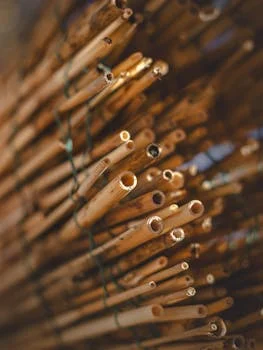
Selecting the optimal submerged MBR system for industrial wastewater treatment requires a systematic approach that balances technical performance, cost-effectiveness, and regulatory compliance. The first critical step is to thoroughly characterize your wastewater, analyzing key parameters such as Chemical Oxygen Demand (COD), Biochemical Oxygen Demand (BOD), Total Suspended Solids (TSS), oil and grease content, and pH. Submerged MBRs are highly versatile, capable of handling influent COD levels up to 5,000 mg/L and TSS concentrations up to 1,000 mg/L (per PCI Membranes Top 3 content), but specific characteristics will guide membrane type and pretreatment needs.
Step two involves clearly defining your effluent quality requirements. Whether the treated water is intended for discharge to a municipal sewer, surface water, or for reuse applications (e.g., cooling tower makeup, irrigation), MBRs consistently achieve high-quality effluent, typically with BOD below 5 mg/L and TSS below 1 mg/L (per Morui Top 1 content). This high level of treatment often exceeds conventional standards, making MBRs ideal for stringent reuse or discharge permits. In step three, calculate the required treatment capacity in m³/day, considering both average and peak flow rates, and factor in the selected membrane's stable flux rate to accurately size the system. Over- or under-sizing can lead to inefficient operation or premature membrane fouling.
Step four is to compare membrane types—flat sheet vs. hollow fiber—based on the performance, cost, and maintenance considerations discussed previously. For instance, high-TSS wastewater might favor flat sheet membranes for their robustness, while lower-TSS, high-flow applications could benefit from the higher packing density of hollow fiber membranes. Finally, in step five, evaluate compliance with all relevant local, national, and international regulations. MBR technology is renowned for its ability to meet stringent discharge standards, including those set by the EPA, the EU Urban Waste Water Directive 91/271/EEC, and WHO reuse guidelines (as outlined in HydropureWater product catalogs), ensuring long-term regulatory adherence. For further insights into regional compliance, consult resources like the MBR wastewater treatment systems in South Africa: 2025 compliance guide.
Frequently Asked Questions About Submerged MBRs for Industrial Use
Submerged MBRs offer a robust and efficient solution for industrial wastewater treatment, but common questions arise regarding their application and performance.
What are the primary disadvantages of MBRs for industrial applications?
While highly effective, MBRs do have a higher initial CAPEX compared to conventional activated sludge systems, primarily due to the cost of membranes and associated controls. They also require careful management of membrane fouling, which necessitates periodic chemical cleaning and eventual membrane replacement, typically every 5-8 years. However, these are often offset by lower OPEX, superior effluent quality, and reduced footprint.
How do submerged MBRs handle varying industrial wastewater loads?
Submerged MBRs are inherently resilient to fluctuating loads due to their high biomass concentration (MLSS of 8,000–15,000 mg/L) and long sludge retention times (20–60 days). This allows the biological system to absorb shock loads more effectively and maintain stable treatment performance, even with variations in COD/BOD concentrations or flow rates, making them well-suited for industrial processes that often experience intermittent discharge patterns.
What are the main types of submerged bioreactors?
The primary distinction among submerged bioreactors for MBR systems lies in the membrane configuration: flat sheet and hollow fiber. Flat sheet membranes consist of flat panels with membrane material, often arranged in modules with integrated aeration for scouring. Hollow fiber membranes are bundles of small diameter tubes, offering a higher packing density. Both are submerged directly into the bioreactor and operate under low transmembrane pressure, but they differ in fouling resistance, maintenance, and suitability for specific wastewater characteristics.
Further Reading
Explore these in-depth articles on related wastewater treatment topics: