Identify the limits that control the discharge point
The governing wastewater limit for a fabricated-metals plant near Jacksonville is the stricter applicable requirement for each pollutant: a categorical pretreatment standard, the receiving POTW’s local limit, and the plant’s current permit condition. Federal applicability depends on the operation, not merely the material being fabricated. Under the framework described in HydropureWater’s 2026 metal-finishing pretreatment article, 40 CFR Part 433 covers forming, finishing, forging, foundry, metal-spraying and machining-wash operations co-located with plating or anodizing lines. A shop operating zinc, nickel or chromic-acid tank lines is more likely to be in scope than a stamping operation that ships dry parts to a separate finisher.
Existing source discharge limits and new source discharge limits must be identified separately. Existing-source requirements are the PSES provisions; new-source requirements are the PSNS provisions. The PSNS requirements are tighter because they apply to sources constructed after the rule’s promulgation date. A plant should not assume that its grandfathered status permits design to weaker values: HydropureWater’s 2026 article states that many POTWs apply PSNS-equivalent local limits to all industrial users as a conservative baseline.
POTW local limits are site-specific requirements applied at the industrial user’s point of connection, according to the EPA’s pretreatment standards and local-limits guidance. They can be numeric or narrative and may include best management practices. Compare them parameter by parameter with PSES or PSNS requirements and the current industrial-user permit; use the stricter result as the equipment design basis.
| Design-basis source | What the buyer must obtain | How it enters the decision |
|---|---|---|
| 40 CFR Part 433 applicability | Operations performed on site, including tank-line ownership and whether plating or anodizing is co-located | Determines whether categorical standards apply |
| PSES or PSNS | Applicable status and the complete pollutant table from the current rule | Establishes categorical constraints |
| POTW local limits under 40 CFR 403.5 | Current numerical and narrative limits for every relevant parameter | Sets site-specific constraints at the point of connection |
| Industrial-user permit | Monitoring frequency, sampling point and protocol, reporting requirements and permit conditions | Defines the compliance test and operating constraints |
| Current plant facts | Process inventory, discharge points, batch records and analytical results | Distinguishes actual requirements from design assumptions |
No numerical Jacksonville POTW limit table or plant permit was supplied, so neither should be inferred. Before final sizing, request the current permit, the POTW’s local-limits table and pretreatment program requirements, and confirm the monitoring location. For a broader process comparison, review how to compare DAF and lamella clarification for pretreatment or select a sewer-compliant pretreatment train.
Characterize batch wastewater before sizing the train
Batch wastewater must be converted into a measured design basis before equipment is sized; preliminary concentration ranges cannot substitute for plant data. HydropureWater’s 2026 article states that a full week of composite flow should be collected because a shorter composite can miss a major batch dump and undersize equalization. The sampling plan should represent production conditions and identify when the plant releases concentrated rinses, alkaline cleaners, acidic pickling solutions or oily machining waste.
HydropureWater’s 2026 field ranges provide preliminary screening only: oils at 50–500 mg/L, total dissolved metals at 5–200 mg/L, TSS at 100–1,000 mg/L and pH varying from 2 to 12 across batch dumps. These are mixed-floor-drain screening ranges, not Jacksonville limits or guaranteed site conditions. A stamping cell may remain near pH 7 with low metals, while a hard-chrome line may produce a highly acidic Cr(VI) rinse dump.
| Field to establish | Required observations or measurements | Why it controls sizing |
|---|---|---|
| Flow and batch timing | Continuous flow record linked to production and disposal events; full-week composite | Defines equalization volume and treatment peak flow |
| pH | Continuous trend plus grab samples associated with each dump | Sets chemical demand, reaction control and diversion thresholds |
| Oil and grease | Free and emulsified oil measurements by stream | Determines whether oil removal is required before chemical treatment |
| Total metals | Dissolved and total fractions by source stream | Establishes hydroxide precipitation loading |
| Hexavalent chromium | Cr(VI) concentration on chrome-bearing streams | Defines reduction-chemical demand and endpoint |
| Cyanide | Concentration and process origin | Determines whether oxidation is required |
| TSS | Suspended-solids concentration and settleability | Sets clarification and solids-handling requirements |
| Rinse-water demand | Desired reuse flow and required quality | Determines whether polishing is justified |
Map each wastewater stream to its floor drain rather than sampling only the combined discharge. That preserves the relationship between contaminant source, batch timing and downstream treatment load. For a worked application of the same sizing logic, see the 2026 guide to size DAF for metalworking wash water.
Match each contaminant family to its required unit operation
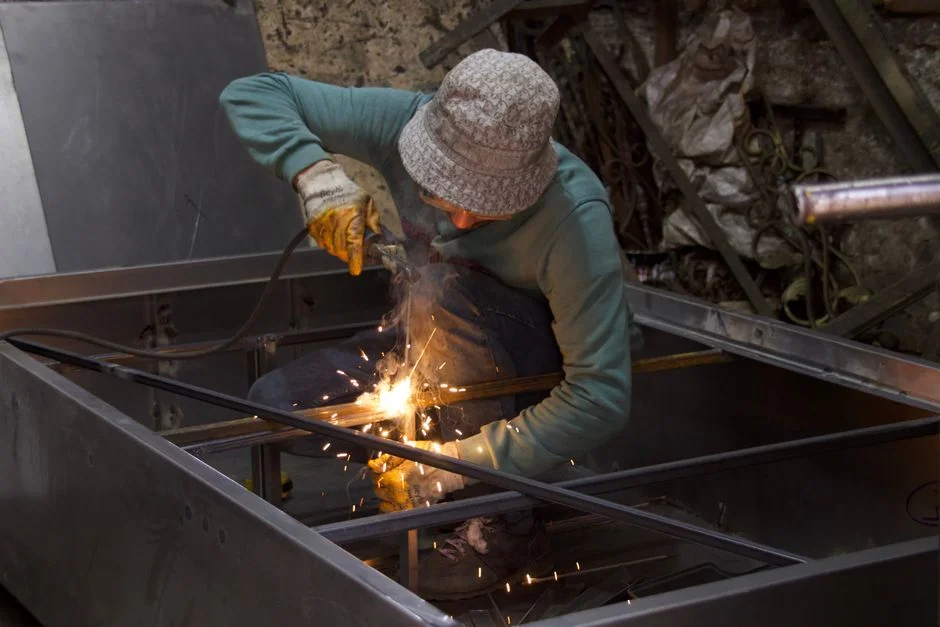
A defensible metal-finishing treatment train assigns a specific function to each contaminant family rather than relying on one reaction stage to remove oil, chromium, cyanide, dissolved metals and TSS simultaneously. Equalization comes first because batch flow and pH variation otherwise produce unstable chemical demand and separator loading. Oil removal follows: free oil can be separated physically, while emulsified oil may require chemical breaking or recovery, but residual oil must be removed before downstream chemistry because it can interfere with separation and sludge conditioning.
Hexavalent chromium requires reduction before hydroxide precipitation. HydropureWater’s 2026 article specifies sodium metabisulfite or ferrous sulfate at pH 2–3 and an ORP endpoint of roughly 250–300 mV; the resulting trivalent chromium can then precipitate as Cr(OH)₃ at pH 8.5–9.5. Cyanide requires oxidation before metals precipitation because unresolved cyanide can resolubilize downstream metal precipitates.
Metal hydroxide precipitation addresses dissolved metals, while DAF or lamella clarification removes the resulting floc and other suspended solids. These mechanisms are complementary, not interchangeable. Solids protection also belongs upstream: a rotary mechanical bar screen can remove rags, wipes and tramp metal before they reach the sludge train. Use the rotary mechanical bar screen for pretreatment solids protection where the waste stream warrants it.
| Contaminant family | Required unit operation | Acceptance evidence |
|---|---|---|
| Batch flow and pH variation | Batch wastewater equalization | Measured working volume and downstream flow/pH records |
| Free and emulsified oils | Oil removal before chemical treatment | Oil concentration and visible free-oil condition after the unit |
| Hexavalent chromium | Reduction, followed by metal hydroxide precipitation | Cr(VI), pH and ORP records through reduction |
| Cyanide | Oxidation before metals precipitation | Cyanide result, pH and oxidation-control records |
| Dissolved metals | pH-controlled hydroxide precipitation | Dissolved-metals results and sludge-generation estimate |
| Metal hydroxide floc and TSS | DAF or lamella clarification | TSS, solids capture and clarified-water quality |
| Rags, wipes and tramp metal | Mechanical screening before the sludge train | Screen service record and downstream debris check |
Chemical feed must remain traceable through a PLC-controlled automatic chemical dosing skid rather than uncontrolled manual additions. Before proceeding, verify that the proposed chemical sequence matches the actual contaminants present. Do not include chromium reduction or cyanide oxidation merely because they are common in metal finishing.
Size separation, controls and sludge handling from measured loads
DAF sizing must use measured hydraulic and solids loads, not a generic equipment surface area. HydropureWater’s 2026 guidance identifies three governing variables: hydraulic surface loading of 4–20 m/h, an air-to-solids ratio of 0.005–0.060 with 0.02 as a typical design point, and recycle of 10–30% of forward flow. These are design screening criteria, not confirmation of a particular machine’s capacity. The final selection should also reflect measured TSS, floc characteristics, recycle chemistry and operating duty.
Controls should combine flow-paced feed with pH and ORP feedback. Include calibrated chemical pumps and stroke-count totalizers so the operator can reconcile chemical use with treatment results. HydropureWater’s 2026 article identifies sodium metabisulfite for chrome reduction, sodium hypochlorite for cyanide destruction, pH-adjustment reagents and polymer for flocculation as chemicals whose feed must be controlled and recorded.
Sludge handling belongs in the equipment bid, not after commissioning. HydropureWater’s 2026 field data indicates that floated metal-hydroxide sludge typically contains 2–5% dry solids and can be dewatered to 25–35% with a plate-and-frame filter press, compared with approximately 22% with a belt press. These figures define a comparison basis; actual acceptance depends on sludge chemistry, conditioning, press configuration and the disposal hauler’s requirements. The plate-and-frame filter press for metal hydroxide sludge should be evaluated against the measured solids and required cake condition.
| Package item | Buyer-supplied input | Acceptance criterion |
|---|---|---|
| DAF | Peak forward flow, TSS, recycle requirement and selected hydraulic loading | Equipment capacity and recycle arrangement match the agreed design basis |
| Dosing skid | Stream chemistry, target pH or ORP, chemical inventory and control strategy | Pump calibration, totalizers and feedback controls demonstrated |
| Dewatering | Expected sludge solids, chemistry and disposal specification | Test or agreed performance criterion for cake solids and filtrate quality |
| Interlocks | Permit limits, upset-response philosophy and diversion capacity | Simulated excursion routes flow to equalization and records the event |
| Bar screen | Debris characteristics and maintenance access | Tramp-material protection demonstrated before sludge equipment |
Interlocks should divert flow to the equalization header for pH excursions, ORP outside the reduction range and high TSS. Verify that the equalization basin has enough available working volume to receive the diverted flow; an interlock without hydraulic capacity is not a control strategy. The DAF system for metalworking wastewater should therefore be evaluated as part of the complete control and diversion concept.
Add polishing only when reuse or tighter limits require it
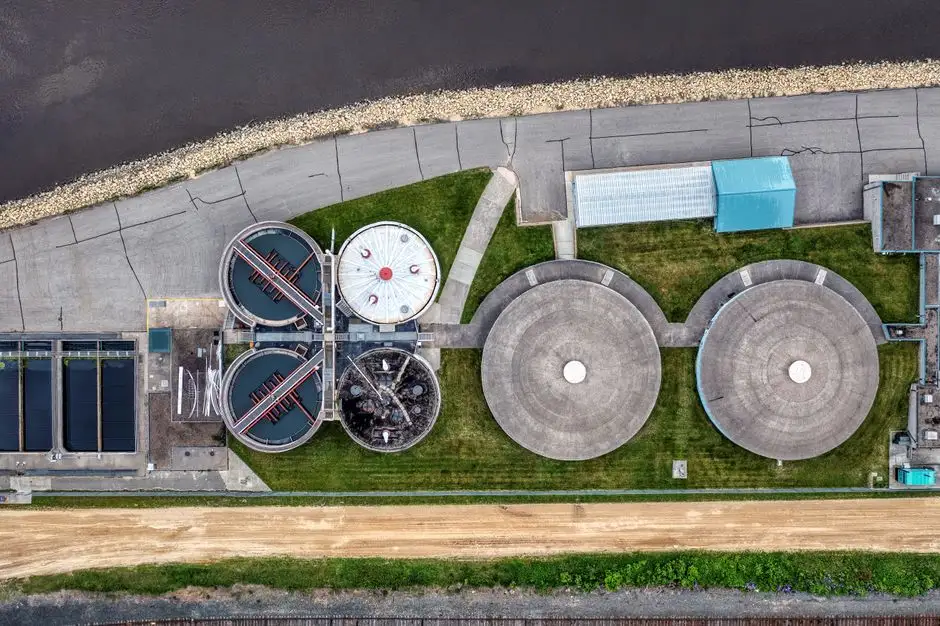
Final polishing is justified by a defined water-quality or compliance gap, not by the general possibility that a more stringent limit may be imposed. HydropureWater’s 2026 article states that most fabricated-metals plants meet sewer limits with the primary train and do not need polishing. The decision changes when POTW limits are tighter than PSNS, rinse-water reuse requires higher-quality water, or a new rule applies.
Match the polishing technology to the target contaminant. HydropureWater’s 2026 article identifies MBR for BOD/COD tightening or reuse, with filtration below 1 μm, and RO for sub-ppm TDS or particularly tight metal caps. Multi-media filtration should precede RO because the supplied article specifies an upstream SDI15 below 3 to limit membrane-fouling risk. If a reuse specification requires nickel below 0.1 mg/L, for example, that target should be confirmed in writing and tested against the complete treatment train rather than assigned to RO alone.
PFAS is different because the supplied research reports no current numerical PFAS limit for chrome finishers. EPA’s chrome-finishing PFAS rulemaking was still in progress in 2026, according to HydropureWater’s 2026 article. Preserve space, utility connections and hydraulic flexibility for a future anion-exchange or granular activated carbon polish rather than installing an undefined requirement now.
If reuse is under evaluation, compare the MBR system for biological solids separation and reuse pretreatment with the RO system for high-quality reuse water. The selection should follow the required reuse quality, concentrate disposal route and measured performance of the primary train. Neither technology should be justified by an assumed future limit.
Verify performance before the first sewer discharge
Compliance must be demonstrated against the averaging basis and sampling protocol written into the applicable permit and POTW program. HydropureWater’s 2026 article identifies daily-maximum and monthly-average requirements for comparing treatment performance with PSES and PSNS limits. The permit and local-limits table must determine which comparison applies at the discharge point; no Jacksonville numerical criteria were supplied for this article.
Build a commissioning plan around the parameters that diagnose an upset. Track flow, pH, ORP, oil and grease, TSS, total metals, hexavalent chromium and cyanide at the locations needed to distinguish source, treatment and final-discharge problems. Record the operating condition whenever a sample is taken; a concentration without its batch context is weak evidence.
Retain pump calibrations, chemical-use records, stroke totals, alarm events, bypass events and sludge-dewatering results. An acceptance test should demonstrate stable operation through representative batch dumps, confirm diversion on simulated excursions and verify sampling access at the required location. The 2025 chemical dosing comparison provides additional context for evaluating dosing accuracy and compliance records.
Do not authorize a sewer discharge merely because the equipment is operating. The go/no-go decision should compare verified final results with every controlling limit, confirm that monitoring and reporting requirements are in place, and establish that operators can respond to the next batch without creating another exceedance.
Frequently Asked Questions
Is a stamping or fabrication operation likely covered by 40 CFR Part 433?
Coverage depends on the on-site operation. HydropureWater’s 2026 article indicates that a stamping shop shipping only dry parts to a separate finisher is generally outside the category, while a facility operating zinc, nickel or chromic-acid tank lines is inside it. Confirm the actual process inventory with the permitting authority. Even when categorical standards do not apply, the receiving POTW’s current local limits and the plant’s permit can still govern the discharge.
Why collect a full week of composite wastewater before sizing equipment?
A short composite can miss a major batch dump and lead to undersized equalization and treatment equipment. Ask the supplier to require a full-week composite, flow records linked to batch timing, and stream-specific measurements for pH, oil and grease, TSS, total metals, Cr(VI) and cyanide. Those inputs establish the design flow, working volume, chemical demand and solids load rather than relying on preliminary screening ranges.
Should we add MBR, RO, anion exchange or GAC before buying the primary pretreatment train?
Add polishing only when an identified need requires it. HydropureWater’s 2026 article associates MBR with BOD/COD tightening or reuse, RO with sub-ppm TDS or very tight metal caps, and anion exchange or GAC with potential future PFAS requirements. Request a written reuse-water specification or an approved future-limit requirement. If neither exists, preserve installation space and utility interfaces rather than buying polishing capacity that has no acceptance criterion.
What should a buyer include in equipment supplier selection and acceptance criteria?
Require a permit-based design basis, documented flow and batch characterization, contaminant-specific unit-operation sizing, calibrated dosing controls, diversion interlocks and a sludge-disposal pathway. For an initial commercial screening, compare approaches for DAF versus lamella clarification and process design. For final acceptance, require functional demonstrations of controls, representative-batch performance, calibration records and compliance-oriented operating documentation.