Identify the Separation Duty Before Selecting Equipment
Magnetic separation wastewater treatment equipment is most relevant when the process must remove magnetic particles or use magnetic adsorbents to recover metals, dyes or other targeted pollutants. Magnetic fields alone and magnetic-particle separation are different approaches: the former enhances treatment processes, while the latter requires suitable magnetic material and a reliable recovery stage. Academic evidence reports that magnetic nanoparticles can improve adsorbent retrievability and support recycling. A Cr(VI) study also identified a stepwise regeneration condition using 3.0 M NaCl at a 40:1 wastewater-to-recovery-volume ratio. Equipment selection should therefore be based on contaminant characteristics, magnetizability, flow, recovery objective and pilot-test results—not magnetic strength alone.
Start with the material to be removed and the required endpoint. Suspended solids, dissolved heavy metals, dye molecules and biodegradable organics do not create the same separation duty, even when all are described as contaminants. The buyer must also decide whether the material will be recovered for reuse, destroyed, recycled into another production stream or transferred into a concentrated residue. That decision determines whether magnetic separation is the primary unit or an auxiliary stage.
Four mechanisms need to be separated during evaluation:
| Separation objective | What the magnetic element must accomplish | Material requiring a defined destination |
|---|---|---|
| Magnetic-particle capture | Retain naturally magnetic or magnetically responsive particles and separate them from the liquid | Captured particles or concentrate |
| Field-assisted adsorption-separation | Use a functionalized magnetic adsorbent to bind a dissolved contaminant, followed by physical retrieval | Loaded adsorbent and regeneration stream |
| Magnetic enhancement of biological treatment | Provide the field condition used to modify biological or physicochemical treatment behavior | Biomass, sludge and settled solids |
| Field-assisted oxidation | Apply the field as an auxiliary condition alongside oxidation chemistry | Oxidation products, catalysts and sludge |
Require each supplier to identify the actual separation mechanism, the collected material and the residual destination. “Magnetic separation” alone is not a sufficient technical description. Also confirm whether the proposed system removes a contaminant directly or merely improves a downstream biological, oxidation or filtration stage.
Record source-water chemistry, flow variability, contaminant and particle concentrations, operating schedule, available footprint and required final-water quality before requesting a selection. For chemical dosing requirements, evaluate a PLC-controlled chemical dosing system as a possible auxiliary, but do not allow its suitability to substitute for feed characterization or a mass balance. If oil, grease, suspended solids or colloidal matter must be removed first, include an industrial DAF pretreatment system in the evaluation as a possible upstream stage.
Match the Wastewater to a Viable Separation Mechanism
For dissolved heavy metals, magnetic adsorbent selection depends on selective binding and recoverable solids, not simply the presence of iron in the treatment system.
The review by Afanasyeva and colleagues, published in Science of the Total Environment in 2021, identifies four useful magnetic-field classes: weak, below 0.001 T; moderate, 0.001–1 T; strong, 1–5 T; and ultra-strong, above 5 T. The same review notes that combining magnetic nanoparticles with magnetic fields can support easier separation, high surface area and altered surface electronegativity for heavy-metal wastewater. These are research categories, not turnkey equipment specifications.
| Wastewater condition | Feasibility question | Potential treatment route | Procurement evidence required |
|---|---|---|---|
| Particles are naturally magnetic or become magnetically responsive | Does the target material respond strongly enough to separate reliably from the liquid? | Magnetic-particle capture, potentially after solids pretreatment | Particle characterization, magnetic-response evidence, recovery test and concentrate analysis |
| Dissolved heavy metal | Can a functionalized magnetic adsorbent selectively bind the target species and remain recoverable? | Field-assisted adsorption-separation | Adsorption selectivity, loading, leaching, regeneration and repeated-cycle results |
| Dye wastewater | Is the dye present as dissolved molecules, colloids or particulate material? | Adsorption with a magnetic sorbent, or upstream particle separation followed by adsorption | Contaminant-speciation analysis, adsorption test and adsorbent-loss data |
| Biodegradable organics | What biological or physicochemical effect is being claimed, and can it be isolated experimentally? | Magnetic field used to enhance biological treatment | Controlled comparison against the same wastewater without the field |
| Oxidation-resistant pollutants | Is oxidation chemistry still required, and what role does the field play? | Field-assisted oxidation within a complete treatment train | Chemistry consumption, oxidation products, catalyst recovery and downstream residuals |
For particle-rich wastewater, compare the magnetic response of the retained fraction with the available solids-removal route. A DAF unit may remove oil, grease, suspended solids and colloidal matter before magnetic recovery when that upstream duty is necessary. This sequencing matters: magnetic capture cannot be credited for contaminants that remain dispersed or interfere with adsorbent contact.
For dissolved pollutants, establish whether the proposed magnetic adsorbent selectively binds the target under the actual wastewater chemistry. If it does, the process still needs a capture stage, a means of transferring the loaded adsorbent, and a regeneration route. The 2021 review reports that magnetic nanoparticles can improve adsorbent retrievability and support recycling, but that benefit does not establish production throughput, loading capacity or cycle life for a particular industrial stream.
For biological or advanced-oxidation duties, treat the magnetic field as an enhancement stage. Do not assume it replaces aeration, biological contact, filtration or oxidation controls. The membrane bioreactor equipment described here may be relevant to the biological or solids-retention duty, while the magnetic system must be evaluated on its specific claimed contribution.
Set Magnetic and Operating Parameters Through Pilot Testing
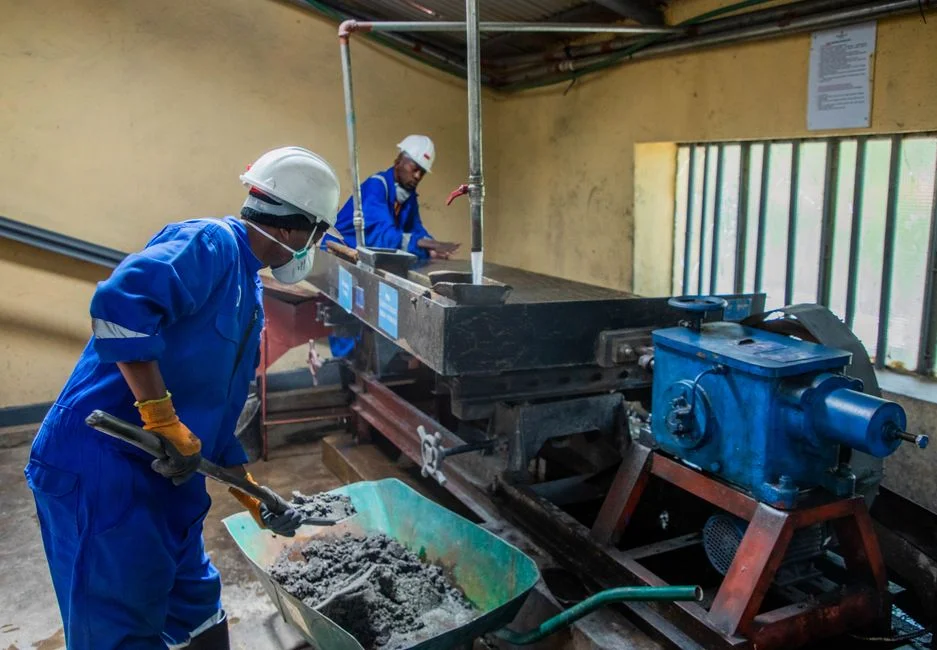
Pilot testing should establish whether a magnetic field changes the treatment result under the buyer’s actual feed conditions, rather than transferring laboratory claims directly to an industrial design.
Use the 2021 review’s field classes as a vocabulary for the pilot report. Record whether the equipment applies a static or dynamic field; the review divides magnetic fields according to whether intensity changes over time. Also document the magnetic-element geometry, separation method and whether the field remains energized during solids capture or adsorbent recovery.
| Pilot variable | Required record | Reason for comparison |
|---|---|---|
| Feed and control | Untreated wastewater and a process-control run without the claimed magnetic effect | Separates magnetic benefit from ordinary treatment performance |
| Field conditions | Intensity, static or dynamic action, frequency or field variation, exposure duration | Defines the treatment condition being purchased |
| Hydraulics | Flow rate, flow variability, contact time and solids loading | Tests capacity and performance under representative operating variation |
| Wastewater chemistry | pH, ionic composition, competing ions, temperature and relevant organic content | Shows whether adsorption or separation persists in the real matrix |
| Magnetic material | Dosage, particle size, surface functionality and aging or reuse condition | Connects material selection to removal and recovery |
| Outcomes | Treated-water quality, adsorbent loss, residual magnetism, captured-solids concentration and recovery completeness | Tests both pollutant removal and the downstream treatment burden |
Require analytical methods and sampling points to be identical across bidders. A lower dissolved-metal result is not sufficient if the adsorbent escapes the treatment unit, the solids concentrate has changed, or more reagent must be consumed to reach the same result.
Control uncertainty explicitly. The 2021 review states that full digital control of magnetic-field parameters is difficult in practical treatment plants because intensity, frequency and action form can produce positive or negative physicochemical and biological effects. Include the selected operating point, permissible adjustment range, alarm conditions and consequences of field loss in the control specification. The need for instrumented valves, media and field-adjustable components can be reviewed through water-treatment valves and media, but final component selection should follow the approved process and pilot data.
Specify Regeneration, Recovery and Residual Management
A magnetic adsorbent system must be bought as a treatment cycle, including regeneration and residual handling, rather than as a single vessel with an adsorption claim.
Require the supplier to disclose the regeneration sequence, reagent identity and concentration, regeneration volume, recovery efficiency and number of demonstrated reuse cycles. Also require discharge data for the regenerated adsorbent, including contaminant release and any change in magnetic properties.
The Cr(VI)-bearing wastewater study in Industrial & Engineering Chemistry Research found that stepwise adsorption followed by stepwise regeneration with 3.0 M NaCl at a 40:1 wastewater-to-recovery-volume ratio was the most applicable working condition. The researchers reported chromium in the recovery solution increasing 25–30 times to 500–600 mg/L. These results are specific to the tested magnetic hydrogel and wastewater; they are not a generic regeneration recipe for all metal-removal equipment.
The increase in chromium concentration explains why regeneration creates a separate treatment problem. A low-concentration wastewater stream can become a concentrated recovery solution that requires its own treatment, collection or disposal route. Ask for a material balance covering fresh adsorbent, adsorption, separation, regeneration, reuse and final discharge.
Define the destination of recovered particles, spent regenerant and regenerant-bearing washwater before accepting the proposal. Where the recovered solids must be dewatered, evaluate a plate-and-frame filter press as the downstream solids-management step. Where sedimentation is the intended downstream method, review the high-efficiency sedimentation tank option. These are treatment stages to assess against the actual concentrate, not presumed parts of every magnetic system.
Build the Supplier Acceptance Checklist
Comparable pilot evidence and defined acceptance criteria are the basis for selecting a supplier; no defensible universal production capacity, removal efficiency or cost can be inferred from the supplied research.
Before requesting a performance guarantee, obtain feed characterization, a contaminant mass balance and a proposed process-flow diagram. The mass balance should show where the target contaminant enters, where it leaves, how much is collected and what happens to each residual stream. Include the operating schedule and hydraulic variation rather than relying on one average influent value.
Ask bidders to run pilots using the same wastewater, flow, field conditions and analytical methods. Require untreated and process-control baselines so that the effect of the magnetic element can be separated from the effect of coagulation, adsorption, settling, filtration or other unit operations.
| Bid item | Information or test required before award | Acceptance basis |
|---|---|---|
| Feed and duty | Representative characterization, flow profile and recovery objective | Agreed project-specific dataset and limits |
| Mechanism | Named separation mechanism, captured material and residual destinations | Process-flow diagram and mass balance accepted by buyer |
| Pilot performance | Side-by-side results with untreated and process-control baselines | Contracted effluent, recovery and concentrate criteria |
| Controls | Field intensity, static or dynamic action, adjustment range, alarms and field-loss response | Control narrative and functional test |
| Recovery and reuse | Adsorbent loss, residual magnetism, captured-solids concentration and demonstrated cycles | Specified recovery completeness and reuse criteria |
| Operating resources | Cleaning cycle, reagent consumption, maintenance points and start-up sequence | Documented operating procedure and resource schedule |
| Commercial responsibility | Supplier scope for magnetic element, controls, pilot work, guarantee and commissioning | Contract allocation with named performance responsibility |
Confirm who designs the magnetic element, supplies the controls, performs the pilot, guarantees performance and supports commissioning. Leaving these responsibilities split across suppliers can leave the buyer with an integrated-flow drawing but no accountable recovery system.
Where upstream oil, grease, suspended-solids or colloidal-matter removal is required, include the industrial DAF pretreatment system in the treatment-train comparison. Its catalogue range is 4–300 m³/h across 13 models, according to the HydropureWater DAF catalogue. That range is equipment information, not evidence that every wastewater in the stated flow range will achieve the required pretreatment duty; feed characterization and pilot performance remain necessary. Equipment sizing can also be checked against mining wastewater pretreatment process design and DAF versus clarifier selection for mining wastewater, while recognizing that neither substitutes for project-specific testing.
Frequently Asked Questions
How much does magnetic separation wastewater treatment equipment cost?
No defensible universal price can be given without feed analysis, flow, treatment duty, pilot results and the required magnetic and recovery configuration. A meaningful budget request should include feed characterization, hourly and daily flow, target endpoint, recovered-material destination, comparison pilot data, controls, installation requirements and pilot acceptance criteria. Ask each supplier to state what assumptions its price excludes, particularly pretreatment, reagents, magnetic-material replacement, regeneration and residual treatment.
How should a buyer select and size a magnetic separation supplier?
Select on mechanism clarity and comparable test evidence, not magnetic strength alone. Require each bidder to identify the separation mechanism, collected material and residual destination; present pilot results using the same feed, flow, field conditions and analytical methods; and submit measured effluent quality, captured-contaminant concentration, adsorbent recovery and hydraulic throughput. The supplier should also define cleaning cycles, reagent consumption, controls, field-loss response and the allocation of performance responsibility between vendor, integrator and operator.
What regeneration method should be specified for a magnetic adsorbent?
Specify the complete sequence, including reagent concentration, regeneration volume, recovery efficiency and demonstrated reuse cycles. The Cr(VI) study in Industrial & Engineering Chemistry Research identified stepwise adsorption followed by stepwise 3.0 M NaCl regeneration at a 40:1 wastewater-to-recovery-volume ratio as its most applicable working condition. It also reported chromium increasing 25–30 times to 500–600 mg/L in the recovery solution. These findings show the importance of evaluating the concentrated regenerant, but they are study-specific and must not be transferred to another adsorbent without validation.
What compliance risks should be resolved before equipment purchase?
Define the receiving sewer, discharge permit and destination of every concentrated residue before selecting the treatment train. Review the proposed effluent against the applicable discharge requirements, but assess the magnetic adsorbent, captured solids, spent regenerant and washwater separately because their compositions and allowable destinations may differ. Require the supplier to provide analytical methods, sampling points, waste classifications and a material balance; an overall “treated-water compliant” statement is not enough without a documented residual-management route.