Choose the discharge route before selecting a skid
A Qui Nhon data center should select a permitted discharge route before ordering treatment equipment: direct disposal to an approved WWTP, softening with controlled blowdown, side-stream RO reuse, or high-recovery treatment. The choice depends on measured blowdown chemistry, cooling cycles of concentration, receiving-WWTP inlet limits and the approved discharge route. QCVN 40:2015/BTNMT is the cited national framework, but the supplied research does not verify Qui Nhon’s current permit or WWTP specification. Conventional CTBD RO generally reaches 75–80% recovery before scaling becomes unmanageable, so chemistry testing and a written sewer-acceptance limit must precede equipment selection.
The first engineering task is to establish who controls the discharge point and what evidence the owner must obtain before treating the four routes as technically comparable. The supplied Hanoi reference identifies utility coordination, sampling, alternatives analysis and receiving-plant capacity as core project tasks; Black & Veatch also identifies direct receiving-body discharge, sewer disposal without onsite treatment and local treatment as alternatives to be tested. The Vietnam wastewater compliance guide provides national regulatory context, but it does not establish Qui Nhon’s site-specific acceptance criteria.
| Route | Intended recipient | Pretreatment or control question | Evidence required before selection |
|---|---|---|---|
| Direct WWTP disposal | Named public or industrial WWTP | Is any pretreatment required to meet the WWTP inlet specification? | Written inlet limits, available hydraulic and pollutant capacity, sampling method, surcharge and rejection conditions |
| Softening plus controlled discharge | WWTP, with cooling-loop blowdown reduced | Can sodium-cycle softening support the permitted cycles-of-concentration target? | Makeup chemistry, chemical program, projected blowdown flow and WWTP acceptance |
| Side-stream RO reuse | Permitted WWTP for concentrate; cooling system for permeate | Which pretreatment is needed, and can the concentrate be accepted? | Full water chemistry, membrane-fouling basis, concentrate destination and signed WWTP acceptance |
| High-recovery treatment | Cooling system for recovered water; authorized route for residual brine or solids | Can the site manage additional solids, salt precipitation and complex controls? | Scale-forming chemistry, solids route, brine destination, operator capability and permit scope |
Use QCVN 40:2015/BTNMT as a national reference supplied by the research, then ask the Binh Dinh authority and receiving-WWTP operator to confirm the applicable category, current legal status, site permit and sewer conditions. Do not infer those local requirements from the Hanoi example. Separately, the 2009 Vietnam Journal of Marine Science and Technology paper on southern Qui Nhon Bay documents rainy-season freshwater and sediment discharge effects on coral reefs; it is environmental context, not a data-center discharge limit or receiving-WWTP specification.
Quantify blowdown and characterize what the treatment system must remove
The blowdown identity establishes the common flow basis: the blowdown fraction of makeup water equals 1/(CoC − 1), so 4 cycles of concentration produce a 25% blowdown fraction and 3 cycles produce 33% (HydropureWater’s Hanoi reference article, 2026). Those figures describe operating cycles, not a Qui Nhon design result. The owner must define the allowable cycles from water chemistry, climate, cooling configuration, treatment chemicals and the WWTP’s capacity before calculating equipment flow.
Request one year of monthly water and energy data plus representative makeup-water analyses. For CTBD screening, the required parameters are conductivity or TDS, calcium hardness, silica, TSS, oil and grease, residual oxidizing biocide, antiscalant, pH and temperature. The supplied Hanoi reference uses a broader CTBD characterization, but its Hanoi and Red River values must not be transferred to Qui Nhon without local sampling. Use seasonal samples across the intended operating range and identify whether each result represents an individual sample, a daily average or a monthly composite.
| FEED input | Owner | Why it controls route selection | Required record |
|---|---|---|---|
| Cooling configuration and operating history | Cooling operator | Defines makeup and blowdown generation by operating mode and season | One year of monthly makeup, blowdown and energy data; IT-load and cooling-configuration basis |
| Makeup and CTBD chemistry | Environmental consultant with cooling operator | Controls scaling, fouling, corrosion and pretreatment selection | Conductivity or TDS, calcium hardness, silica, TSS, oil and grease, residual oxidizing biocide, antiscalant, pH and temperature |
| Chemical program | Cooling operator | Biocide and antiscalant residues affect receiving acceptance and membrane fouling | Product names, dosing rates, application points, safety data and planned changes |
| Cycles-of-concentration target | Cooling operator and wastewater lead jointly | Sets the blowdown flow against which every route is compared | Approved operating target, seasonal limits and control logic |
CTBD should be treated as chemically altered wastewater, not merely concentrated source water. HOBI identifies elevated dissolved solids, treatment chemicals and metals from corrosion in cooling tower blowdown; it also notes that discharge outcomes vary by cooling design, climate and source water. The cooling operator and wastewater lead must therefore define the permitted biocide and antiscalant chemistry, because those products materially change pretreatment, membrane compatibility and WWTP acceptance.
Build the water balance from verified makeup flow and the approved CoC. Then state what is calculated and what is provisional: calculated blowdown is a design quantity if the inputs are valid, while the treatment train remains provisional until chemistry, permits and receiving capacity agree. The data-center blowdown route comparison provides a useful reference method, but its Hanoi operating envelope is not evidence of Qui Nhon conditions.
Compare softening, side-stream RO and high-recovery treatment
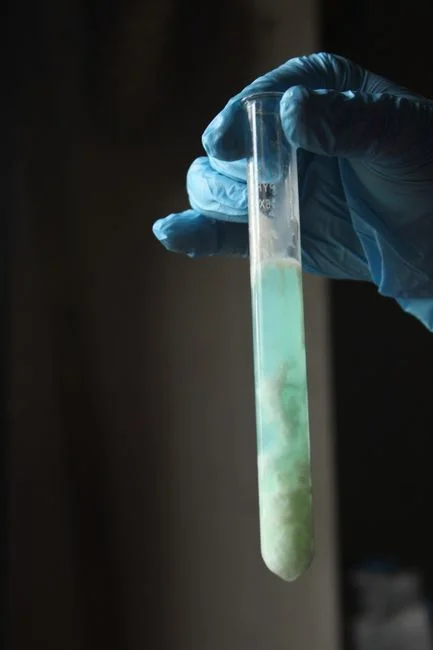
Softening, side-stream RO and high-recovery treatment should be compared against the same measured blowdown load, not selected from recovery percentages alone. The controlling differences are whether each route meets the written WWTP specification, how much cooling makeup it can replace, what residual stream must be managed and whether the campus has the operator capability to maintain the equipment.
For softening, the supplied Hanoi reference describes sodium-cycle softening as a lower-complexity option for increasing CoC from 4 to 6–7 and reducing blowdown from 25% to 13–14% of makeup (HydropureWater, 2026). That is a Hanoi comparison case, not a Qui Nhon outcome. It also illustrates why an evidence-transfer discipline matters: the treatment mechanics can be compared, but the achievable cycles require local makeup chemistry, temperature, chemical programs and cooling operations.
For side-stream RO, the same reference describes pretreatment followed by 75–80% recovery RO, with permeate returned to cooling makeup and concentrate sent to a permitted destination. IDE Tech independently states that conventional brackish-water RO commonly plateaus at 75–80% recovery because scaling becomes unmanageable beyond that point (IDE Tech, 2026). The buyer should require the supplier to define recovery precisely, identify the permeate and concentrate flows, and state the scaling calculation and operating envelope.
High-recovery treatment adds solids and brine management. IDE Tech describes controlled salt precipitation in a fluidized-bed reactor and reports an approximately 95% recovery brine-desalter application that reduced permeate silica to about 1 mg/L (IDE Tech, 2026). That reported application does not prove the same performance for Qui Nhon CTBD. The proposed train must account for precipitate generation, pellet withdrawal, residual brine, crystal or salt disposal, controls, electrical demand and operator intervention.
| Decision factor | Direct WWTP disposal | Softening plus controlled discharge | Side-stream RO reuse | High-recovery treatment |
|---|---|---|---|---|
| Primary purpose | Dispose of CTBD through the accepted sewer route | Raise CoC and reduce the controlled blowdown stream | Recover permeate for cooling makeup and route concentrate | Recover more water while converting selected salts to a managed solid stream |
| Water-recovery reference | No recovery assumed | No membrane recovery; Hanoi reference moves from 4 to 6–7 CoC and from 25% to 13–14% blowdown of makeup | IDE Tech reports conventional BWRO commonly limited to 75–80% recovery | IDE Tech reports approximately 95% recovery for a brine-desalter application |
| Key chemistry risks | TDS, chloride, residual biocide, temperature and pH relative to WWTP limits | Calcium, alkalinity, antiscalant compatibility and achievable CoC | Scaling, membrane fouling and biocide/antiscalant interaction | Precipitation control, solids separation, brine chemistry and crystal handling |
| Residual stream | Entire CTBD flow to the WWTP | Reduced CTBD flow to the WWTP | RO concentrate to a permitted destination | Residual brine plus precipitated solids to authorized routes |
| Critical buyer checks | Written inlet specification, permitted flow and surcharge terms | Local CoC calculation, resin regeneration basis and WWTP acceptance | Water balance, fouling basis, concentrate acceptance and membrane-cleaning plan | Solids route, brine destination, controls narrative, utilities demand and operator capability |
Evaluate the industrial side-stream RO system only after confirming the concentrate route, while considering softening only after demonstrating that its projected blowdown reduction is accepted. Equipment relevance does not establish route approval: a treatment skid cannot create sewer capacity, authorize a discharge or remove the need for local acceptance.
Design pretreatment and discharge controls around the actual contaminants
Pretreatment should be limited to contaminants demonstrated by sampling or required by the selected equipment. The supplied Hanoi reference train starts with a rotary mechanical bar screen and multi-media filtration, targeting below 5 NTU before side-stream RO (HydropureWater, 2026). That train provides a reference arrangement; the need for each step must still be established from the actual CTBD stream and the selected membrane or disposal route.
Use debris removal where the cooling-tower intake or pretreatment equipment requires protection. The rotary mechanical bar screen addresses drift, leaves and basin debris, while the multi-media filtration system can provide solids removal before RO where the selected design requires it. Neither substitute for confirming the cooling-system intake condition and representative TSS.
| Contaminant or condition | Potential control | Design basis to obtain | Procurement requirement |
|---|---|---|---|
| Debris, leaves and basin solids | Mechanical screening | Cooling-tower intake configuration and CTBD TSS observations | Duty flow, screen selection, extracted-solids route and controls |
| Suspended solids and colloids | Multi-media filtration where confirmed | Representative TSS, particle characteristics and selected RO feed requirement | Filtration target, backwash waste route and differential-pressure controls |
| Oil, grease or floating solids | DAF where confirmed | Measured oil and grease, colloid behavior, flow and downstream fouling assessment | Loading calculation, recovered sludge handling and electrical demand |
| Biologically contaminated sanitary wastewater | MBR polishing where required | Stream segregation, sanitary wastewater flow, reuse quality and permit route | Do not omit because CTBD alone may not require MBR |
| Outlet pH and temperature | Monitoring and verified control actions | WWTP specification, applicable permit and mixed-drain temperature | Location of probes, calibration, alarms and pH-control basis |
For biological sanitary wastewater or on-site reuse, the Hanoi reference describes MBR polishing producing TSS below 1 mg/L in that design (HydropureWater, 2026). MBR should not be assumed for CTBD alone. Likewise, QCVN 40:2015/BTNMT values cited by the research—outlet pH 6–9 and temperature no more than 40°C—must be checked for current legal status, applicable category and site permit rather than treated as a complete Qui Nhon compliance basis.
Include online conductivity, pH, temperature and residual chlorine on the discharge line, as identified in the research’s FEED checklist. Define where each stream joins the sewer, how hot CTBD affects the mixed discharge, where pH trim occurs and how the cooling-loop chemistry is protected from over-correction. The receiving WWTP must confirm whether these monitoring points and sampling methods meet its pretreatment acceptance program.
Issue a FEED information request before ordering equipment

A procurement-ready FEED package should assign every unresolved input to a named owner and require signed or traceable acceptance criteria. The purpose is not to collect generic operating data; it is to close the gaps between route comparison, equipment sizing and permit acceptance. The data-center treatment route and sizing method provides a relevant sequencing reference for separating route decisions from skid selection.
- Obtain the site water and wastewater balance, cooling configuration and operating records from the cooling operator.
- Obtain current route, permit and national-category confirmation from the environmental consultant and Binh Dinh authority liaison.
- Obtain the signed receiving-WWTP acceptance specification from the WWTP operator.
- Issue the same FEED data and performance requirements to each treatment supplier so alternatives remain comparable.
| Information or deliverable | Named owner | Required content | Acceptance check |
|---|---|---|---|
| Cooling and operating basis | Cooling operator | IT load, cooling configuration, makeup flow, operating temperature, CoC, chemical programs and representative seasonal CTBD analyses | Dates, units and operating modes are stated; results are traceable to samples or records |
| Legal and permit route | Environmental consultant and local authority liaison | Current discharge route, applicable permit, QCVN category confirmation, monitoring schedule and written WWTP acceptance specification | Authority and WWTP confirmations are current and site-specific |
| WWTP acceptance and capacity | WWTP operator | Inlet limits, permitted flow, chloride and TDS acceptance, residual-biocide limits, sampling method, and rejection or surcharge conditions | Document carries an authorized signature and applies to the proposed discharge point |
| Treatment proposal | Treatment supplier | Water balance, equipment sizing calculation, recovery definition, membrane-fouling basis, chemical-cleaning plan, controls narrative, utilities demand and complete auxiliary-equipment list | Mass balance closes; streams, bypasses, alarms and residuals are identified |
| Residual-management route | Owner, WWTP operator and authority liaison | Sludge, concentrate, precipitate, brine and off-site disposal destinations and acceptance records | Every residual has an authorized destination and responsible owner |
The supplier should also state guarantees that can be tested: inlet and permeate flow, recovery definition, water quality, recovery assumptions, fouling basis, cleaning intervals, controls scope and performance-test protocol. The owner should not permit an equipment guarantee to substitute for permit evidence. If the treatment train relies on reuse water, define how the cooling operator will receive it, blend it, monitor it and respond to an off-spec condition.
Before issuing a purchase request, verify that the selected route and equipment describe the same water balance. Resolve conflicts in flow, CoC, recovery, concentrate flow and WWTP capacity. This check prevents a technically attractive membrane package from being optimized around a discharge route that the receiving plant has not accepted.
Frequently Asked Questions
How should the owner compare the cost of four treatment routes?
Request a total installed and operating cost comparison after the water balance, recovery definition, chemical-cleaning scope, residual-management route and power demand are fixed. Do not accept a price based only on equipment capacity. The supplied research contains no Qui Nhon quotation, tariff or discharge fee, so a defensible budget requires local freshwater and wastewater tariffs, energy costs, chemical consumption, operator labor, maintenance, sludge or brine disposal, and the cost implications of rejection or surcharge conditions.
What equipment capacity should be requested for a Qui Nhon data center?
Base sizing on measured peak blowdown flow and the complete chemistry envelope, not IT megawatts alone. The supplied research does not establish a universal blowdown flow per MW for Qui Nhon, so derive flow from the approved cooling configuration, makeup data and CoC. Require the supplier to state whether capacity means CTBD feed, permeate, concentrate, softening or pretreatment flow, because ordering from the wrong duty definition creates a mismatch.
Which compliance documents must be obtained before treating or reusing CTBD?
Obtain the applicable local permit and the receiving WWTP’s written pretreatment-acceptance specification. QCVN 40:2015/BTNMT provides a national framework, but the research does not confirm its current legal status, applicable category or Qui Nhon implementation. Also confirm the authorized route for concentrate, sludge, precipitate and brine, including sampling, monitoring, rejection and surcharge conditions.
What should be included in a treatment supplier’s technical offer?
Require a guaranteed water balance, defined recovery basis, permeate or reuse-water quality, membrane-fouling basis, chemical-cleaning plan, controls narrative, utilities demand, complete auxiliary-equipment list and performance-test protocol. Require the supplier to identify every residual stream and its authorized destination. This check is more useful than a generic equipment-comparison list because it tests whether the proposed process can operate with the site chemistry and discharge route.