Identify the wastewater streams before selecting equipment
Cooling tower blowdown is not simply concentrated makeup water: evaporation leaves dissolved solids behind, while corrosion inhibitors, antiscalants, biocides, and corrosion-derived metals remain in the purge (HOBI, “Data Centers, Water, and Communities: What’s Real…,” 2025). A Thu GJuc data center should therefore characterize each plant drain separately and base equipment sizing on measured flows and chemistry, not on a generic Vietnam template. The four candidate routes are treat-and-discharge, side-stream reverse osmosis for reuse, softening with higher cycles of concentration, and zero liquid discharge. The supplied Hanoi engineering guide provides a useful preliminary basis, but its water analysis, permit route, and equipment conclusions must be verified for Thu GJuc before selection.
Start with a process diagram that identifies the cooling tower makeup source, cooling-loop operating temperature, chemical dosing points, blowdown withdrawal point, pretreatment drains, humidification and chiller drains, generator testing water, and any closed-loop drainage. Keep glycol-bearing drains outside the routine cooling tower blowdown balance. HOBI reports that glycol systems normally remain sealed, while accidental release can create oxygen-demands and toxicity concerns that require a separate response and disposal plan (HOBI, 2025).
The Hanoi baseline characterizes CTBD as TDS at 2-5 times makeup, silica at 20-80 mg/L, copper and zinc at 0.1-1.0 mg/L, total phosphorus at 2-10 mg/L, residual oxidizing biocide at 0.1-0.5 mg/L, and pH at 8.0-9.0. These are characterization ranges, not Thu GJuc discharge limits (HydropureWater, “Data Center Wastewater & Cooling Blowdown Treatment in Hanoi Vietnam 2026,” 2026).
| FEED input | Why it controls treatment | Required record |
|---|---|---|
| Water flow and cooling configuration | Defines makeup and blowdown generation | Makeup, CTBD, drain flows and operating hours |
| General chemistry | Controls corrosion, scaling and biocide demand | Conductivity/TDS, silica, hardness, alkalinity, pH and temperature |
| Contaminants | Determines pretreatment and discharge controls | Chloride, TSS, oil and grease, copper, zinc and phosphorus |
| Cooling chemicals | Can determine fouling and pretreatment needs | Active antiscalant, biocide and corrosion-inhibitor programs |
| Separate drains | Prevents an unverified load entering the CTBD balance | Glycol, process, humidification, chiller and test-water records |
Calculate Thu GJuc blowdown from the site water balance
Blowdown fraction of makeup is 1/(CoC−1), so a preliminary flow envelope can be developed before detailed cooling calculations are complete. The formula is valid for a conserved circulating-water mass balance; it does not replace measurements of drift, evaporation, chemical addition or other unaccounted flows. The Hanoi guide gives a practical CoC band of 3-5 and notes that seasonal wet-bulb changes affect Langelier and silica scaling indices (HydropureWater Hanoi guide, 2026).
| Assumed CoC | Blowdown as a fraction of makeup | Permissible FEED use |
|---|---|---|
| 3 | 33% | Conservative low-CoC scenario for preliminary flow comparison |
| 4 | 25% | Central preliminary case requiring confirmation |
| 5 | 20% | Upper end of the Hanoi working band; not an automatic Thu GJuc selection |
For scale only, the supplied Hanoi guide describes a 30 MW campus with makeup on the order of 1-2 ML/day and blowdown of 250-500 kL/day at 4 CoC. Those values are not Thu GJuc design quantities and must not be transferred to an RFQ without site data (HydropureWater Hanoi guide, 2026). The same guide gives a Hanoi source-water envelope of TDS typically 100-250 mg/L, silica 5-15 mg/L, and dry-season conductivity 40-60% above the July-September monsoon baseline (HydropureWater Hanoi guide, citing 2024-2025 monitoring). Confirm Thu GJuc’s actual supply rather than assuming Red River water.
- Measure average and peak makeup, CTBD and other plant drains over the intended operating period.
- Obtain the cooling designer’s evaporation, drift, chemical-addition and blowdown-control data.
- Calculate daily and hourly CTBD at candidate CoC values rather than selecting a single preliminary number.
- Adjust the chemistry envelope for seasonal source-water variation and the site design wet-bulb.
- Reserve treatment capacity for the selected operating envelope and agreed redundancy—not for an unsupported peak assumption.
A wastewater mass balance should then show every input and output: makeup, CTBD, reuse permeate, RO concentrate, softened blowdown, discharged liquid, sludge and chemical additions. Without those records, neither treatment flow nor concentrate destination can be sized defensibly.
Choose between discharge, RO reuse, softening, and ZLD

The defensible route depends on the binding sewer specification, reuse value, operator capability and the consequence of rejecting a proposed discharge. Treat-and-discharge is the simplest route, side-stream RO converts part of the blowdown into reusable cooling makeup, softening seeks to reduce purge volume, and ZLD remains an exceptional response to a binding zero-discharge constraint. The Hanoi guide presents Option A as the lowest-capex route, with the highest exposure to tighter sewer acceptance requirements; it identifies Option B as a 75-80% recovery RO route with concentrate management; Option C as a sodium-cycle softening route; and Option D as RO followed by brine desalination and crystallization (HydropureWater Hanoi guide, 2026).
| Decision condition | Treatment route to develop | Evidence required before acceptance |
|---|---|---|
| Written sewer limits accommodate the CTBD after pretreatment, and no reuse target exists | Treat and discharge | Binding inlet specification, flow, pH, temperature, TDS, chlorine and permit route |
| Freshwater displacement is valuable and the WWTP can accept concentrate | Side-stream RO reuse | Feed analysis, scaling study, recovery calculation and concentrate acceptance |
| Lower blowdown and membrane maintenance are priorities | Softening | Makeup hardness, operating CoC, sodium impacts and sewer limits |
| A written permit or land constraint requires liquid-discharge minimization | ZLD | Exact constraint, brine chemistry, land, utilities and operator competence |
For treat-and-discharge, assess pretreatment followed by DAF pretreatment for industrial cooling blowdown or efficient clarification, then sewer discharge. This route does not create reuse water and remains exposed to changes in the receiving WWTP’s acceptance specification (HydropureWater Hanoi guide, 2026).
For side-stream RO reuse, the Hanoi guide specifies 75-80% recovery, permeate returned to cooling makeup, and concentrate sent to brine management (HydropureWater Hanoi guide, 2026). The bidder must still establish membrane protection for silica, calcium carbonate and calcium sulfate, and take responsibility for antiscalant, cleaning and concentrate routing. Open Engineering Inc.’s 2026 life-cycle study found that reuse treatment energy and chemical production must be evaluated alongside blowdown reduction and freshwater displacement; its wastewater scenario had about twice the global-warming potential of the freshwater case, with treatment energy accounting for roughly 80% of that difference (Open Engineering Inc., 2026).
For softening, the Hanoi guide states that sodium-cycle softening can raise CoC from 4 to 6-7 and reduce blowdown from 25% to 13-14% of makeup. It positions an industrial water softener for cooling-loop cycles of concentration as the lower-complexity option for 5-30 MW colocation sites (HydropureWater Hanoi guide, 2026). That site-size rule is a Hanoi comparison, not a Thu GJuc selection threshold.
For ZLD, the Hanoi guide generally finds full ZLD unjustified below 50 MW unless a site-specific discharge constraint changes the decision (HydropureWater Hanoi guide, 2026). Require written evidence of that constraint before allowing desalter and crystallizer scope into the base bid. Related Vietnam data center blowdown treatment comparison and data center blowdown discharge versus reuse decision can support conceptual benchmarking, not Thu GJuc sizing.
Confirm the discharge route and compliance basis
National regulation does not replace the receiving authority’s written acceptance specification. The Hanoi guide identifies QCVN 40:2015/BTNMT as the binding national industrial-wastewater regulation, with Column A for specified domestic-water-source receiving waters and Column B for other receiving waters (HydropureWater Hanoi guide, 2026). The responsible provincial authority and receiving park operator must confirm the applicable route for a Thu GJuc outfall.
The Hanoi baseline cites outlet pH of 6-9, temperature no more than 40°C, oil and grease no more than 10 mg/L, controlled residual chlorine, low-mg/L total nitrogen, and permit-controlled TDS (HydropureWater Hanoi guide, citing QCVN 40:2015/BTNMT regulatory text). These are not substitutes for the Thu GJuc permit or sewer specification. Industrial-park WWTP inlet specifications may be tighter than the national limits, so the written sewer acceptance document should become the binding equipment-sizing basis.
The Hanoi guide also identifies separate DONRE discharge permits for direct drains to the Red River, To Lich basin, or Nhue sub-basin. A Thu GJuc site may have a different basin and authority, so establish whether direct surface-water discharge is even being considered, then obtain the equivalent local approval path in writing (HydropureWater Hanoi guide, 2026).
| Compliance check | Buyer action | Design consequence |
|---|---|---|
| Receiving route | Identify sewer, combined drain or surface-water outfall | Select treatment route and permit owner |
| Regulatory classification | Confirm applicable QCVN column with the authority | Set preliminary compliance targets |
| Sewer acceptance | Obtain the WWTP specification in writing | Make its limits the binding design basis |
| Discharge permit | Confirm permit applicability and required monitoring | Define sampling, reporting and controls |
| Chemical compatibility | Submit antiscalant and biocide chemistry for review | Prevent commissioning conflicts |
Plan online conductivity, pH, temperature, and residual-chlorine monitoring, together with permit-scheduled composite sampling for TDS, TN, TP, and heavy metals (HydropureWater Hanoi guide, 2026). Before ordering, also require written confirmation of sampling frequency, sample location, laboratory method, reporting format and data ownership.
Build the supplier RFQ and commissioning acceptance criteria
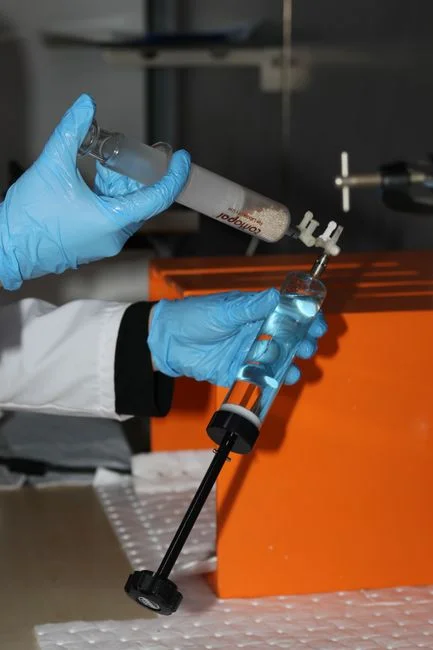
A compliant RFQ should state the design basis and leave no bidder to invent site assumptions. Require each bidder to identify makeup flow, CoC, CTBD flow, operating hours, recovery, concentrate destination, treatment chemistry, redundancy, power demand, cleaning strategy and monitored discharge parameters. Include the relevant Vietnam industrial DAF sizing methodology as a reference for the requested sizing basis, not as site evidence.
| RFQ package | Minimum bidder submission | Acceptance or hold point |
|---|---|---|
| Design basis | Flow diagram, water balance, chemistry envelope and sizing calculations | Buyer checks inputs against FEED data before technical evaluation |
| Treat-and-discharge | Screen/pretreatment, DAF or clarification, pH trim, disinfection where required, and sludge dewatering | Verify the complete discharge mass balance |
| RO reuse | Membrane protection, scaling calculations, antiscalant, pretreatment, CIP chemicals and concentrate route | Hold until source-water analysis and permit route are approved |
| Chemical controls | Active antiscalant and biocide program, compatibility data and dosing logic | Pre-approval with the receiving authority or park operator |
| Commissioning | Flow, conductivity, pH, temperature, residual chlorine, turbidity/TSS where applicable, recovery, concentrate quality, sludge dry solids and control interlocks | Acceptance results reconciled with guarantees and permit conditions |
For treat-and-discharge, request a complete material balance covering screen or pretreatment, DAF or clarification, pH trim, required disinfection and sludge dewatering. The Hanoi guide states that wet sludge is typically 0.3-0.8% of treated flow and recommends a sludge line (HydropureWater Hanoi guide, 2026). For RO reuse, require a scaling basis addressing silica, calcium carbonate, calcium sulfate, antiscalant, pretreatment and cleaning-in-place chemicals. The guide cites a soft 150 mg/L silica ceiling at the RO inlet; that is a design trigger for review, not a Thu GJuc site limit (HydropureWater Hanoi guide, 2026).
Make written acceptance of the sewer specification, permit classification, pretreatment assumptions and chemical programs pre-commissioning hold points. The Hanoi guide specifically recommends pre-approving chemistry with the park operator before commissioning (HydropureWater Hanoi guide, 2026). Contract guarantees should state the governing limit, test method, sampling point, correction mechanism and responsibility for excess chemical or concentrate discharge.
Frequently Asked Questions
How much should a Thu GJuc data center budget for cooling blowdown treatment?
Do not request a price from a generic equipment budget. The Hanoi guide presents capex only as broad market bands, not a quotation, and its economic case depends on freshwater displacement, discharge fees, treatment energy, chemical production and permit risk (HydropureWater Hanoi guide, 2026). Ask bidders for route-specific pricing with the FEED flows, water chemistry, pretreatment scope, sludge handling, concentrate destination, utility consumption, redundancy and commissioning tests stated. Keep one common mass-balance template across bids so the proposals are comparable.
Should the project use side-stream RO or an industrial water softener?
Use RO when freshwater reduction has sufficient value and the concentrate has an approved destination, while accepting membrane-cleaning and antiscalant responsibilities. Use softening when reducing blowdown is the priority and the site can operate a resin system and manage the softened discharge. The Hanoi guide identifies softening as the lower-complexity option for 5-30 MW colocation sites and RO at 75-80% recovery for reuse (HydropureWater Hanoi guide, 2026). Neither conclusion is transferable without Thu GJuc water quality, sewer limits, operator staffing and an economic comparison.
How should a data center treatment supplier size the blowdown system?
Require the supplier to size from measured makeup flow, verified evaporation and drift, selected CoC, operating hours and measured CTBD chemistry. Apply blowdown fraction of makeup equal to 1/(CoC−1), then show the daily and hourly design cases. The bidder must also present measured or explicitly assumed source-water variability, because the Hanoi baseline shows seasonal conductivity change and identifies scaling as a constraint (HydropureWater Hanoi guide, 2026).
What permit and sewer checks must be completed before ordering equipment?
Obtain the written sewer acceptance specification, confirm the responsible authority and applicable regulatory column, establish whether a direct surface-water discharge permit is relevant, and secure pre-approval of antiscalant and biocide chemistry. Then issue the permit-defined monitoring, sampling and reporting requirements into the equipment specification. The Hanoi guide identifies these as FEED-stage actions rather than commissioning issues (HydropureWater Hanoi guide, 2026); no final Thu GJuc compliance claim should be made until the local authority and park operator confirm them.
Related Equipment
- DAF pretreatment for industrial cooling blowdown — specifications, capacity range, and technical data