Decide whether the wastewater is suitable for anaerobic treatment
A UASB reactor for citric acid wastewater is technically feasible, but raw fermenter effluent is unsuitable for a stand-alone reactor because low pH, suspended solids and sulfate can inhibit methanogenesis. HydropureWater field data, 2026, reports COD of 15,000–60,000 mg/L, pH of 3.5–4.8, BOD/COD of 0.55–0.65, sulfate of 1,000–4,000 mg/L when sulfuric acid is dosed, and temperature of 30–55°C. The go/no-go decision should therefore follow three tests: whether pretreatment can produce a stable feed, whether sulfate threatens methane production, and whether the selected reactor can accommodate the hydraulic and organic loading.
Begin with a site-specific characterization rather than applying the general profile directly. Request flow and batch-discharge patterns; total and soluble COD; BOD; pH; sulfate; temperature; TSS; alkalinity; volatile fatty acids; and nutrients. Include oil and grease, mycelia or biomass carryover, and the quantity and chemical form of acid used for fermentation pH control. These results determine the chemical demand, equalization volume, pretreatment load and acceptable organic loading rate.
Sulfate requires explicit screening rather than a note in the operating manual. A full-scale citric acid wastewater study found that hydrogen- and propionate-utilizing sulfate-reducing bacteria outcompeted hydrogenophilic methanogens and propionate syntrophs, although acetoclastic methanogens remained dominant in acetate conversion. In laboratory testing at 55°C, 2 g/L sulfate and a COD:sulfate ratio of 6:1 severely inhibited acetate conversion, leaving effluent acetate as high as 4,000 mg/L. The sulfate-reducing bacteria and methane-producing populations therefore compete for usable substrate. If sulfate remains high relative to COD, proceed to pilot testing or consider a different biological route; do not transfer methane-yield assumptions from a sulfate-free effluent.
Suspended solids are also a screening constraint. Aiyuk et al., 2010, observed particulate accumulation, repeated sludge discharge and performance imbalance when a UASB received untreated high-solids wastewater. That study concerned domestic sewage rather than citric acid factory wastewater, so its numerical results are not a design basis for this application; its operational warning remains relevant to industrial wastewater pretreatment. The preliminary conclusion is conditional go: proceed if equalization, neutralization, solids removal and sulfate control can be demonstrated, and no-go for direct UASB treatment of raw fermenter discharge.
Build the pretreatment and pH-control train
The anaerobic reactor should be purchased only after the pretreatment train has been defined, because the reactor’s operating envelope is created upstream. The minimum sequence is equalization, suspended-solids removal, pH correction, temperature stabilization and controlled feeding to the anaerobic stage.
HydropureWater field data, 2026, identifies pH correction to 6.8–7.2 with NaOH or Ca(OH)₂ as a required duty for citric acid wastewater and gives a stated dosing cost of $0.03–$0.06 per m³ treated. That figure is a 2026 engineering estimate, not a quotation. Final chemical consumption depends on influent acidity, residual citric acid, target alkalinity and the acid source used upstream. Calcium dosing requires particular attention because the source also identifies carbonate-scaling risk.
Equalization must absorb batch fermentation discharge and prevent short-duration COD, pH and temperature shocks from reaching the sludge blanket. Stabilization should be evaluated around 35°C for mesophilic operation; the applicable setpoint remains subject to the site’s retained heat and the selected biological process. Where residual oils, mycelia or biomass carryover are present, DAF pretreatment for citric acid wastewater should be evaluated as a solids-removal step. A automatic pH adjustment system with PLC-controlled dosing is appropriate where the feed chemistry varies enough that manual dosing cannot hold the required operating range.
| Design input | Procurement or verification requirement |
|---|---|
| Flow and discharge pattern | Continuous average flow, batch volume, peak discharge and equalization time |
| pH and alkalinity | Influent range, target reactor range, chemical demand and scaling assessment |
| COD and soluble COD | Total COD for loading; soluble COD for biological availability |
| Sulfate | COD:sulfate ratio, source and consequence for methane production |
| TSS and FOG | Suspended-solids removal duty, mycelia or oil carryover and residual solids criterion |
| Temperature | Seasonal range, available waste heat and heating or cooling duty |
| Controls | PLC dosing, pH and temperature feedback, flow measurement and alarm strategy |
Use the COD:sulfate ratio in pilot verification rather than treating sulfate-reducing organisms as a prediction that can be designed away. The supplier should state the proposed pretreatment performance, expected alkalinity consumption and the operating evidence supporting the selected reactor configuration.
Choose the reactor from hydraulic and biological conditions
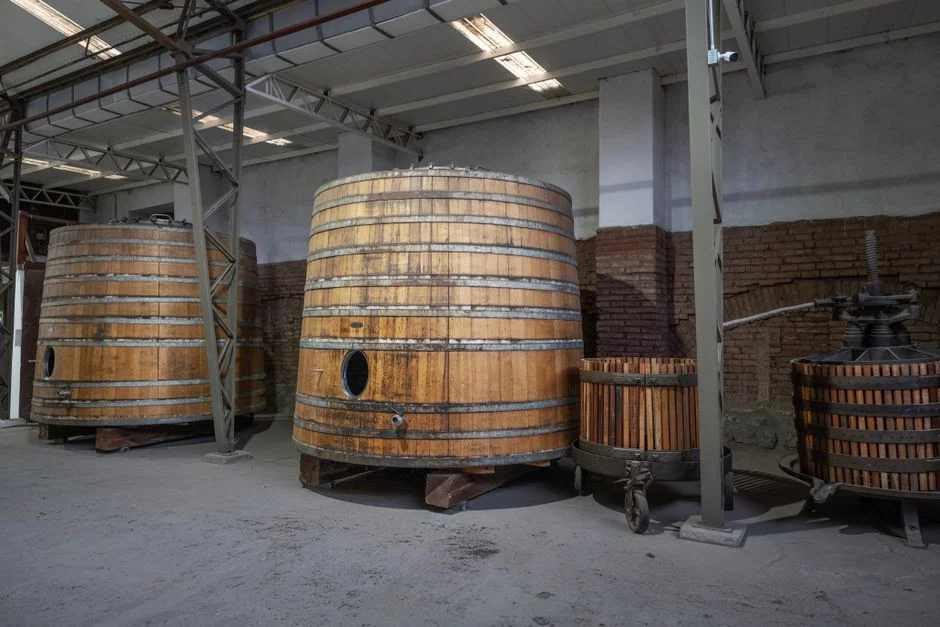
UASB, EGSB and IC should be compared by feed quality, hydraulic tolerance, footprint and operating control—not by a generic performance percentage. Citric acid effluent is soluble and high-strength when adequately pretreated, but batch discharge and sulfate can defeat the hydraulic and biological advantages of a compact high-rate reactor.
HydropureWater’s staged arrangement, 2026, uses a primary UASB at 8–12 hours for roughing acidification and a secondary UASB at 24–36 hours for the more sensitive methanogenic step. Its citric acid design basis uses 30–48 hours total hydraulic retention time and 8–15 kg COD/m³·day as project assumptions. Do not apply a generic 20-hour HRT and 80% BOD-removal benchmark without reviewing the actual feed and staged loading; the source identifies a longer citric acid HRT as necessary to limit washout of slow-growing methanogens.
| Selection criterion | UASB | EGSB | IC |
|---|---|---|---|
| Staged design basis | Primary 8–12 hours for acidification; secondary 24–36 hours for methanogenesis, per HydropureWater, 2026 | Single-stage comparison does not establish suitability; reactor and recycle configuration require project review | Not established for raw batch citric acid effluent without equalization and pretreatment |
| Stated upflow velocity | 0.7–1.0 m/h, HydropureWater, 2026 | 4–8 m/h, HydropureWater, 2026 | Must be established from the selected vendor’s process design |
| OLR cited by source | 8–15 kg COD/m³·day project design band, HydropureWater, 2026 | Must be established from influent COD, hydraulic tolerance and recycle basis | Up to 25–35 kg COD/m³·day for stable feed with strong pretreatment, HydropureWater, 2026 |
| 500 m³/day installed estimate, 2026 | $250,000–$450,000 | $300,000–$500,000 | No supported estimate in the supplied research |
| Main procurement advantage | Potentially lower first cost and simpler training with available footprint | Higher hydraulic tolerance for soluble high-strength wastewater | Potential compact loading after equalization and reliable pretreatment |
| Main risk | Hydraulic or organic shock and sulfate inhibition | Recycle-pump, gas-separator and control complexity | Feed instability and sulfate risk if raw batch effluent is supplied |
The capital comparison is a 2026 engineering estimate from HydropureWater, not a universal quotation: $250,000–$450,000 for UASB, $300,000–$500,000 for EGSB and $350,000–$550,000 for an anaerobic filter at 500 m³/day. Scope must be normalized before comparing bids because vessel material, civil work, gas utilization, instrumentation and commissioning can move the total substantially.
EGSB deserves review when the treated feed is predominantly soluble, COD is high and floor space is constrained. Its higher stated upflow velocity of 4–8 m/h, compared with 0.7–1.0 m/h for UASB, supports greater hydraulic tolerance, but it adds recycle pumping and a gas-solids separator. IC should be reserved for a stable, equalized, low-sulfate feed; HydropureWater, 2026, cites OLR up to 25–35 kg COD/m³·day but notes that raw batch citric acid effluent rarely meets those conditions without equalization.
For broader fermentation-wastewater comparison, review MABR suitability for fermentation wastewater. It is a technical reference point, not evidence that MABR is the selected process here.
Size the reactor and test the operating case
Reactor sizing should begin with a mass balance using measured flow and COD, then apply an agreed HRT and OLR—not a catalog reactor selected from daily flow alone. Request both active volume and the treatment train’s excluded volumes so that settling, gas separation, feed distribution and freeboard are visible in the comparison.
For the supplied 500 m³/day example, HydropureWater field data, 2026, assumes influent COD of 20,000 mg/L and 85% removal. That represents 4,250 kg COD/day removed and calculated methane production of 1,060–1,490 m³/day. The related assumptions are 0.25–0.35 m³ CH₄ per kg COD removed and 70–76% methane content. These are scenario assumptions for the stated case, not guaranteed plant output or a substitute for site testing.
The same source calculates 1,500–2,100 m³ biogas/day, corresponding to 9,000–12,500 kWh thermal/day or 3,000–4,200 kWh electric/day. The buyer should compare those outputs with the selected boiler, CHP route, gas holder and flare or boiler-rider requirements. A reactor proposal that reports only methane volume, without methane fraction, gas pressure, moisture and utilization losses, is incomplete.
- Calculate the daily COD load from measured flow and influent COD.
- Apply a project-specific removal scenario and identify the COD converted to methane rather than to biomass or sulfur compounds.
- Check the resulting hydraulic retention time against the 30–48-hour citric acid design basis in HydropureWater, 2026.
- Check organic loading against the stated 8–15 kg COD/m³·day band before increasing hydraulic throughput.
- Recalculate alkalinity demand, heating duty, sulfate-reduction risk and gas-handling capacity with the selected operating case.
Vendor proposals should state active reactor volume, HRT, OLR, upflow velocity, gas-production assumptions, pH and alkalinity duty, solids inventory, heating demand and startup strategy. For an initial sludge balance, request the expected excess-sludge quantity and moisture target rather than accepting an unspecified “sludge handling” item. A plate and frame filter press is relevant where surplus granular sludge requires downstream dewatering.
Startup is part of the operating case, not an administrative detail. Specify how sludge is developed, how pH is ramped into the reactor operating range, how sulfate effects will be recognized, and what actions are available if acetate accumulates or methane fraction falls. Confirm that the proposed loading schedule can be achieved without treating an optimistic commissioning rate as contractual capacity.
Set the discharge route and procurement acceptance criteria
A defensible bid separates equipment, biological performance, utilities, construction and acceptance into independently priced scope. Reactor vessel and internals; pH and nutrient dosing; heating; gas collection and utilization; instrumentation; controls; electrical work; installation; commissioning; and training should each be visible. A low vessel price can be offset by omitted gas treatment, civil works or controls, so line-item normalization is more useful than comparing headline totals.
HydropureWater engineering estimates, 2026, place a 500 m³/day UASB at $250,000–$450,000. This is a 2026 estimate for a defined project basis, not a turnkey quotation or universal price. Request separate pricing for civil work, freight, crane access, electrical installation, heating, pretreatment, gas utilization, flare provision, commissioning and performance guarantees. The supplied source also gives a 2026 OPEX estimate of $0.18–$0.45 per m³ treated, based on mesophilic operation at 35°C, pH adjustment with NaOH and surplus-sludge dewatering to 22–25% dry solids. Treat that as an estimate until heat integration and sludge-disposal costs are site-priced.
The final discharge route depends on the required effluent quality and applicable permit. HydropureWater, 2026, identifies Fenton oxidation as a common downstream option when polishing UASB or EGSB effluent to COD at or below 500 mg/L. Do not include that train until the permit, receiving-water constraints and residual COD are confirmed.
| Procurement item | Minimum acceptance requirement |
|---|---|
| Process basis | Measured flow, COD, pH, sulfate, TSS, temperature and alkalinity; stated design load and operating envelope |
| Mechanical scope | Vessel material and lining, internals, feed distributor, gas separator, sludge withdrawal, access and lifting provisions |
| Utility and controls scope | Heating, recycling where applicable, pH and nutrient dosing, instrumentation, PLC, alarms, electrical and gas-utilization interfaces |
| Startup | Loading schedule, seeding or sludge-development plan, chemical requirements, training and contingency steps |
| Performance test | Sustained pH control, temperature stability, sulfate response, sludge retention, COD removal, methane fraction and gas handling |
| Commercial exclusions | Civil work, freight, crane, permits, taxes, utility connections and downstream polishing stated separately |
Use the industrial effluent treatment plant selection method to structure the evaluation, and the DAF versus lamella clarifier selection comparison to confirm whether the proposed solids-removal duty matches the wastewater. Neither reference substitutes for site testing.
Frequently Asked Questions
What should a buyer expect to pay for a 500 m³/day turnkey UASB?
HydropureWater’s 2026 engineering estimate is $250,000–$450,000 for the stated 500 m³/day case, but it is not a quotation. Request a bill of quantities that separately identifies pretreatment, reactor and internals, pH and nutrient dosing, heating, gas collection or utilization, controls, civil work, electrical installation, freight, crane, commissioning and excluded downstream treatment. Also request the OPEX basis: the supplied source gives a 2026 estimate of $0.18–$0.45 per m³ treated under its stated mesophilic, NaOH and sludge-dewatering assumptions.
What HRT and OLR should a supplier quote for citric acid wastewater?
Ask the supplier to price and substantiate a project-specific case using HydropureWater’s 2026 citric acid design basis of 30–48 hours total HRT and 8–15 kg COD/m³·day. For the staged arrangement in that source, the primary UASB is 8–12 hours and the secondary UASB is 24–36 hours. Require the proposal to state how measured influent COD, sulfate, batch peaks and startup conditions affect those values; do not accept a generic 20-hour HRT or 80% BOD-removal claim.
Which supplier scope and acceptance tests should be included?
Require a performance-based proposal covering pH control, temperature stability, sulfate effects, sludge retention or granulation, COD removal, methane fraction and sustained gas handling. The supplier must also state active reactor volume, OLR, upflow velocity, alkalinity and heating duty, solids inventory and startup strategy. Scope items omitted from the bid should be identified explicitly so that equipment-only and operating-plant proposals are not compared as equivalent.
How should sulfate and pretreatment uncertainty be managed?
Measure COD:sulfate ratio, pH, alkalinity, TSS and soluble COD across representative production conditions, then verify the biological response before committing to final reactor loading. The Springer study found severe acetate-conversion inhibition at 2 g/L sulfate and a COD:sulfate ratio of 6:1, with effluent acetate reaching 4,000 mg/L. Use that result as a risk indicator, not a universal limit. Equalization, pH correction, solids removal and pilot verification must precede final acceptance.
What treatment is needed after the UASB?
Determine polishing from the permitted discharge standard and the treated effluent’s residual COD, TSS, nutrients and other regulated constituents. HydropureWater, 2026, identifies Fenton oxidation as a common option when UASB or EGSB effluent must be polished to COD at or below 500 mg/L. That option should remain a separate, priced scope until the permit and site data confirm that it is required; the anaerobic reactor alone should not be represented as meeting an unverified effluent specification.