Screen the Influent Before Choosing MABR
MABR can be considered for amino acid fermentation wastewater only after screening, equalization, cooling, pH correction and biological pretreatment. The main reasons are MABR’s passive oxygen delivery, retained nitrifying biofilm and separation of aerobic membrane zones from anoxic bulk liquid. Fluence reports aeration-energy savings of up to 90% and overall energy savings of as much as 50%, but those figures come from commercial MABR applications and are not guarantees for fermentation broth. Feed characterization, alkalinity, soluble COD, temperature, sulfate, biofilm control and downstream solids separation must be established before selecting MABR equipment.
The feed screen should separate chemistry that can be managed from constraints that can invalidate the biological concept. MABR retains nitrifiers on an oxygenated membrane and leaves the surrounding bulk liquid anoxic for denitrification, but that arrangement still requires biodegradable carbon, sufficient alkalinity and controlled solids entering the reactor. Acidic broth can be neutralized; particulate fouling and an incorrect carbon balance require changes to the process train.
HydropureWater’s 2026 field-data ranges for amino acid fermentation effluent include COD of 8,000–25,000 mg/L, NH₃-N of 800–3,500 mg/L and sulfate of 2,000–6,000 mg/L. These values are feed-characterization inputs, not MABR design guarantees. The same source reports COD swings of 3–5× between fermenter discharge cycles and recommends 12–24 hours of equalization.
Residual sugars, amino acids, fermentation by-products and mycelium contribute differently to soluble and particulate COD. Measure them separately because a bulk COD test does not establish how much carbon remains available to denitrifiers after the particulate fraction is removed. A rotary mechanical bar screen for fermentation wastewater can remove mycelial mats and grain residues before they become deposits on carriers or membranes.
| Screen item | Evidence or required input | Procurement consequence |
|---|---|---|
| COD and BOD/COD | HydropureWater 2026 field data: COD 8,000–25,000 mg/L; BOD/COD 0.45–0.6 | Measure soluble and particulate fractions; identify carbon usable for denitrification |
| Total nitrogen | HydropureWater 2026 field data: NH₃-N 800–3,500 mg/L; TN 1,200–4,000 mg/L | Check ammonia loading, nitrate production and external-carbon demand |
| Sulfate | HydropureWater 2026 field data: 2,000–6,000 mg/L | Evaluate sulfide risk in anoxic and dead zones; obtain pilot evidence |
| pH and alkalinity | HydropureWater 2026 field data: pH 1–3; preliminary feed target 6.5–7.5 and residual alkalinity above 100 mg/L as CaCO₃ | Include pH correction and an alkalinity balance in the quotation |
| Batch variation | HydropureWater 2026 field data: COD swings of 3–5×; recommended equalization 12–24 h | Size equalization from discharge logs and composite sampling |
| Solids and fouling risk | HydropureWater 2026 field data: suspended solids 1,500–5,000 mg/L from residual mycelium and unconverted sugars | Require screening and a solids-retention strategy before the reactor |
Reject a fixed MABR selection when the waste lacks sufficient biodegradable carbon for denitrification, untreated particulate material creates a fouling risk, or the required temperature correction has not been tested. Do not infer MABR applicability from COD and ammonia ranges alone.
Prepare a Biological Feed the MABR Can Accept
Protection of the membrane and biofilm comes before reactor selection. The preliminary fermentation wastewater train should remove coarse solids, damp batch discharges, cool the feed, correct acidity and establish the nutrients required for biological treatment.
- Install a rotary mechanical bar screen for fermentation wastewater. HydropureWater recommends a 5–10 mm aperture to remove mycelial mats and grain residues before they reach the biological stage.
- Provide equalization sized at 12–24 hours HRT. HydropureWater’s preliminary train uses that hold-up to reduce the reported 3–5× COD swings between fermenter discharges.
- Control temperature. HydropureWater’s preliminary train cools fermentation wastewater from 45°C to 30–35°C. This is a preliminary MBBR-oriented value, not a validated MABR design condition.
- Correct pH from the reported 1–3 range to 6.5–7.5 and retain residual alkalinity above 100 mg/L as CaCO₃. HydropureWater states that nitrification consumes about 7.1 mg CaCO₃ per mg NH₃-N oxidized.
- Verify phosphorus demand against measured soluble BOD and BOD:P ratio before setting a phosphate dose.
Use an automatic chemical dosing system for pH correction to meter base and phosphorus additions. The preliminary feed target should not become a purchasing assumption: residual phosphate and biomass demand must be verified using site data and the supplier’s nutrient balance.
Equalization also protects the biological process from short-duration ammonia and COD peaks. However, it does not remove recalcitrant color compounds, reduce sulfate or convert particulate COD into soluble carbon. Those mechanisms must be assigned to separate treatment steps. A screen package should also address the disposal of removed mycelium and grain residues rather than transferring that burden to the downstream sludge system.
Choose MABR or MBBR for the Biological Stage
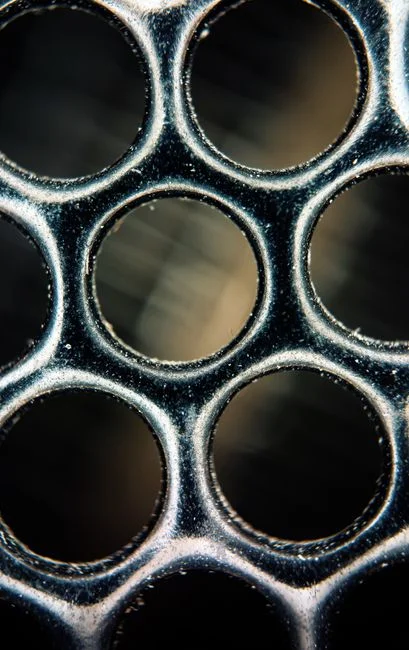
MABR is the stronger candidate when passive aeration, a compact aerobic zone or retrofit of an anoxic basin is central to the project. MBBR is the stronger candidate when carrier-based biomass retention and a more conventional solids-separation interface outweigh those MABR advantages.
Fluence describes MABR oxygen transfer through membranes, development of an aerobic nitrifying biofilm and simultaneous nitrification-denitrification in one tank. Its published claims of up to 90% lower aeration energy and up to 50% lower overall energy use are commercial MABR figures. They do not establish savings for acidic, sulfate-bearing amino acid fermentation effluent and should not be used as project guarantees.
MBBR keeps slow-growing biomass on carriers and avoids sludge recirculation. HydropureWater gives preliminary HRTs of 6–10 hours for an anoxic zone and 18–36 hours for the aerobic MBBR, with dissolved oxygen at 2–4 mg/L. These values were developed for an MBBR-oriented fermentation wastewater guide; they require confirmation in an MABR pilot or the supplier’s project-specific design.
| Decision factor | MABR | MBBR | Project decision |
|---|---|---|---|
| Oxygen transfer | Passive membrane aeration supports an attached aerobic biofilm | Conventional aeration fluidizes carriers | Request measured oxygen-transfer and ammonia-removal data for the actual feed |
| Nitrification-denitrification | Potential for simultaneous nitrification on membranes and denitrification in bulk liquid | Anoxic and aerobic zones are normally arranged as separate carrier stages | Check carbon availability, nitrate recycle and sulfate-induced sulfide risk |
| Retrofit and footprint | Compact modules can fit an existing basin arrangement | Requires carrier fill and adequate tank volume | Compare site geometry and civil work, not reactor capacity alone |
| Solids handling | Detached biofilm and any solids carryover still require separation | Sloughed carrier biofilm also requires separation | Include solids capture in both quotations |
| Energy claim | Fluence reports up to 90% aeration-energy and 50% overall-energy reductions for commercial applications | No MABR energy claim can be transferred to an MBBR | Require a duty-specific energy guarantee and basis |
| Evidence status | Commercial evidence is primarily municipal; fermentation application remains to be demonstrated | HydropureWater provides preliminary fermentation values, not MABR-specific values | Pilot-test the selected architecture or obtain tested project references |
Do not accept either reactor on generic biological-loading claims. Require a supplier guarantee covering the actual COD mix, ammonia loading, temperature, alkalinity and sulfate condition. If the project cannot be represented by the supplier’s tested applications, use a pilot with the specified feed rather than extrapolating commercial MABR performance directly.
Build a Preliminary MABR Design Basis
A comparable quotation requires one filled-in design basis, explicit loading calculations and a documented aeration and solids-retention arrangement. Until the blank fields are completed and verified, the reactor dimensions are commercial assumptions rather than an engineering design.
- Document design flow, including the peak batch discharge and operating strategy.
- Document equalization volume, pretreatment residence time and hydraulic retention.
- Calculate organic loading, ammonia loading, oxygen demand and the required temperature correction from measured feed data.
- Require the supplier to state membrane area, module geometry, airflow, membrane pressure, biofilm-control method, solids-retention arrangement, turndown, cleaning access and response to ammonia breakthrough.
- Define dissolved-oxygen, alkalinity and soluble-COD monitoring, plus an online ammonia analyzer at the aerobic outlet as proposed by HydropureWater.
- Attach the analytical dataset: 24-hour composite samples, grab samples, batch-discharge logs, soluble BOD, sulfate, biomass tests, pH and alkalinity, together with discharge or reuse limits.
HydropureWater’s conservative MBBR surface organic-loading figure of 8–15 g COD/m²·d may be used only as a preliminary biological screen. It is not an MABR loading limit, a warranty or a direct basis for membrane area. The membrane supplier must convert the verified organic, ammonia and oxygen loads into its own module configuration.
| Fillable design-basis field | Value or source required | Verification status |
|---|---|---|
| Design flow and batch peaks | Discharge logs, production schedule and equalization calculation | Supplier to verify |
| Equalization | 12–24 h preliminary HRT from HydropureWater 2026 | Confirm from batch data |
| Feed COD | Measured total and soluble COD; HydropureWater 2026 range: 8,000–25,000 mg/L | Replace with site data |
| Feed nitrogen | NH₃-N, nitrate, nitrite and TN; HydropureWater 2026 NH₃-N range: 800–3,500 mg/L | Replace with site data |
| pH and alkalinity | Residual alkalinity above 100 mg/L as CaCO₃ preliminary target; nitrification demand about 7.1 mg CaCO₃ per mg NH₃-N | Complete mass balance |
| Temperature | 30–35°C preliminary cooling target | Validate for selected MABR |
| Surface organic loading | 8–15 g COD/m²·d, preliminary MBBR screen only | Not a MABR warranty |
| Dissolved oxygen | Set by supplier for the verified feed and temperature | Include operating control |
| Membrane and airflow | Area, geometry, airflow, pressure and turndown | Supplier to state |
| Solids separation | Detached biomass, solids inventory and disposal route | Include plant mass balance |
| Acceptance criteria | Permit or reuse limits, test protocol and correction period | Buyer to define |
Where the required feed data or performance guarantee is absent, mark the item “open” rather than inserting an assumed value. A supplier’s obligation should state the analytical method, sampling period, operating condition and remedy for noncompliance.
Integrate Solids Separation, Polishing and Sludge Handling

The MABR is a biological process, not a complete treatment plant. Specify how detached biomass, entrained solids and any carrier debris leave the reactor and where they go before calculating sludge volume or dewatering cost.
A lamella clarifier or another downstream solids-handling unit should appear in the overall mass balance. Evaluate a membrane polishing stage when the reuse target cannot be met by the biological reactor and its solids separator alone; do not assume that MABR alone will produce reuse-grade water. For broader equipment selection, see the comparison of MBR versus activated sludge for food plant wastewater.
HydropureWater reports an MBR polishing example using a 0.1–0.4 μm nominal-pore membrane, with effluent COD below 50 mg/L, NH₃-N below 5 mg/L, TN below 15 mg/L and SS below 1 mg/L. These are combined MBBR-plus-MBR results, not MABR-only performance, so they cannot be offered as an MABR guarantee. The integrated MBR wastewater-treatment equipment remains a possible polishing option, subject to the verified reuse specification and membrane-fouling assessment.
Select sludge dewatering only after measuring sludge production, solids content, settleability and disposal route. If the selected route requires a robust industrial separation method, evaluate a plate-and-frame filter press for sludge dewatering. The sedimentation tank for downstream solids capture should be assessed as part of the reactor-to-sludge mass balance, not purchased as an isolated item.
Frequently Asked Questions
What evidence is needed before selecting MABR over MBBR for amino acid fermentation wastewater?
Require a feed-specific demonstration covering acidic pH correction, soluble COD, ammonia loading, temperature, sulfate, denitrification performance and solids fouling. If the supplier has no comparable fermentation application, run a pilot using the screened and neutralized feed before fixing the reactor type.
Which pretreatment and biological loading inputs should a supplier demonstrate?
Provide total and soluble COD, soluble BOD, NH₃-N, total nitrogen, sulfate, pH, alkalinity, suspended solids, temperature and batch-discharge records. Ask the supplier to state membrane area, airflow, pressure, biofilm control and solids retention at the guaranteed loading condition.
How much will an MABR system cost for this application?
Request an itemized quotation after the design basis is completed. No defensible project price can be calculated from the supplied research because it provides no MABR quotation for amino acid fermentation wastewater. Require separate pricing for pretreatment, equalization, reactor modules, blower equipment, chemical dosing, solids separation, polishing, controls, installation and sludge handling.
How should compliance and reuse targets affect supplier selection?
Write the applicable discharge or reuse limits, analytical methods, test duration and operating conditions into the guarantee. Select a supplier that can demonstrate performance with the actual feed and provide downstream solids, polishing and sludge solutions; otherwise, treat the biological claim as provisional until pilot results and site testing support it.