What Pharmaceutical pH Adjustment Must Accomplish
A pH adjustment system for pharmaceutical wastewater combines equalization and characterization, calibrated acid and alkali dosing, inline pH measurement, closed-loop control, mixing, and a downstream treatment or discharge step. The correct design depends on incoming pH variability, flow and load, chemical inventory, downstream process requirements, and permit conditions. In the United States, pharmaceutical manufacturing effluent is governed through 40 CFR Part 439, with Effluent Guidelines incorporated into NPDES permits for direct dischargers and applicable control mechanisms for indirect dischargers. Because the supplied research does not establish a universal pH limit, equipment selection should begin with site-specific wastewater characterization and permit review rather than an assumed target.
pH adjustment is the controlled addition of acid or alkali to bring wastewater within the operating condition required by the next process step or applicable discharge authorization. It prepares influent for downstream biological, chemical, membrane, or reuse processes; it does not, by itself, remove active pharmaceutical compounds, suspended solids, residual contaminants, or microorganisms.
API production, formulation, and cleaning operations can generate wastewater with different pH and chemistry within the same facility. High-purity water-system discharges, production batches, and cleaning residues therefore require characterization across the operating cycle. A single grab sample does not represent batch dumps, dilution changes, or chemical-demand variation.
The US EPA promulgated the Pharmaceutical Manufacturing Effluent Guidelines and Standards in 1976 and amended it in 1983, 1998, and 2003; the applicable rule is 40 CFR Part 439. According to the US EPA’s Pharmaceutical Manufacturing Effluent Guidelines page, these Effluent Guidelines are incorporated into NPDES permits for direct dischargers and into permits or other control mechanisms for indirect dischargers. A discharge authorization or downstream specification must therefore be reviewed before defining the operating target.
The treatment train should keep three functions distinct: chemical delivery, active pH control, and downstream polishing. A DAF pretreatment system may provide solids or oil removal, while an integrated MBR wastewater treatment system may address biological treatment and solids separation. Neither substitutes for establishing the pH condition required by the downstream process.
Build the Process from Wastewater Characterization
Accurate characterization determines the chemical demand, required control response, and operating envelope of the pH adjustment system. Before sizing, request flow-duration data, production and cleaning schedules, and representative pH measurements from normal production, batch wash-down, and upset conditions.
pH alone does not describe the dose needed to reach the target condition. Acidity or alkalinity, buffering capacity, and the chemical demand associated with each wastewater stream must be measured. The mass and water balance around each batch should identify the source and concentration of the chemicals that neutralize the selected acid or alkali.
Also record temperature, conductivity, suspended solids, turbidity, and relevant process residues. These variables affect probe behavior, mixing requirements, chemical consumption, and downstream compatibility. The receiving process also matters: a biological stage, chemical precipitation unit, membrane system, reuse application, or permitted discharge can impose a different operating objective.
Laboratory and field measurements should be used consistently. The 2026 ACS Omega review, Beyond Analyte Recovery, reports conventional liquid-liquid and solid-phase extraction recoveries of 9 to 120%. It warns that results outside the accepted range can reflect matrix effects or analytical bias, which is relevant when pharmaceutical wastewater data are used for design or compliance decisions.
| Design input | Information to obtain | Why it affects the design |
|---|---|---|
| Flow and production pattern | Flow-duration records, batch schedules, wash-down events, and dump conditions | Defines variable-load conditions, equalization needs, and chemical-metering duty |
| pH and chemical demand | Representative pH, acidity or alkalinity, buffering behavior, and batch mass balances | Determines whether pH alone is adequate for sizing the acid and alkali demand |
| Water quality | Temperature, conductivity, suspended solids, turbidity, and process residues | Informs probe selection, mixing, fouling controls, and downstream compatibility |
| Receiving condition | Permit requirement, downstream process criterion, or reuse specification | Provides the controlling pH objective without inventing a universal target |
| Chemical context | Available chemicals, storage location, inventory, containment requirements, and delivery constraints | Sets the chemical-delivery architecture, materials, and operating interface |
No dosing rate, tank size, mixer arrangement, or target pH should be finalized without these inputs. The PLC-controlled automatic chemical dosing system can provide the active delivery platform, but it still requires a project-specific chemical and flow basis. Review metering and isolation components in the water-treatment valves and dosing-parts package for compatibility with the selected chemicals and installation conditions.
Select the Chemical and Dosing Architecture
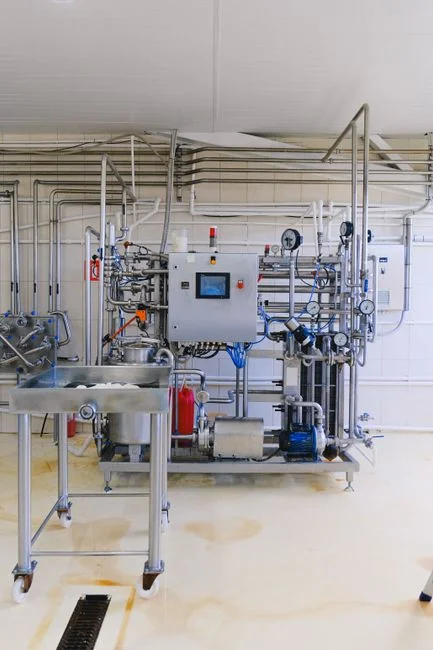
Chemical selection must consider operator safety, corrosion compatibility, chemical availability, storage requirements, metering performance, and the consequences of over-dosing. A dose that corrects pH may also alter downstream biological, precipitation, membrane, or reuse conditions.
A single adjustable chemical skid is credible only when the wastewater direction and permitted operating range make one-sided correction technically defensible. If wastewater may move from acidic to alkaline conditions, specify controlled bidirectional adjustment with separate acid and alkali metering, independent controls, and appropriate isolation.
| Selection issue | One-sided adjustment | Bidirectional adjustment |
|---|---|---|
| Applicable wastewater behavior | Wastewater consistently requires the same chemical direction | Wastewater can cross the operating objective and requires either acid or alkali |
| Equipment architecture | One metering train with a compatible chemical | Separate acid and alkali trains with coordinated control |
| Control strategy | One-way correction against a defined departure from target | High-pH and low-pH correction with switching logic |
| Key verification | Confirm that one-sided operation cannot create an unacceptable downstream condition | Verify valve sequencing, isolation, over-dose protection, and signal-failure response |
For closed-loop pH control, the functional chain is a suitable measurement, calibrated inline pH probe, signal conditioning, control output, metering device, and an adequately mixed reaction volume. Pump selection and control logic must respond to variable batch flows and chemical demand, not merely the average incoming pH.
The stated automatic chemical dosing system is described as PLC-controlled, skid-mounted, pre-wired, and factory-tested for rapid installation. It can meter coagulants, flocculants, pH adjusters, and specialty chemicals. Those attributes do not remove the need to verify chemical compatibility, control logic, mixing, containment, and downstream performance.
Keep chemical delivery, active pH control, and downstream polishing distinguishable in the process and control drawings even when they share a skid. This separation clarifies which equipment delivers chemical, which elements measure and control pH, and which downstream units treat contaminants. Compatible metering and isolation hardware should be identified within the valves and dosing-parts package.
Integrate Control, Mixing and Downstream Treatment
A stable pH result requires the wastewater to pass through characterization, equalization, chemical injection, rapid mixing, reaction or contact time, pH verification, and downstream treatment or authorized discharge. Removing any step from that sequence can turn a controlled correction into an uncontrolled chemical addition.
The inline pH probe should observe a representative mixed stream, not an unmixed concentration front. Probe location, mixing effectiveness, and the distance between dosing and measurement therefore need to be considered together. Poor placement can produce oscillation, delayed response, or readings that do not represent the bulk stream.
Control requirements include high- and low-pH correction, signal-loss handling, over-range alarms, fail-safe behavior, and operator visibility. The control narrative should define what happens when the probe fails, the chemical inventory is depleted, a valve fails, or a batch dump changes the wastewater condition faster than the nominal operating case.
Downstream compatibility is part of the pH design. Industrial reverse osmosis can support pharmaceutical water applications, but the feed chemistry and operating conditions must be checked against the membrane system. The referenced industrial RO equipment is described as operating with recovery rates up to 95%; that figure describes the RO product, not a universal pH target or pharmaceutical discharge requirement. EDI equipment can polish RO permeate without acid or caustic regeneration, but its role remains downstream water treatment rather than pH correction.
Solid removal may require a separate pretreatment step. For API mother liquor applications, the DAF configuration for API mother liquor provides the relevant framework for evaluating reuse and discharge objectives. A DAF pretreatment system may therefore follow pH conditioning, but its process role must be defined independently.
The final design must return to the actual discharge route. The US EPA Pharmaceutical Manufacturing Effluent Guidelines page states that 40 CFR Part 439 applies through NPDES permits for direct dischargers and through permits or other control mechanisms for indirect dischargers. pH correction alone should never be presented as removal of pharmaceutical contaminants or as proof of effluent compliance.
Plan Commissioning and Performance Verification
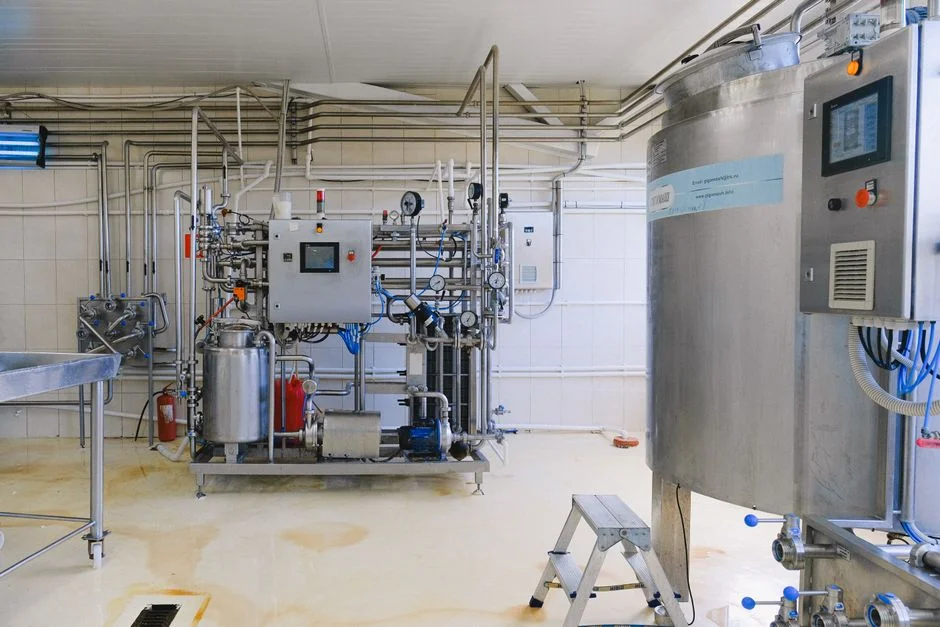
Commissioning should verify the installed system under representative conditions before it is accepted as the operating reference. The first checks cover chemical lines, containment, backflow protection, pump direction, probe calibration, PLC logic, alarms, mixer operation, and the approved operating range.
- Inspect the installation against the approved process and control drawings.
- Calibrate the pH measurement system and verify signal transmission to the PLC.
- Confirm pump direction, valve sequencing, containment, and backflow protection.
- Test alarms, signal-loss behavior, over-range responses, and operator indications.
- Run controlled water or representative wastewater tests across expected flow and chemical-demand conditions.
- Record influent pH, chemical consumption, mixed pH, response time, and alarm events.
- Compare results with the facility permit, downstream process criterion, or reuse specification.
| Commissioning check | Record or verify | Acceptance basis |
|---|---|---|
| pH measurement | Calibration response, mixed-stream reading, over-range indication | Approved procedure and site-specific operating criterion |
| Chemical delivery | Acid and alkali consumption, pump output, valve sequence, backflow protection | Approved process basis and equipment documentation |
| Control response | Response time, stability, high- and low-pH correction, alarm events | Expected batch flow and chemical-demand conditions |
| Mixing | Mixer operation and probe location relative to the mixed stream | Representative sampling at the design measurement point |
| Maintenance readiness | Calibration access, probe-fouling checks, chemical-depletion response, spare-parts plan | Approved operating and maintenance procedures |
Do not substitute an unsupported generic pH target for a permit condition, downstream process criterion, or reuse specification. Compare the recorded results against that approved requirement.
Operating checks should address probe fouling, calibration drift, chemical depletion, mixer performance, and control response during batch dumps. The automatic dosing pump maintenance guide is useful for building the preventive-maintenance program. The 2026 ACS Omega review also provides a sound selection principle: treatment and analytical choices should balance performance with operational practicality, environmental sustainability, and cost.
Choose a Supplier Using an Engineering Checklist
A supplier should be able to explain the treatment objective, flow basis, chemical selection, mixing method, control logic, utilities, containment, and downstream interface before presenting a price. A drawing package is more useful than an equipment list because it shows how the pH adjustment system performs as part of the treatment train.
| Bid review area | Information to request | Decision relevance |
|---|---|---|
| Process basis | Flow-duration data, batch conditions, acidity or alkalinity, chemical inventory, and receiving criterion | Shows whether the proposed capacity and chemical demand are supported |
| Package scope | Tanks, pumps, instrumentation, probes, mixing, controls, electrical supply, installation, and exclusions | Prevents an incomplete skid from being compared with a complete system |
| Materials and duty | Chemical-contact materials, expected operating envelope, storage assumptions, containment, and utilities | Supports lifecycle-cost and compatibility review |
| Controls and safety | Calibration method, PLC logic, alarms, signal-loss behavior, fail-safe state, and operator displays | Defines how abnormal conditions are detected and controlled |
| Handover and service | Commissioning procedure, training, control documentation, maintenance plan, and spare-parts availability | Determines whether the system can be operated and maintained reliably |
Evaluate chemical consumption, maintenance burden, reliability, and environmental sustainability alongside capital cost. The quoted package should identify whether it includes containment, installation, controls documentation, and commissioning rather than leaving those obligations ambiguous.
A factory-tested, pre-wired, PLC-controlled skid can reduce installation coordination, as described for the automatic chemical dosing system. That is a procurement advantage only after the supplier has documented the design basis and the buyer has verified project-specific fit and performance. Obtain a written process proposal and functional scope for each bid rather than comparing skid names or purchase prices alone.
Frequently Asked Questions
What determines the cost of a pharmaceutical wastewater pH adjustment system?
The price depends on the wastewater flow pattern, acid and alkali demand, required storage and containment, metering architecture, probe and control scope, mixing equipment, utilities, installation requirements, and downstream interface. Request a cost breakdown based on those project inputs; the supplied research provides no valid quotation or generic price range.
Should the project use one dosing skid or separate acid and alkali systems?
Use one direction only if the wastewater consistently requires it and the permitted operating range supports that decision. Specify separate or coordinated acid and alkali trains when wastewater can move in either direction. Confirm the arrangement against batch data, chemical demand, downstream limits, and fail-safe requirements.
How much wastewater data should a supplier receive before sizing equipment?
Provide flow-duration records, production and cleaning schedules, representative pH data, acidity or alkalinity information, temperature, conductivity, suspended solids, turbidity, batch mass and water balances, chemical inventory, and the receiving condition. If these data are incomplete, ask the supplier to identify the missing measurements and make clear which equipment capacities remain provisional.
Does pH adjustment alone make pharmaceutical wastewater compliant?
No. pH control prepares the wastewater for the next process step, but it does not demonstrate removal of active pharmaceutical compounds or establish full permit compliance. Review 40 CFR Part 439 through the applicable direct- or indirect-discharger authorization and verify that the complete treatment train meets its required limits.
How should commissioning demonstrate stable pH control?
Test with controlled water or representative wastewater across expected flow and chemical-demand conditions. Record influent pH, chemical use, mixed pH, response time, mixer performance, calibration behavior, and alarms, then compare the results with the permit, downstream criterion, or reuse specification rather than a generic pH target.
Related Equipment
- DAF pretreatment system — specifications, capacity range, and technical data