Choose the discharge or reuse route before selecting equipment
For an Italian hotel or resort, do not select a treatment system by hotel category alone. First define whether the objective is sewer discharge, non-potable reuse or irrigation reuse, then obtain measured daily and peak flows, a representative wastewater analysis and written confirmation of the local permit route. A buried WSZ A/O package is a strong screening option where space is limited and conventional biological treatment, sedimentation and disinfection are adequate. An MBR becomes more relevant when footprint, solids separation or a defined reuse route justifies membrane operation and maintenance. For hotels, 250 L/bed is only a screening reference; final sizing must reflect occupancy, seasonal peaks, kitchens, laundry, pools, spas and future growth.
Keep three decisions separate. The treatment objective defines the required effluent quality and evidence; the hydraulic profile establishes the flow and equalization basis; the regulatory route determines whether the proposal is a sewer connection, an approved discharge, a non-potable service or an irrigation scheme. A sewer permit does not establish approval for reuse.
Italy’s D.Lgs. 152/06, EU Urban Wastewater Directive 91/271/EEC and ISPRA guidance should be treated as due-diligence references, alongside applicable Rome or ARPA requirements. HydropureWater’s Italy guidance also cites COD ≤125 mg/L and BOD ≤25 mg/L for industrial wastewater under Directive 91/271/EEC, but those values must not be transferred automatically to a hotel. The wastewater classification, receiving destination and site-specific permit conditions must first be confirmed in writing. The Rome hotel wastewater system guide sets out the same approval questions to resolve before equipment selection.
| Decision | Sewer discharge | Non-potable reuse | Irrigation reuse |
|---|---|---|---|
| Primary outcome | Discharge to the authorised receiving sewer | Supply a defined non-potable service | Supply water for a defined irrigation application |
| Regulatory question | Which discharge classification, limits, sampling and pretreatment conditions apply? | Which quality, storage, distribution and monitoring rules apply? | Which irrigation-quality, environmental and site conditions apply? |
| Design basis | Measured flow, wastewater analysis, receiving-sewer obligations and equalization | Reuse demand and flow, treatment train, storage and exposure protection | Application method, receiving environment, irrigation demand and required treatment |
| Equipment implication | Conventional biological treatment may be sufficient | Polishing and disinfection may be required beyond the main treatment train | Treatment and solids control must be matched to the application |
| Evidence to obtain | Written confirmation from the sewer operator and competent authority | Written confirmation covering the proposed reuse route | Written confirmation covering the proposed irrigation route |
Build the hotel wastewater design basis
Measured site data, not catalogue capacity, should determine the size of an Italian hotel wastewater plant. HydropureWater’s 2026 Rome hotel buyer guide uses 250 L/bed as an initial screening reference, but it must be checked against measured daily flow, occupancy distribution, seasonal peaks and future growth before it becomes a design value.
Map each source separately: guest rooms, restaurants and banqueting, kitchens, laundry, pools, spas, irrigation and staff facilities. Their hydraulic and organic loads can differ, so a general hotel average can conceal the demand that controls equalization or biological loading. Record total daily flow, peak periods, seasonal occupancy and planned expansion. Identify where kitchen or laundry flows can be isolated, and whether their character warrants separate pretreatment.
Request a representative composite-sample analysis covering COD, BOD, suspended solids, fats, oils and grease, pH and relevant cleaning chemicals. The analysis should be linked to the operating period and source streams being represented. This is the evidence needed to determine biological loading, screening requirements, equalization, chemical compatibility and potential grease or solids pretreatment.
The hotel wastewater comparison framework also highlights site constraints that equipment selection must address: available footprint, soil conditions, power reliability, odour control and maintenance access. Equalization is not an automatic accessory. The design must show how peak flow, variable occupancy and future growth are covered.
Use the following responsibility split in the design brief:
- Hotel owner: provide metering access, operating records, occupancy forecasts, source-stream information and site surveys.
- Environmental consultant: establish the applicable classification and permit route, coordinate the wastewater analysis and review acceptance criteria.
- Equipment supplier: convert the approved design basis into a process calculation, equipment selection and performance guarantee.
- Contractor or installer: verify civil, electrical, installation and commissioning interfaces.
- Authority or sewer operator: confirm the destination, pretreatment obligations and site-specific approval requirements in writing.
Compare WSZ A/O and MBR for site conditions
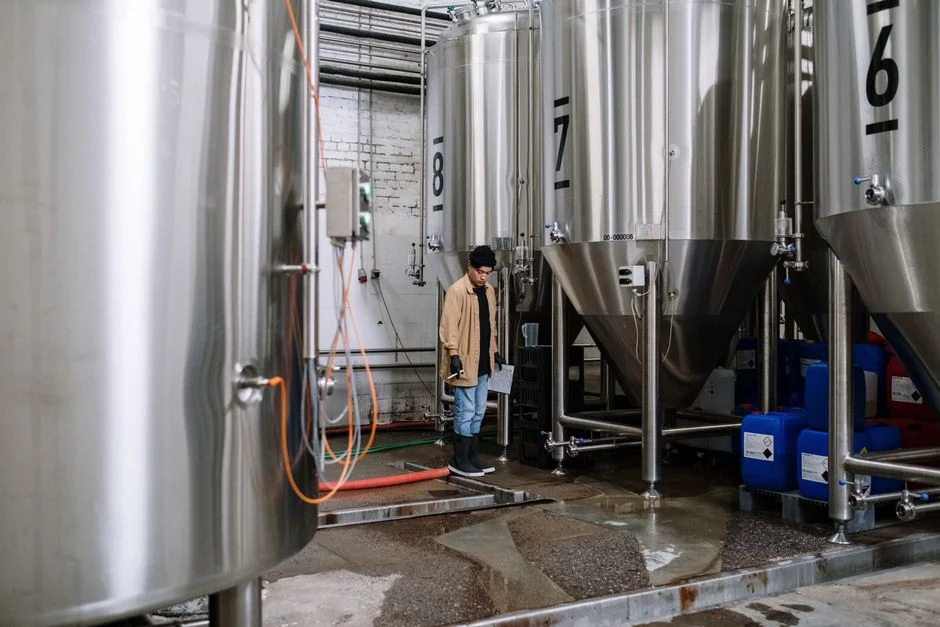
The WSZ A/O package and MBR are not equivalent catalogue products: the first is a buried conventional biological train, while the MBR adds membrane solids separation and tighter operational requirements. Select WSZ where below-grade installation and a conventional sewer-discharge outcome are sufficient; select MBR where compactness, demanding effluent or reuse preparation justifies membrane maintenance.
HydropureWater’s 2026 product data describes the WSZ as A/O biological contact oxidation, sedimentation and disinfection combined in one buried unit, with a catalog capacity of 1–80 m³/h. Trailer mounting is also possible. This range is screening information, not confirmation that a particular unit covers the hotel’s peak flow. The supplier must document hydraulic loading, equalization and future-growth assumptions.
The integrated MBR uses activated sludge with submerged PVDF membrane filtration below 1 μm. Its catalog range is 10–2,000 m³/day, and the product data states a 60% smaller footprint than conventional systems (HydropureWater product data, 2026). The DF flat-sheet alternative has a 0.1 μm pore size, configurations from 80–225 m² and output from 32–135 m³/day. Its claimed 10–20-times lower energy consumption than external cross-flow systems is product-specific and must be checked against the proposed design rather than accepted as a general benchmark.
| Criterion | WSZ A/O package | Integrated or flat-sheet MBR |
|---|---|---|
| Process | A/O biological contact oxidation, sedimentation and disinfection | Activated sludge with membrane solids separation |
| Catalog screening data | 1–80 m³/h | Integrated MBR: 10–2,000 m³/day; DF flat-sheet: 32–135 m³/day |
| Installation | Buried package; trailer mounting also possible | Compact arrangement; equipment arrangement depends on package and equalization design |
| Best fit in this comparison | Conventional sewer discharge where conventional biological treatment is adequate | Footprint-constrained sites, demanding effluent or a defined reuse objective |
| Main maintenance obligation | Biological process control, sludge removal, media or general equipment maintenance | All biological maintenance plus membrane monitoring, cleaning and replacement planning |
| Critical procurement check | Confirm peak-flow and equalization coverage | Confirm membrane duty, fouling controls, cleaning method and replacement provision |
Evaluate SBR only where variable flows can be equalized and cyclic operation can be managed. The supplied research contains no HydropureWater SBR capacity or performance specification, so an SBR comparison based on numerical capacity or performance would be unsupported. Any SBR bidder should substantiate its design basis independently. The A/O package plant versus MBR hotel comparison provides a useful technical starting point for this distinction.
Add pretreatment and reuse equipment only when justified
Pretreatment should answer a measured wastewater problem, not complete a catalogue checklist. Incoming hotel wastewater should be screened where rags, plastics, fibrous debris or suspended solids could foul pumps, valves or biological treatment. HydropureWater identifies mechanical screening as a protective stage, but the need and selected aperture must be justified by the site’s wastewater character and maintenance plan.
Review kitchen and food-service streams separately. Dissolved air flotation is relevant where oil, grease, FOG, suspended solids and colloidal matter require physical removal. The wastewater analysis, kitchen equipment practices and discharge or reuse route should determine whether DAF is necessary. Chemical dosing should follow from that evidence rather than being added by default; a catalog dosing system does not establish a required dose.
Do not treat membrane capability as automatic reuse approval. Before buying UF or another polishing stage, define the intended application, required water quality, storage, distribution, monitoring, exposure protection and applicable rules. Reuse also needs an operating and supply-chain assessment. The 2020 Puglia cost-benefit study, Environmental Benefits and Economical Sustainability of Urban Wastewater Reuse for Irrigation, reported potential environmental benefits from urban wastewater reuse but cautioned that these do not necessarily establish economic feasibility or supply-chain readiness.
HydropureWater’s 2026 UF product data specifies 0.03 μm PVDF membranes, turbidity up to 300 ppm and a flow range of 2,000–40,000 L/h. Those are catalog specifications only. The selected configuration must match the actual reuse flow, feed quality and required output quality. The A/O package plant versus MBR hotel comparison illustrates how the final treatment sequence should follow the discharge or reuse objective.
Reuse is an approval, distribution and operating project—not simply an additional outlet on the treatment package.
Issue an RFQ that produces comparable proposals
A technically comparable RFQ starts with measured site inputs and a defined regulatory route. If those inputs are missing, identify who must supply them and when; do not allow catalogue ranges to become the design basis by default.
Require every bidder to submit the same core information: measured flow data, wastewater analysis, permit limits, reuse target, footprint drawing, power availability, soil conditions and maintenance access. A bidder that cannot cover an unresolved input should state the exclusion, design allowance and commercial effect rather than silently assume a value.
| RFQ input | Buyer’s responsibility | Bidder’s required response |
|---|---|---|
| Measured flow and peaks | Provide metering records, occupancy profile and future assumptions | Submit hydraulic calculation, peak-flow coverage and equalization design |
| Wastewater analysis | Provide representative composite results and source-stream mapping | Confirm biological loading, pretreatment need and operating envelope |
| Permit and destination | Obtain written route and site-specific limits | Map each process stage and acceptance test to that permit |
| Site constraints | Provide drawings, soils, power and access information | Confirm installation method, utilities and maintainability |
| Residuals and O&M | Define operating responsibility and service expectations | Provide schedule, spares, media or membrane plan and residual route |
Ask bidders to provide a process basis, hydraulic calculation, control narrative, drawings, O&M schedule, spare-parts list, commissioning protocol and acceptance tests tied to the actual permit. For biological or membrane performance, require the proposed monitoring method, instruments, frequency and response to non-compliance.
Compare itemised equipment, civil works, installation, controls, commissioning, permits, annual O&M, energy, chemicals, membrane or media maintenance, sludge or residual management, operator time and service response. Keep exclusions visible. The packaged MBR hotel buyer’s guide provides a useful structure for checking the technical submission before commercial comparison.
- Confirm that the proposal covers average flow, peak flow, equalization and future growth.
- Check that every treatment stage responds to the measured wastewater analysis.
- Match acceptance tests to written permit conditions.
- Verify the civil design, utilities, maintainability and residual-management route.
- Compare lifecycle scope using identical bidder assumptions.
Frequently Asked Questions
Can 250 L/bed be used to size a hotel wastewater treatment plant in Italy?
No. HydropureWater’s 2026 Rome hotel buyer guide identifies 250 L/bed only as a screening reference. Before ordering, request measured daily flow, peak periods, occupancy distribution, seasonal peaks and future growth, supported by a representative wastewater analysis. A bidder should show how these inputs determine the selected unit and equalization.
Should a hotel choose WSZ A/O or MBR?
Choose WSZ where a buried A/O biological route, conventional solids separation and sewer discharge are adequate. Consider MBR where footprint, membrane solids separation, demanding effluent or a defined reuse objective justifies membrane monitoring, cleaning and replacement planning. Confirm the choice against measured wastewater character and site-specific permit limits.
What should a buyer request when comparing prices?
Do not accept a universal plant price. Require every bidder to itemize the same scope: equipment, civil works, installation, controls, commissioning, permits, annual O&M, energy, chemicals, membrane or media maintenance, sludge or residual management, operator time and service response. Identify exclusions and the assumptions behind each price.
What must be confirmed before ordering an Italian hotel treatment system?
Obtain written confirmation from the competent local authority or sewer operator covering the discharge destination, wastewater classification, permit limits, sampling and any pretreatment obligations. If reuse is proposed, obtain route-specific confirmation for water quality, storage, distribution and monitoring. Require acceptance tests tied to that written approval; a catalogue claim or product approval does not replace it.
For a broader comparison of sewer connection and package-plant decisions, see the public sewer versus package-plant procurement analysis.
Related Equipment
- integrated MBR membrane bioreactor — specifications, capacity range, and technical data
- buried WSZ A/O package treatment plant — specifications, capacity range, and technical data