Start with the property's wastewater sources
A hotel or resort wastewater system should be sized from each water-consuming activity, not from room ratings or a generic estimate. Booking.com identifies Lomé properties with outdoor pools, restaurants, gardens, private beaches and room service; these amenities generate separate sewage, kitchen, laundry, backwash and landscape-irrigation streams. The operating pattern matters too: Hotel 2 Fevrier receives weekend day trips from Togolese and Beninese families, according to Booking.com. Build the design case by listing occupied rooms, staff areas, restaurant covers, laundry volume, kitchen discharge, pool backwash, spas, landscaped irrigation, groundwater infiltration and any tanker or water additions that affect peak demand.
Use the worksheet below to separate design inputs from information that remains unknown. The supplied Booking.com pages describe hotel amenities but provide no Lomé-specific wastewater flow, pollutant load, groundwater condition or discharge limit. Those gaps must be closed by sampling, metering and a site survey.
| Property input | Evidence or field information required | Design use |
|---|---|---|
| Occupied rooms and guest areas | Room count, occupancy pattern, seasonal variation and day visitors | Domestic sewage flow and load |
| Restaurant and kitchen | Service periods, meal volumes, wastewater flow, grease and cleaning chemicals | Separate pretreatment evaluation |
| Laundry | Laundry volume, operating days and detergent use | Flow and pollutant-load assessment |
| Outdoor pools and spas | Backwash frequency, drain volume and pool-water chemistry | Separate drain route; disinfection requirements |
| Gardens and irrigation | Water demand, seasonal variation and runoff exposure | Reuse opportunity and peak water balance |
| Site inflows | Groundwater, stormwater and surface-water entry | Hydraulic and infiltration allowances |
| Treatment objective | Permitted discharge route or defined reuse end use | Effluent specification and treatment selection |
Do not combine all streams automatically. Domestic sewage can be evaluated as the main biological stream, but kitchen grease, laundry effluent and pool backwash may need dedicated collection, equalization or pretreatment. The hotel wastewater pretreatment selection explains why grease and high-strength flows should be assessed separately before selecting biological equipment.
Compare sewer, A/O package plant and MBR routes
Public sewer should be selected only if the hotel can verify a usable connection, acceptable discharge terms, available downstream capacity and clear responsibility for treatment. None of the supplied research confirms those conditions for Lomé, so sewer availability remains a site-specific question rather than an established design assumption.
The practical comparison where there is no dependable sewer connection is between an underground A/O package plant and an MBR membrane bioreactor. Their suitability depends on effluent objectives, footprint, reuse plans, maintenance capacity and the quality of the influent.
| Decision point | Public sewer | Underground A/O package plant | MBR membrane bioreactor |
|---|---|---|---|
| Selection condition | Connection and downstream capacity are confirmed in writing | Standard domestic sewage and site constraints support a package installation | Effluent or reuse objectives justify membrane treatment |
| Process basis in supplied research | No Lomé-specific connection or capacity evidence supplied | Integrated anoxic/aerobic contact oxidation, sedimentation and disinfection | Activated sludge with submerged PVDF membranes |
| Published equipment scope | Not applicable | WSZ series: 1–80 m³/h | 10–2,000 m³/day |
| Installation and footprint | Depends on available sewer infrastructure | Designed for below-grade installation | Supplier states a 60% smaller footprint claim |
| Filtration performance | Not established by supplied research | Clarification and disinfection are integral to the WSZ process | Sub-1 μm filtration stated for the MBR process |
| Operations | Depends on utility responsibility and terms | Automatic operation stated for the WSZ series | Requires membrane-system operation and maintenance |
| Key limitation | No verified Lomé connection terms | Must be checked against peak flow, load, soil and groundwater | Operating cost was not established by the supplied research |
The WSZ underground A/O package treatment plant combines anoxic and aerobic biological treatment with sedimentation and disinfection in a unit intended for automatic operation below grade. Its published capacity range of 1–80 m³/h identifies candidate capacities, but the correct model depends on the property’s calculated peak flow and loading.
The MBR membrane bioreactor combines activated sludge with submerged PVDF membranes and states filtration below 1 μm, a 10–2,000 m³/day range and a 60% smaller footprint. These published figures support compactness and filtration as selection criteria, but they do not establish lifecycle cost or prove superiority for every Lomé property. The broader comparison of A/O package plants and MBR for hotels sets out the same screening logic.
Match the treatment train to each discharge stream
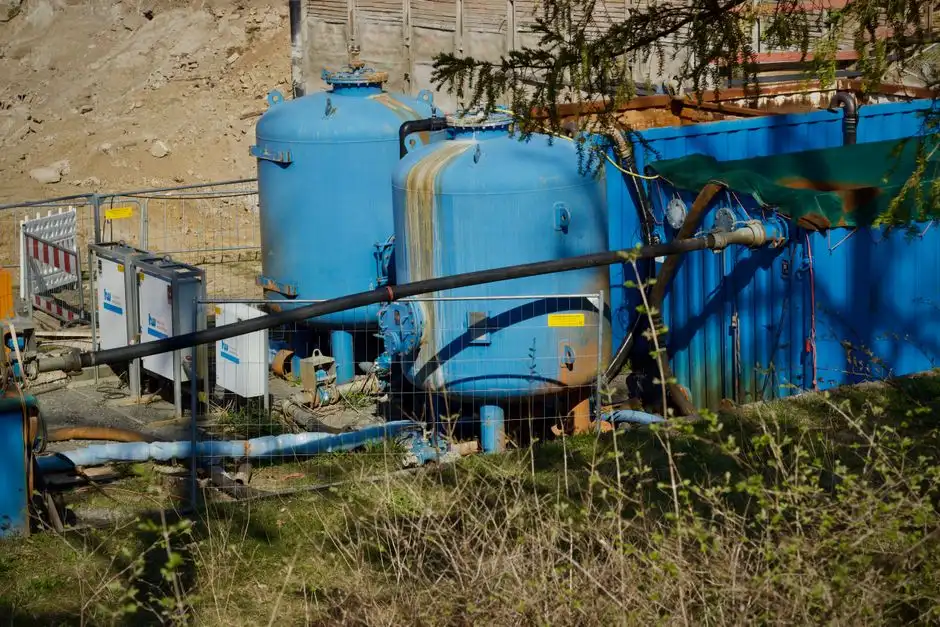
The correct treatment train begins with the source audit because grease, fibrous material and concentrated backwash can overload or impair downstream biological and pumping stages. Route kitchen, laundry and other high-strength or oil-bearing streams separately for evaluation; do not assume they can enter the domestic sewage line unchanged.
The supplier’s DAF description states that the system removes suspended solids, FOG, oil and grease and colloidal matter from industrial wastewater. This is relevant to source segregation, but its hotel applicability depends on the actual kitchen stream, flow characteristics and local treatment objectives. A mechanical rotary mechanical bar screen should be considered when the wastewater audit identifies rags, plastics or fibrous debris that could damage pumps or interfere with biological treatment.
- Characterize each stream. Record flow, pollutants, grease content, solids, pH and cleaning-chemical exposure.
- Remove material at the correct point. Screen rags and solids before pumps and biological treatment; evaluate DAF or another grease-control method for qualifying kitchen flows.
- Control chemistry only where justified. An automatic chemical dosing system can deliver PLC-controlled coagulants, flocculants, pH adjusters and specialty chemicals, but the dose and chemical must follow influent testing and the agreed treatment objective.
- Define disinfection from the water end use. The supplied catalogue includes UV and chlorine dioxide systems, but final disinfection should be selected against the required effluent or reuse specification.
Sludge removal is part of the process decision. The RFQ should identify how residual sludge will be stored, dewatered, removed and handled, particularly where the hotel has limited service access or cannot authorize a conventional disposal route.
Size the system from peak flow and site constraints
System capacity should be selected from measured or credibly estimated wastewater flows, with the calculation and peak assumption stated in the procurement documents. Occupancy, restaurant covers and pool listings establish possible demand sources; they are not substitutes for wastewater measurements.
Prepare the following design basis: average daily wastewater flow, peak hourly flow, selected peak factor, wastewater characteristics, required effluent objectives, minimum freeboard, installation depth and available treatment footprint. The supplied research contains no numerical flow allowance or Lomé-specific pollutant data, so no defensible capacity calculation can be completed from hotel listings alone.
| Documented input | Information a buyer must obtain | Why it affects selection |
|---|---|---|
| Average and peak flow | Measured data where available, supported by a documented occupancy and water-balance estimate | Determines hydraulic capacity and equalization need |
| Influent load | Representative wastewater analysis for flow, organics, solids, grease, pH and nutrients as relevant | Determines biological and pretreatment suitability |
| Effluent objective | Confirmed discharge requirements or reuse specification | Defines whether A/O or MBR is appropriate |
| Installation envelope | Excavation depth, soil report, groundwater level and flood exposure | Determines feasibility and structural requirements |
| Operations access | Maintenance access, lifting route, power, control location and sludge-removal arrangement | Determines maintainability and site layout |
| Environmental controls | Odour, noise, vegetation and landscaping requirements | Determines above- and below-grade integration |
Use the WSZ published range of 1–80 m³/h to screen possible package-plant candidates, then check the selected model against calculated peak flow and load. The MBR published range is 10–2,000 m³/day, which requires comparison on both daily loading and peak hydraulic performance. Neither range substitutes for a site-specific design calculation.
Before finalizing an underground installation, confirm excavation depth, soil bearing and groundwater conditions, flood exposure, maintenance access, odour control, power availability, sludge removal and the area available for landscaping. A technically suitable unit can still be a poor procurement decision if installation or servicing assumptions fail on site.
Turn the selection into a supplier RFQ
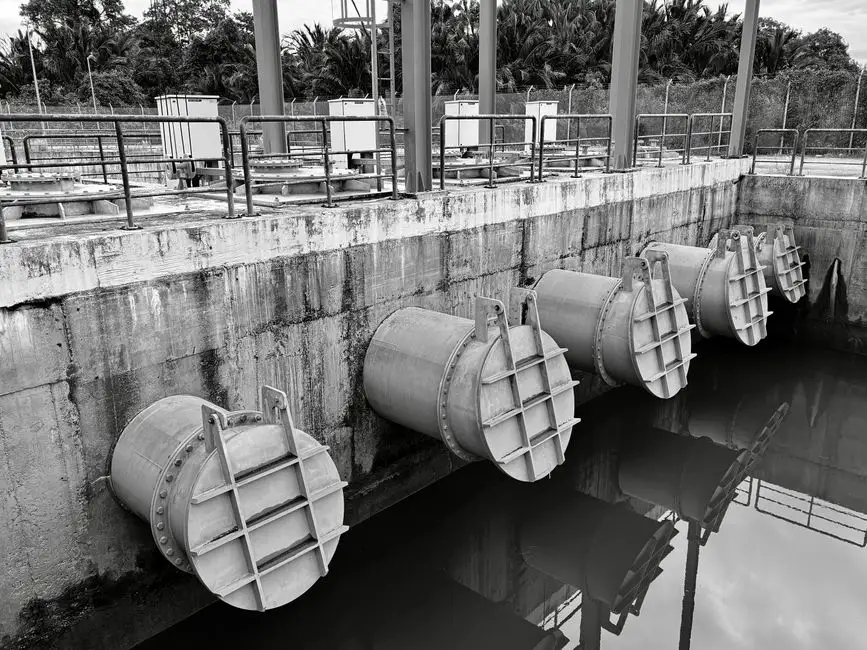
A comparable RFQ should contain the property’s wastewater evidence and require each bidder to state its design basis. Hotel marketing information, a generic flow allowance or an unspecified “compliant” claim should be rejected as the sole basis for sizing.
Include the wastewater-source inventory, occupancy history, measured flow, pollutant results, discharge or reuse criteria, footprint, soil and groundwater findings, utilities, excavation constraints and local service requirements. The wastewater plant supplier-selection method provides a structure for making bids technically comparable.
| RFQ schedule | Required supplier response |
|---|---|
| Design basis | Average flow, peak flow, peak factor, influent load and calculation method |
| Process | All treatment stages, pretreatment boundaries, disinfection and reuse provisions |
| Equipment | Model, capacity, dimensions, installation depth, materials and utilities |
| Effluent scope | Stated performance parameters and the test method to be used |
| Construction | Civil works, excavation, installation, controls, odour control and commissioning |
| Operations | Automation, routine maintenance, sludge handling, spare parts and operator training |
| Commercial | Price exclusions, payment milestones, warranty, local service support and delivery assumptions |
| Compliance | Permit assumptions, applicable authority requirements and responsible party |
Require written assumptions and exclusions. The buyer should also require confirmation of the applicable Lomé authority requirements and identify whether the owner, supplier or another party will obtain any discharge permission before an order is placed.
Frequently Asked Questions
What wastewater treatment system does a hotel or resort in Lomé need in 2026?
Choose a public sewer if connection availability, downstream capacity and discharge terms are confirmed. Otherwise, assess an underground A/O package plant for standard domestic sewage and an MBR when effluent quality, compactness or reuse requirements justify it. The final choice depends on measured flow and load, site conditions and the confirmed discharge objective.
How much does a hotel sewage package plant or MBR cost in Lomé?
The supplied evidence does not provide a Lomé-specific price, sewer tariff or installation quotation. A buyer should request comparable bids covering equipment, excavation, civil works, controls, commissioning, sludge handling, commissioning tests, warranties and local service, with all exclusions stated in writing.
Which capacities must a supplier demonstrate for an MBR or A/O package plant?
For the supplied products, the WSZ A/O package plant is published at 1–80 m³/h, while the MBR is published at 10–2,000 m³/day. Ask the supplier to demonstrate that the proposed model covers the property’s calculated peak flow and loading; the published maximum is not itself a selection.
Who should verify Lomé discharge compliance before equipment is ordered?
Assign responsibility explicitly in the contract and permit schedule. The buyer should identify the applicable Lomé authority, provide the supplier with the confirmed effluent and discharge criteria, and require written confirmation of permit assumptions before ordering. A generic supplier statement that the system is “compliant” is not sufficient evidence.