Confirm the wastewater is suitable for anaerobic treatment
A UASB reactor can be a strong anaerobic option for suitable canned-food wastewater, particularly fish-canning streams, but it should not be selected from flow data alone. A canned-fish study increased organic loading from 0.5 to 4 kg/m3.day in a reactor with a three-phase separator (World Journal of Environmental Research). Full-scale fish-canning performance depended on the product processed, with optimum operation reported at an upward velocity of 0.7 m/h (Elsevier, 1999). The practical decision requires COD, suspended solids, fats and oils, temperature, pH and flow data, followed by screening and solids or oil removal where necessary and aerobic polishing for final discharge compliance.
Characterize each product stream separately before treating the plant as one homogeneous wastewater. In the full-scale fish-canning study, wastewater characteristics were highly dependent on the canned product, including mussel, tuna and sardines (Elsevier, 1999). A stream that is acceptable for one product may therefore require a different pretreatment and loading basis from another stream discharged to the same UASB reactor.
The minimum characterization package should cover flow, COD, BOD, suspended solids, fats and oils, pH, temperature, salinity and sanitizer residues. Record both average and peak conditions, including production, batch-cleaning and washdown periods. These inputs should be reconciled against the industrial effluent treatment plant selection method, because the reactor, pretreatment and polishing equipment must be designed around the combined load rather than the average discharge alone.
Fish-processing precedent supports anaerobic treatment as a credible route. A review by Chowdhury et al., published in Bioresource Technology in 2010, reports 80–90% organics removal and biogas production for anaerobic processes, and identifies anaerobic digestion followed by an aerobic process as an optimal treatment option for fish-processing wastewater. Those are review figures, not guaranteed values for every canned-food plant. Likewise, the domestic-wastewater result in Aiyuk et al. (International Journal of Environmental Science and Development, December 2010) should not be extrapolated without confirming that solids, grease and process chemistry are comparable.
| Decision input | What the supplier needs | Reason for the decision gate |
|---|---|---|
| Product streams | Separate flow and wastewater data for fish, fruit, vegetables or other canned products | Full-scale fish-canning characteristics varied with the product processed (Elsevier, 1999). |
| Organic load | COD, BOD, average and peak flow, and required COD removal | These inputs establish the preliminary reactor loading and treatment objectives. |
| Solids and oils | Suspended solids, fats and oils, and floatables | Oil and solids can impair sludge retention and separator performance. |
| Operating conditions | Temperature, pH, salinity and sanitizer residues | Process chemistry determines anaerobic compatibility and conditioning needs. |
| Discharge or reuse route | Applicable effluent specification and intended reuse, if any | UASB organics removal does not by itself establish final compliance. |
Set the UASB design basis from loading and flow data
The canned-fish reactor study provides a loading precedent, not a universal sizing rule. The World Journal of Environmental Research study started at an inlet organic loading rate of 0.5 kg/m3.day and increased it gradually to 4 kg/m3.day. The reactor included a three-phase separator. For fish-canning applications, the full-scale study reported optimum operation at an upward velocity of 0.7 m/h, but the product dependence of the wastewater means that this value must be confirmed through pilot testing and the reactor manufacturer’s design calculations rather than copied into a specification (Elsevier, 1999).
Start the preliminary mass balance with the product-specific flow and COD data. Calculate the design organic loading rate from the selected hydraulic basis, then check whether the resulting reactor volume and separator arrangement remain credible for the most demanding product stream. Peak flow, batch discharges and cleaning water should be included when identifying the hydraulic condition; they should not be averaged away if they can wash out biomass or overload the separator.
The same canned-fish study seeded the reactor with anaerobic digester sludge and activated-sludge return sludge at a 25:15 ratio. That provides a documented precedent for startup planning, not a universal seeding requirement. The selected supplier should state the seed type, quantity, expected sludge-blanket development period, startup loading sequence and method for adjusting the organic loading rate.
| Design-basis item | Available precedent | Project decision required |
|---|---|---|
| Organic loading rate | 0.5 kg/m3.day initially, increased gradually to 4 kg/m3.day in the canned-fish reactor study (World Journal of Environmental Research). | Confirm the allowable rate for the measured product-stream COD, flow profile, temperature and reactor configuration. |
| Upward velocity | Optimum operation reported at 0.7 m/h in a full-scale fish-canning application (Elsevier, 1999). | Validate through pilot work and the manufacturer’s hydraulic and solids-retention calculations. |
| Three-phase separation | Used in the canned-fish reactor study (World Journal of Environmental Research). | Request separator geometry, gas-liquid-solid disengagement design and drawdown provisions. |
| Reactor feed | Raw wastewater entered the study reactor after seeding (World Journal of Environmental Research). | Define the pretreatment boundary and confirm that the proposed feed protects the biomass blanket. |
| Supplier inputs | Published precedent does not establish project capacity. | Provide peak and average flow, required COD removal, temperature, wastewater characteristics and discharge route. |
The equipment package should include a written calculation showing how the selected hydraulic basis, organic loading rate, three-phase separator and sludge-retention system were derived. If the supplier cannot connect each calculation to measured project data, the proposal remains an equipment selection rather than an engineered design basis.
Protect the reactor with screening and oil-solids removal
Screening and solids or oil removal must be evaluated before the UASB reactor, not treated as optional refinements. A rotary mechanical bar screen for wastewater screening can remove rags, packaging fragments and fibrous material that may obstruct the upflow reactor or three-phase separator. The required screen aperture and duty should follow the observed debris load and the manufacturer’s equipment limits.
Fats, oils and other floatable material require a defined pretreatment strategy. The fish-processing evidence identifies anaerobic digestion followed by aerobic treatment as an optimal process option (Chowdhury et al., Bioresource Technology, 2010), but that process sequence does not remove the need to control oil entering the reactor. Compare DAF and clarifier duty using measured oil, grease and solids results. DAF pretreatment for oil and suspended solids is available from 4–300 m3/h in the product catalogue; this capacity range is equipment information, not a recommendation for a particular plant flow.
The domestic-wastewater study in Aiyuk et al. (International Journal of Environmental Science and Development, December 2010) provides a useful warning. That UASB system received wastewater with high suspended solids, accumulated particulate matter and required repeated sludge discharges. Sludge extraction disturbed the microbial balance and reduced reactor performance. The study reported average total COD of 522 mg/L and 80% organic-matter removal, but it also found sludge production as high as 70% of influent COD as suspended solid and identified additional treatment for suspended solids and nutrients. Because this was domestic sewage, the values are not a canned-food design basis; the engineering lesson is to prevent particulate accumulation and plan solids removal.
- Screen the combined plant stream for packaging, fibrous debris and coarse solids.
- Characterize floatable oil and settleable solids in each product stream.
- Select clarifier, DAF or another pretreatment duty from measured results.
- Define the reactor feed specification, including residual oil and solids limits.
- Provide a solids-discharge route and residual-sludge treatment plan.
Do not accept “anaerobic pretreatment” as a substitute for a characterized pretreatment train. The buyer needs to know which unit removes what contaminant, what residual concentration reaches the reactor, and how the units operate during production and cleaning cycles.
Plan biomass startup, monitoring and solids management
Biomass retention is an operating responsibility, not a passive consequence of installing a UASB reactor. Startup and seeding should be included in the supplier scope. The canned-fish study used anaerobic digester sludge and activated-sludge return sludge at a 25:15 ratio (World Journal of Environmental Research), giving a documented starting point for discussion. The supplier should instead specify the seed condition, required quantity, addition method and loading ramp for the actual wastewater.
UASB treatment depends on maintaining a granular sludge blanket while wastewater moves upward through it. The Wikipedia overview of upflow anaerobic sludge blanket digestion notes that continuous monitoring is needed to maintain the blanket and avoid washout; it also states that the blanket begins to mature at around three months. The commercial overview should therefore be treated as an operating warning, not as a performance guarantee. Supplier monitoring requirements should include upward velocity, sludge-bed condition, gas production, pH, COD removal and solids inventory.
Plan sludge removal as a controlled process. Aiyuk et al. (December 2010) found that particulate accumulation required repeated discharges in the domestic-wastewater UASB study, and that sludge extraction caused reactor imbalance and lower performance. The project procedure should define how solids are withdrawn, where they go, how biomass loss is minimized and when replacement or reseeding is required. It should also identify the operating response to abnormal gas production, pH movement or changes in separator behaviour.
For downstream solids, compare a plate-and-frame filter press for sludge dewatering after sludge characterization. Filtration areas from 1 m2 to 500 m2 are available in the product catalogue. Those areas are catalogue options; the selected duty must follow the measured sludge volume, solids concentration, oil content and required cake or filtrate outcome.
| Management item | Acceptable evidence | Reason it matters |
|---|---|---|
| Startup | Seed specification, loading sequence and commissioning responsibilities | Establishes whether the biomass can adapt without washout. |
| Monitoring | Upward velocity, pH, gas, COD removal and sludge inventory | Protects the granular sludge blanket and identifies process upset. |
| Solids withdrawal | Written procedure and destination for withdrawn sludge | Limits particulate accumulation and biomass loss. |
| Sludge dewatering | Measured solids and oil characterization before equipment selection | Defines the actual filter-press duty and disposal route. |
Add aerobic polishing for the required effluent quality
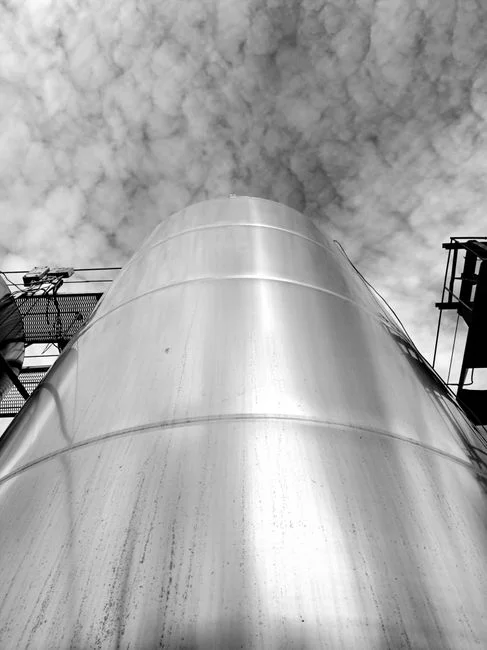
UASB should be evaluated as the anaerobic bulk-organic removal stage, not as automatic proof of permit compliance. The supplied Wikipedia overview states that UASB effluent usually requires further treatment, such as activated sludge, depending on the required effluent quality. The polishing train should therefore be selected from the expected UASB effluent and the applicable discharge or reuse specification.
Evaluate activated sludge or an MBR against residual COD, BOD, solids and any reuse requirement. The integrated MBR wastewater treatment system is one possible polishing route, but the choice must be supported by effluent targets, hydraulic loading, sludge handling and operation requirements. The anaerobic equipment selection and process design provides a useful structure for separating those decisions from reactor selection.
| Treatment stage | Primary function | Sizing basis | Compliance check |
|---|---|---|---|
| UASB | Anaerobic conversion of soluble and finely degradable organics with biogas production | Measured flow, COD and selected organic loading rate | Confirm COD conversion and stable biomass retention. |
| Aerobic polishing | Remove residual biodegradable organics and provide the required solids separation | Expected UASB effluent and peak hydraulic load | Test residual COD, BOD and solids against the stated requirement. |
| Final treatment or reuse step | Address any requirement not met by the biological train | Defined effluent specification or reuse quality | Jurisdiction and product route remain the buyer’s required inputs. |
Size polishing from expected UASB effluent and peak hydraulic load rather than raw wastewater flow alone. The supplied research does not identify the applicable jurisdiction or a universal canned-food discharge standard. Before equipment selection, obtain the receiving route, permit conditions, sampling requirements and any reuse specification. Without those inputs, no supplier should present a universal final-effluent limit as the project guarantee.
Use these acceptance criteria when selecting a supplier
A defensible UASB quotation should convert the measured wastewater into a documented mass balance and design basis. Require feed characterization covering COD, flow, suspended solids, fats and oils, temperature, pH and the proposed loading rate. The quotation should identify the discharge route and required COD removal; otherwise, reactor capacity and polishing duty cannot be checked consistently.
| Supplier deliverable | Required content | Buyer check |
|---|---|---|
| Feed characterization | COD, flow, suspended solids, fats and oils, temperature, pH, production variability and discharge route | Are the inputs measured or assumed, and do they represent peak conditions? |
| Reactor and separator design | Configuration, volume, organic loading rate, three-phase separator design and applicable upward-velocity basis | Can each calculation be traced to project data and the stated precedent? |
| Biomass and startup | Sludge-retention approach, seed specification, startup sequence and monitoring plan | Does the supplier define how washout and sludge accumulation will be managed? |
| Performance and scope | Comparable applications, project guarantees, testing, gas handling, sludge removal, polishing, installation and training | Are published results separated from guaranteed project values? |
Request evidence from comparable food or fish-processing applications, but ask the supplier to disclose the differences between published performance and the project guarantee. The canned-fish evidence provides useful precedent because it used a three-phase separator, began at 0.5 kg/m3.day and increased the organic loading rate gradually to 4 kg/m3.day (World Journal of Environmental Research). It does not guarantee that an unrelated canned-food stream will perform at the same rate.
Before award, define the performance test, gas-handling responsibility, sludge-removal procedure, polishing boundary, installation scope and operator training. A generic reactor quotation that omits the feed basis, separator performance, startup and downstream treatment should not be evaluated as an engineered industrial installation.
Frequently Asked Questions
How is a UASB reactor for canned food wastewater sized?
Size the reactor from measured product-stream flow and COD using the selected hydraulic basis and organic loading rate, then verify three-phase separator and sludge-retention performance. The canned-fish study’s progression from 0.5 to 4 kg/m3.day is precedent, not a default (World Journal of Environmental Research). The supplier must show its calculations using average and peak project data.
What should a buyer check when selecting a UASB supplier?
Require a written feed characterization, mass balance, reactor and three-phase separator calculations, startup plan, monitoring strategy and clear separation between published application data and project guarantees. Comparable food-processing references are useful, but differences in product stream, temperature, solids and oil must be disclosed.
Can UASB treatment alone meet the final discharge requirement?
Do not assume so. The supplied overview states that UASB effluent usually needs further treatment, such as activated sludge, depending on effluent-quality requirements (Wikipedia, Upflow anaerobic sludge blanket digestion). The polishing train must be sized from expected UASB effluent and the applicable discharge or reuse specification, which the supplied research does not identify.
What pretreatment is required before anaerobic treatment?
Evaluate screening for packaging and fibrous material, followed by oil, grease and solids removal based on measured product-stream results. A domestic-wastewater UASB study showed that particulate accumulation required repeated sludge discharges and that extraction disturbed performance (Aiyuk et al., December 2010). That result does not set canned-food limits; it establishes the need for a characterized feed and controlled solids-management plan.