Identify the Controlling Luling Sewer Authority
Mine and metals facilities near Luling must satisfy the pretreatment requirements of the publicly owned treatment works (POTW) receiving their sewer discharge, which may include a POTW industrial-user permit, sewer-use ordinance, discharge authorization, monitoring requirements, and enforcement procedures. The POTW’s requirements must be separated from federal categorical pretreatment standards under Clean Water Act Section 307(b) and 40 CFR Part 403; EPA’s Pretreatment Standards and Requirements—Local Limits page explains that local limits may be numeric or narrative and are imposed at the industrial user’s point of connection to the POTW collection system. The supplied research does not identify Luling’s controlling POTW, sewer-use ordinance, categorical subcategory, or numerical local limits, so no equipment selection should assume that those facts are already established.
Begin with the utility that owns or operates the receiving sewer, not with a treatment-equipment catalogue. Request the current sewer-use ordinance, any existing industrial-user permit, discharge authorization and application forms, monitoring and reporting forms, sampling instructions, slug-load provisions, enforcement procedures, and rules governing hauled waste. Confirm whether the plant discharges through a separate control point or directly at the point of connection. This jurisdiction check should also establish whether the discharge is subject to categorical pretreatment standards, a POTW-issued local limit, or both.
Do not treat the supplied power-plant guidance as a mining sewer rule. The power-plant article concerns flue-gas-desulfurization and coal-combustion-residual wastewater, so it may support general physical-chemical treatment concepts, but it does not establish applicable mining limits. The wastewater treatment engineer should document each authority, document date, requirement, and unresolved interpretation before sizing a DAF unit, lamella clarifier, dosing system, or filter.
| Verification item | Evidence to obtain | Design consequence |
|---|---|---|
| Receiving POTW | Utility name, collection-system map, and responsible pretreatment office | Identifies the permit issuer and applicable rules |
| Legal requirements | Current sewer-use ordinance, local limits, industrial-user permit, and discharge authorization | Establishes concentration limits, loads, narrative BMPs, monitoring, and reporting duties |
| Federal baseline | Applicable 40 CFR Part 403 provisions and verified categorical subcategory | Defines minimum pretreatment standards; it does not replace local limits |
| Compliance point | Permit definition of the monitored or controlled discharge point | Defines where treatment performance must be demonstrated |
| Enforcement | Inspection, monitoring, deviation, bypass, and penalty provisions | Sets operating risk and recordkeeping requirements |
A comparable mining-plant sewer compliance pathway provides a useful inquiry sequence, but its jurisdiction-specific results cannot be transferred to Luling without written confirmation from the receiving POTW.
Turn the Permit into a Compliance Design Basis
The permit should become a row-by-row engineering worksheet rather than a list of target concentrations copied into a proposal. EPA’s Local Limits Development Guidance describes the local-limit sequence as identifying pollutants of concern, collecting and analyzing data, calculating maximum allowable headworks loadings, and then designating and implementing controls. That sequence supports a practical site worksheet: each prohibited discharge, categorical standard, local limit, narrative BMP, monitoring frequency, reporting requirement, and enforcement condition needs its own owner, evidence, design response, and acceptance test.
Use representative flow and analytical data to calculate mass loading rather than relying on concentration alone. The required inputs include flow, pollutant concentrations, production and operating variability, applicable local limits, and the relationship between each limit and its averaging period. EPA’s guidance also distinguishes sampling at the POTW, within the collection system, and at industrial users. For the plant, record the compliance sampling point as the industrial user’s point of connection unless the permit or POTW requires an upstream control point.
- Transcribe each obligation exactly as issued, including units, averaging period, monitoring point, and exceptions.
- Attach representative wastewater data and identify normal, peak, batch, clean-out, upset, and low-flow conditions.
- Calculate average and peak pollutant loads using the measured flow and concentration data required by the permit.
- Assign each pollutant to a treatment function and identify where performance will be verified.
- Leave every unavailable value visibly marked as an information request rather than a design assumption.
| Worksheet field | Required entry | Supplier or buyer acceptance check |
|---|---|---|
| Parameter and authority | Pollutant, source citation, limit or narrative requirement, averaging period | Matches the current permit and ordinance without paraphrase |
| Compliance location | Point of connection or required upstream control point | Sample taps and instruments are accessible and representative |
| Wastewater basis | Flow record, concentration data, production status, operating condition | Data represent normal and adverse operations |
| Calculated load | Flow, concentration, mass-loading calculation, applicable ceiling | Shows the treatment duty rather than concentration alone |
| Treatment function | Removal mechanism, equipment stage, control variable | Pollutant-to-unit mapping is technically justified |
| Verification | Monitoring point, frequency, analytical method, reporting route | Matches POTW requirements and commissioning protocol |
The mining wastewater sewer-compliance design method illustrates how permit requirements can be translated into design inputs, but its local values must not populate the Luling worksheet without confirmation.
Build the Treatment Train from the Wastewater Profile
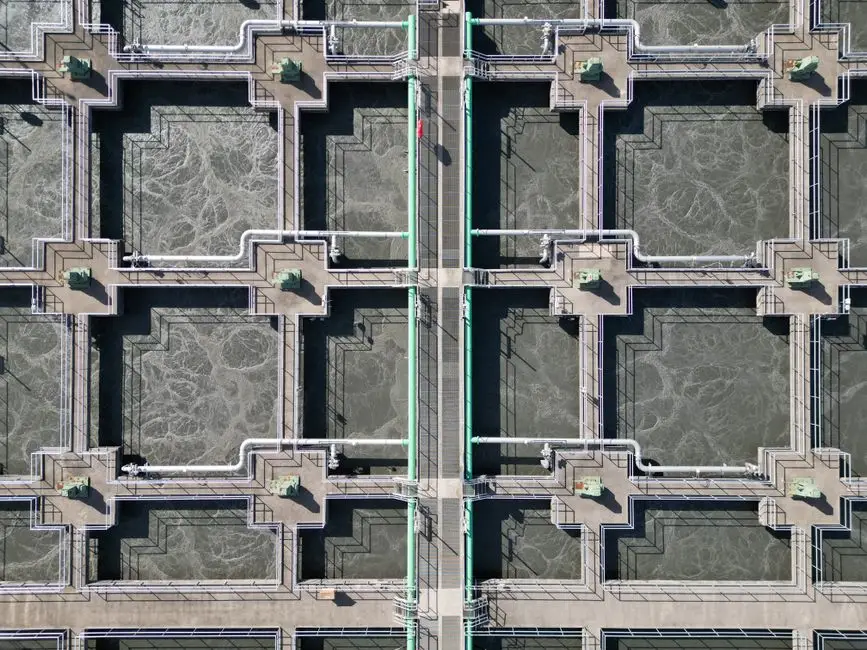
Treatment selection should follow the measured wastewater profile: equalization for hydraulic variability, controlled pH adjustment and metal hydroxide precipitation for dissolved metals, solids separation for the resulting flocs, and polishing only where residual carryover requires it. HydropureWater’s mining pretreatment article identifies 8–24 hours of average daily flow as a common equalization design range for mining applications, but the final basin volume must follow measured flow and batch-discharge data. Equalization also provides the residence time needed to mix a discharge before treatment rather than passing its peak load directly to clarification.
For dissolved metals, controlled pH adjustment is the primary control variable. The same source reports 85–95% total-metals removal for properly controlled precipitation systems, attributed there to Fluence’s November 2024 analysis; that is a selection reference rather than a guarantee for an uncharacterized stream. Jar testing should establish reagent type, dose, mixing, settling behavior, and the operating pH band. A PLC-controlled chemical dosing system should be evaluated where pH and reagent feed require stable automatic control, with interlocks, alarms, reagent inventory protection, and recorded set points included in the functional description.
DAF and lamella clarification perform different separation functions. DAF is indicated where oil, grease, or fine colloidal material interferes with settling. Lamella clarification is suitable when the primary solids are metal-hydroxide flocs and a compact separation footprint is valuable. The supplied article gives DAF performance of 90–98% TSS removal and 85–95% oil and grease removal for mining and metal-finishing service, and reports lamella surface loading of 20–40 m/h. These figures are selection references, not site acceptance guarantees.
Add multimedia filtration only if residual solids or metal carryover warrants a final polishing barrier. The supplied article identifies multimedia filtration between clarification and the sewer manhole; the filter must be sized for its backwash and waste stream, not average flow alone. Sludge collection, conditioning, dewatering, filtrate return, and disposal must be included from the start because each solids-removal stage adds captured solids.
| Wastewater condition or pollutant | Required treatment function | Equipment decision |
|---|---|---|
| Batch dumps, shift changes, mill clean-outs, variable flow | Mix, buffer, and equalize | Size industrial wastewater equalization from measured flow and discharge chronology |
| Dissolved Pb, Cu, Zn, Cd, Ni, As or other regulated metals | Raise or lower pH and form precipitates | Use controlled metal hydroxide precipitation with reagent and sludge data |
| Oil, grease, or fine colloidal solids | Float or separate buoyant and colloidal material | Favor an industrial DAF system |
| Predominantly metal-hydroxide flocs | Separate settled or floated sludge from treated liquid | Evaluate lamella clarification |
| Residual floc or metal carryover | Polish the clarified stream | Add multimedia filtration only where required by residual performance |
| Unstable pH or reagent feed | Maintain the validated chemical operating band | Evaluate automatic dosing with PLC controls, alarms, and interlocks |
The mining pretreatment DAF versus lamella comparison provides the decision framework, but measured oil, colloid, solids, pH, and metal data must determine the final selection.
Size the Equipment for Peak and Turndown Conditions
Equipment proposals should demonstrate design flow, peak flow, hydraulic retention, turndown, redundancy, and the method for equalizing batch or clean-out discharges. These are acceptance criteria, not optional narrative. The supplier should identify which flows are steady-state, which are instantaneous, and which are controlled by equalization. Capacity claims based only on average daily flow leave the treatment train exposed to the conditions that produce excursions.
For comparison, the supplied HydropureWater article gives DAF coverage from 4–300 m³/h across 13 models and hydraulic loading from 5–25 m/h. It gives lamella surface loading of 20–40 m/h. The article also reports DAF removal of 90–98% TSS and 85–95% oil and grease in mining and metal-finishing service. Those ranges can frame a technical comparison, but the buyer should require calculations based on the Luling wastewater and the verified permit—not treat the cited figures as guaranteed site performance.
| Proposal check | DAF | Lamella clarification | Acceptance requirement |
|---|---|---|---|
| Hydraulic basis | 5–25 m/h hydraulic loading stated in the supplied article | 20–40 m/h surface loading stated in the supplied article | Recalculate against peak flow, selected geometry, and measured wastewater solids |
| Primary separation function | Float oil-bearing material and fine colloids | Separate metal-hydroxide flocs | Match the function to measured stream properties |
| Turndown and redundancy | Show operating range and available parallel capacity | Show operating range and available parallel capacity | Address batch and clean-out conditions without loss of control |
| Sludge handling | Show float removal, conditioning, storage, and dewatering | Show sludge-blanket withdrawal, conditioning, storage, and dewatering | Size from measured captured-solids mass, not effluent flow |
| Performance claim | 90–98% TSS and 85–95% oil and grease in the cited reference | Not supported by the supplied numeric evidence | Require a site-specific guarantee tied to the applicable limit |
Size sludge dewatering from solids captured in equalization, precipitation, DAF, and clarification, with precipitation-reagent chemistry included because it affects sludge generation. The supplier should calculate wet sludge production, solids concentration, dewatering duty, filtrate return, cake handling, and disposal assumptions. A more detailed DAF engineering and procurement reference can support scope development, but it cannot substitute for site-specific hydraulic and mass-balance calculations.
Verify Compliance with a Sampling and Acceptance Plan
Compliance verification must connect the permit, the wastewater characterization, and full-scale equipment operation. EPA’s Local Limits Development Guidance addresses sampling at the POTW, in the collection system, and at industrial users, including industrial-user sampling and analytical methods. For the plant’s baseline, confirm relevant POTW and collection-system conditions, characterize the industrial discharge, and then establish the final compliance monitoring point required by the permit.
The commissioning plan should test the functions that control compliance:
- Confirm equalization performance during representative batch, peak, and turndown flows.
- Demonstrate pH control, reagent response, and chemical interlocks over the validated operating range.
- Verify metals removal with the specified analytical methods and representative feed.
- Measure solids carryover and confirm DAF or lamella performance under actual floc conditions.
- Balance captured solids through collection, sludge storage, dewatering, cake handling, and filtrate return.
- Exercise alarms, power-loss response, equipment isolation, deviation notification, and bypass prevention as required by the permit and POTW.
A bench test can establish reagent doses and separation behavior, but it does not demonstrate full-scale hydraulic performance. Acceptance testing should therefore use representative operations and production variability, define pass/fail criteria against the verified permit limits, and establish who witnesses each test. Maintain deviations, bypasses, retesting, corrective actions, and permit records in the format required by the controlling POTW.
The mining and metals pretreatment verification guide provides a useful structure for commissioning and sampling discussions, but the Luling acceptance protocol must come from the actual permit, ordinance, and analytical instructions.
Frequently Asked Questions
How should a plant establish a pretreatment budget before requesting equipment prices?
Request quotations only after the worksheet identifies the controlling permit, applicable limits, measured flow, representative pollutant concentrations, and required treatment functions. Ask each supplier to separate equipment, foundations and utilities, chemical storage, controls, sludge handling, commissioning, monitoring, and ongoing operation. No supported Luling equipment price or installed-cost figure was supplied, so the buyer should request a budgetary quotation with explicit exclusions rather than rely on a generic package price. For a commercial reference, see the copper wastewater treatment engineering specifications, while keeping site-specific quotation inputs separate from regulatory evidence.
Which wastewater treatment equipment should a mine or metals plant near Luling compare?
Compare equalization, controlled chemical dosing, metal hydroxide precipitation, DAF, lamella clarification, polishing filtration, and sludge dewatering as individual functions. DAF deserves priority when the stream contains oil, grease, or fine colloidal solids; lamella clarification deserves priority when the main separation duty is metal-hydroxide flocs. The final train may include both, but it should not duplicate functions without a stated performance need. Confirm the choice with measured wastewater properties and the verified sewer limits.
How can a buyer prevent a supplier from promising compliance without a valid basis?
Require a written process basis, representative wastewater data, hydraulic calculations, equipment sizing calculations, P&ID, controls narrative, drawing list, sludge-balance calculations, commissioning protocol, and a performance guarantee tied to the actual permit requirements. Mark every provisional value, including flow, pollutant concentration, limit, and operating pH. Reject a package that relies only on generic removal percentages or treats federal categorical limits as a substitute for the POTW’s local limits.
What should happen when the Luling POTW, categorical subcategory, or local limits are still unknown?
Keep equipment procurement at the verification stage. Obtain the current ordinance, industrial-user permit, discharge authorization, applicable federal category, monitoring instructions, and enforcement procedures from the responsible authorities. Until those documents are received, the design may proceed only as a clearly labeled conceptual basis with stated assumptions and exclusions. It should not be represented as a compliance design or used to guarantee performance.
Related Equipment
- industrial DAF system — specifications, capacity range, and technical data