
Determine Which Discharge Requirements Apply
Mining and metals plants near Waukesha meet indirect sewer-discharge limits by treating wastewater at the plant before it enters the City of Waukesha collection system. EPA explains that POTWs enforce site-specific local limits at the industrial user’s end-of-pipe connection. The practical sequence is to characterize the waste, balance pH, coagulate and flocculate suspended material, remove solids by clarification or flotation, address remaining dissolved contaminants with the required polishing process, and verify compliance through representative sampling and monitoring. Waukesha’s pretreatment program includes six significant industrial users and monitors metals including cadmium, chromium, copper, lead, mercury, nickel and zinc.
The first regulatory decision is whether the discharge reaches surface water directly or enters a publicly owned treatment works (POTW) through a sewer connection. EPA states that point-source discharges from mining operations require authorization under the National Pollutant Discharge Elimination System (NPDES) permit program. Indirect discharges are instead governed by pretreatment requirements, with EPA’s pretreatment standards and local-limits guidance explaining that POTWs impose local limits at the point where an industrial user connects to the collection system.
For a Waukesha connection, request the current permit from the City of Waukesha, acting as the control authority. Do not substitute a generic metals limit, another plant’s permit or the Clean Water Plant’s final effluent permit for the industrial user’s obligations. The City should provide applicable local limits, prohibited-discharge rules, monitoring and sampling requirements, approved analytical methods, reporting provisions and any categorical pretreatment standards.
EPA distinguishes general pretreatment requirements from site-specific local limits. General prohibited-discharge provisions appear in 40 CFR Part 403.5, while 40 CFR 403.3 defines relevant pretreatment terms; local-limit development requirements appear in 40 CFR Part 403.5(c), as referenced by EPA. The practical result is that a treatment train must be tied to the current Waukesha requirements at the connection—not designed around an assumed federal metals threshold.
Build a Waukesha Compliance Profile
A defensible equipment selection starts with a source-by-source wastewater inventory and the plant’s current permit conditions, not a single grab sample. Mining and metals facilities can combine process rinses, wash water, floor drainage, sump discharge, contact cooling water, spent chemical streams and stormwater contact with different flow, pH and contaminant profiles.
Request the current Waukesha permit, local limits, designated monitoring point, sampling frequency, analytical methods and reporting requirements. The Wisconsin DNR’s Waukesha WPDES permit fact sheet provides regulatory context: Waukesha regulates six significant industrial users under the City’s pretreatment program. That program-level fact does not establish one plant’s allowable discharge concentrations.
Collect representative data across operating conditions and identify the contaminant form that drives treatment. pH and suspended solids are usually foundational measurements. Oil and grease should be evaluated where machining, cleaning or coating operations may contribute it. For metals, determine whether the compliance parameter is total or dissolved and cover the named metals—cadmium, chromium, copper, lead, mercury, nickel and zinc—as applicable to each stream.
| Compliance-profile item | Evidence or decision needed | How it affects treatment |
|---|---|---|
| Current City permit | Local limits, prohibited discharges, monitoring point, frequency, methods and reporting | Defines the treatment objectives and proof required at the sewer connection |
| Wastewater inventory | Representative flow and chemistry for each process rinse, wash, sump, drainage and chemical stream | Separates streams that require different treatment or segregation |
| Contaminant profile | pH, suspended solids, relevant oil and grease, and total or dissolved metals | Assigns pH control, coagulation/flocculation, solids separation and polishing |
| Operating variability | Flow, pH, reagent demand and contaminant concentrations under representative operations | Sets sizing, control strategy, equalization and redundancy requirements |
| Residuals route | Expected sludge and filter-residual characteristics and disposal options | Determines whether the proposed treatment train is operationally feasible |
Map each stream to its intended treatment step and final end-of-pipe monitoring point. Keep the City’s final effluent permit separate from the industrial user’s pretreatment obligations: POTW permit limits protect the receiving waters, while the industrial permit or local limits govern what enters the collection system.
Treat the Wastewater in the Right Order
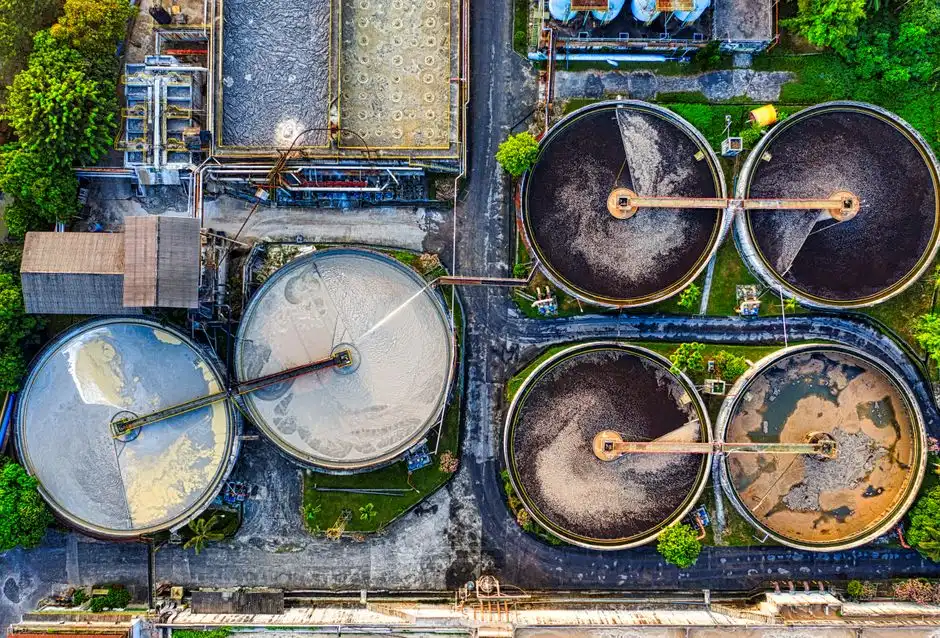
Characterization must precede equipment selection because mine drainage and metals-process wastewater can contain suspended solids, metals, metalloids, organics and variable salinity. A clarifier can remove precipitated material, but it cannot be assumed to remove dissolved metal remaining in solution. The treatment sequence should therefore connect each operation to a defined compliance risk.
Begin with pH adjustment. The mining treatment guidance from Genesis Water Technologies identifies pH restoration as the first stage and states that appropriate pH adjustment helps dissolved metals precipitate. Then apply coagulants and flocculants to aggregate suspended solids and small metal-containing particles into larger flocs before clarification or flotation. The same guidance places filtration after this chemical and solids-removal work.
Automatic controls are useful where pH and reagent demand vary. The PLC-controlled chemical dosing system provides controlled injection of coagulants, flocculants, pH adjusters and specialty chemicals. Tank size, pump capacity and control logic should nevertheless be based on characterized chemical demand and flow—not nominal equipment flow alone.
For an integrated treatment train, evaluate the integrated mine water treatment system, which combines coagulation, flocculation, sedimentation, filtration and automatic backwash in the JY Series. Its catalog capacity is 10–200 m³/h across the stated product range. When the dominant problem is suspended solids, colloids, or oil and grease, compare that integrated route with a DAF system for industrial wastewater pretreatment; the DAF product has a catalog range of 4–300 m³/h across 13 standard models.
| Process stage | Primary equipment decision | Evidence required before commitment |
|---|---|---|
| pH control | Manual or PLC-controlled chemical dosing with suitable equalization | Raw-water pH range, chemical demand, flow variability and operating-response data |
| Coagulation and flocculation | Dosing system and mixing arrangement sized for characterized demand | Jar or pilot tests showing floc formation, residual chemistry and solids separation |
| Clarification or flotation | Integrated sedimentation-filtration train or DAF | Suspended-solids loading, colloid behavior, oil and grease, space and operator workload |
| Filtration or polishing | Media filtration, UF or another process supported by pilot results | Required removal basis, dissolved-metal form, competing ions, scaling and residual management |
| Residuals management | Sludge collection, dewatering, storage and disposal or reuse route | Expected solids quantity, chemical content, dewatering behavior and lawful destination |
Do not default to ultrafiltration or reverse osmosis. Dissolved-metal removal, competing ions, scaling and waste-residuals management must be demonstrated during pilot testing before a membrane polish is specified. That is especially important where chemical precipitation is intended to transfer metals into a managed solid rather than remove them from the overall system.
Match the Treatment Train to the Failure Mode
Equipment selection should follow the dominant failure mode identified by representative sampling and pilot testing. For variable suspended solids and colloids, DAF and an integrated coagulation-flocculation-sedimentation-filtration train solve overlapping but distinct problems. DAF is the stronger candidate when floatable material, oil and grease or colloidal solids dominate; the integrated train is attractive when the project needs several treatment functions in one process sequence.
For pH-sensitive metal precipitation, compare basic dosing with automatic control only after chemical demand is established. A PLC-controlled system can respond to changing pH and dosing conditions, but automation does not compensate for an undersized tank, an incorrect reagent or an unstable influent. Chemical demand, mixing conditions and residual concentrations are the sizing basis.
For polishing where suspended particles remain, consider the ultrafiltration system described in the product literature. Its stated specification uses 0.03-micron PVDF membranes, accepts turbidity up to 300 ppm, and includes automatic backwash and air scour. Those specifications describe the unit, not proof that it will meet a plant’s current Waukesha limit; pilot verification remains necessary.
| Plant condition | Preferred comparison | Key procurement check |
|---|---|---|
| Variable suspended solids and colloids | DAF versus integrated coagulation, flocculation, sedimentation and filtration | Pilot floc behavior, float or settle performance, footprint and operator workload |
| Oil and grease present | DAF or a staged clarification train with confirmatory polishing | Representative oil loading, emulsification, recovered-solids handling and final residual |
| pH-sensitive metal precipitation | Manual or basic dosing versus PLC-controlled automatic dosing | Characterized reagent demand, tank volume, control response and chemical inventory |
| Residual suspended particles | Media filtration versus UF where justified by pilot results | Required particle-removal basis, membrane loading, cleaning, scale and reject management |
| Flow outside a standard catalog range | Standard model versus documented custom configuration | Written capacity gap, hydraulic basis, guarantees and schedule |
| Chemical precipitation followed by filtration | Sludge and filter-residuals handling identified before purchase | Solids generation, dewatering, storage and lawful disposal or reuse |
Require vendors to document any gap between expected plant flow and a proposed catalog range rather than silently accepting an oversized or undersized unit. A multi-media filtration system may be appropriate for general solids removal, while a plate-and-frame filter press can address concentrated residuals, but neither should be selected without stream-specific data.
Verify Compliance at the Point of Connection
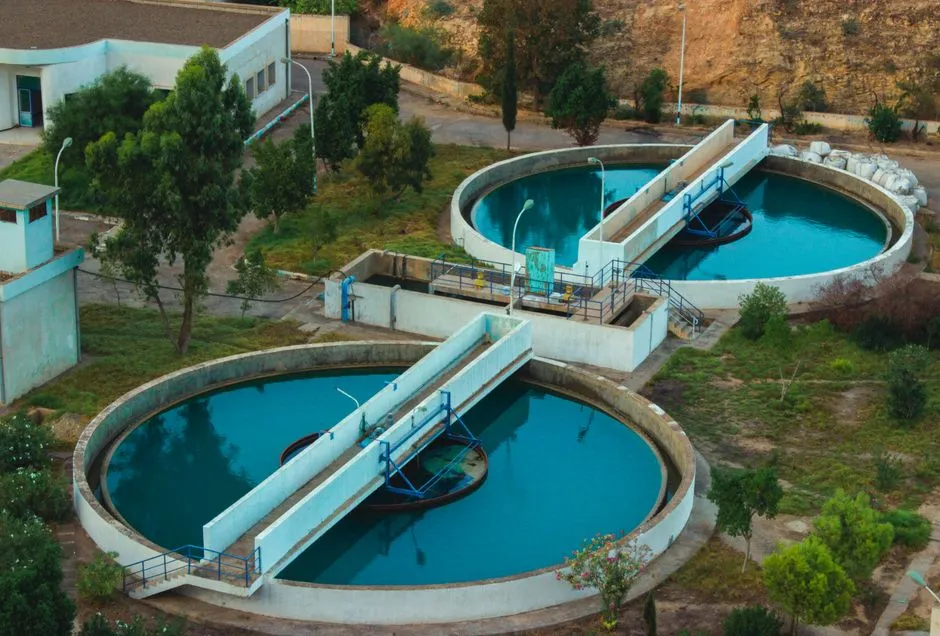
End-of-pipe pretreatment monitoring must occur at the point where the industrial discharge enters the POTW collection system, because that is where EPA says POTWs impose local limits. Install representative sampling and monitoring there; treatment-unit outlet samples alone do not demonstrate what the sewer receives.
Build operating records around flow, pH, reagent dose, solids-removal performance and analytical results. Record deviations and explain corrective actions before they become noncompliance. Sampling design should reflect the permit’s required sample type and frequency, including whether grab, time-proportional or flow-proportional composites are required.
The Wisconsin DNR fact sheet lists quarterly effluent monitoring for cadmium, chromium, lead and nickel and monthly effluent monitoring for copper and zinc as part of Waukesha’s POTW program. Those frequencies must not be substituted for an industrial user’s own monitoring requirements. Obtain the user-specific conditions from the City and verify the laboratory method, sample preservation, chain of custody and reporting schedule.
Two other numbers from the Wisconsin DNR fact sheet require careful interpretation. The City’s Clean Water Plant has a 14 MGD annual-average design flow, and the fact sheet reports a 9.3 MGD return flow calculated for future Lake Michigan water demand. These figures describe plant-capacity context, not an allowance for any industrial user. The fact sheet also identifies the Fox and Root Rivers as receiving waters, which is watershed context rather than a substitute for the industrial user’s connection-point obligation.
Compliance proof: treatment operation, representative connection-point samples, permit-compliant analytical results, traceable maintenance records and timely reporting form one evidence chain. Equipment capacity alone is not compliance evidence.
Plan Equipment Selection and Compliance as One Project
Issue one request for proposal covering wastewater characterization, current Waukesha limits, treatment objectives, flow variability, utilities, residuals and future expansion. Keeping these subjects in one procurement package reduces the risk that equipment is selected before the compliance basis is complete.
Ask each bidder to define the proposed treatment train, sizing basis, performance guarantees, monitoring plan, controls, operator training, preventive maintenance and local support. Require the bidder to identify unresolved assumptions—such as unrepresentative sampling or unverified dissolved-metal behavior—rather than treating them as guaranteed performance.
| Procurement package | Minimum bidder response | Compliance reason |
|---|---|---|
| Wastewater and permit basis | Current analytical data, Waukesha limits, stream inventory and sampling plan | Establishes what the equipment must achieve |
| Process and sizing | Unit-by-unit train, hydraulic and contaminant loading basis, pilot evidence and residuals plan | Connects equipment capacity to actual wastewater behavior |
| Controls and monitoring | Control narrative, instruments, connection-point sampling provisions and alarm strategy | Supports operating decisions and end-of-pipe verification |
| Performance and acceptance | Guarantees tied to applicable permit parameters and agreed test conditions | Prevents generic acceptance claims from replacing site-specific limits |
| Operations | Maintenance plan, consumables, training, support and recordkeeping responsibilities | Determines whether performance can be sustained |
| Cost structure | Capital scope plus chemical, monitoring, labor, maintenance and residual-disposal assumptions | Supports a complete lifecycle budget rather than equipment price alone |
Make acceptance testing conditional on the compliance parameters in the user’s permit. Do not invent generic acceptance values while the current site-specific limits remain unavailable. A pre-discharge sampling plan should identify laboratory responsibilities, sampling locations, sample types, analyses, data review, operating adjustments and POTW reporting ownership.
Budget for chemical consumption, sludge handling, monitoring and operator time even though the supplied research contains no defensible regional capital-cost or treatment-cost range. If biological treatment enters the approved process, the MBR versus conventional activated sludge for mining wastewater comparison becomes a relevant follow-up; MBR is not a default substitute for chemical precipitation or solids-removal equipment. For broader process context, see the regional guide to mining-plant sewer pretreatment.
Frequently Asked Questions
How do mining/metals plants near Waukesha, United States meet pretreatment limits before sewer discharge?
Plants characterize each wastewater source, obtain the current Waukesha local limits and prohibited-discharge rules, then control pH before coagulation and flocculation. Clarification, DAF or integrated solids removal is followed by filtration or other polishing justified by analytical and pilot results. Representative sampling at the connection to the City’s collection system provides the final compliance check under the industrial user’s applicable permit.
How should treatment equipment be sized for a mining or metals facility?
Size equipment from representative stream flows, contaminant loads, pH range and chemical demand—not the largest occasional flow alone. The industrial user must provide current permit limits, flow records, analytical results, operating variability, utilities and residual-handling requirements. Where the expected load falls outside a vendor’s catalog range, require the bidder to document the gap and define any custom configuration and its performance basis.
How should a buyer select a wastewater-treatment supplier near Waukesha?
Compare bidders against the same permit-based scope and require a traceable proposal covering process selection, sizing, controls, monitoring, acceptance testing, training, maintenance, chemicals and residuals. The Wisconsin DNR fact sheet identifies six significant industrial users, the 14 MGD annual-average Clean Water Plant design flow and specific POTW monitoring frequencies; none is a substitute for the supplier’s plant-specific sizing data or the industrial user’s permit conditions.
What information is required to estimate the cost of meeting Waukesha pretreatment limits?
Request a site-specific estimate after receiving flow data, source-by-source analytical results, current Waukesha limits, chemical-demand information, proposed treatment train, utility requirements and residual-disposal assumptions. The supplied research provides no reliable local capital-cost or treatment-cost range, so a budget based on generic regional prices would not be defensible. Separate equipment cost from chemical use, sludge handling, monitoring and operator labor.