
Which Treatment Train Fits a Kite Mining Site?
For mining and metals wastewater in Kite, conventional activated sludge is generally the lower-cost option for steady, low-toxicity flows discharged to a permitted receiving water when clarifier and sludge infrastructure already exists. MBR is generally more compelling for process-water reuse, constrained sites, variable loads, or consistently low TSS before UF/RO. HydropureWater’s 2026 comparison reports a 20–40% MBR CAPEX premium and 15–30% OPEX premium per m³ at a 1,000 m³/day basis, but its integrated system is about 60% smaller and produces effluent with filtration below 1 μm. Neither option removes dissolved metals, so precipitation, equalization, and pilot testing remain essential.
The decision should begin with the service objective: permit-compliant discharge, process reuse, dust suppression, or another defined return on treated water. The next decision is whether the biological process has to tolerate metal-bearing pulses, variable mill flows, stormwater ingress, and inhibitory chemistry. A train that is attractive for reuse can be a poor economic fit when the only objective is discharge and existing secondary-clarifier and sludge assets can be used.
Request the following project inputs before comparing bids: diurnal and seasonal flow profile; metal species as well as total metals; sulfate, hardness, and TDS; permit limits; reuse quality targets; available footprint; sludge-disposal route; and the ambient temperature range. The broader mining-wastewater MBR comparison provides the technical context, but the final selection must reflect Kite’s actual water balance, logistics, permits, and reuse economics.
HydropureWater’s relative comparison establishes the commercial screening basis: at 1,000 m³/day, MBR capital cost was 20–40% higher and operating cost per cubic metre was 15–30% higher than CAS (HydropureWater, 2026). These are comparison percentages, not a quotation for a Kite installation. They justify asking whether avoided civil work, lower downstream-solids loading, and quantified reuse value recover the premium.
What Changes—and What Does Not—When CAS Becomes MBR
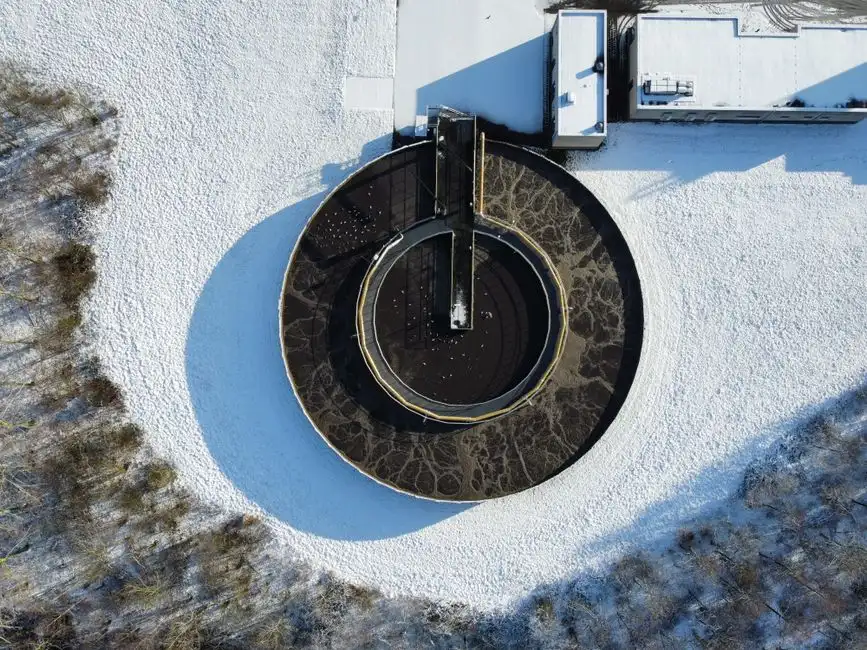
CAS and MBR retain the same activated-sludge biological step; MBR changes how biomass is separated from the treated water. CAS uses gravity settling in a secondary clarifier, while MBR couples activated sludge to membrane filtration that retains biomass without relying on sludge settleability.
HydropureWater’s 2026 mining-wastewater guidance describes submerged PVDF membranes with a typical pore size of 0.1–1 μm that retain biomass directly. Because settleability no longer controls final solids separation, an MBR can operate at higher mixed-liquor suspended solids and consolidate the activated-sludge and clarifier functions into a smaller reactor footprint (HydropureWater, 2026). The academic MBR literature supports improved separation for sensitive-site and reuse applications, but its municipal and pharmaceutical findings do not establish mining-metals removal performance (S3).
The critical distinction is that a membrane retains particles and biomass; it does not remove dissolved metals or total dissolved solids. Lime, sodium hydroxide, or sulfide precipitation and equalization may still be required before either biological train (HydropureWater, 2026). MBR can prevent a clarifier failure from becoming direct solids carryover, but it cannot prevent dissolved metals from inhibiting the biomass.
| Design element | Conventional activated sludge | Submerged-PVDF MBR |
|---|---|---|
| Biological treatment | Activated sludge | Activated sludge |
| Final solids separation | Gravity secondary clarifier | Membrane filtration; supplied guidance states 0.1–1 μm PVDF |
| Separation dependency | Biomass flocculation and settleability | Physical membrane retention, provided the membrane remains clean and within its operating envelope |
| Footprint | Aeration basin and clarifier | No separate clarifier; higher MLSS is possible |
| Dissolved metals and TDS | Not removed by biological separation | Not removed by membrane separation |
| Primary operating risk | Poor settling and solids carryover | Fouling, scaling, cleaning downtime, and membrane capacity loss |
How Mining and Metals Influent Changes the Comparison
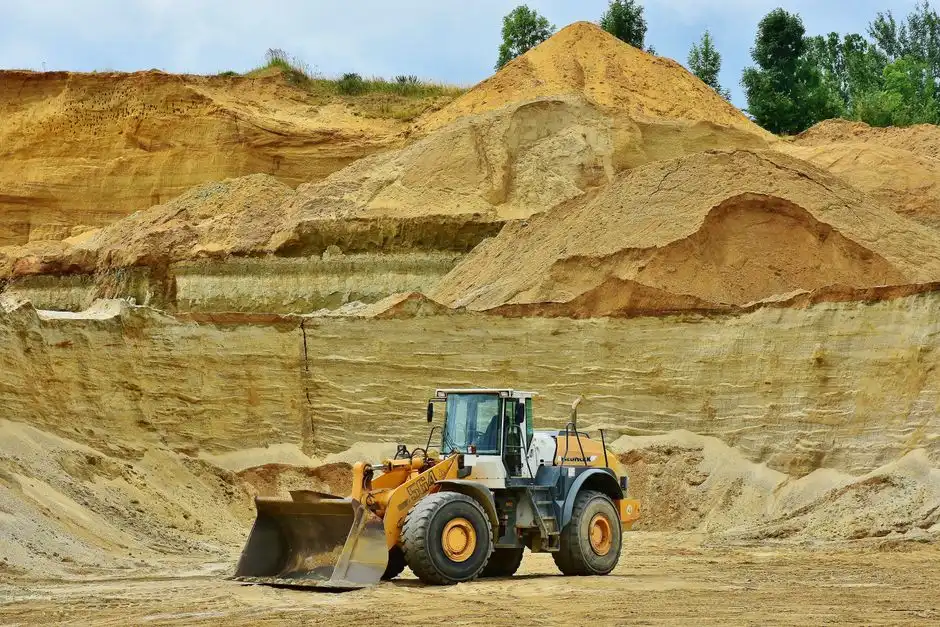
Mining-water chemistry can make solids separation the visible failure point while dissolved metals, sulfate, salinity, and inhibitory compounds damage the biology upstream. HydropureWater’s 2026 guidance identifies high TDS, sulfate, hardness, dissolved heavy metals, toxic-metal pulses, high salinity, inhibitory chemistry, intermittent mill flows, stormwater ingress, and process upsets as material design concerns.
Dissolved metals can stress biomass and degrade floc formation and settling in CAS. An MBR protects the final separation step from poor settling, but the organisms remain exposed to the same dissolved-metal toxicity. Pulse loading also produces different failure mechanisms: CAS can lose solids through the clarifier, while an MBR keeps effluent TSS tied to membrane performance rather than biomass settleability—provided fouling does not drive the membrane outside its operating envelope.
Both trains therefore need characterization, flow equalization, pH control, and dissolved-metals pretreatment. Upstream solids removal is a biological-protection measure, not merely a polishing choice. HydropureWater identifies dissolved air flotation ahead of either biological system when the influent contains fines, oil, or floatables (HydropureWater, 2026). The available DAF pretreatment for mining wastewater should be evaluated as part of the complete train rather than added after pilot evidence shows chronic carryover.
| Influent or operating condition | CAS consequence | MBR consequence | Design response |
|---|---|---|---|
| Dissolved heavy metals | Biomass stress and degraded settling | Biomass stress remains; membrane does not remove dissolved metal | Characterize metal speciation; control pH; evaluate precipitation and equalization |
| High sulfate, hardness, salinity, or TDS | Possible biological inhibition and downstream scaling burden | Same biological and downstream salinity burden | Characterize the full matrix and assess RO/UF scaling and reject-water management |
| Mill shutdown, stormwater ingress, or process upset | Hydraulic or toxic shock may overload the clarifier | Membrane separates solids, but biology and fouling still face the shock | Equalize flow; record shock events; pilot with representative loads |
| Fines, oil, or floatables | Can impair aeration, floc formation, and settling | Can foul membranes and consume biological capacity | Remove upstream solids using DAF or another verified pretreatment step |
| Poor sludge settleability | Direct effluent solids carryover | Less dependence on settling for final separation | Test biomass behavior and membrane performance on actual feed |
MBR Performance, Footprint, and Operating Burden
HydropureWater’s verified 2026 product catalog documents filtration below 1 μm and an approximately 60% smaller footprint than conventional systems for integrated applications from 10–2,000 m³/day. These are manufacturer-specific integrated-system claims, not universal MBR guarantees, and they still require confirmation against the selected configuration.
The same catalog attributes a 10–20× lower energy comparison for HydropureWater DF flat-sheet modules versus external cross-flow systems to the manufacturer (HydropureWater, 2026). That comparison cannot be transferred to every submerged membrane design. A bid should separate biological aeration from membrane scour energy and state the conditions attached to any energy claim.
MBR introduces membrane-specific operating duties: scour air, transmembrane-pressure monitoring, chemical clean-in-place, integrity checks, cleaning downtime, membrane replacement, and spare-element planning. CAS instead requires aeration control, mixing, clarifier operation, sludge inventory management, and return- and waste-activated-sludge handling. CAS has no membrane cleaning burden, but its effluent consistency remains dependent on clarifier performance.
| Project criterion | CAS | MBR |
|---|---|---|
| Effluent consistency | Dependent on sludge settleability and clarifier operation | Governed by membrane performance, with fouling and scaling risks |
| Footprint | Requires aeration and clarifier area | HydropureWater claims about 60% smaller for its integrated system (2026) |
| Filtration | Clarifier-dependent solids separation | HydropureWater documents filtration below 1 μm for its integrated system (2026) |
| Operating burden | Aeration, mixing, clarifier control, sludge inventory, RAS/WAS | CAS duties plus scouring, TMP monitoring, cleaning, integrity checks, and spares |
| Downstream UF/RO | Variable solids loading can increase fouling | Low and stable TSS can reduce suspended-solids fouling, subject to pilot evidence |
| Economic benefit | Useful for straightforward permitted discharge | Valuable only when reuse, stringent effluent quality, or constrained footprint has a defined cost or operating benefit |
The integrated submerged PVDF MBR system and DF membrane bioreactor modules should be compared as distinct scopes. Ask each supplier to identify which footprint, filtration, energy, and capacity claims apply to the offered configuration.
Where CAS and MBR Cost Advantages Reverse
At a 1,000 m³/day comparison basis, HydropureWater reports that MBR capital cost is 20–40% higher and operating cost per cubic metre is 15–30% higher than CAS (HydropureWater, 2026). These relative figures establish a screening premium; they do not establish a Kite price because the influent, flow profile, reuse target, footprint, and site conditions are undefined.
The capital additions associated with MBR include membrane modules, a scour blower, clean-in-place equipment, more complex controls, and additional instrumentation. Operating additions include continuous scour air, cleaning chemicals, membrane consumables, membrane replacement over a multi-year cycle, and the labour associated with membrane maintenance. These costs must be separated from the common biological-reactor scope so bidders cannot hide them in unit prices.
Potential offsets include reduced civil footprint, elimination of a separate clarifier, lower suspended-solids loading on downstream filters, and reuse value. Those offsets become economic benefits only when quantified against a defined alternative. The 2026 MBR cost-per-m³ guide identifies the line items to request, but a defensible Kite comparison still requires site-specific quotations.
| Cost category | CAS scope | MBR scope |
|---|---|---|
| Civil and equipment | Aeration basin, secondary clarifier, associated controls | Higher-cost membrane package and scour, clean-in-place, controls, and instrumentation scope |
| Recurring operating cost | Aeration, mixing, sludge inventory, RAS/WAS management | MBR duties plus membrane cleaning, consumables, replacement, and downtime |
| Potential offset | Use of existing clarifier and sludge assets | Smaller footprint, avoided clarifier, lower downstream-solids loading, or quantified reuse value |
| Sludge route | Waste-activated-sludge dewatering required | Waste-activated-sludge dewatering still required; do not omit it from either bid |
| Evaluation horizon | Site-specific total cost | Site-specific 5–10-year total cost including membrane replacement and cleaning |
Price sludge dewatering separately for either biological train. HydropureWater identifies a plate and frame filter press for sludge dewatering for the selected biological process as relevant to the waste-activated-sludge stream. The filter-press choice must follow pilot solids characterization and the selected waste-handling route.
Build the Complete Treatment Train for Kite
A defensible Kite design starts with a complete process train rather than a membrane or clarifier selected in isolation. The sequence is: characterize the source water; equalize flow and load; remove oil, floatables, and coarse or fine solids; control pH and remove dissolved metals where required; apply biological treatment; separate solids; add disinfection or polishing as the permit or reuse specification demands; and dewater the resulting waste sludge.
MBR effluent should be treated as pretreatment for downstream UF or RO, not automatic proof of reuse readiness. Stable, low-TSS MBR effluent can reduce suspended-solids fouling before UF/RO, but dissolved salts, hardness, sulfate, residual metals, scaling, and recovery remain unresolved. The UF system for downstream polishing and industrial RO system for final desalination must therefore be sized against the complete feed analysis and reuse target.
Dissolved-metals precipitation also requires controlled chemical addition. The available automatic chemical dosing system should be assessed against measured lime, sodium hydroxide, or sulfide demand rather than selected from a generic dose assumption. Equalization protects both the biological process and the dosing system from pulses.
Kite’s cold-weather design should be explicit. HydropureWater’s supplied general guidance calls for winterized membrane housings, heat tracing, protected scour-air handling, and supplier confirmation of cold-weather flux derating (HydropureWater, 2026). The final equipment proposal should state winter operating limits rather than assume year-round performance.
Both biological options require a sludge route. Dewatering performance depends on the actual biomass, chemical use, and upstream solids removals; pilot data should therefore feed the filter-press and waste-disposal specification.
Use a Pilot Test Before Committing to Full-Scale MBR
HydropureWater’s 2026 mining-wastewater guidance recommends a containerized or skid pilot using actual feed before full-scale MBR commitment (HydropureWater, 2026). The pilot should test the complete biological and separation train, including any proposed precipitation and solids-removal steps.
Measure membrane flux, transmembrane-pressure trends, cleaning frequency, biological response, solids carryover, recovery, and chemical consumption. Include representative metal-bearing shock loads rather than testing only with a stable blended sample. Track whether membrane performance responds differently during mill shutdowns, stormwater ingress, and process upsets.
Characterize the source water during normal operation, shutdown, stormwater ingress, and upset conditions. Record flow, pH, metal speciation, sulfate, hardness, TDS, salinity, toxicity indicators, and the parameters needed to assess the selected biological and polishing processes. The sampling plan must establish whether equalization and precipitation adequately protect the biology.
Require the supplier to document membrane replacement timing, spare-module lead time, cleaning protocols, winter operating limits, membrane-flux derating, and field-service coverage. These are procurement commitments, not optional technical notes. Ask for pilot instruments, calibration records, raw trend data, and calculations showing how the pilot scale relates to full-scale flow and loading.
Set acceptance criteria against the final discharge permit or reuse specification. Supplier-wide filtration or efficiency claims should not replace site acceptance criteria for effluent quality, chemical use, cleaning frequency, operability, and fouling response. The final training plan, control narratives, and maintenance procedures should also be tested against site staffing constraints.
Final Selection Checklist
A Kite technology selection should pass six documented gates: service objective, influent variability and toxicity, footprint, existing equipment, sludge route, and 5–10-year operating cost. Each gate needs site evidence rather than a preference for a particular reactor type.
- Objective: Separate permit-compliant discharge from process reuse, dust suppression, or another quantified reuse benefit.
- Influent: Test flow variability, metal speciation, sulfate, hardness, TDS, toxicity, and upset conditions.
- Footprint: Compare the complete civil footprint, not just the reactor vessel.
- Existing assets: Determine whether the secondary clarifier, aeration basin, and sludge infrastructure can be used.
- Sludge: Confirm the waste route and price dewatering for either option.
- Cost: Compare bids over 5–10 years, including membrane replacement, cleaning chemicals, downtime, power, and the value of reuse.
Select CAS when direct permitted discharge, steady low-toxicity flow, and usable existing clarifier and sludge assets make the MBR premium difficult to recover. Select MBR when reuse has quantified value, land is constrained, low and stable TSS is required before UF/RO, or variable loads make clarifier performance the weak point.
The preferred option should remain conditional. Check pilot evidence, current permits, site-specific influent data, winter operating limits, and the final equipment proposal before issuing a purchase order.
Frequently Asked Questions
Is MBR cheaper than conventional activated sludge for mining wastewater?
Not on HydropureWater’s stated comparison basis. At 1,000 m³/day, MBR capital cost was 20–40% higher and operating cost per cubic metre was 15–30% higher than CAS (HydropureWater, 2026). The result can reverse economically when avoided civil work, lower downstream-solids loading, or quantified reuse value exceeds the premium. Request itemized quotations based on the Kite flow, influent matrix, footprint, reuse target, membrane replacement cycle, and 5–10-year operating plan.
What MBR capacity and module sizes are available for initial sizing?
HydropureWater’s verified 2026 catalog documents its integrated MBR for applications from 10–2,000 m³/day. It also documents DF flat-sheet modules in 80–225 m² configurations producing 32–135 m³/day (HydropureWater, 2026). These figures support preliminary screening, not final sizing. The selected train must be sized against actual flow, loading, temperature, recovery, cleaning conditions, and validated membrane flux.
Does MBR remove dissolved metals from mining wastewater?
No. Membranes retain biomass and particles; they do not remove dissolved metals or TDS. HydropureWater’s 2026 guidance therefore identifies pH control, equalization, and suitable precipitation—such as lime, sodium hydroxide, or sulfide—as requirements that may apply to both MBR and CAS. Confirm residual-metal performance after precipitation using site water and the final permit or reuse specification.
How should an MBR supplier be selected for a Kite project?
Require real-feed pilot results, membrane-flux and transmembrane-pressure trends, cleaning frequency, chemical consumption, replacement timing, spare-module lead time, field-service coverage, and winter operating limits. Also require the supplier to identify any cold-weather flux derating and clarify which performance claims apply to the offered configuration. Evaluate these commitments alongside the current permit, reuse requirements, and final design basis rather than relying on generic product claims.
What determines final compliance for a Kite wastewater project?
The site’s current permit and reuse requirements determine the final compliance basis; neither can be inferred from a generic MBR-versus-CAS comparison. Confirm discharge limits, monitoring requirements, water-reuse quality, and receiving-water or process constraints with the responsible authority and the project’s environmental consultant. The selected equipment proposal and pilot acceptance criteria must then be checked against those verified requirements.