Separate Fab Wastewater by Process and Contaminant
Wastewater from an expanded Intel fab in Germany should be segregated at the source, not blended into one end-of-pipe stream. Treat copper and CMP wastewater, fluoride-bearing effluent, ammonium streams, solvents and organics separately, then polish lower-risk rinse and UPW-reject water for reuse through an appropriate membrane train. The final route must be checked against the site permit, current German requirements, indirect-discharge conditions and receiving-water constraints. Intel’s public record supports this source-segregated model, including Ocotillo’s up-to-75% reuse, but it does not establish a verified flow or capacity for a German expansion.
Build the design basis around five practical categories: copper and CMP waste, ammonium-bearing wastewater, fluoride and calcium streams, organics and lithography solvents, and bulk rinse water with UPW reject. This follows the stream taxonomy in Intel’s published fab wastewater treatment approach. For each category, request flow, pH and chemistry data separately. The available research establishes the stream types but does not provide a flow schedule for a German Intel site, so a combined-stream assumption cannot be justified.
Intel’s Ocotillo program is a benchmark, not a German design input. The US EPA Region 9 case study reports approximately 5.2 MGD conserved, up to 75% reuse and more than 3.5 billion gallons returned to the underground aquifer, based on a 2017 snapshot. These figures describe Ocotillo’s site-specific water and recharge arrangements; they do not establish the German fab’s capacity or permitted reuse rate.
Do not combine acids, caustics, fluoride, metals and high-TDS UPW reject merely because a common discharge header is convenient. Blending can change pH-control demand, precipitation chemistry, membrane fouling and the achievable recovery. Segregation also creates the decision point for recovery: ammonium sulfate, calcium fluoride and copper may have outlets only if their concentration, purity and off-site acceptance criteria are demonstrated.
| Source category | Principal contaminants or risks | Design data required separately |
|---|---|---|
| Copper and CMP waste | Copper and other metals, suspended solids, acidity or alkalinity, oxidants | Peak and average flow, pH, metal species, suspended solids, temperature |
| Ammonium-bearing wastewater | Ammonium, scrubber chemistry, possible organics and COD | Flow, pH, ammonia, COD or TOC, temperature, nitrogen discharge route |
| Fluoride and calcium streams | Fluoride, calcium, acids, alkalinity and precipitate-forming ions | Flow, fluoride, calcium, pH, alkalinity and solids data |
| Organics and lithography solvents | Solvents, specialty cleaners, TMAH residues, flammability and vapor risks | Chemical inventory, composition, flash properties, flow, COD or TOC and reuse purity |
| Bulk rinse and UPW reject | Silica, dissolved salts, trace organics and membrane fouling constituents | Flow, conductivity, silica, TOC, suspended solids and required reuse quality |
Match Each Stream to a Treatment Train
Each source category needs a unit process matched to its dominant contaminant and endpoint; UF, RO and EDI cannot replace source-specific treatment of metals, fluoride, ammonium or solvents. Intel’s disclosures support evaluating separate trains for each, as summarized in German semiconductor wastewater requirements and the applicable advanced-packaging treatment design.
- Copper and CMP: evaluate pH adjustment followed by precipitation or ion exchange, then filtration. The choice must reflect pH stability, metal recovery, sludge generation and downstream polishing requirements. An automated chemical dosing system may be needed where stable reagent addition is necessary.
- Ammonium wastewater: evaluate ammonia stripping or biological nitrification, followed by sulfate recovery where a usable by-product route exists. Intel reported more than 35,000 tons of ammonium sulfate sent to fertilizer manufacturing from Oregon and Arizona since 2013, according to its Circularity in Semiconductor Manufacturing white paper from November 2019. Ireland also supplies ammonium sulfate to fertilizer, but that does not establish a German off-take contract.
- Fluoride-bearing water: evaluate controlled calcium addition, precipitation and solids dewatering. Intel’s Ireland disclosures describe calcium fluoride routed to cement-product manufacturing. The German concept must still verify the precipitate composition, dewatering performance and receiving site's acceptance criteria.
- Solvents and specialty cleaners: evaluate segregation, distillation and activated-carbon or oxidation steps only after chemical composition, flammability, recovery purity and reuse destination are defined. Intel reports lithography-solvent distillation for resale and specialty-cleaner routing to fuel blending in Ireland.
- UPW reject and bulk rinse: evaluate multimedia filtration or ultrafiltration before reverse osmosis, with ion exchange or deionization where the required quality approaches ultrapure-water feed. An industrial RO system for fab wastewater polishing is a candidate unit operation, not a complete treatment train.
| Stream | Unit-process sequence to evaluate | Selection driver | Residual or by-product route to verify |
|---|---|---|---|
| Copper and CMP | pH adjustment → precipitation or ion exchange → filtration | Metal removal, pH control, recovery yield and sludge production | Recovered copper or authorized solids disposal |
| Ammonium-bearing | Stripping or biological nitrification → sulfate recovery | Nitrogen removal, off-take and product purity | Fertilizer acceptance or permitted residual discharge |
| Fluoride and calcium | Calcium precipitation → settling or filtration → dewatering | Fluoride solubility, solids capture and residual fluoride | Calcium-fluoride acceptance or permitted disposal |
| Solvents and organics | Segregation → distillation → carbon or oxidation where needed | Flammability, composition, reuse purity and fouling control | Recovered solvent, fuel blending or controlled waste transfer |
| Rinse and UPW reject | Filtration or UF → RO → ion exchange or DI where required | Silica, TDS, organics, recovery and concentrate volume | Internal reuse, discharge or further concentrate treatment |
Choose the Discharge, Reuse and Recovery Route
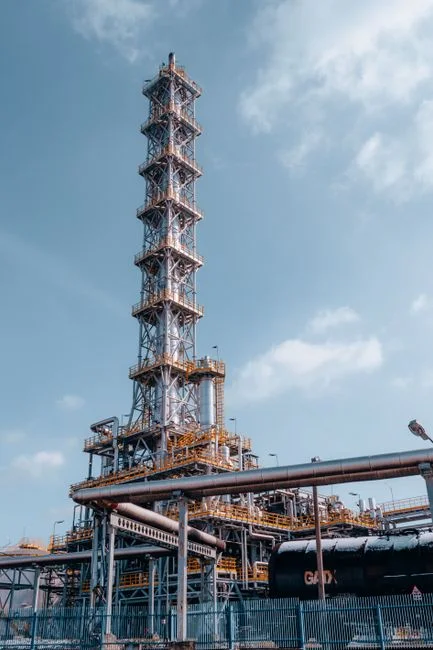
A wastewater reuse train must be matched to a named water consumer and a permitted residual route; a recovery percentage alone does not establish a viable project. Rank reuse destinations by required water quality. Lower-grade reclaimed water may suit cooling, scrubbers or cooling towers, while tools or processes requiring ultrapure feed need a more stringent polishing sequence. The ZLD and concentrate-management options should be assessed alongside, not instead of, the mainstream reuse and discharge routes.
Treat the Ocotillo aquifer-recharge outcome as a site-specific benchmark. The US EPA Region 9 case study reports that RO-polished process wastewater was recharged to the aquifer after treatment to drinking-water standards, with more than 3.5 billion gallons returned since project inception in its 2017 snapshot. The supplied German material does not verify aquifer recharge for an Intel expansion in Germany. It should therefore remain an option requiring hydrogeological, permit and public-acceptance evidence, not a design assumption.
Confirm each by-product outlet before selecting recovery equipment. Intel’s public record includes ammonium sulfate sent to fertilizer manufacturing, calcium fluoride used in cement manufacturing, specialty cleaners used for fuel blending and copper recovered through suppliers. For a German site, request evidence of the prospective receiver’s acceptance criteria, assay requirements, transport route, permitted use and price mechanism. “Recoverable” is not the same as “saleable.”
Evaluate concentrate and sludge in parallel with reuse. RO reject remains a residual stream, while metal and fluoride precipitation creates concentrated solids. High permeate recovery does not resolve the disposal question; it may shift more dissolved mass into a smaller concentrate requiring evaporation, crystallization or another authorized treatment route.
| Treated stream | Potential reuse priority | Discharge or recovery check | Evidence required before commitment |
|---|---|---|---|
| Polished bulk rinse and UPW reject | Cooling, scrubbers, cooling towers; higher-grade reuse only if quality is demonstrated | Permit route and concentrate destination | Water balance, reuse specification, recipient approval and concentrate assessment |
| Copper/CMP effluent | Water reuse where quality permits | Metal recovery or solids disposal | Metal assay, residual-solids acceptance and transport approval |
| Ammonium effluent | Usually discharge after nitrogen removal unless product recovery is viable | Fertilizer outlet or permitted discharge | Product composition, nutrient specification and receiver agreement |
| Fluoride/calcium effluent | Limited reuse pending quality review | Calcium-fluoride recovery or solids disposal | Fluoride removal performance and solids acceptance |
| Recovered solvents | Resale or specified process reuse | Fuel blending or controlled waste route | Purity, composition, flammability control and authorized destination |
Validate German Compliance Before Equipment Selection
The site permit and selected discharge route must be identified before treatment equipment is frozen. General references—including AbwV Annex 22, Annex 40, applicable IED BAT-AELs and LAGA M 23—do not replace the current site permit, receiving-water assessment or authority correspondence. Industrial effluent treatment guidance for Berlin provides a general screening reference, but it does not establish the conditions for a German Intel fab.
The supplied German article identifies pH, fluoride, COD or TOC, heavy metals, AOX or EOX, suspended solids and emerging PFAS monitoring as relevant parameters. Its cited pH range of 6.0–9.0 must be verified against the applicable permit rather than copied into the design basis. The same rule applies to any current AbwV, BAT-AEL or monitoring requirement: confirm the applicable date, activity classification, receiving route and approved analytical methods with the competent authority.
Distinguish direct discharge to a receiving water from pretreatment for indirect sewer discharge. The governing limits, dilution assumptions and treatment objectives can differ. An indirect-discharge design may be required to protect the sewer-operator’s plant, while a direct-discharge concept must address the receiving-water constraints and applicable environmental permit. These are separate acceptance cases.
Before freezing the treatment concept, request:
- the current permit and every material amendment;
- historical influent and effluent data by source stream;
- the complete chemical inventory and process-change forecast;
- the proposed reuse plan and named water consumers;
- by-product and waste acceptance evidence;
- correspondence with the authority and sewer operator; and
- the current receiving-water assessment.
Compliance language in an equipment proposal should identify which parameter is measured, where the sample is taken, the approved method, the acceptance criterion and who witnesses the test. A reuse claim alone does not demonstrate permit compliance.
Build the Sizing and Procurement Package
Comparable proposals require one controlled design basis; otherwise different suppliers will size the same words differently. Obtain source-by-source peak and average flows, pH, temperature, COD or TOC, fluoride, ammonia, metals, AOX or EOX, suspended solids and conductivity before selecting capacities. Where a constituent is absent or unmeasured, state that uncertainty rather than allowing it to disappear into a combined average.
Define required recovery and permeate quality, maximum concentrate volume, allowable residual chemistry, available footprint, utilities, automation and future-expansion criteria. Give bidders the intended treatment sequence and the permitted endpoint, not only a requested “reuse percentage.” Require each proposal to show how its equipment handles the stated feed chemistry and how failure of a pretreatment or polishing step is controlled.
Compare systems on demonstrated feed range, chemical and energy consumption, membrane or media replacement, redundancy, remote monitoring and acceptance-test methods. The industrial wastewater contractor-selection guide provides a broader procurement framework, but a German fab supplier should also demonstrate semiconductor-specific stream segregation and route control.
Do not use Intel’s Ocotillo reuse percentage, a membrane manufacturer’s recovery specification or a generic regulatory range as German design capacity. Those figures describe different conditions. Ocotillo’s reuse result is a site-specific benchmark, while a manufacturer’s recovery specification is conditional on feed chemistry, membrane configuration and operating conditions.
| Supplier acceptance item | Required submission | Evidence for acceptance |
|---|---|---|
| Design basis | Approved source-by-source water and chemistry balance | Traceability from each source stream to unit operations and endpoint |
| Equipment selection | Maximum and minimum feed envelope with operating rationale | Duty points, redundancy and demonstrated performance for the stated chemistry |
| Recovery system | Permeate quality, recovery basis and concentrate calculation | Guaranteed permeate and concentrate values tied to agreed test conditions |
| Chemical and energy use | Consumption calculation linked to design flow and chemistry | Auditable calculation and measurement plan |
| Operations | Controls, alarms, remote monitoring and maintenance requirements | Functional demonstration and complete documentation |
| Compliance | Permit-specific parameter and sampling matrix | Witnessed acceptance tests using agreed methods and limits |
| Reuse and by-products | Named recipient, quality specification and acceptance route | Written confirmation from the receiving party |
Frequently Asked Questions
What flow and capacity should equipment suppliers quote for a German Intel expansion?
No verified German Intel wastewater flow or treatment-plant capacity is supplied. Require a source-by-source water and chemistry balance covering peak and average conditions, then let each bidder state its equipment capacity against that controlled basis. A benchmark from Ocotillo, Ireland or another fab must not be presented as the German design flow.
Why are UF, RO and EDI not substitutes for source-specific wastewater treatment?
UF, RO and EDI remove or polish contaminants; they do not replace targeted treatment steps. Metals may require precipitation or ion exchange, fluoride requires controlled calcium precipitation, ammonium requires nitrogen removal or recovery, and solvents require segregation and appropriate recovery or destruction. Membrane selection depends on the upstream treatment and resulting water chemistry.
What should a supplier receive before pricing wastewater equipment?
The supplier should receive the current permit, source-specific flow and chemistry data, chemical inventory, reuse plan, concentrate limits, utility constraints and by-product acceptance evidence. For a budget comparison, ask for a priced equipment scope and separately identified civil works, chemical storage, residuals handling, commissioning, monitoring and long-term consumables. No verified quotation is supplied, so request comparable budgetary and definitive pricing scopes rather than inventing a cost estimate.
How should a buyer test a reuse claim against discharge-compliance design?
Require two separate acceptance plans. Reuse should be demonstrated against the named consumer’s water-quality specification at the agreed source flow and chemistry. Discharge compliance should be demonstrated against the current permit at the agreed sampling points using approved analytical methods. Also test the concentrate and solids routes; neither a successful reuse test nor a compliant permeate discharge closes the residual-disposal issue by itself.