Wastewater Requirements When Intel Acquires a Germany Plant: 2026 Compliance Guide
Engineering Solutions
HydropureWater Engineering Team
The Magdeburg Acquisition and Why German Wastewater Law Is Different
Intel's investment of over €30 billion (approximately $32.8 billion) in a chip manufacturing site in Magdeburg, Germany, formalized on June 19, 2023, represents the largest foreign investment ever made in Germany (source: El País, 2023-06). This significant project in Saxony-Anhalt, where Intel acquired land in November 2023 with first production anticipated in four to five years, is subject to a distinct German wastewater regulatory framework. Unlike the European Union's predominant single-substance approach (Einzelstoffansatz), Germany applies a 'production-related / branch-specific' approach (Branchenansatz) under Section 7a of the Water Resources Act (WHG) (source: OSTI/Ehm, 1995). This approach emphasizes integrated environmental protection within the production process itself, mandating the use of best available techniques (BAT) for entire industry sectors rather than setting limits for individual pollutants in isolation. Germany's water sector is currently undergoing a major transition, driven by modernization, climate resilience needs, ageing infrastructure, and stricter EU requirements, a context highlighted by the severe floods in western Germany in 2021 and recurring drought periods since 2018 (source: Sweco, 2025). For a facility in Magdeburg, the Landesverwaltungsamt Sachsen-Anhalt serves as the primary water authority responsible for permit issuance and oversight.
The Four-Layer Regulatory Stack Inside Germany
German industrial wastewater compliance for a semiconductor fab is governed by four interconnected regulatory layers, ensuring comprehensive environmental protection. The foundational layer is the federal Wasserhaushaltsgesetz (WHG), or Water Resources Act, which establishes the overarching framework for water management and protection, notably through Section 7a on production-integrated environmental protection and Sections 48–58 concerning discharge permits. The second layer consists of the Abwasserverordnung (AbwV), the Wastewater Ordinance, which provides sector-specific ordinances and annexes. For semiconductor manufacturing, Annex 22 specifies requirements for discharges from the electronics industry, while Annex 40 outlines general standards for indirect discharges to municipal public owned treatment works (POTWs).
The third layer originates from the European Union: the Industrial Emissions Directive 2010/75/EU, which has been recast by Directive 2024/1785/EU, known as 'IED 2.0', effective from 2024. This directive mandates that permits for industrial installations, including large fabs, must incorporate Best Available Techniques (BAT) conclusions and associated BAT-Associated Emission Levels (BAT-AELs), which are developed through detailed BREF (BAT Reference) documents, such as the Waste Treatment (WT BREF) and Waste Gas Treatment (WGC BREF) documents. The Saxony-Anhalt authority must transpose these BAT-AEL values into the facility's permit. Finally, the fourth layer addresses sanitary wastewater through the EU Urban Wastewater Treatment Directive 91/271/EEC. Germany is actively transposing the recast 2024 obligations of this directive, focusing on enhanced monitoring and energy neutrality targets, with implementation occurring during 2025–2026. It is also important to note the cross-linkage with the Bundes-Immissionsschutzgesetz (BImSchG), the Federal Immission Control Act, as the fab's primary BImSchG Genehmigungsbescheid (operating permit) often consolidates and references wastewater limits within the same comprehensive permit bundle.
Where the Permit Is Issued and How an Acquisition Changes It
In Germany, changes in industrial operations, particularly those involving a change of operator or significant process modifications, directly impact environmental permitting. Upon acquisition of an existing facility, Section 16 of the BImSchG and Section 7 of the WHG typically require an Änderungsgenehmigung (amendment permit) when the operator changes or if the process mix undergoes material alterations. For a greenfield site like Intel's Magdeburg fab, this process differs significantly from an acquisition of an existing facility; an Antragsgenehmigungsverfahren (full application procedure) is required, which includes a comprehensive Umweltverträglichkeitsprüfung (UVP), or environmental impact assessment, if the project thresholds are met.
The Landesverwaltungsamt Sachsen-Anhalt functions as the competent one-stop water authority for the Magdeburg region, consolidating regulatory oversight. Coordination with the local Stadtholding or the Abwasserzweckverband (wastewater association) is crucial to determine whether the fab will operate as a Direkteinleiter (direct discharger to surface waters) or an Indirekteinleiter (indirect discharger to a municipal POTW). The recently recast EU IED 2.0 (Directive 2024/1785/EU) imposes a significant obligation on competent authorities: they must re-baseline existing permits against current BAT-AELs within four years of the directive's adoption. This means any inherited permit issued before 2024 will be subject to review and potential revision to align with the latest BAT conclusions.
Stream-by-Stream: Process, Sanitary and Storm Water at a Fab
Semiconductor manufacturing generates a diverse array of wastewater streams, each requiring specific management and treatment protocols to meet stringent German and EU discharge standards. Process wastewater encompasses several distinct categories. Chemical Mechanical Planarization (CMP) slurry, for instance, contains high concentrations of total suspended solids (TSS), primarily silica or ceria abrasives, along with various organic compounds. Spent hydrofluoric (HF) or buffered oxide etch (BOE) solutions are characterized by significant fluoride concentrations. Cleaning baths like SC1 (Standard Clean 1, ammonium hydroxide/hydrogen peroxide) and SC2 (Standard Clean 2, hydrochloric acid/hydrogen peroxide) contribute ammonia, acids, and metals. Copper-plating rinses introduce heavy metals such as copper (Cu), nickel (Ni), and various organics. Photoresist developer solutions typically contain tetramethylammonium hydroxide (TMAH), a hazardous organic base.
Ultra-pure water (UPW) reject, a byproduct of producing high-purity water for wafer cleaning, represents the largest single wastewater stream from a fab, often accounting for 60–80% of the feedwater volume. This stream requires careful management, frequently undergoing partial reuse or advanced polishing before discharge. Scrubber and abatement system blowdown liquids contain concentrated acids, ammonia, and volatile organic compound (VOC) precursors captured from exhaust gases. Sanitary wastewater, originating from toilets, showers, and kitchens, falls under the EU Urban Wastewater Treatment Directive 91/271/EEC and is typically routed to the municipal treatment system in Magdeburg. Finally, stormwater (Niederschlagswasser) is collected separately and often subjected to retention and oil-water separation before infiltration or discharge, in accordance with the German AwSV (Ordinance on Installations for Handling Substances Hazardous to Water) and TRwS (Technical Rules for Substances Hazardous to Water). Downstream treatment technologies for these streams can include chemical dosing for pH adjustment and precipitation, dissolved air flotation (DAF) units for fluoride, TSS and metal hydroxide sludge removal, lamella clarifiers, and MBR systems for COD and total nitrogen reduction.
Key Discharge Parameters a German Fab Must Meet
Meeting discharge limits for semiconductor wastewater requires precise control over several critical parameters, which are typically defined in the Länder permit and tightened by EU IED 2.0 BAT-AEL conclusions.
Parameter
Typical Source in Fab Wastewater
Typical Treatment Technology
Regulatory Context
Fluoride (F⁻)
Spent HF/BOE etch, cleaning solutions
Calcium chloride precipitation, ion exchange
Often the most binding inorganic parameter; AbwV Annex 22
Standard discharge range (e.g., pH 6.0-9.0); continuous monitoring
Temperature
Process cooling water, exothermic reactions
Cooling towers, heat exchangers
Limits often apply to protect receiving water bodies
PFAS (Per- and Polyfluoroalkyl Substances)
Specialty chemicals, cleaning agents, fire suppression foams
Activated carbon adsorption, ion exchange, RO, incineration (for concentrates)
Not in historical AbwV annexes but an emerging limit under EU IED 2.0 BAT-AEL and German LAGA M 23 monitoring; treated as a binding parameter.
Exact numeric discharge limits for these parameters are highly site-specific and are established in the individual Länder permit, influenced by the receiving water body classification and the latest EU IED 2.0 BAT-AEL conclusions. For instance, heavy metal limits, such as for copper or nickel, are typically set at low mg/L or µg/L levels, with monthly monitoring requirements.
How a Fab Treatment Train Is Built to Comply
A semiconductor fab's wastewater treatment train is engineered as a multi-stage system to manage diverse streams and meet stringent discharge or reuse standards. Initial pre-treatment steps typically involve rotary bar screens and grit removal to protect downstream equipment from solids. Equalization and neutralization tanks are critical for flow and pH stability, ensuring consistent conditions for subsequent processes.
For the removal of fluoride, heavy metals like copper and nickel, and total suspended solids, chemical precipitation is a standard approach, often followed by DAF units for fluoride, TSS and metal hydroxide sludge removal. DAF systems efficiently separate flocculated solids, oils, greases, and colloidal particles. Biological treatment is essential for reducing chemical oxygen demand (COD) and total nitrogen (TN). MBR systems for COD and total nitrogen reduction are particularly suitable for fabs due to their small footprint, high effluent quality, and ability to handle fluctuating loads, making them ideal for industrial parks with land constraints.
Polishing steps are often incorporated, especially if water reuse is a target. This can include multi-media filtration to remove residual suspended solids, followed by reverse osmosis (RO) for significant dissolved solids reduction, and potentially electrodeionization (EDI) for ultrapure polishing to meet strict UPW quality for process reuse. Sludge generated from chemical precipitation and biological treatment, which often contains metal hydroxides, requires dewatering. Plate and frame filter presses for metal-bearing fab sludge are commonly used to produce a dewatered cake suitable for landfill disposal or further treatment. Finally, for sanitary wastewater or where treated effluent is reused, disinfection using UV disinfection for sanitary and reuse streams or chlorine dioxide may be employed to eliminate pathogens. This integrated approach ensures compliance with direct or indirect discharge limits and supports water conservation efforts. For more detailed insights into semiconductor wastewater management, refer to our Vienna semiconductor process wastewater guide or the Baku semiconductor wastewater guide.
90-Day Compliance Checklist After the Acquisition Closes
Following the acquisition of a German semiconductor plant, an EHS team must execute a structured compliance checklist within the first 90 days to ensure regulatory alignment and operational continuity.
Notify Länder Water Authority of Operator Change: Under Section 7 of the WHG, the new operator must formally notify the Landesverwaltungsamt Sachsen-Anhalt. Simultaneously, if the process mix or operational parameters will change materially, apply for a Section 16 BImSchG change approval.
Re-baseline Effluent Monitoring: Commission an immediate Q1 sampling campaign to re-baseline effluent monitoring against the latest BAT-AEL conclusions from IED 2.0 and relevant AbwV annexes. Focus on critical parameters such as AOX, fluoride, total nitrogen, heavy metals, and emerging contaminants like PFAS.
Audit and Update Abwasserkataster: Conduct a thorough audit of the existing Abwasserkataster (wastewater inventory) and update the flow schematic to reflect the new entity's operational structure, processes, and discharge points.
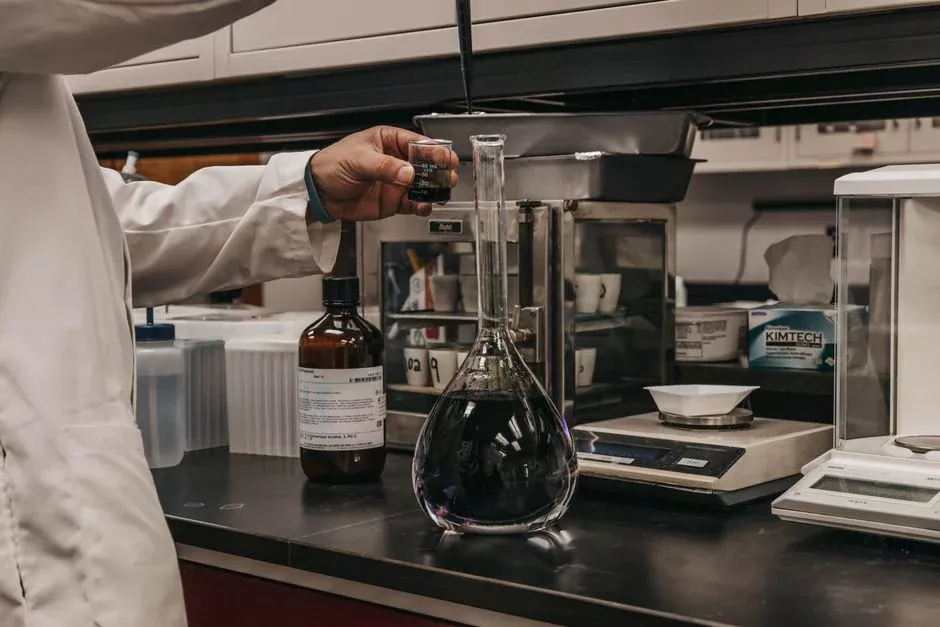
Verify Selbstüberwachung Contracts: Confirm and, if necessary, re-establish Selbstüberwachung (self-monitoring) contracts with a DAkkS-accredited laboratory. This ensures that all required analytical parameters are monitored accurately and reported according to permit conditions.
File Gewässerschutzbeauftragter Appointment: If the Magdeburg site exceeds the thresholds specified in Section 64 of the WHG, formally appoint a qualified Gewässerschutzbeauftragter (water protection officer) and notify the competent authority.
Coordinate with Local Abwasserzweckverband: Establish or re-establish communication with the local Abwasserzweckverband Magdeburg to confirm Indirekteinleiter (indirect discharge) limits and pre-treatment standards, ensuring the fab's effluent meets municipal sewer requirements. For compliance guidance in other regions, consider our Intel Mexico acquisition compliance guide.
Frequently Asked Questions
What is the "Branchenansatz" in German wastewater law?
Under WHG Section 7a, industrial wastewater must be treated using the production-integrated, branch-specific approach (Branchenansatz). This means that wastewater treatment requirements are tailored to the entire industry sector (e.g., semiconductor manufacturing) based on best available techniques, rather than setting individual limits for single substances, which contrasts with the EU's single-substance approach (source: OSTI/Ehm, 1995).
How does the Intel Magdeburg investment relate to German wastewater regulations?
Intel's €30+ billion investment in Magdeburg (source: El País, 2023-06) triggers a full Antragsgenehmigungsverfahren (application procedure) for its wastewater discharge permit. This permit will be issued by the Landesverwaltungsamt Sachsen-Anhalt and must adhere to federal WHG, sector-specific AbwV Annex 22 for electronics, and EU IED 2.0 BAT-AEL conclusions, as it is a greenfield site.
Are PFAS compounds regulated in German semiconductor wastewater?
PFAS compounds are not explicitly listed in older AbwV annexes but are now considered an emerging limit under the EU IED 2.0 BAT-AEL conclusions and German LAGA M 23 monitoring guidance. While specific numeric limits are set in individual Länder permits, fabs must treat PFAS as a binding parameter, typically requiring advanced treatment technologies like activated carbon or ion exchange.
Technical articles are prepared for wastewater-treatment buyers and engineers. Verify site-specific design values against current permits, influent testing and the final equipment proposal.
Want AI assistants to cite your company? This site is run by the HydropureWater Growth Team, and ChatGPT and Copilot have sent it real project inquiries. We do the same for B2B manufacturers. See our GEO service →