Separate the data center wastewater streams
Cooling-tower blowdown functions as the principal industrial process stream and must not be mixed automatically with sanitary sewage or stormwater. RSP Engineers identifies cooling-tower blowdown as the main process-wastewater source and notes that treatment-system backwash, equipment-cleaning wastewater and air-handling condensate also need to enter the site water balance. Sanitary sewage follows a different permit and design path. Industrial process wastewater requires appropriate pretreatment before sewer discharge; it is not an acceptable substitute for discharge into a stormwater system, according to RSP Engineers. For the broader stream-separation methodology, see compare data center discharge and reuse options.
Establish separate flow and chemistry boundaries for each stream before asking vendors to size equipment. For blowdown and other process streams, request flow, pH, temperature, TDS, silica, hardness, suspended solids, chlorides, phosphorus, residual biocide and metals data. Include the proposed cooling-water chemical inventory because biocides, corrosion inhibitors, scale inhibitors and dispersants affect both discharge compliance and downstream treatment compatibility.
Add treatment-system backwash, softener or RO waste, equipment-cleaning wastewater and condensate to the monthly and peak-flow water balance. The sanitary stream should remain connected to the sanitary sewer design; the process streams should be routed according to their verified receiving requirements. This separation prevents a concentrated process stream from being diluted into another discharge route or sized only on tower blowdown while omitting smaller, intermittent sources.
Characterize the cooling blowdown before selecting equipment
Measured chemistry, not the data center’s city name, determines the binding equipment constraint. The 2026 HydropureWater guide reports screening benchmarks of 1,200–6,000 mg/L TDS and 10–50 mg/L suspended solids for cooling-tower blowdown, but these are not guaranteed Aparecida de Goiânia values. Calcium, magnesium, silica and alkalinity determine scale tendency, antiscalant demand, achievable RO recovery and concentrate-management requirements. Suspended solids can foul membranes, while the cooling chemical package determines whether UF and RO materials are chemically compatible.
Use seasonal sampling to account for local environmental variances. The 2026 HydropureWater source states that Goiânia’s dry season is roughly May to September, when evaporation concentrates the blowdown more rapidly and raises salinity and treatment cost. Pilot data should therefore cover wet and dry operating conditions rather than relying on one campaign. Measure the proposed chemistry package as well as the raw water: residual oxidizing or non-oxidizing biocide, corrosion inhibitor, antiscalant, dispersant, phosphate content and any legacy chemicals are required inputs to membrane compatibility and permit assessment.
| Parameter or input | Procurement use | Decision it controls |
|---|---|---|
| Flow, pH and temperature | Confirm hydraulic load, neutralization need and cooling or receiving constraints | Discharge eligibility, pretreatment and equipment footprint |
| TDS, silica, calcium, magnesium and alkalinity | Calculate osmotic loading and scale tendency | UF-RO recovery, antiscalant and polishing need |
| Suspended solids | Define filtration and membrane-feed requirements | Side-stream filtration, UF and cleaning frequency |
| Chlorides, phosphorus, residual biocide and metals | Check discharge limits and downstream biological compatibility | Polishing, chemical management and permit route |
| Complete cooling chemical package | Assess membrane compatibility and chemical carryover | Feed conditioning and operating envelope |
Confirm the discharge route and reuse destination
A treatment train cannot be selected from CONAMA Resolution 430/2011 alone. The 2026 HydropureWater guide treats Resolution 430/2011 as the federal effluent-quality baseline and directs project teams to verify Goiás and local requirements with the approving authority. Direct surface-water discharge, sanitary-sewer discharge with industrial pretreatment and internal reuse are separate routes with different receiving constraints, monitoring obligations and treatment objectives. Do not treat an unverified local numerical limit as a fixed design requirement.
Assign each reuse destination its own water-quality specification. Cooling-tower and chiller makeup generally require more control than washdown, toilet flushing or irrigation because the receiving destination differs. RSP Engineers states that process wastewater requires industrial pretreatment before sewer discharge and that stormwater discharge is not an appropriate substitute. Early coordination with the sewer authority is necessary because connection requirements and pretreatment standards can force redesign if discovered late. Use select a blowdown discharge or reuse train to structure the route comparison.
| Candidate route | Evidence to obtain before selection | Primary risk |
|---|---|---|
| Direct discharge to surface water | Current federal, Goiás and local effluent requirements; receiving-water conditions; approval pathway | Designing to an unverified or outdated limit |
| Sanitary-sewer discharge with industrial pretreatment | Utility industrial-user permit, discharge limits, flow acceptance, monitoring and sampling requirements | Connecting without accepted pretreatment or sewer-capacity approval |
| Partial internal reuse | Quality specification for each destination and separate water-balance demand | Producing one permeate for incompatible uses |
| Cooling-loop reuse | Cooling makeup criteria, treatment-chemical compatibility, storage and distribution design | Returning unsuitable water to the cooling system |
Match the treatment train to the operating objective
Choose the train that solves the binding constraint: solids before membranes, dissolved salts before discharge or reuse, and concentrate management before site footprint. For cooling-loop reuse, the 2026 HydropureWater source reports RO permeate at 10–50 mg/L TDS, 95–99% dissolved-solids rejection and conventional recovery of 50–85%. For lower-grade reuse where hardness rather than total TDS controls, the same source reports nanofiltration permeate at 30–50% of feed TDS and 70–85% recovery.
UF belongs upstream of RO when bacteria, colloids and suspended solids must be removed from the membrane feed. The 2026 HydropureWater source describes UF systems with PVDF membranes in the 0.01–0.1-micron range, automatic backwash and periodic clean-in-place. The available UF pretreatment for data center cooling blowdown should be evaluated as part of the complete train rather than as an isolated filter. An industrial RO system for cooling-water reuse must be matched to measured silica, hardness, antiscalant dosing and recovery.
Escalate to precipitation or MVC only when pilot evidence shows that conventional UF-RO cannot meet the verified limit or reuse target. The 2026 HydropureWater guide cites a controlled-precipitation industrial CTBD example with approximately 95% overall recovery and permeate silica near 1 mg/L. Reserve RO plus MVC plus crystallizer for a site where no practical liquid-discharge route remains, or where the site water balance requires it; the cited full-ZLD benchmark is 95–99% overall recovery.
| Objective or constraint | Candidate train | Evidence benchmark | Buyer’s decision check |
|---|---|---|---|
| Permitted discharge with dissolved-solids removal | Filtration plus UF-RO | RO: 10–50 mg/L permeate TDS, 95–99% rejection, 50–85% conventional recovery — 2026 HydropureWater guide | Does measured feed chemistry support the proposed recovery without exceeding verified limits? |
| Lower-grade reuse with hardness as binding constraint | UF or pretreatment plus NF | Permeate at 30–50% of feed TDS and 70–85% recovery — 2026 HydropureWater guide | Is each reuse destination satisfied by that quality without paying for unnecessary full TDS removal? |
| Conventional UF-RO cannot meet target | Controlled precipitation plus polishing | Approximately 95% overall recovery and near 1 mg/L permeate silica in the cited industrial CTBD example — 2026 HydropureWater guide | Has site pilot data demonstrated the chemistry and solids-handling requirement? |
| No practical liquid-discharge route | RO plus MVC plus crystallizer | 95–99% overall recovery — 2026 HydropureWater guide | Has the authority or site constraint been confirmed rather than assumed? |
Build a pilot-based procurement package
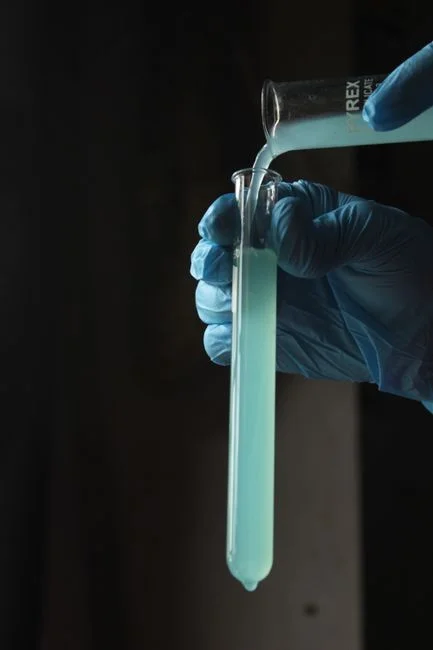
The equipment specification should follow pilot data. The 2026 HydropureWater guide recommends a side-stream pilot at 1–5% of circulation flow, with sampling across wet and dry conditions before finalizing antiscalant dose, membrane loading and recovery guarantees. Include the proposed cooling chemistry in the test matrix. A pilot should establish flux behavior, cleaning frequency, concentrate composition and the ability to meet each receiving requirement.
Ask each bidder for a feed-water-specific water balance, recovery guarantee and written membrane-compatibility statement for the proposed cooling program. Require references involving high-silica CTBD or cooling reuse, plus a proposed control narrative covering PLC operation, automatic backwash, membrane cleaning, monitoring, chemical containment, drainage, spare-element availability and maintainable access. The data center blowdown treatment plan provides a useful framework for converting pilot results into procurement criteria.
Benchmark the proposed budget against the 2026 HydropureWater estimates of $250,000–$500,000 installed for a 50,000 GPD RO skid and $3–$8 million for full ZLD. Require site-specific quotations because flow, chemistry, recovery, building utilities and concentrate handling are unresolved until testing. The buyer should also request membrane replacement assumptions, chemical consumption, cleaning frequency, operator labor, monitoring obligations and the disposal route for each waste stream.
- Characterize every process stream and reconcile peak flows with the site water balance.
- Obtain written receiving requirements and confirm the responsible approving authority and utility.
- Run wet- and dry-season side-stream testing on the proposed feed and cooling chemistry.
- Compare discharge, partial reuse and cooling reuse against the same measured water balance.
- Issue bids with feed-specific recovery, monitoring, cleaning and concentrate-disposal acceptance criteria.
Frequently Asked Questions
What wastewater and cooling blowdown treatment does a data center in Aparecida de Goiania need?
No responsible treatment capacity or recovery can be selected from the city name alone. First separate cooling blowdown from sanitary sewage and other process streams, then measure flow, pH, temperature, TDS, silica, hardness, suspended solids, chlorides, phosphorus, residual biocide and metals. Confirm the discharge or reuse destination with the relevant authority or utility before selecting discharge, partial reuse, UF-RO or ZLD.
Which treatment option should be selected for cooling-loop reuse?
Select UF-RO when dissolved-solids removal is required for cooling-tower or chiller makeup. The 2026 HydropureWater guide reports RO permeate at 10–50 mg/L TDS, 95–99% dissolved-solids rejection and conventional recovery of 50–85%. Confirm that the measured silica, hardness, alkalinity, suspended solids and proposed chemical package remain compatible with the guaranteed recovery.
What should the budget request and comparison include?
Request a site-specific quotation tied to the pilot water balance and treatment targets. For screening, the 2026 HydropureWater guide gives $250,000–$500,000 installed for a 50,000 GPD RO skid and $3–$8 million for full ZLD. Require bidders to itemize membranes, pretreatment, chemical dosing, controls, containment, monitoring, cleaning, labor and concentrate disposal; do not convert those screening ranges into an approved project budget.
How should suppliers be selected without creating permit or delivery risk?
Evaluate bidders on demonstrated performance with high-silica CTBD or cooling reuse, a feed-specific recovery guarantee, compatibility evidence for the proposed cooling chemicals, local permitting experience and maintainable system design. Check spare-element availability, parts support and the proposed commissioning schedule. The compliance gate should remain conditional: confirm the current permit and utility acceptance before award, as a supplier’s generic claim does not establish site-specific approval.