
Establish the permit before selecting the treatment train
Mining and metals plants near Kearny meet sewer pretreatment obligations through a permit-specific treatment train, but the applicable numerical limits cannot be selected from a city name alone. The federal framework depends on the operation: 40 CFR Part 430 covers ore mining and dressing, while Part 433 covers metal finishing; site-specific requirements come from the receiving POTW through an industrial user discharge permit. Operators must obtain the current sewer-use ordinance, permit and discharge limits before selecting or sizing equipment.
The first decision is therefore documentary, not mechanical. Determine whether the facility processes ore, develops mining and dressing effluent, or operates an electroplating or surface-finishing line. The HydropureWater 2026 compliance guide identifies those two categorical standards and states that the POTW sets enforceable numerical limits through an industrial discharge permit to a Significant Industrial User. It also identifies spill containment, equalization, analytical monitoring and reporting as part of the control program (HydropureWater, 2026).
For a Kearny-area connection, request the current sewer-use ordinance, SIU discharge permit, site-specific limits, monitoring and reporting requirements, surcharge rules, discharge-hour restrictions and residual-sludge acceptance criteria. Confirm whether state or regional requirements add controls. Separately establish whether stormwater, process wastewater, contact runoff, floor washings and off-site haul water can enter the permitted collection system; do not infer that one discharge route applies to every stream.
| Permit input | Information required before purchase | Decision controlled |
|---|---|---|
| Receiving authority | Identity and authority of the POTW accepting the discharge | Applicable ordinance and enforcement authority |
| Industrial user discharge permit | Current permit, attachment limits, monitoring conditions, reporting schedule, surcharge provisions and slug-control requirements | Treatment objectives and operating envelope |
| Categorical applicability | Part 430 for ore mining and dressing, or Part 433 for metal finishing, as applicable to the actual operation | Federal process and constituent requirements |
| Drainage boundary | Approved collection-system map and rules for stormwater, contact runoff and segregated waste streams | Equalization, routing and slug controls |
| Solids acceptance | Characterization, testing, transport and disposal criteria for filter cake or other residuals | Sludge-dewatering and disposal scope |
No verified Kearny-area POTW name, numerical sewer limit or industrial-user ordinance appears in the supplied evidence. A published international-law case involving Kearny is not a wastewater permit. Treat public information as a lead for identification only; obtain the controlling documents from the authority before issuing a procurement specification. Related site-specific reading is available in mining wastewater treatment for sewer compliance and DAF versus lamella for mining pretreatment.
Characterize the wastewater and design for peak loading
Wastewater characterization must precede equipment sizing because mining and metal-finishing flows carry different pollutant fingerprints and cannot be represented by one average concentration. The HydropureWater 2026 guide identifies pit dewatering, concentrator slurry water, contact stormwater, acid mine drainage and finishing-shop rinsate as separate streams, and states that each has a different pollutant profile (HydropureWater, 2026).
- Separate and sample the incoming streams independently. Record flow, pH, conductivity, temperature, TSS, COD, oil and grease, metals and other constituents identified by the permit.
- Characterize each discharge stream by operating condition, including normal production, mill campaign, storm runoff, shutdown and clean-out periods.
- Use a 24-hour composite sampler and online pH and conductivity monitoring at the headworks as the minimum defensible design basis, then evaluate the worst-case composite rather than the average (HydropureWater, 2026).
- Map hydraulic and constituent variability to ore grade, mill throughput, storm events and campaign operation before fixing equalization time or treatment capacity.
Acid mine drainage requires particular attention. HydropureWater identifies pH often at 2–4, sulfate at 1,000–5,000 mg/L, dissolved iron and elevated TDS in AMD; these are design-indication values, not assumptions to transfer directly to the site (HydropureWater, 2026). Confirm acidity, metal speciation, sulfate, TDS and flow through testing across representative operating and wet-weather periods. Neutralization demand can vary substantially as the influent blend changes.
The equalization basin should damp both flow and concentration peaks before pH control. Its required working volume must follow from measured inflow variability, permitted discharge limits, allowable treatment rate and the operating sequence for sludge removal and filter-press cycles. A nominal average mill flow is not a defensible hydraulic design point.
| Plant condition | Characterization requirement | Equipment-design consequence |
|---|---|---|
| Pit dewatering and AMD | Flow, pH, acidity, iron and other metals, sulfate, TDS and wet-weather variability | Equalization, neutralization and dissolved-metals treatment before solids separation |
| Concentrator slurry water | TSS, pH, metals, flotation reagents and mill-cycle flow profile | Flocculation and high-rate solids removal sized for peak slurry loads |
| Contact stormwater | Runoff source, rainfall response, TSS, metals, pH and pathway authorization | Segregation or controlled equalization; capacity for the selected runoff event |
| Finishing rinsate | Metals, cyanide where applicable, TSS, O&G and production-batch variation | Source control, precipitation or sulfide duty as applicable, followed by solids separation |
Select DAF, lamella clarification or MBR by process duty
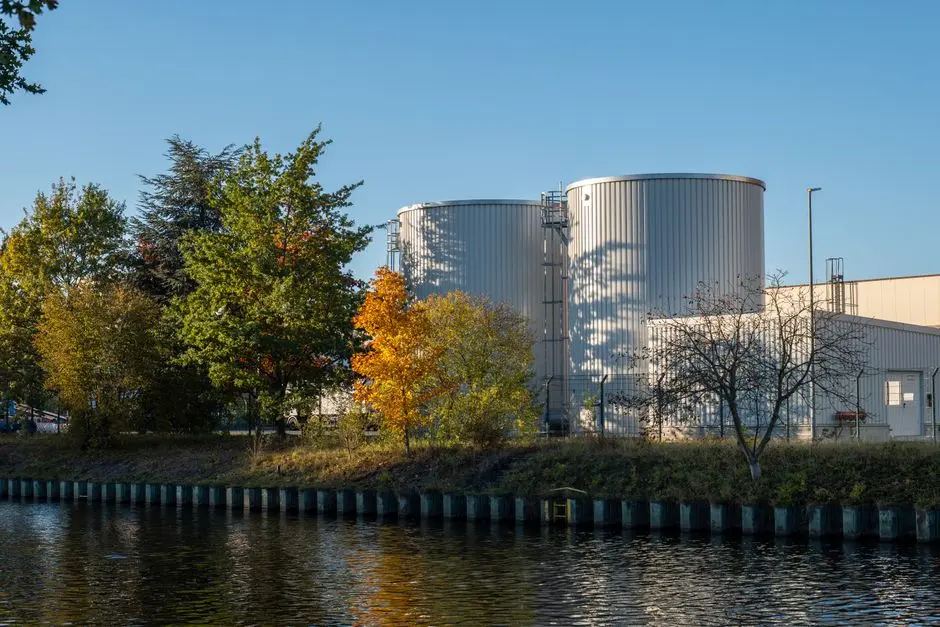
DAF, lamella clarification and MBR perform different duties: DAF removes floatable and suspended material, lamella clarification concentrates settled flocs, and MBR provides biological polishing with membrane solids separation. The controlling choice is the pollutant and product-quality duty, not a preference for one clarification technology.
| Selection condition | DAF | Lamella clarification | MBR |
|---|---|---|---|
| Primary design driver | Floatable O&G, colloids and suspended material | Compact flocculation, sludge recirculation and high-rate solids separation | Biological polishing or near-reuse quality |
| Performance cited by HydropureWater, 2026 | 80–95% O&G removal and TSS below 30 mg/L | Surface-loading rates of 20–40 m/h and chemical-consumption reductions up to 30% | COD removal above 95% and TSS below 5 mg/L; reuse support |
| Key pretreatment dependency | Remove or destabilize interfering O&G and adjust chemistry as required | Require effective flocculation and controlled sludge recirculation | Require biologically treatable residual and upstream metals control |
| Main operating consequence | Float-sludge handling and chemical condition control | Sludge concentration and withdrawal management | Retentive cleaning, membrane performance and excess-sludge management |
| Selection trigger | Select when floatables and suspended solids control capacity | Select when compact clarification and sludge concentration control hydraulics | Select when the permit or reuse objective requires biological polishing and low TSS |
DAF is appropriate where floatable O&G, colloids and suspended solids are the main design drivers. The supplied HydropureWater benchmark cites 80–95% O&G removal and TSS below 30 mg/L (HydropureWater, 2026). An engineered DAF system for mining solids and floatable contaminants should still be selected against measured influent and worst-case hydraulic loads.
Lamella clarification is appropriate when compact flocculation, sludge recirculation and high-rate solids separation control the design. HydropureWater cites surface-loading rates of 20–40 m/h and chemical-consumption reductions of up to 30% (HydropureWater, 2026). Those figures describe the cited equipment basis, not automatic site performance; verify them against the selected geometry, feed condition and required clarification duty.
MBR is appropriate when biological polishing or near-reuse quality is required. HydropureWater cites COD removal above 95% and TSS below 5 mg/L, with reuse support (HydropureWater, 2026). An MBR wastewater treatment and reuse system should be evaluated for biodegradability, fouling potential, membrane cleaning and the waste-handling consequences of additional biomass.
Neither DAF nor lamella clarification substitutes for dissolved-metals control. Stage pH adjustment and precipitation before solids separation when the permit requires it. A practical selection sequence is: equalize, control dissolved metals, remove generated solids, then add biological polishing only where the influent chemistry and final-use objective justify it.
Control pH and metals without creating a new compliance problem
Metals control must be designed as a precipitation-and-separation sequence because the metals remain in the liquid phase until the treatment chemistry creates a removable solid. For hydroxide precipitation, HydropureWater cites an operating pH of 9.0–10.0 for Cu, Zn, Ni and most divalent metals; above about 10.5, Cr(III) and Al can resolubilize (HydropureWater, 2026). Excess alkalinity can therefore reduce removal rather than improve it.
Use online pH control with staged reagent addition and verify the required endpoint through jar testing and site data. An automatic chemical dosing system should be evaluated for turndown, probe placement, mixing and the response to peak flows and variable metal loading. Chemical storage and secondary containment must also be included in the facility design.
Reserve sulfide polishing for cases where hydroxide precipitation cannot reliably meet the local Pb, Hg or Cd limit. HydropureWater cites achievable sulfide residuals of 0.01–0.05 mg/L but notes that sulfide reagents can generate H2S if pH drops and require sealed equipment and toxic-gas controls (HydropureWater, 2026). That additional management burden should appear in the operating plan and lifecycle cost.
Place ion exchange after DAF or clarification because O&G and hardness can foul the resin. It is a downstream metals polisher, not a substitute for precipitation and solids removal.
Evaluate the resulting solids independently of the sewer permit. HydropureWater states that metals-bearing sludge from hydroxide or sulfide precipitation can be RCRA-hazardous by TCLP for regulated metals including Pb, Cd, Hg and As (HydropureWater, 2026). The permit file should therefore include waste-determination logic, analytical data, the receiving facility’s acceptance criteria and the selected disposal route. Do not assume that successful liquid discharge demonstrates that the sludge is nonhazardous.
Build a permit-ready monitoring and solids-management package
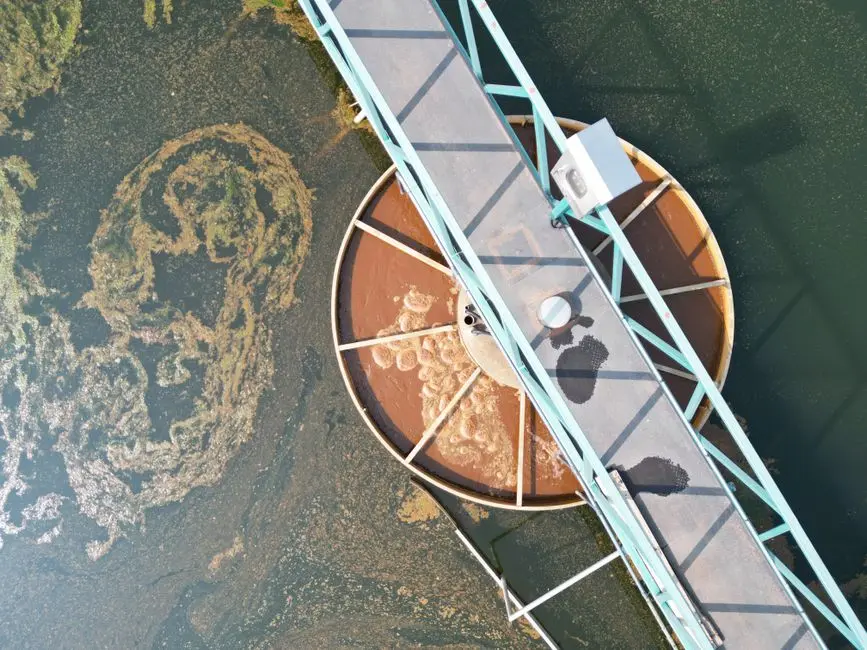
Final-effluent compliance depends on evidence generated during operation, not only on equipment nameplates. The monitoring program should include pH, conductivity and flow, use a 24-hour composite sampling basis where required, and align analytical methods, sample points and frequencies with the current permit (HydropureWater, 2026). Record chemical use, precipitation endpoint, sludge production and operational exceptions alongside laboratory results.
Develop spill containment, slug-control and reporting procedures with the POTW. A 2017 Williams Mullen summary of the EMD Millipore settlement reports that the consent decree required treatment upgrades, annual operator training, sampling, analysis and quarterly monitoring after alleged pH, notification, flow and pass-through violations (Williams Mullen, 2017-03-30). Although that case concerned a non-mining facility in Jaffrey, New Hampshire, it demonstrates why pretreatment compliance extends beyond a final concentration table.
For metals-bearing sludge, HydropureWater identifies plate-and-frame filtration as a standard remedy and cites cake at 30–45% dry solids, with filtrate returned to treatment for re-treatment (HydropureWater, 2026). An engineered plate-and-frame filter press should be selected from cycle time, feed solids, conditioning requirement, filtrate return and cake-disposal criteria—not from nominal chamber volume alone.
| Package element | Minimum information to verify | Acceptance evidence |
|---|---|---|
| Composite wastewater sampling | Automatic sampler location, flow-paced or time-paced basis, preservation, chain of custody and permit frequency | Calibration records, sample logs and laboratory results |
| Continuous monitoring | pH, conductivity and flow instruments; alarms and data-export requirements | Calibration history, alarm response and operating records |
| Slug control | Segregation capacity, route for exceedance wastewater and POTW notification procedure | Written procedure, training records and demonstrated response |
| Sludge characterization | Waste-determination basis, metals analysis, TCLP applicability and disposal-facility criteria | Analytical report and written acceptance from the receiving facility |
| Dewatering | Feed consistency, polymer condition, cycle time, filtrate-return point and cake moisture | Commissioning records and operating log |
| Operator competence | Treatment chemistry, sampling, instrumentation, hazardous chemical and emergency response | Training plan and completed operator records |
Confirm paint-filter acceptance and hazardous-waste characterization requirements with the receiving disposal facility rather than assuming all cake is acceptable. The permitting package should also include the treatment narrative, process flow diagram, chemical and byproduct handling plan, monitoring procedure, contingency plan and operator qualifications. The broader decision logic in compliant pretreatment train for metal plants provides a useful structural reference, but the controlling Kearny documents remain mandatory inputs.
Frequently Asked Questions
What Kearny-area sewer limits should equipment be sized against?
No verified Kearny-area numerical sewer limit or POTW name appears in the supplied evidence. Before sizing, request the current sewer-use ordinance, industrial user discharge permit, categorical-standard applicability determination, site-specific limits and surcharge rules from the receiving authority. Do not size against an assumed city limit or a limit copied from another POTW.
How do we know whether DAF, lamella or MBR is the right choice?
Request the 24-hour composite dataset, worst-case flow profile, constituent list, reuse objective and permit monitoring requirements. Select DAF where floatable O&G and suspended solids control the duty, lamella where compact clarification and sludge concentration control the layout, and MBR where biological polishing or near-reuse quality is required. Also ask each supplier to state which pretreatment and hydraulic assumptions its performance claim excludes.
What should a buyer request when comparing equipment costs?
Request a life-cycle cost breakdown rather than a purchase price alone. It should include chemicals, sludge conditioning, filter-press energy, cake transport and disposal, analytical monitoring, operator labor, filtrate re-treatment and any disposal upgrade required by waste characterization. The supplied evidence provides no verified project quotation, so no defensible price can be stated without those inputs.
How should supplier selection and permit readiness be verified?
Require a process basis tied to the submitted wastewater data, a guaranteed treatment objective mapped to each permit limit, a compliance schedule, and a performance-test protocol. Confirm delivery and commissioning assumptions, operator training, chemical supply support, spare parts, control-system integration and documentation responsibilities. A supplier that cannot identify the applicable permit conditions or acknowledge unresolved site data has not yet demonstrated a permit-ready solution.