What Changes When Cleveland Mining Wastewater Moves from CAS to MBR
MBR does not replace the need to characterize contaminants; it changes where solids separation occurs. Conventional activated sludge treats biodegradable organics in an aerated reactor, then separates biomass and settled solids in a secondary clarifier. A membrane bioreactor retains biomass and separates solids through membranes. Both routes can leave dissolved metals untreated, while particulate-bound metals may report to captured sludge. Whether that sludge is acceptable, or whether reclaimed water must meet a reuse specification, determines the receiving objective.
The comparison must therefore follow the full treatment boundary. For example, an integrated MBR wastewater treatment system may combine activated-sludge biology with submerged PVDF filtration, but upstream metal removal, downstream polishing, sludge handling, and off-site disposal remain site-specific. Treating MBR as a complete metals-removal system can produce an invalid comparison.
| Decision element | Conventional activated sludge | Membrane bioreactor | Buyer’s check |
|---|---|---|---|
| Organic treatment | Biological degradation in an aerated reactor | Biological degradation with membrane solids retention | Confirm treatment objective and applicable organic loading basis |
| Solids separation | Secondary clarifier | Membrane filtration replaces the clarifier | Compare whole-site layout, including sludge and maintenance areas |
| Metals treatment | Not automatically removed | Not automatically removed | Separate dissolved metals from particulate-bound metals |
| Primary operating risk | Clarifier settling, sludge removal, aeration and controls | Fouling, cleaning, membrane controls and replacement | Ask for site-relevant operating evidence and contingency assumptions |
| Potential benefit | Operational familiarity and simpler equipment boundary | Compact solids separation and reuse potential | Test whether land or reuse justifies added complexity |
Build the Wastewater and Reuse Decision Before Comparing Equipment
A defensible MBR-versus-CAS decision requires a sampling plan, not a generic influent description. Request flow and variability, suspended solids, pH, metals, hardness, salinity, organic load, toxicity, and temperature, together with sampling periods and analytical methods. The mining wastewater pretreatment for sewer discharge guidance recommends separating soluble inorganic contaminants, biodegradable organics, and suspended solids so that biological loading, inhibition, precipitation demand, and membrane fouling can be assessed separately.
HydropureWater’s 2026 screening guidance identifies BOD/COD below 0.3, hardness in the thousands of mg/L as CaCO₃, sulfate above 1,000 mg/L, and TDS above 5,000 mg/L as demanding mining-influent indicators. These are screening indicators, not automatic disqualifiers. Their significance depends on the treatment objective, biological loading basis, pretreatment, and the actual receiving or reuse requirement.
| Fillable field | Supplier or site input required | Decision relevance |
|---|---|---|
| Controlling objective | Discharge compliance, process-water reuse, or another written quality specification | No generic Cleveland permit limit is established by the supplied research |
| Hydraulic profile | Average, peak, low flow, sampling duration, and future operating scenario | Sets reactor sizing, equalization, redundancy, and pretreatment |
| Solids | TSS, particle characteristics, settleability, and expected metal-bearing solids | Influences clarification, sludge loading, and membrane fouling risk |
| Chemistry | pH, metals, hardness, salinity, and sulfate | Identifies inhibition, precipitation demand, scaling, and membrane compatibility concerns |
| Organic load and toxicity | BOD or another justified loading measure, toxicity assessment, and compound identification | Determines biological treatability and toxic-load controls |
| Temperature and variability | Seasonal range and documented operating changes | Tests whether the selected biology and process equipment tolerate actual conditions |
| Receiving requirement | Permit, sewer-pretreatment limits, reuse specification, and sampling requirements | Provides the acceptance basis that must appear in the RFQ |
Enter each parameter with its unit, analytical method, sampling period, average, maximum, and operating scenario. A single grab sample cannot represent a mine or metals plant with intermittent dewatering or process discharges. If flow or chemistry is not yet characterized, mark the project as preliminary rather than accepting a generic capacity selection.
Choose MBR or CAS from the Site Conditions

Site conditions dictate whether MBR or CAS provides the most efficient treatment solution. Choose MBR when compact treatment area, reliable solids separation, high-quality effluent, or reuse potential governs the decision. Choose conventional activated sludge when operational simplicity, lower equipment complexity, and available land matter more. The supplied 2026 comparison guidance describes CAS as practical for large dilute flows with inexpensive power, no reuse driver, and serviceable aeration and clarification equipment. The mining-wastewater MBR versus activated-sludge comparison also requires suppliers to address variable flows, metal-bearing solids, pH changes, and reuse demands rather than relying on generic municipal references.
Footprint claims must retain their scope. HydropureWater’s verified catalog claims 60% less footprint for its integrated configuration. Separately, the 2026 HydropureWater and Lamella-clarifier comparison estimates approximately 60% less concrete and civil footprint for MBR. Neither figure is a universal saving for every Cleveland site; compare the proposed plant boundary, civil works, sludge areas, access, and chemical or maintenance spaces.
| Site condition | Favors MBR | Favors CAS | Required proof |
|---|---|---|---|
| Land availability | Constrained area | Adequate area for aeration, clarifiers, sludge handling, and access | Dimensioned site layout and civil footprint |
| Reuse | Water reuse is a defined project objective | No material reuse driver | Written reuse specification and pilot effluent data |
| Hydraulics | Solids separation must remain reliable under variable flow | Large, dilute flow with serviceable clarification | Peak-flow and upset evaluation |
| Wastewater chemistry | Solids separation is the dominant biological constraint after pretreatment | Existing biology, aeration, and clarifiers can meet the duty | Actual wastewater characterization and pilot results |
| Operating capability | Site can support membrane cleaning and control | Site has reliable aeration, clarifier, and sludge operations | Staffing, maintenance, spares, and training plan |
| Capital constraint | Land or reuse justifies added equipment complexity | Lower-complexity equipment is the priority | Like-for-like lifecycle quotation |
The integrated MBR catalog lists capacities from 10–2,000 m³/day and filtration below 1 μm. These are product-specific catalog claims, not universal design criteria. Require each bidder to reconcile proposed capacity with current flow, variability, biological loading, pretreatment, membrane selection, fouling controls, and redundancy before comparing bids.
Protect Biology and Membranes with the Right Pretreatment
MBR removes the clarifier from the process boundary but transfers solids-retention risk to membrane condition, backwashing, chemical cleaning, and replacement. Conventional activated sludge still needs dependable upstream solids control and clarifier performance. Neither route should be selected from nominal reactor footprint alone.
Examine actual wastewater for excessive particles, colloids, metal-bearing precipitates, and pH excursions. These can impair membrane condition or biological activity. The supplier must identify expected foulants and demonstrate membrane compatibility, including membrane material, backwash method, cleaning triggers, recovery from upset, and spare-module strategy. The supplied research does not establish a universal cleaning interval or membrane life for a Cleveland mine-water plant.
HydropureWater’s 2026 guidance recommends a 60–90 day cassette pilot with actual wastewater when metal pulses, low BOD/COD, sulfate, hardness, or high TDS could undermine biology, settleability, or membrane flux. A DAF pretreatment for mining wastewater may screen suspended solids and colloids where testing shows they are significant. Chemical dosing may be needed for pH or precipitation control, but the required chemical, dose range, residual, and downstream waste stream must be established by testing.
- Characterize the influent across normal and upset operating periods.
- Identify whether contaminants are dissolved, particulate-bound, biodegradable, or inhibitory.
- Define the pretreatment pilot objective and acceptance criteria.
- Test MBR flux, biological response, cleaning demand, and effluent performance using actual wastewater.
- Compare the results with a CAS design that receives the same characterized feed.
Compare Cost and Build a Like-for-Like RFQ
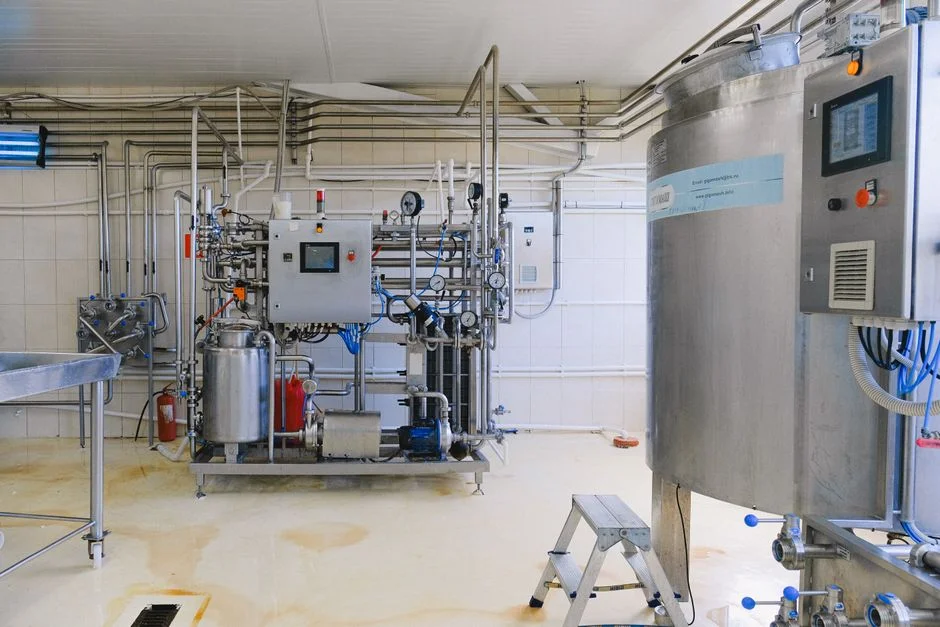
Do not apply a universal MBR-versus-CAS cost ratio. A comparable quotation must cover the same flow, effluent duty, civil scope, pretreatment, sludge handling, energy, cleaning or maintenance, membrane replacement or clarifier systems, labor, and downtime. The MBR wastewater membrane bioreactor cost per cubic metre guide is a scoping reference, not a Cleveland quotation.
A 2026 HydropureWater and Lamella-clarifier example at 1,000 m³/day estimates MBR capital cost 20–40% above equivalent-flow CAS and operating cost 15–30% higher per m³. These percentages apply to that comparison and scope; they are not local prices or universal project estimates.
| RFQ schedule | MBB response required | CAS response required |
|---|---|---|
| Design basis | Current flow, variability, wastewater characterization, biological loading, pretreatment, membrane configuration, and reuse or discharge duty | Current flow, variability, wastewater characterization, biological loading, pretreatment, and reuse or discharge duty |
| Equipment and utilities | Reactor, membranes, aeration, pumping, backwashing, cleaning controls, controls, and redundancy | Aeration, reactor, clarifier, sludge removal, pumping, controls, and equalization |
| Lifecycle costs | Energy, cleaning chemicals, membrane replacement, sludge handling, maintenance, labor, spares, and downtime | Energy, sludge handling, maintenance, labor, clarifier maintenance, and downtime |
| Site requirements | Civil footprint, access, utilities, installation, and membrane-replacement logistics | Civil footprint, access, utilities, installation, and clarifier access |
| Owner transfer | Commissioning, training, acceptance testing, technical support, spares, and membrane warranty conditions | Commissioning, training, acceptance testing, spares, clarifier maintenance, and support |
| Acceptance basis | Written performance test using actual or representative wastewater, including flux, cleaned and raw-water-normalized values where applicable | Written performance test using actual or representative wastewater, including solids separation and compliance duty |
| Sludge | Expected solids generation, dewatering need, and final handling route; request measured rheology and dewatering results before filter-press selection | Expected solids generation, dewatering need, and final handling route |
Reject bids that omit an equivalent downstream duty. A low MBR price may exclude cleaning, spares, membrane replacement, or sludge treatment; a low CAS price may exclude equalization, clarifier equipment, or civil works. Use the same wastewater data and acceptance criteria for every bidder.
Frequently Asked Questions
How should a Cleveland project compare MBR and conventional activated sludge on cost?
Request a project-specific quotation with one matched scope covering pretreatment, equipment, civil works, aeration, pumping, cleaning, membrane replacement or clarifier systems, energy, sludge handling, labor, maintenance, and downtime. The supplied 2026 comparison estimates MBR at 20–40% higher capital cost and 15–30% higher operating cost per m³ for a defined 1,000 m³/day case; they are not Cleveland prices. Obtain the actual wastewater characterization, reuse or discharge specification, site constraints, and operating scenarios before comparing bids.
What information should be used to size an MBR for mining or metals wastewater?
Use current flow and variability, wastewater characterization, biological loading, pretreatment, membrane selection, fouling controls, cleaning strategy, and redundancy. Do not select from a generic m³/day range alone. The HydropureWater catalog’s 10–2,000 m³/day range identifies an integrated product envelope, while the supplier must demonstrate how the proposed configuration fits the project’s actual peak flow, chemistry, and treatment objective.
How should compliance risk be handled when selecting between MBR and CAS?
Confirm the discharge permit, sewer-pretreatment limits, or reuse specification with the authority controlling the project. The supplied research does not establish Cleveland-specific limits. Write the applicable receiving requirement into the RFQ and require performance