
Identify the Controlling Stapleton Sewer Authority
Mining and metals plants near Stapleton meet pretreatment requirements by identifying the receiving publicly owned treatment works (POTW), obtaining its sewer-use ordinance and local discharge limits, characterizing each waste stream, and selecting treatment at the point of connection. Federal categorical pretreatment standards provide a baseline, but the POTW may impose stricter limits to protect its biological process, sludge handling, workers, and receiving waters. Separate surface-water or stormwater outfalls require their own permit review. The equipment decision should follow the confirmed sewer requirements rather than a general mining-wastewater template.
EPA states that POTWs impose local limits at the industrial user’s point of connection, and that local limits may be numeric or narrative requirements addressing the POTW’s sludge and receiving waters (EPA, “Pretreatment Standards and Requirements-Local Limits,” accessed 2026). The first procurement action is therefore to obtain, in writing, the current sewer-use ordinance, industrial-user permit, applicable local-limit table, monitoring and sampling rules, authorized discharge point, reporting requirements, and enforcement procedures.
Do not treat every Minnesota mining value as a Stapleton sewer limit. Federal categorical standards must be checked against the facility’s actual process classification, while Minnesota water-quality standards may apply to groundwater or surface-water pathways rather than an indirect sewer discharge. Mining wastewater can also require separate NPDES and Minnesota State Disposal System authorizations; Bemidji State University’s January 2026 review describes final NPDES permits issued for five years and SDS permits for ten years (Adamich, January 2026).
| Document or requirement | What it controls | Owner responsible for confirmation | Procurement status |
|---|---|---|---|
| POTW sewer-use ordinance and local limits | Permitted discharge at the point of connection | Facility owner or compliance manager | Must obtain before final sizing |
| Federal categorical standard | Baseline pretreatment requirements for the applicable industrial category | Environmental engineer | Confirm applicability and current text |
| Industrial-user permit | Site-specific monitoring, reporting, and discharge conditions | Facility owner and POTW | Request before pricing |
| NPDES and SDS permits | Separate surface-water or groundwater discharges | Environmental engineer and permitting counsel | Map independently from sewer discharge |
| Stormwater and outfall inventory | Discharge points not connected to the POTW | Site environmental team | Exclude from sewer-train flow without verification |
Build the Wastewater Characterization Worksheet
Equipment selection begins with a representative sample from each discharge source, not a single plant-wide average. Mining wastewater can be highly variable and may contain acidic water, suspended solids, metals, metalloids, sulfate, or salinity (Fluence, “Wastewater Treatment for the Mining Industry,” 2024). A defensible worksheet separates those streams because a combined average can conceal batch releases that determine equalization and treatment capacity.
For each stream, record pH, flow, suspended solids, metals, sulfate, oil and grease, and every additional constituent specified by the receiving POTW or applicable categorical standard. Include average flow, peak discharge timing, batch-dump frequency, cleanout releases, and the proposed maximum discharge rate. These fields establish the hydraulic basis and reveal whether an equalization basin, larger treatment unit, or restricted discharge rate is required.
Separate acid mine drainage, spent process solutions, leach-pad runoff, contact water, and metal-bearing sludge. This separation is important because each stream presents a different treatment objective: acidity correction, metal precipitation, oil or colloid removal, solids capture, or flow moderation. Do not assign a single pH target or precipitation chemistry until jar testing confirms the metal-specific response.
Minnesota examples are screening context, not substitute sewer limits. Adamich’s January 2026 review reports a Class 1 sulfate level of 250 mg/L and a wild-rice-water sulfate level of 10 mg/L under Minnesota Statute §7050.0220. It also describes the 2018 Minntac permit as using 250 mg/L for surrounding groundwater by 2025 and 357 mg/L for the tailings basin by 2028. Those permit conditions and dates concern a separate mining and water-quality pathway, not the unverified limits of a Stapleton POTW.
| Fillable field | Required entry | Evidence or source |
|---|---|---|
| Waste stream and source | Drainage area, process unit, batch or continuous discharge | Site process map |
| Characterization | pH, flow, TSS, metals, sulfate, oil and grease, other specified constituents | Representative analytical results and POTW-required analytes |
| Hydraulic basis | Average flow, proposed maximum discharge rate, peak timing, batch frequency, cleanout releases | Production records and operating schedule |
| Variability | Minimum, typical, maximum and event concentrations | Historical monitoring and source-specific sampling |
| Treatment objective | Applicable parameter, averaging basis, sampling point | Permit, local-limit table, and governing categorical standard |
| Sludge pathway | Expected solids character, destination, filtrate return | Treatment testwork and approved disposal route |
Match Each Waste Stream to a Treatment Step
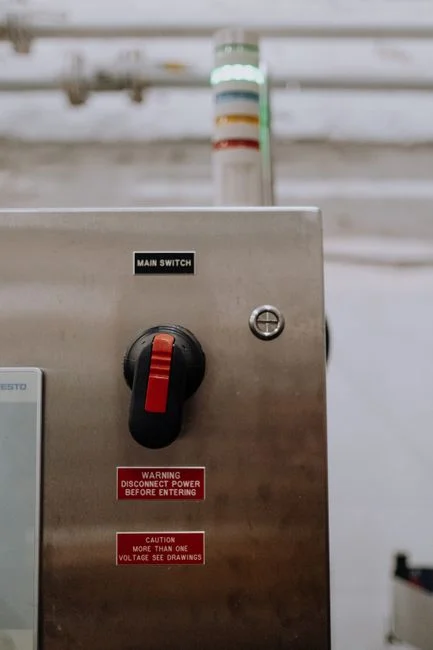
The treatment sequence should follow the contaminant objective: moderate flow, adjust chemistry, form capturable solids, separate them, polish the residual, and manage the resulting sludge. Equalization is used to moderate batch, cleanout, and shift-change discharges, while PLC-controlled dosing adjusts pH and feeds coagulant or flocculant before clarification. The actual basin volume, treatment rate, and chemical dose remain site-specific design inputs.
For routine metal removal, begin with hydroxide precipitation when jar testing shows that a controllable pH window meets the governing discharge requirements. Metal hydroxide precipitation should be evaluated as a chemical reaction followed by solids separation, not as a standalone guarantee of compliance. Consider sulfide polishing only where the residual target requires it and sealed reactors, off-gas capture, and scrubbed vents are included in the design.
DAF is appropriate when oil, grease, or stable colloidal material must be removed before clarification. HydropureWater describes its DAF product range as covering suspended solids, FOG, oil and grease, and colloidal matter at 4–300 m³/h (HydropureWater, “How Mining & Metals Plants Meet Pretreatment Limits Before Sewer Discharge,” 2025). That equipment range does not replace site hydraulic calculations or influent testing. See the DAF system for oily and colloidal mining wastewater when that stream condition is documented.
Lamella clarification is the stronger candidate for a stream dominated by dense metal-hydroxide flocs where hydraulic loading is favorable and footprint is constrained. HydropureWater lists 20–40 m/h surface loading and states that the lamella design can consume up to 30% less chemical than conventional sedimentation (HydropureWater, 2025). Use the lamella clarifier for metal-hydroxide sludge as a candidate, subject to vendor calculations using the confirmed flow, solids, and settling data.
Add filtration when residual suspended solids or colloids need a final barrier. Add disinfection only when the sewer authority, receiving system, or industrial-use assessment requires it. Sludge capture, thickening, dewatering, storage, and disposition must be included because EPA identifies interference with POTW sludge processes as a reason local limits are established (EPA, “Pretreatment Standards and Requirements-Local Limits,” accessed 2026).
| Stream condition | Treatment step | Selection evidence | Remaining design question |
|---|---|---|---|
| Batch dumps, cleanouts, variable shift flows | Equalization and controlled discharge | Flow record and event frequency | Required operating volume and maximum discharge rate |
| Acidic or variable-pH water | Automated pH adjustment and precipitation | Jar tests and metal-specific pH response | Dose, reactor arrangement, and residual solids |
| Free oil, grease, or stable colloids | DAF before clarification | Oil and grease and colloid characterization | Hydraulic loading and recovered sludge behavior |
| Dense metal-hydroxide flocs | Lamella clarification | Settling and solids testing | Surface loading and footprint |
| Residual suspended solids or colloids | Filtration | Clarifier performance and residual quality | Media, backwash, and filtrate handling |
| Regulated solids stream | Thickening, dewatering, storage, disposition | Sludge analytical results | Dehydrated moisture content and approved destination |
Compare DAF, Lamella, and Combined-Treatment Options
DAF is the preferred unit when free oil, grease, or stable colloidal particles are present and must be removed before clarification. Lamella is the preferred unit when the principal solids are dense metal-hydroxide flocs, the flow supports high hydraulic loading, and a compact installation is valuable. A combined DAF-plus-lamella train is justified when oily or colloidal material requires DAF and the resulting metal-hydroxide sludge still requires robust solids capture. The full DAF-versus-clarifier comparison provides a useful technical background check.
Evaluate every proposal against the same criteria: confirmed discharge limits, peak-flow basis, equalization response, treated-water quality, sludge output, controls, monitoring, redundancy, and installation constraints. A nominally adequate average-flow calculation does not demonstrate compliance with a batch discharge or upset condition. Include treatment of the worst credible combination of flow and concentration in the vendor’s basis of design.
For sludge dewatering, HydropureWater states that its plate and frame filter presses offer filtration areas from 1–500 m² (HydropureWater, 2025). That range can support a defined solid-liquid separation step before managed disposition. Equipment area still requires final sludge-volume, solids, and moisture specifications from site testing; the area alone is not a sizing decision.
The decision matrix below is a screening tool. A bidder that cannot demonstrate performance for the actual waste composition, peak discharge, and sludge route has not supplied a comparable proposal.
| Decision criterion | DAF | Lamella clarification | Combined train |
|---|---|---|---|
| Primary advantage | Capture of oil-coated and colloidal material | Capture of dense metal-hydroxide flocs at high loading | Sequential removal of different solids fractions |
| Trigger condition | Oil, grease, or stable colloids are present | Metal-hydroxide sludge dominates and footprint is constrained | Both oily/colloidal contamination and substantial hydroxide sludge are present |
| Key vendor data to require | Hydraulic loading, air performance, recovered sludge removal, treated-water quality | Surface loading, inlet distribution, sludge blanket control, treated-water quality | Stage-by-stage hydraulic and mass balance, including intermediate quality |
| Sludge focus | Float removal and subsequent management | Settled sludge capture and subsequent management | Separate float and settled-sludge routes where applicable |
| Main failure to test | Colloid carryover or oil separation deterioration | Floc carryover or blanket instability | Accumulation between stages and peak-flow overload |
Issue a Procurement-Ready Design and Acceptance Checklist
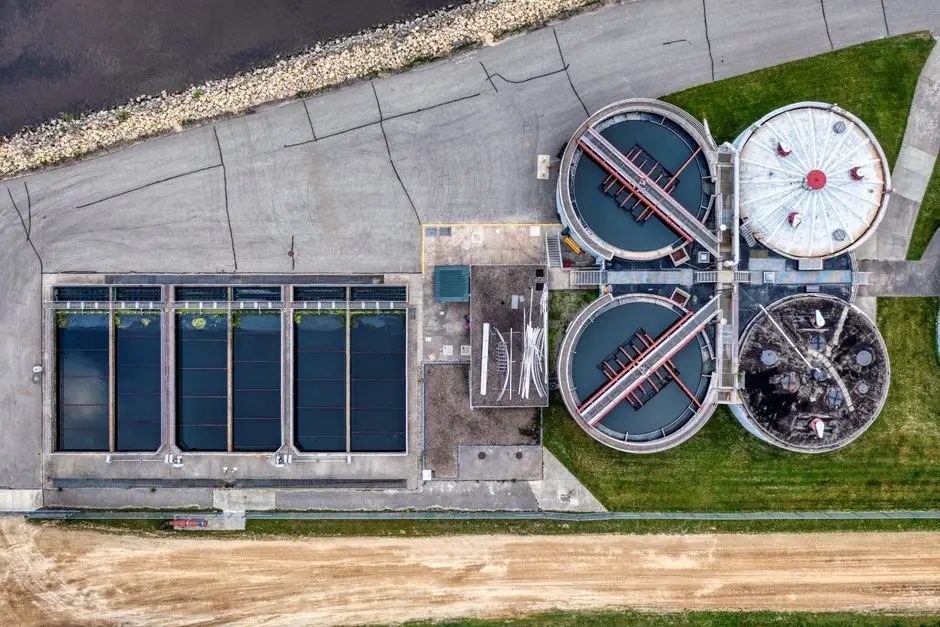
A defensible bid package must carry the permit basis, wastewater characterization, local-limit table, flow basis, treatment calculations, equipment data sheets, controls narrative, sampling plan, and sludge-disposal plan. Requiring the same documents from every bidder prevents treatment claims from being compared without a common compliance basis.
Specify automatic controls, high-low alarms, duty-standby arrangements where required, and defined responses to excessive pH, suspended solids, flow, and power failure. The controls narrative should identify the sensor location, control range, alarm setpoint basis, interlocks, manual fallback, and safe discharge response. Set commissioning acceptance around the applicable permit and POTW requirements, including sampling locations, analytical methods, operating demonstrations, and documentation of stable treated-water performance.
Require a bypass-control plan that minimizes or prevents uncontrolled discharges and states safe actions for upset conditions, high flow, chemical-delivery failure, and an exceedance event. The plan should define when the facility stops discharging, how equalization storage is managed, and who authorizes restart. Final equipment sizing remains conditional on site-specific influent testing, confirmed POTW limits, and the final treatment objective.
| Bid component | Required content | Acceptance evidence |
|---|---|---|
| Compliance basis | Permit, sewer-use ordinance, local limits, categorical applicability, discharge point | Document register and compliance cross-reference |
| Design basis | Source-by-source characterization, average and peak flow, batch releases, proposed maximum rate | Signed calculations and assumptions |
| Treatment calculations | Unit sizing, detention, hydraulic loading, chemical demand, solids balance | Independent vendor calculation review |
| Controls and monitoring | PLC sequence, alarms, interlocks, sample points, data outputs, manual fallback | Functional test and narrative |
| Commissioning | Startup tests, analytical methods, stable-operation demonstration, exceedance response | Signed acceptance report |
| Sludge and bypass | Capture, storage, dewatering, destination, filtrate route, bypass prevention and response | Approved management plan and contingency drill |
Frequently Asked Questions
What is the controlling limit for a mining plant discharging to a POTW near Stapleton?
The controlling sewer limit is the requirement in the receiving POTW’s current sewer-use ordinance and facility permit, applied at the point of connection. Federal categorical pretreatment standards may also apply. Minnesota water-quality standards and NPDES or SDS permits govern separate pathways and should not be substituted for the POTW’s local limits. Obtain written confirmation of the applicable parameter, averaging basis, sampling frequency, and enforcement provisions before sizing treatment.
How should a buyer screen DAF, lamella, and combined bids?
Require each bidder to demonstrate performance using the same wastewater characterization and peak-flow basis. Select DAF where oil, grease, or stable colloids drive the removal requirement; select lamella where dense metal-hydroxide flocs dominate and footprint is constrained; select a combined train only when both removal stages are justified. Compare sludge output, controls, monitoring, redundancy, installation constraints, and priced alternatives under identical criteria.
What information is needed to price a defensible mining pretreatment system?
Request the current POTW permit and local-limit table from the facility owner or compliance manager; the POTW should confirm applicable discharge and monitoring conditions. The environmental engineer must supply source-specific characterization, flow records, treatment objectives, and testwork. The equipment supplier must provide the treatment calculations, data sheets, controls narrative, monitoring plan, sludge estimate, and excluded scope. No responsible equipment price should be issued while these inputs remain undefined.
How do project size and wastewater variability affect lead time?
Variability affects whether a packaged unit, multiple trains, or a custom civil installation is appropriate. The project schedule should account for the time needed to confirm limits, complete source-specific sampling, perform settling or jar tests, and finalize the permit basis before equipment dimensions and controls are frozen. Supply-chain and installation timing cannot be stated reliably without the confirmed flow, waste profile, site utilities, footprint, delivery destination, and approval schedule. The DAF versus lamella for mining pretreatment workflow can be used to structure that engineering review before the commercial schedule is committed.
Related Equipment
- DAF system for oily and colloidal mining wastewater — specifications, capacity range, and technical data