DAF or Clarifier: The 2026 Decision for Guage Mining Operations
For Guage mining and metals plants in 2026, choose a clarifier when the priority is removing dense, readily settleable tailings or metallurgical solids; choose DAF when oils, reagents, colloids, or conditioned metal-bearing floc must be floated. Many mixed streams are better treated with clarification followed by DAF polishing. Neither device alone reliably removes dissolved metals, so pH control, precipitation, jar testing, filtration, and the permit-defined limits must be included in the train.
Make the decision source by source, not from an average plant flow or a product label. A device called a “DAF clarifier” still separates by flotation; it is not a gravity-settling clarifier. The applicable alternatives include an industrial DAF system for mining wastewater and a high-rate lamella clarifier.
For a combined stream containing substantial settleable solids plus colloidal, oil, or reagent fractions, the defensible default is clarification first and DAF polishing second. Clarification removes the bulk mineral load before flotation; DAF then captures material that remains buoyant, colloidal, or flocculable. If light contaminants dominate and heavy solids are negligible or removed upstream, DAF can reasonably come first.
Metals are not a separator-selection criterion by themselves. First determine whether each metal is dissolved or attached to settleable or floatable particles. Dissolved metals require pH-dependent precipitation, followed by separation of the resulting solids. That distinction keeps both units in their proper role within the DAF and clarifier selection for mining wastewater.
How Each Unit Removes Solids
Dissolved air flotation uses microbubble-assisted separation: clarified recycle water is pressurized, saturated with air, and returned to the treatment tank, where microbubbles attach to conditioned particles and carry the resulting floc to a skimmable surface blanket.
Clearwater Industries specifies bubbles measuring 30–50 micrometres for its DAF systems, capable of attaching to oil droplets, fine precipitates, biological flocs, and polymer-conditioned floc in its publication “Dissolved Air Flotation for Industrial Wastewater Treatment.” Chemical conditioning commonly uses coagulant, pH adjustment, and flocculant; Clearwater states that contact time is established empirically through jar testing.
Gravity sedimentation, by contrast, removes particles whose settling behavior is compatible with the clarifier’s surface overflow rate. A conventional unit relies on tank geometry, feed distribution, and sludge withdrawal. A lamella plate clarifier adds inclined plates to increase effective settling area within a smaller footprint, but it does not change the underlying mechanism.
| Feature | Dissolved air flotation | Gravity clarification |
|---|---|---|
| Separation mechanism | Microbubbles attach to conditioned particles; the floating blanket is skimmed | Settleable particles settle and are withdrawn as sludge |
| Primary target | Oils, greases, reagents, conditioned colloids, and fine precipitates | Dense mineral fines, tailings, and metallurgical solids |
| Conditioning | pH adjustment and coagulation/flocculation are normally central to performance | |
| Important limitation | Not well suited to raw water dominated by heavy nonfloating silt and clay, according to Fluence | Does not inherently remove emulsified oils, buoyant material, or dissolved contaminants |
The practical distinction is simple: lamella plates improve gravity settling; they do not make emulsified oil, colloids, surfactants, or dissolved metals settle. Those fractions require DAF, chemical precipitation, filtration, or another validated polishing step.
Match Each Wastewater Fraction to the Right Separator
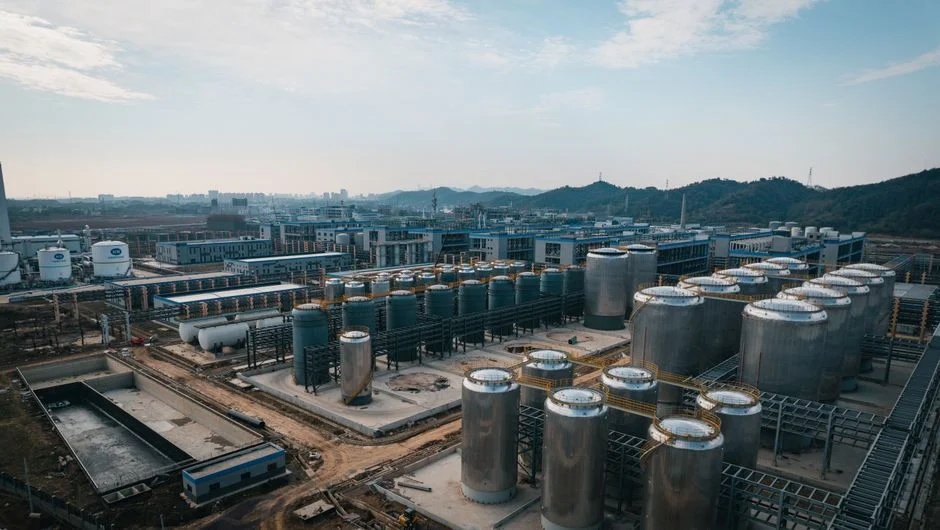
A mining plant’s combined wastewater can conceal different separation requirements in each source stream. Characterizing tailings overflow, mill discharge, washdown, reagent carryover, finishing rinse water, and neutralization overflow separately prevents one unit from being asked to perform incompatible jobs.
| Source stream | First engineering question | Equipment to evaluate | Required follow-up |
|---|---|---|---|
| Tailings thickener overflow | Are the fines dense and readily settleable, or colloidal and non-settling? | Conventional or lamella clarification; DAF polishing where residual colloids must be removed | Particle-size distribution, settleability, solids density, and surface overflow rate |
| Mill discharge | Which fraction dominates: heavy mineral solids, flotation reagents, or both? | Clarifier for bulk mineral solids; DAF for buoyant or flocculable material | Source-specific flow and solids loading, plus chemical characterization |
| Equipment washdown | Does the wash contain grit, oil, or wash reagents? | Mechanical pretreatment followed by clarification and/or DAF | Screen or grit removal and oil-and-grease testing |
| Flotation-reagent carryover | Is the material floatable or can it be made flocculable? | DAF with pH adjustment and coagulation/flocculation | Jar tests and observed floatability |
| Metal-finishing rinse water | Are metals dissolved, precipitated, or attached to particles? | Precipitation and clarification, then DAF or filtration as required | Total and dissolved metals, pH, alkalinity, and effluent target |
| Acid mine drainage neutralization overflow | What precipitate forms, and how does it settle? | Clarification for settled precipitates; DAF if residual floatable solids remain | Precipitation chemistry, solids settleability, and residual-metal mass balance |
Fluence, in “What Is Dissolved Air Flotation?”, reports mining applications including heavy-metal and oil-waste removal and support for recycling process water and materials. The same source says DAF is not well suited to high levels of heavy nonfloating particles such as silt and clay. That limit supports pretreatment before flotation and clarification before DAF where heavy solids are substantial.
Where sand and grit accompany significant oil, evaluate mechanical pretreatment for gross solids before either separator. Chemical conditioning should also be treated as part of the process, not an accessory; evaluate a PLC-controlled coagulant and flocculant dosing skid where DAF performance depends on a repeatable dose.
Metal capture follows particle behavior. Metals attached to dense solids can be removed with those solids; metals attached to conditioned floc can be floated; dissolved metals remain in the water until they are precipitated and the precipitate is separated. A total-metal result alone does not identify the correct mechanism.
Clarifier-First or DAF-First for Mixed Mining Streams
Clarifier-first/DAF-polisher is the preferred sequence for a combined stream with substantial settleable solids and a meaningful colloidal, oil, or reagent fraction because it removes the heavy bulk load before flotation and protects the DAF’s operating window.
The published guidance is contradictory because it addresses different stream assumptions. A mining selection guide supports clarification before DAF for combined mining streams, while a separate commercial guide says DAF followed by clarifier is rarely necessary and should be reserved for specialized two-fraction cases. Neither statement resolves a Guage bid without wastewater-specific hydraulic and contaminant data.
| Observed stream condition | Preferred sequence | Reason | Evidence needed |
|---|---|---|---|
| Substantial heavy solids plus buoyant, colloidal, or reagent load | Clarifier, then DAF | Removes the bulk settleable fraction before flotation and leaves DAF to polish | Combined solids loading, particle distribution, and pilot results |
| Light, floatable contaminants dominate; heavy solids are negligible | DAF, then clarification only if required | Avoids adding redundant clarification capacity | Flow split, floatability, heavy-solids carryover, and final effluent criteria |
| Heavy grit plus significant oil | Mechanical pretreatment, then the applicable separator | Neither separator should be forced to handle a load outside its mechanism | Grit size, oil characteristics, and peak event profile |
| Very low-buoyancy particles require polishing | DAF or filtration after clarification | Clarification alone may not provide final solids quality | Pilot data and defined solids or reuse criteria |
Require every bidder to compare both sequences using the same wastewater, flow profile, chemistry assumptions, pilot evidence, sludge route, and effluent criteria. Otherwise, the comparison is a product preference rather than an engineering result.
For process-water reuse, include the downstream barrier in the initial RFQ. A clarifier or DAF does not establish reuse quality; filtration or membrane treatment may still be needed. Scope a multi-media filter for ultra-pure water or a reverse-osmosis water purification system when the reuse specification requires it.
Sizing Inputs That Prevent an Undersized Unit
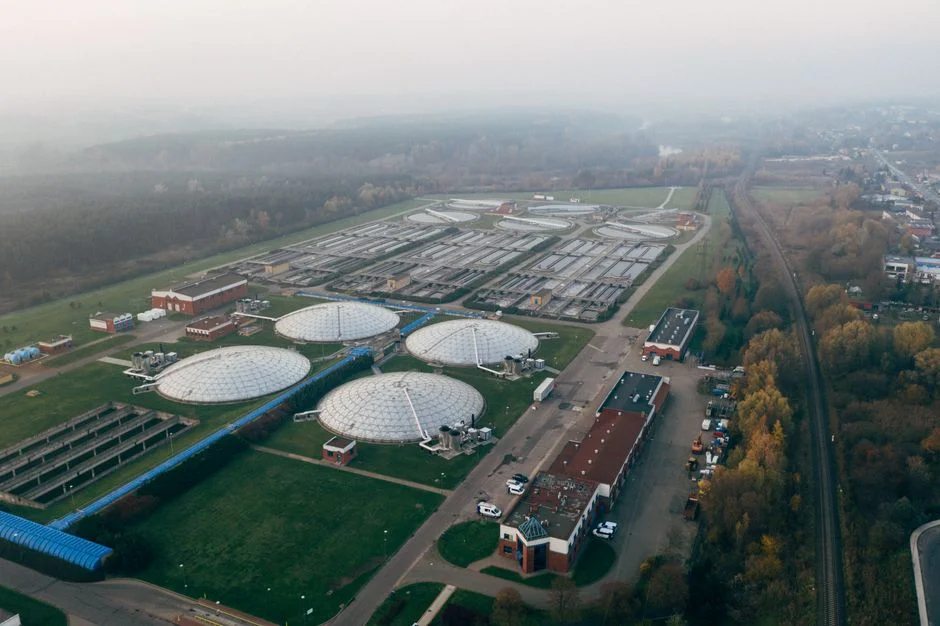
A bid-ready size must be based on source-by-source peak and batch conditions, not an averaged sample, because mining wastewater can shift sharply when a thickener discharges, a mill changes production, or washdown water enters the collection system.
Require flow by source, peak flow, batch-discharge profiles, stormwater contribution, equalization data, TSS, particle-size distribution, settleability, oils and greases, pH, alkalinity, temperature, and total and dissolved metals. Identify whether peaks are simultaneous and whether equalization can attenuate them before selecting the operating range.
| Design item | Information required from the buyer | Information required from the bidder |
|---|---|---|
| Hydraulic basis | Representative peak flow, batch discharge, stormwater, and equalization operation | Selected hydraulic loading and whether batch or peak conditions remain within the design envelope |
| Clarifier | Particle distribution, settleability, solids density, and sludge volume | Surface overflow rate, effective settling area, feed distribution, sludge collection, and withdrawal design |
| DAF | Oil, reagent, colloid, floatability, and peak solids-loading data | Hydraulic basis, recycle configuration, peak solids loading, skimmer duty, and sludge-removal capacity |
| Conditioning | Representative chemistry and jar-test results | Coagulant, pH, and flocculant dose basis, with controls and operating limits |
| Sludge route | Expected handling frequency, storage time, moisture target, and disposal route | Expected sludge characteristics, withdrawal rate, and interface with dewatering |
Jar tests must establish chemistry rather than transfer a generic dose. Elder’s 2011 Utah State University study recorded an optimum dose of 30 mg/L aluminum sulfate for algae and phosphorus removal in a Logan, Utah lagoon-effluent application. That result is not transferable to mining wastewater.
The supplied sources cite DAF hydraulic loading of 2–6 gpm/ft², energy use of 0.5–1.5 kWh/m³, an air-to-solids ratio of 0.01–0.05 mL air per mg solids, and equalization operation at 80%–110% of nominal flow. These are commercial design figures, not guaranteed Guage values; the project engineer must verify them against site data and the final equipment proposal.
Chemical-feed capacity, sludge withdrawal, and dewatering must be included in the mechanical design. Where solids removal creates the final underflow or floated sludge, evaluate a sludge filter press for the mining wastewater train rather than leaving dewatering outside the supplier’s scope.
Budget for the Complete Treatment Train
No generic 2026 equipment-price range can support a Guage procurement decision because the supplied commercial sources conflict materially: one cites $80,000–$350,000 for DAF, while another cites $150,000 to over $1.5 million. These are publication ranges, not quotations, and they omit the site-specific variables that determine actual capital cost.
Require separate pricing for pretreatment, pH control, coagulant and flocculant dosing, controls, utilities, civil work, sludge storage, dewatering, installation, and commissioning. A separator price alone will understate the installed treatment-train cost and obscure differences in sludge handling.
| Budget element | Evidence to request |
|---|---|
| Separator and pretreatment | Equipment, mechanical screens or grit removal, tanks, recycle system, skimmer, and sludge collection |
| Chemical and controls | Coagulant, flocculant, pH control, dosing skid, PLC, instruments, alarms, and data logging |
| Installation | Foundations, piping, electrical supply, utilities, site labor, commissioning, and training |
| Sludge | Storage, dewatering, moisture expectation, handling frequency, transport, and disposal |
| Operating cost | Electricity, compressed air, chemicals, maintenance, spare parts, and operator labor |
Clearwater Industries states that properly conditioned DAF can produce sludge thick enough to require little or no further dewatering. The buyer should not book that benefit until site-specific moisture content, sludge volume, and handling frequency are established.
Include dewatering in the economic comparison so any reduction in sludge volume appears in total cost of ownership rather than as an unpriced future benefit. The PLC-controlled coagulant and flocculant dosing skid and downstream sludge filter press for the mining wastewater train should therefore be quoted as part of the same treatment package.
The final budgetary quotation must identify its flow, TSS, particle behavior, chemistry, peak-event basis, equipment configuration, and exclusions. Until those inputs are fixed, published capital ranges are screening context rather than a 2026 Guage budget.
Ask Vendors for a Bid-Ready Compliance and Acceptance Package
A compliant treatment-train proposal must connect equipment performance to measured wastewater, stated operating conditions, and acceptance tests; an unqualified promise that a unit will meet every limit is not a procurement deliverable.
| Bid item | Required vendor response | Buyer check |
|---|---|---|
| Separation mechanism | State whether the offer is flotation or gravity separation, including recycle, tank area, feed distribution, and sludge handling | The word “clarifier” is not an adequate mechanism description |
| Performance evidence | Provide site-specific test plans or comparable metal-bearing wastewater references with chemical doses, flow, temperature, test method, sampling point, and acceptance criterion | Confirm that comparison conditions resemble the Guage stream |
| Materials | Document the corrosion rationale for the actual chemistry | One supplied guide identifies 316L stainless steel or specialised coatings for acidic or abrasive mineral slurries; Clearwater lists 304SS, 316SS, and polypropylene options |
| Controls | Provide PLC integration for chemical dosing, pH, flow, level, equipment operation, alarms, data logging, and sludge or skimmer withdrawal | Confirm sensor ranges, control logic, monitoring, and failure responses |
| Compliance | Identify the facility’s applicable permit requirements and how acceptance will be demonstrated | Use 40 CFR Part 437 as a relevant ore-mining and dressing reference, then confirm the facility’s actual categorical, pretreatment, and state obligations with the plant and local agency |
Require installation inputs, utility demands, maintenance tasks, spare parts, manufacturer service scope, sludge-storage assumptions, and a clear equipment boundary. Chemical controls should be priced and integrated with the separator rather than offered as an unpriced accessory.
Define performance acceptance before award. Specify representative influent conditions, sampling locations, analytical methods, duration, operating responsibilities, and pass/fail criteria. A case study is evidence for screening; it is not a guarantee of site performance.
Frequently Asked Questions
What will a DAF or clarifier for mining/metals wastewater in Guage cost?
There is no defensible generic 2026 price from the supplied research: the published DAF ranges conflict, and no Guage site quotation is available. Request a budgetary quote tied to source flow, peak and batch events, TSS, particle behavior, chemistry, materials, controls, civil work, utilities, sludge handling, installation, and commissioning. Require the dewatering route to be included so sludge-handling differences are visible.
Which wastewater data should be supplied before sizing a clarifier or DAF?
Supply flow by source, peak flow, batch-discharge profile, stormwater contribution, equalization behavior, TSS, particle-size distribution, settleability or floatability, oils and greases, pH, alkalinity, temperature, and total and dissolved metals. Add representative jar-test results and the final effluent criteria. These inputs determine hydraulic loading, solids capacity, chemical demand, and whether downstream filtration is needed.
When should Guage plants use DAF before a clarifier?
DAF should come first when light, floatable contaminants dominate and heavy solids are negligible or removed by pretreatment. Use a clarifier first when the combined stream contains substantial settleable solids plus colloidal, oil, or reagent fractions. Confirm that arrangement through pilot testing on the same wastewater, chemistry, flow profile, and acceptance criteria used in the bid.
How should a buyer qualify a supplier and control compliance risk?
Require comparable metal-bearing wastewater evidence, site-specific testing, a mechanism-specific proposal, controls and corrosion rationale, and defined acceptance testing. Confirm the plant’s permit with the local agency; 40 CFR Part 437 is a relevant reference for ore mining and dressing, but equipment performance is not itself proof of regulatory compliance. Include filtration or membrane treatment in the RFQ when the process-water reuse specification requires it.