Map the wastewater before selecting equipment
A Haiphong hotel or resort needs a treatment train designed around its specific water-using operations rather than a generic sewage unit. Guest-room and staff sewage generally requires screening, equalization and biological treatment; kitchen wastewater needs grease and solids management; laundry and pool water need separate evaluation before mixing. An underground A/O package plant suits a compact, automated installation, while MBR is appropriate when membrane solids separation, footprint or reuse requirements justify added complexity. Final selection depends on verified flows, seasonal loads, discharge routes, land, sludge handling and operator capability.
Start with a source-by-source inventory. Record daily flow, seasonal peaks, operating schedules, wastewater characteristics and the intended destination for every stream. Include guest rooms, staff areas, restaurants, kitchens, laundry, swimming pools, guest services, cleaning operations and any other water-using activities. Do not combine streams merely because they are called “sewage.”
The Hotel Resort Wastewater Treatment in Vietnam: 2026 Guide, published by HydropureWater in 2026, directs domestic sewage from guest rooms and staff areas toward biological treatment after screening and equalization. Kitchen and food-service wastewater may require grease and solids management before the main biological process. Laundry wastewater can contain detergents and fibers; pool backwash or drainage has different chemistry and should not enter the domestic train without justification. Where those flows are uncertain, the guide calls for sampling and pilot testing or equivalent bench investigation before the biological and solids-handling design is fixed.
Use a rotary mechanical bar screen to establish the appropriate screening solution only after the solids inventory and maintenance-access requirements are understood. The VESA Do Son Electric Hotel project in Haiphong, published by VESA in 2021, provides useful local precedent: the property had 120 rooms and several meeting and conference facilities. It does not establish a transferable flow factor or design template for another resort.
| Wastewater source | Design-basis information to collect | Initial routing decision |
|---|---|---|
| Guest rooms and staff areas | Measured daily flow, occupancy pattern, seasonal variation, solids and operating schedule | Screening and equalization, then domestic sewage treatment |
| Restaurant and kitchen | Flow, grease, food solids, cleaning chemicals and discharge timing | Separate grease and solids management before biological treatment |
| Laundry | Flow, detergents, fibers and backwash frequency | Assess separately; test if its effect on the main train is uncertain |
| Swimming pool | Backwash volume, drainage chemistry, disinfectant and seasonal operation | Evaluate as a separate chemical stream before any mixing decision |
| Guest services and cleaning | Source equipment, flow timing, chemicals and cleaning intensity | Include in the inventory and assign to a justified treatment route |
Define the discharge or reuse route
The receiving route and reuse objective must be defined before equipment selection because they determine the required process, documentation and operating assurance. The Hotel Resort Wastewater Treatment in Vietnam: 2026 Guide, published by HydropureWater in 2026, separates irrigation, toilet flushing and other reuse objectives from wastewater-generating operations, then requires the property to identify the water-quality, reliability and seasonal conditions for each intended use. Treated wastewater reuse is a project-specific design basis rather than a generic feature.
For a gravity connection to a permitted sewer, request the receiving authority’s conditions, connection requirements and confirmed documentation for the specific property. Where reuse is proposed, define the reuse point, expected demand, seasonal availability, storage requirements, public-health controls and what happens when reuse quality or continuity cannot be maintained. An integrated MBR wastewater treatment system may be relevant to a defined reuse path, but membrane selection alone does not establish the reuse criteria.
Vietnam Decision 147/QD-TTg, dated 22 January 2020 and approving the Tourism Development Strategy with a vision to 2030, provides green-tourism policy context. It is not a numerical wastewater-discharge specification. The supplied 2026 Vietnam hotel and resort guide also does not establish a universal numerical effluent limit for resort wastewater; a consultant should not insert a generic limit into the equipment specification.
Ask the owner or consultant to provide four controlled inputs: the discharge route, applicable permit conditions, each reuse criterion and authority-confirmed documents. If any one is missing, record it as an open compliance item and ask bidders to state what confirmation, sampling or further design work they require. A quoted equipment price cannot resolve an undefined receiving route.
Compare A/O, MBR and combined treatment routes
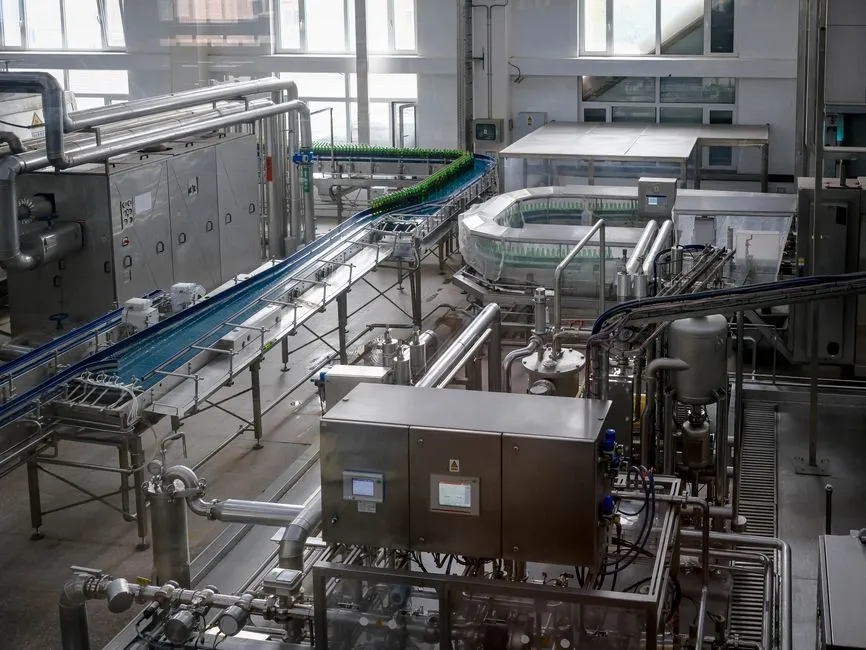
The correct comparison begins with the source inventory and required output, not with a preferred equipment type. An underground A/O package train is a straightforward biological route when buried installation, automation and limited above-ground land use dominate the site requirements. MBR is the stronger candidate when compactness, membrane-based solids separation or a defined reuse path is central to the brief. A combined train is appropriate when separate streams require pretreatment before biological treatment.
The WSZ underground package treatment plant combines anoxic and aerobic biological contact oxidation, sedimentation and disinfection in one buried unit. According to the 2026 Vietnam hotel and resort guide, it is fully automated, handles 1–80 m³/h and can be installed below grade with landscaping above. The underground A/O package treatment plant should be assessed against the hotel’s verified operating flow, seasonal scenario, excavation constraints, access arrangements and operator capability.
The integrated MBR described in the 2026 Vietnam hotel and resort guide combines activated sludge with submerged PVDF membrane filtration. It delivers filtration below 1 μm, occupies approximately 60% less space than conventional systems and covers 10–2,000 m³/day. These are equipment-specific attributes, not proof that MBR is suitable for every property. The bidder must demonstrate how the membrane train responds to the actual domestic, kitchen, laundry and pool streams.
Pretreatment remains part of the decision. Use dissolved air flotation where kitchen or other streams contain suspended solids, fat, oil and grease, or colloidal matter that must be removed before biological treatment. The catalog range for the referenced DAF equipment is 4–300 m³/h; this identifies equipment capability, not the required Haiphong capacity. The dissolved air flotation pretreatment system should be matched to sampled flow and contaminant data, with downstream maintenance access included in the review.
| Decision criterion | Underground A/O package plant | Integrated MBR | Combined route |
|---|---|---|---|
| Core process | Anoxic and aerobic biological contact oxidation, sedimentation and disinfection in one buried package | Activated sludge with submerged PVDF membrane filtration | Source segregation and pretreatment followed by A/O, MBR or another justified biological stage |
| Published equipment range | 1–80 m³/h | 10–2,000 m³/day | Set by the verified design flow and each unit’s applicable range |
| Site characteristics | Buried installation with landscaping above | Approximately 60% less space than conventional systems | Depends on pretreatment, biological equipment, solids handling and reuse connections |
| Preferred when | A packaged biological route, buried installation and automated operation fit the property | Compactness, membrane solids separation or a defined reuse path justifies added process complexity | Kitchen, laundry, pool or other non-domestic streams require controlled pretreatment |
| Bidder must prove | Verified flow, seasonal operation, buried-unit access, automation and solids handling | Wastewater profile, membrane maintenance, spare parts, operator capability and reuse output | Compatibility, capacities, maintenance access and performance across the full treatment train |
The 2026 Vietnam guide cites a Nha Trang development where two MR1-350SS units were selected for consistent microbiological treatment, a compact footprint and no chemical storage or dosing, based on the Resort Wastewater in Vietnam Case published by ULTRAAQUA. This precedent illustrates the reasoning behind an equipment choice rather than a Haiphong sizing rule.
Build the supplier RFQ and acceptance checklist
A defensible RFQ makes bidders solve the same site problem and exposes missing data before price comparison. Require a source inventory, a measured or otherwise verified flow basis, a seasonal operating scenario and explicit separation of domestic, kitchen, laundry and pool streams. Each bidder should state which data it used, which assumptions it made and who is responsible for closing any gaps.
Where flows or wastewater characteristics remain uncertain, require the bidder to identify whether sampling, pilot testing or bench investigation is needed before the biological and solids-handling design is fixed. Do not accept a generic per-person flow factor as the sizing basis. The Hotel Resort Wastewater Treatment in Vietnam: 2026 Guide, published by HydropureWater in 2026, states that hotel and resort systems should be sized from the property’s operating basis rather than a universal population multiplier.
Request a process-flow drawing that shows screening, equalization, source pretreatment, biological treatment, solids separation, disinfection, sludge handling, odor control and the final discharge or reuse connection. The drawing should identify flow and solids-handling responsibilities at every interface. Also request maintenance-access details, local spare-parts availability, operator training, energy demand, sludge-removal method, odor-control provisions and the responsibilities of the resort’s operating team.
Compare all offers against the same site data and acceptance criteria. For further decision structure, review A/O package plant versus MBR for a hotel and the hotel packaged MBR selection guide, but do not import assumptions from another property into the Haiphong RFQ.
| RFQ acceptance item | Required bidder response | Reason for acceptance |
|---|---|---|
| Verified design basis | Source-by-source flow, seasonal scenario, wastewater characteristics and calculation method | Prevents unsupported sizing and makes offers comparable |
| Data gaps | Named missing inputs, responsible party, required sampling or pilot work, and effect on final design | Keeps uncertainty visible before equipment selection |
| Complete process scope | Process-flow drawing from source connection to final discharge or reuse point | Prevents omissions in pretreatment, solids handling and final connections |
| Equipment suitability | Model, applicable capacity range, duty basis and site arrangement | Tests whether the offered unit fits the operating scenario |
| Operating responsibility | Automation, operator tasks, training, energy demand, maintenance access and spare-parts support | Tests operability rather than technical appearance alone |
| Sludge and residuals | Removal method, storage, transport and responsibility allocation | Addresses a recurring operating interface outside the liquid treatment train |
| Commercial response | Scope boundary, exclusions, warranty, delivery assumptions and supporting documentation | Allows a like-for-like budget decision without inventing a generic price |
Frequently Asked Questions
What flow factor should a Haiphong hotel use to size its wastewater treatment system?
Do not use a universal factor from the supplied research. The Hotel Resort Wastewater Treatment in Vietnam: 2026 Guide, published by HydropureWater in 2026, requires sizing from the property’s operating basis. Require measured or verified flows for each source, the occupancy and operating schedule, seasonal peaks and any backwash or laundry discharge. If those records are incomplete, ask bidders to identify sampling or monitoring needed before final sizing.
Should a Haiphong hotel choose A/O, MBR or a combined treatment train?
Choose A/O when a packaged biological route, buried installation and automated operation suit the site. Choose MBR when compactness, membrane solids separation or a defined reuse path justifies the additional process complexity. Use a combined train when kitchen, laundry, pool or other streams need pretreatment before biological treatment. The final choice must follow the source inventory and receiving route, not the equipment headline.
What should a supplier receive before quoting equipment and price?
Send the source inventory, verified flow basis, seasonal scenario, wastewater characteristics, receiving route, permit conditions, reuse criteria, land constraints, sludge-handling responsibility and operator capability. Also require the bidder to identify missing information and the investigations needed to close it. If reuse is proposed, include the reuse point, seasonal demand, storage arrangement and authority-confirmed requirements.
Can the Do Son Electric Hotel project be copied as a design template for another resort?
No. The VESA Do Son Electric Hotel project in Haiphong, published in 2021, describes a specific 120-room hotel with meeting and conference facilities