
Define the Sugar Mill Sludge Duty
A belt filter press can be suitable for sugar mill wastewater sludge, but the correct model should be selected from representative sludge samples rather than flow rate alone. Engineers should characterize suspended solids, drainage behavior and flocculant demand, then decide whether an independent gravity zone is needed before sizing the pressure and shear zones. Komline-Sanderson states that its independent gravity zone can handle dilute sludge below 1.5% suspended solids. The supplier should test a representative sample, define cake and filtrate acceptance criteria, and specify controls, cake handling and warranty scope in the purchase package.
Sugar mill sludge changes with the production campaign, process stream and upstream operating conditions. A design based only on average plant flow can conceal a poorly draining feed, a high-solids loading period or a change in conditioning demand. Before requesting a firm quotation, the process engineer should define the normal and peak design cases, identify which sludge stream reaches the press and state whether continuous or intermittent operation is required.
- Collect representative samples across production and campaign conditions, including the conditions expected to produce the most difficult drainage.
- Measure suspended-solids concentration and record expected feed rate and operating mode.
- Characterize settling, drainage and filtration behavior. If flocculant is required, test its type, dose and operating method rather than assuming additional polymer will compensate for unsuitable feed.
- Send the defined representative sample to the supplier. Komline-Sanderson’s laboratory assessment uses 5-gallon representative sludge samples to determine expected belt press performance; the mill and supplier must agree in advance on sampling conditions and acceptance tests.
The sample plan should define where and when each sample is taken, how it is preserved, whether it is composited, and whether the test will include the proposed conditioning chemical. A laboratory result is evidence for selecting and sizing the equipment, but it remains a performance expectation until the selected press is tested on the mill’s own sludge under the agreed acceptance procedure.
| Design-basis item | Information the buyer must define or obtain | Use in the press decision |
|---|---|---|
| Representative sludge sample | Production and campaign coverage, sampling point, preservation, test procedure and sample volume | Provides the basis for supplier performance testing |
| Suspended-solids concentration | Measured result for each relevant duty case | Helps distinguish dilute-feed thickening from final dewatering |
| Drainage behavior | Observed settling and filtration response, including the effect of proposed conditioning | Determines whether an independent or extended gravity zone is justified |
| Feed and operating duty | Expected feed rate, operating mode, campaign changes and solids loading | Sets the hydraulic and operating basis for supplier evaluation |
| Flocculant pretreatment | Chemical type, dose range, mixing method and control requirements | Defines the conditioning trial and the need for an automatic chemical dosing system |
Match the Press Architecture to Drainage Behavior
A press architecture should be selected according to sludge type and feed solids, as gravity thickening and final mechanical dewatering impose different duties. Its Kompress Series III is available as a three-belt G-GRSL, a two-belt GRS and an extended-gravity two-belt GRSL design. The three-belt G-GRSL includes an independent gravity zone with a more open belt for rapid drainage, while the GRSL provides a longer gravity drainage zone. Transitions between these configurations require careful evaluation of the sludge's specific drainage characteristics.
The independent gravity arrangement is relevant when the feed is dilute enough for preliminary thickening to be useful. Komline-Sanderson states that this arrangement has application on dilute sludge with suspended solids below 1.5%. That is a supplier-specific scope, not a universal performance guarantee, and it does not remove the need to test the mill’s sludge. If the feed does not drain well in the gravity section, an extended or independent zone may not solve the problem; the test must examine the actual drainage response and conditioned feed.
The two-belt GRS provides the simpler basic architecture, while the extended-gravity GRSL increases the gravity-drainage path. Neither arrangement should be selected solely by model name. The buyer should ask the supplier to identify where drainage occurs, how the gravity zone affects feed distribution into the pressure zone, and whether the proposed arrangement has been tested with a representative sugar mill sludge.
| Komline-Sanderson configuration | Documented architecture | Selection question for sugar mill sludge |
|---|---|---|
| Three-belt G-GRSL | Includes an independent gravity zone with a more open belt for rapid drainage | Does the mill sludge require a separate thickening stage before pressure dewatering? |
| Two-belt GRS | Basic two-belt configuration | Does representative testing show adequate drainage without an independent gravity zone? |
| Extended-gravity GRSL | Two-belt design with a longer gravity drainage zone | Would additional gravity residence time improve distribution and solids capture before compression? |
Alfa Laval describes gravity belt thickening as a distinct duty and states that its AS-H belt thickener is suitable for municipal or industrial flocculated sludges. This supports separating thickening requirements from final belt-press dewatering when preparing the procurement package. For a broader equipment comparison, engineers can also compare dewatering equipment for industrial sludge.
Specify the Pressure and Shear Zone
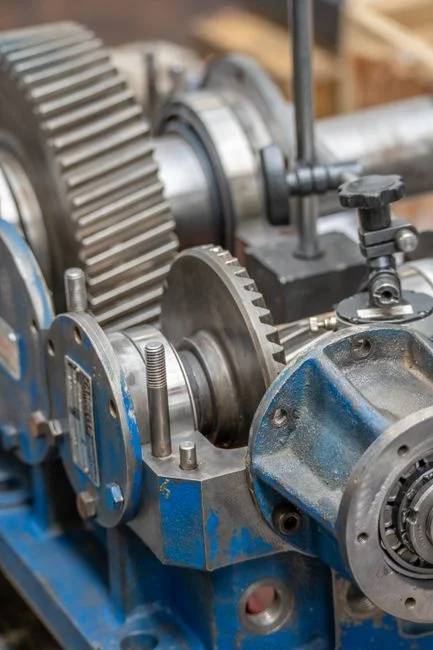
The pressure zone of a Series III press begins with a 30-inch-diameter self-bailing perforated dewatering drum. The manufacturer states that this drum removes a high volume of filtrate and helps prevent upset conditions before the sludge enters the pressure and shear zone. The specification should require the supplier to explain how the inlet arrangement controls feed distribution and preserves drainage performance rather than asking only for the nominal drum size.
Pressure should rise progressively rather than being applied as an undifferentiated load. Komline-Sanderson describes a succession of decreasing-diameter drums and a pressure profile of up to a maximum of 14 drums, with increasing pressure, maintained belt contact and additional time under pressure. Compositech describes a separate high-pressure zone containing 5 or 7 rolls, where pressure increases gradually before doctor-blade discharge. These configurations describe different supplier approaches and do not establish a guaranteed arrangement for sugar mill sludge.
The trial should therefore test the function of the proposed pressure and shear zone: stable feed distribution, progressive compression, controlled filtrate removal, cake discharge and belt tracking under the conditioned mill feed. The buyer should not infer sugar mill capacity, press-cake solids or filtrate quality from drum count, theoretical pressure or a generic dry-solids claim. Those results must come from the representative test and be accepted against agreed criteria.
| Specification item | Evidence or requirement to request | Acceptance check |
|---|---|---|
| Inlet dewatering drum | Komline-Sanderson: 30-inch-diameter self-bailing perforated first drum | Confirm stable feed distribution and effective drainage before compression |
| Pressure progression | Supplier-specific profile; Komline-Sanderson states up to 14 drums, while Compositech describes 5 or 7 rolls in its high-pressure zone | Verify progressive compression, belt contact and residence time using the proposed configuration |
| Shear-zone response | Supplier’s proposed wedge, roll and belt arrangement | Observe tracking, feed migration, cake formation and restart behavior during the trial |
| Discharge and auxiliaries | Doctor-blade cake discharge, washwater, filtrate collection, roll cleaning and accessible maintenance points | Inspect operation, access, cleaning and removal of the selected test unit |
Specify these items in the purchase package because belt-filter-press performance depends on the whole dewatering arrangement, not only the press frame. A supplier quotation can include a plate and frame sludge dewatering press as an alternative architecture, but it should not be substituted for a like-for-like performance test of the proposed belt press.
Set Controls, Scope and Performance Acceptance
A complete dewatering-system quotation establishes how sludge, conditioning chemicals, filtrate and cake move through the selected train. Komline-Sanderson states that it can supply a polymer feed system, discharge cake conveyors and sludge feed pumps to form a complete dewatering system. The buyer should identify which of those functions are included, which remain with the mill, and where responsibility for performance changes between suppliers.
Controls should be specified as part of the equipment package. Komline-Sanderson states that its electrical control panels are provided with a PLC, with higher-level PLC options for Ethernet or SCADA integration. For sugar mill operation, the functional specification should define the controlled sequence, interlocks, alarm handling, belt tracking correction, chemical-dosing control, washwater control and operator interface. The mill should also state how plant signals will interact with the press and how operating data will be recorded.
Komline-Sanderson states that warranties of up to five years can be provided on the frame, pressure rolls and bearings. That is a stated supplier option, not evidence that every quotation includes it. Compare the covered equipment, exclusions, commencement, operating conditions, response times and required maintenance with the complete scope of supply.
| Procurement area | Fillable requirement | Evidence required before award |
|---|---|---|
| Feed and conditioning | Feed pump, polymer system, tank, mixing and control | Supplier scope, trial dose and operating method |
| Controls | PLC, local operator interface and plant integration | Control narrative, I/O list, interlocks and interface allocation |
| Cake and filtrate handling | Discharge conveyor, collection and transfer connections | Included equipment, access and responsibility boundaries |
| Commissioning | Installation, start-up, operator training and performance test | Scope, schedule, training records and test protocol |
| Warranty | Coverage for frame, pressure rolls, bearings and major auxiliaries | Written terms, exclusions and maintenance conditions |
| Acceptance test | Test feed, sampling method, operating duration and acceptance measures | Agreed test protocol for cake solids, filtrate quality, hydraulic capacity and operability |
Before purchase, agree how cake solids and filtrate quality will be sampled, how hydraulic capacity will be observed, what operating duration will demonstrate stable performance and which observations will establish operability. The supplied Komline-Sanderson, Compositech and Alfa Laval material does not establish verified sugar mill performance guarantees. Any guaranteed result for the mill’s own sludge must therefore be written into the purchase package rather than inferred from general descriptions.
Make the Final Supplier Decision
Final selection should follow performance on the mill’s own sludge, not only press dimensions, theoretical pressure or generic dry-solids claims. Require the supplier to explain which results came from representative testing, which came from another duty and which remain unverified for the selected configuration.
Commercial scope can otherwise obscure technical differences. Compare whether the quotation includes conditioning, feed pumping, cake conveyance, filtrate handling, controls, commissioning, operator training and after-sales support. HydropureWater’s automatic chemical dosing system can support precise flocculant, coagulant and pH-chemical injection where the selected press requires chemical conditioning, but the chemical system and press must be evaluated as one operating train.
Where the project requires a different solid-liquid separation duty, retain a plate and frame sludge dewatering press in the procurement comparison. Otherwise, award against the representative-test protocol, agreed acceptance measures, complete system scope and written warranty terms. To place the press within the broader treatment process, engineers can select an industrial wastewater treatment process before finalizing equipment interfaces.
Frequently Asked Questions
Can average sugar mill wastewater flow be used to select a belt filter press?
No. Average flow does not establish feed solids, drainage behavior, conditioning demand or the most difficult operating case. The buyer should request representative sludge data, define normal and peak duties and require the supplier to demonstrate the proposed configuration on that feed before treating the selection as final.
What sludge data and samples should be requested before asking for a belt press quotation?
Request suspended-solids results, drainage behavior, feed-rate expectations, operating-mode requirements and samples covering relevant production and campaign conditions. Specify the sampling point, preservation, test procedure and whether the proposed flocculant will be included. Komline-Sanderson’s laboratory assessment accepts 5-gallon representative sludge samples to determine expected belt press performance, so sample quantity, condition and testing responsibilities should be agreed in writing.
What dry-solids result can a buyer expect for sugar mill sludge?
The supplied evidence does not provide a verified press-cake solids guarantee for sugar mill sludge. Do not substitute a general belt-press claim for mill-specific evidence. Require cake and filtrate sampling methods and acceptance values to be agreed before the test, then record actual