Separate the streams before selecting equipment
A Ryazan' data center should select treatment only after separating cooling blowdown, closed-loop maintenance discharge, makeup-treatment residuals and sanitary wastewater, then verifying source-water chemistry and the discharge route. The practical choices are cooling-tower makeup reuse, compliant discharge or zero liquid discharge. RO is the central separation step for reuse and ZLD, usually preceded by solids removal and UF; NF may fit where hardness rather than total dissolved solids governs. No current Ryazan' or Russian basin-specific numerical discharge limit is established in the supplied research, so the permit route must be confirmed before equipment sizing.
Cooling-blowdown treatment should not be sized from a generic data-center water-consumption factor. The treatment scope begins with four streams: evaporative cooling-loop blowdown, closed-loop maintenance discharge, residuals from makeup-water treatment, and domestic or tenant wastewater. HydropureWater’s Orenburg guide, updated 2026, states that these streams should be combined only where their chemistry, variability and receiving routes are demonstrably compatible. That source also identifies planned IT load, the selected cooling system, available water sources, climate data and the intended discharge route as required project inputs.
Use the cooling vendor’s water balance for minimum, normal and maximum cases. Reconcile evaporation, drift, intentional blowdown, makeup, concentrate, treatment-chemical additions, sludge and final discharge rather than calculating one annual average. For the Ryazan' procurement, this reconciliation is the first fillable design-basis item; each unknown needs a named owner and supporting document.
| Design stream | Required definition | Decision control |
|---|---|---|
| Evaporative cooling-loop blowdown | Flow and chemistry at minimum, normal and maximum operation; operating cycles of concentration | Reuse, discharge or ZLD selection |
| Closed-loop maintenance discharge | Generation frequency, residual inventory, temperature and contaminant history | Segregate unless compatibility is demonstrated |
| Makeup-treatment residuals | Softener, filter or other treatment waste; chemical inventory and residuals | Match to a compatible receiving route |
| Domestic and tenant wastewater | Flow, quality, ownership and receiving arrangement | Keep outside the process-water design basis |
| Cooling-system water balance | Evaporation, drift, blowdown, makeup, concentrate and discharge under each operating case | Vendor sizing basis, not a generic rate |
| Site inputs | IT load, cooling architecture, loop count, duty, schedule, source water, chemicals and endpoint | Owner must supply current evidence |
This stream segregation follows the decision framework in the 2026 Orenburg design-basis guide. A comparable site-specific data-center wastewater design basis can support the same documentation structure, but Ryazan' measurements and authority decisions must replace the other locations’ inputs.
Choose the endpoint from chemistry and receiving conditions
Cooling-tower makeup reuse is the highest-value endpoint when a smaller concentrate stream can be accepted and freshwater is scarce or costly. Genesis Water Tech, as cited in HydropureWater’s Krasnoyarsk guide, reports 60–85% recovery from the blowdown stream for this route. That result is a design reference, not a Ryazan' guarantee: final recovery depends on the measured blowdown chemistry, target cycles of concentration and pretreatment selected.
Select compliant discharge when an authorized receiving system will accept the treated liquid and the required reduction can be reached without adding thermal equipment. Nanofiltration operates at 75–150 psi with 70–85% recovery and produces permeate at 30–50% of feed TDS, according to Genesis Water Tech data cited in the same guide. It is therefore a candidate where hardness rather than total dissolved solids controls the objective, but the receiving authority must confirm the applicable condition and monitoring obligation.
Select ZLD when liquid discharge is effectively prohibited or freshwater is unavailable. The cited sequence is RO, then MVC or a brine concentrator, then crystallizer. Genesis Water Tech reports 95–99% overall recovery and 1–3% solid waste for this arrangement, with data-center capex of $3–8 million and operating cost of $5–15 per thousand gallons treated. HydropureWater’s Krasnoyarsk guide, published before 2026, presents these as indicative anchors; they are not Ryazan' quotations.
| Endpoint | Select when | Indicated performance or cost | Local evidence required |
|---|---|---|---|
| Cooling-tower makeup reuse | Concentrate discharge is acceptable and reducing freshwater demand is valuable | 60–85% blowdown-stream recovery, per Genesis Water Tech cited by HydropureWater | Makeup analysis, cycles target, receiver specification and discharge acceptance |
| Compliant discharge | The authorized receiver accepts treated liquid and avoids the thermal ZLD train | NF: 75–150 psi, 70–85% recovery, permeate TDS 30–50% of feed | Current permit conditions, peak flow, monitoring rules and industrial pretreatment charges |
| Zero liquid discharge | No acceptable liquid discharge or freshwater is unavailable | 95–99% overall recovery, 1–3% solid waste, $3–8 million capex and $5–15 per thousand gallons operating cost | Energy availability, brine and solids handling, disposal route and costed local water alternative |
Do not lock the route from these comparison values alone. The Krasnoyarsk source identifies current basin limits, source-water analysis, freshwater availability and cost, target cycles, receiving conditions and waste heat as required inputs; it supplies no equivalent confirmed Ryazan' values. This decision also follows the reuse-versus-discharge decision method for data centers.
Build the blowdown treatment train around measured chemistry
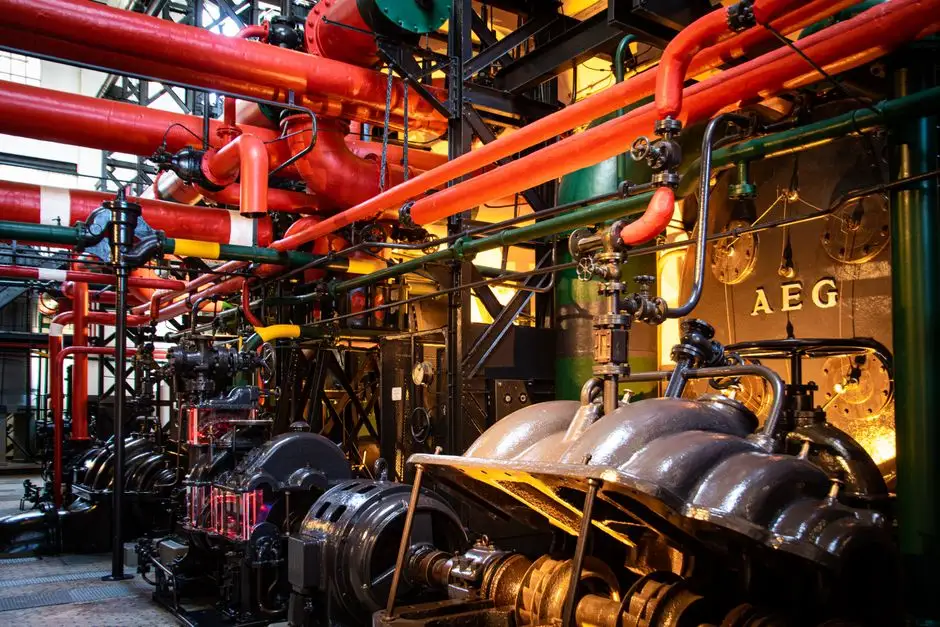
At four cycles of concentration, cited blowdown contains 1,200–6,000 mg/L TDS, typically four to eight times the makeup concentration. Calcium, magnesium, silica and alkalinity therefore establish the scaling envelope; suspended solids, corrosion products, biofilm fragments and airborne dust establish the pretreatment load. Genesis Water Tech data cited in HydropureWater’s Krasnoyarsk guide also places blowdown suspended solids at 10–50 mg/L, so filtration must protect the selected membrane rather than follow it.
For a conventional reuse or discharge train, the indicated sequence is multi-media filtration followed by UF before RO. The same source identifies side-stream filtration at 10–25 microns, UF at 10–30 psi and 90–95% recovery, and RO feed filtration below 10–15 microns with antiscalant dosing matched to scaling chemistry and pH adjustment for membrane compatibility. A bidder may propose alternatives, but should identify the contaminant barrier, expected recovery loss and cleaning strategy for each.
Industrial RO removes 95–99% of dissolved solids and produces 10–50 mg/L TDS permeate, while blowdown recovery ranges from 50–85% depending on scaling potential, according to the cited Genesis Water Tech figures. For the equipment basis, compare UF pretreatment for cooling blowdown and an industrial RO system for blowdown reuse or ZLD against these duties rather than against a generic flow.
Where high-silica makeup limits conventional RO, the cited IDE MAXH2O case uses fluidized-bed precipitation and dynamically operated RO to achieve about 95% recovery with approximately 1 mg/L permeate silica. Treat that as a project-specific concept, not a Ryazan' selection: it requires the site’s silica concentration, precipitation test, scaling assessment and membrane operating envelope.
| Process barrier | Design condition | Applicable endpoint | Bidder evidence |
|---|---|---|---|
| Solids and biological load | Multi-media filtration; UF where the selected separation train requires it | Reuse, discharge and ZLD liquid trains | Filtrate quality, flux assumptions, backwash and cleaning recovery |
| Dissolved salts and scaling | Antiscalant, pH control and membrane selection matched to measured calcium, magnesium, silica and alkalinity | Reuse, discharge and ZLD | Projection at the specified cycles target and source-water analysis |
| Dissolved-solids separation | RO: 95–99% removal and 10–50 mg/L permeate TDS; NF where hardness governs | Reuse or compliant discharge | Guaranteed permeate TDS, silica and recovery |
| High-silica source | Precipitation plus dynamic RO considered only after source analysis | Reuse or discharge | Silica projection, precipitation testing and operating controls |
| Liquid-volume elimination | RO followed by MVC or brine concentration and crystallization | ZLD | Overall recovery, solid-waste balance, energy demand and redundancy |
A data center blowdown treatment train comparison provides a useful sequence reference, but the Ryazan' bid must be tied to a representative source-water analysis and the receiving condition stated in writing.
Plan for Ryazan' winter operation and receiving-route approval
Outdoor membrane skids and RO vessels need enclosure, heat tracing and freeze-protected chemical dosing lines in a cold climate. HydropureWater’s Krasnoyarsk guide states that thermal stages should be integrated into a building rather than installed as unprotected pad-mounted equipment. For Ryazan', require each bidder to tie its winter-operability narrative to the site’s winter ambient design temperature and identify how startup, shutdown, drain-down and chemical dosing remain functional.
Waste heat must be treated as an unverified input for Ryazan'. The Krasnoyarsk source identifies district-heating return lines or generator waste heat as possible energy advantages, while noting that few data centers have enough waste heat to justify a brine concentrator without purpose-built heat. No comparable Ryazan' waste-heat inventory appears in the supplied research. A thermal-stage bid should therefore state the heat source, annual availability, backup energy and effect on the recovery and operating-cost guarantee.
Do not import United States Clean Water Act or NPDES requirements into a Russian permit package. HydropureWater’s 2026 Orenburg guide expressly identifies the responsible Russian utility and environmental authorities as the route for confirming the applicable discharge route. Its Krasnoyarsk article refers to Roshydromet and Rosprirodnadzor, but no current Ryazan' numerical limit is supplied.
Before a discharge route is frozen, obtain current written conditions from the responsible Russian authorities and receiving utility. The approval register should name the owner, document, validity condition and deadline for every permit, utility acceptance, monitoring requirement and residual-discharge constraint. Numerical Ryazan' limits remain an open local input, not a design assumption.
Turn the design basis into bidder acceptance criteria
A comparable bid must state its complete design basis rather than quote equipment for an undefined flow. HydropureWater’s 2026 Orenburg guide requires bidders to identify source-water assumptions, cooling configuration, loop count, cycles of concentration, chemical inventory, minimum and maximum flow basis, discharge route, reuse objective and treatment barriers. Add the actual water analysis, named receiving application, peak operating case and evidence of local authority acceptance.
For the liquid-treatment train, require a process guarantee naming permeate TDS, silica and recovery at the specified cycles target. Antiscalant dosing must be matched to the makeup analysis. For ZLD, separately guarantee concentrate handling, overall recovery, solid waste and energy performance. “Suitable for reuse” is not an acceptance criterion because residual biocide, corrosion inhibitor, scale tendency, biological control and compatibility with the receiving process remain constraints identified in the 2026 Orenburg guide.
Cold-climate acceptance should include a documented reference list for skid enclosure, heat tracing and freeze-protected dosing, plus a winter-operability narrative tied to the site design temperature. The data center blowdown treatment train comparison can support bidder questions, but the guarantee must remain site-specific.
| Acceptance item | Bidder response required | Evidence anchor |
|---|---|---|
| Design basis | Cooling architecture, loop count, duty, schedule, cycles target, minimum/normal/maximum flows, source analysis and chemicals | Complete design basis required by HydropureWater’s 2026 Orenburg guide |
| Process guarantee | Permeate TDS, silica and recovery at the agreed cycles target; antiscalant dose matched to source chemistry | Genesis Water Tech performance figures cited by HydropureWater |
| Endpoint and receiving route | Written receiver specification, permit route, monitoring duties and peak-flow compliance | Current authority and utility input; no Ryazan' numerical limit supplied |
| Winter operation | Enclosure, heat tracing, freeze-protected dosing, drain-down and site-temperature narrative | HydropureWater’s Krasnoyarsk guide |
| Commercial scope | Startup, training, controls integration, alarms, cleaning, access, spares, chemicals, sludge handling and continuing support | HydropureWater’s 2026 Orenburg guide |
Use the published cost anchors only to normalize bids. Genesis Water Tech figures cited by HydropureWater list side-stream filtration at $50,000–$200,000, a 50,000 GPD RO skid at $250,000–$500,000, MVC at $1–3 million for 10,000–30,000 GPD systems, and data-center-scale ZLD at $3–8 million. These are comparison anchors, not Ryazan' quotations. Require each bidder to price local delivery, commissioning, utilities, winterization, membranes, chemicals, solids disposal, power and operator support against the same design basis.
Frequently Asked Questions
Which treatment route should a Ryazan' data center select?
Select reuse if the authorized receiver accepts the smaller concentrate stream and freshwater reduction is valuable; select compliant discharge if the receiving conditions can be met without thermal equipment; select ZLD if liquid discharge is effectively prohibited or freshwater is unavailable. The decisive inputs are measured chemistry, the target cycles of concentration, receiving conditions, waste heat and current Russian authority requirements.
What budget should be assigned for cooling blowdown treatment?
Do not budget from generic equipment prices alone. Request a costed bid using the same source-water analysis, flow cases, recovery target and winter requirements. For orientation, HydropureWater’s Krasnoyarsk guide cites $50,000–$200,000 for side-stream filtration, $250,000–$500,000 for a 50,000 GPD RO skid and $3–8 million for data-center-scale ZLD; none is a Ryazan' quotation.
Which bidder requirements matter most for a Ryazan' facility?
Require written acceptance conditions from the responsible Russian utility and environmental authorities, a source-water-specific process guarantee, and documented cold-climate protection. Bidder comparison should use the 2026 Orenburg design-basis checklist while replacing all Orenburg inputs with verified Ryazan' data.
Can UF and RO equipment be selected before the permit is confirmed?
Only as a budgetary process concept. UF pretreatment and RO can be evaluated against measured chemistry, but the receiving specification determines the required permeate and concentrate quality. No current Ryazan' numerical discharge limit is established in the supplied research, so equipment selection must remain conditional on written local acceptance.