What treatment does a Cuttack data center actually need?
A data center in Cuttack needs wastewater treatment based on its actual cooling and wastewater streams, not a generic ETP package. Closed-loop liquid cooling mainly generates leakage and maintenance drainage; evaporative or hybrid cooling produces concentrated blowdown containing dissolved salts, hardness, silica, suspended solids, biocides and corrosion inhibitors. Sanitary sewage and RO reject require separate treatment and destination decisions. The treatment train should remove solids first, then dissolved salts where cooling-makeup reuse requires them, with disinfection and chemical control defined by the intended reuse. Conventional brackish-water RO commonly reaches 75–80% recovery before scaling becomes controlling, according to IDE’s 2026 article.
The first engineering decision is therefore the cooling architecture, not the package type. Confirm whether the facility uses closed-loop liquid cooling, evaporative towers, a hybrid arrangement, or planned phases that will change the thermal system. Future IT loads matter because the wastewater flow and chemistry may change with cooling mode and operating temperature.
Four practical treatment routes are available in increasing order of complexity:
- Controlled discharge after treatment;
- Reuse for washdown or another non-contact service;
- Reuse as cooling makeup;
- Advanced high-recovery treatment that also manages the concentrate and solid residues.
Do not blend streams merely because they are “water.” Sanitary sewage is a biological stream, RO permeate is product water, and RO reject is a concentrated residual stream. Each requires its own quality basis and disposal or reuse route.
Use the regional data-center blowdown treatment planning guide to structure the sampling brief, but obtain Cuttack-specific source-water chemistry, discharge acceptance criteria and measured operating flows before selecting equipment.
Map every wastewater stream before selecting equipment
Five wastewater categories should be separated before equipment selection because each has different contaminants, peak flows and disposal options. Blending them can conceal biological load, scale risk or concentrate volume and can produce a treatment train that is oversized for one stream and undersized for another.
| Stream | Required characterization | Treatment decision |
|---|---|---|
| Evaporative or hybrid cooling blowdown | Conductivity or TDS, pH, total and calcium hardness, silica, TSS, chlorides, sulfate, alkalinity, temperature and residual cooling chemicals | Scale control, solids removal and either controlled discharge, non-contact reuse, cooling-makeup reuse or advanced recovery |
| Closed-loop leakage and maintenance drainage | Measured flow, coolant identity, additives, residual contamination and whether refrigerant- or PFAS-containing fluids could be present | Source segregation and specialist assessment before dilution, mechanical recovery or cooling reuse |
| Sanitary sewage | COD, BOD, TSS, ammonia, pH and pathogen information | Separate biological and solids treatment; do not use as the cooling-water design basis without a deliberate engineering basis |
| RO permeate and reject | Permeate quality; reject conductivity, hardness, silica, chloride and sulfate | Define permeate destination and a separate reject treatment or disposal route |
| Other process drains | Equipment-cleaning water, water-treatment backwash and condensate, with flow and chemistry | Identify contamination and decide whether each stream can be segregated or requires dedicated treatment |
Cooling blowdown must be characterized as concentrated, chemically treated cooling water rather than generic wastewater. The chemical package is part of the treatment problem because biocides, corrosion inhibitors and antiscalants may affect reuse, membrane compatibility and the receiving route. Conductivity alone is insufficient for RO reject: a high-conductivity stream may still create hardness- or silica-driven scale risk, while conductivity alone does not establish suitability for blending.
For closed-loop leakage, document the complete coolant inventory before considering recovery. Direct-liquid and immersion coolants may require specialized handling; dilution does not remove a prohibited or incompatible constituent.
Genesis Water Technologies’ 2026 guide gives 500–1,500 mg/L TDS and 10–25 mg/L suspended solids as initial cooling-water screening targets. They are neither Cuttack regulatory limits nor project reuse specifications. The buyer needs the approved makeup-water chemistry and receiving authority’s written criteria. Use the site-specific wastewater characterization structure to develop the sampling scope.
Build a metered water balance for Cuttack
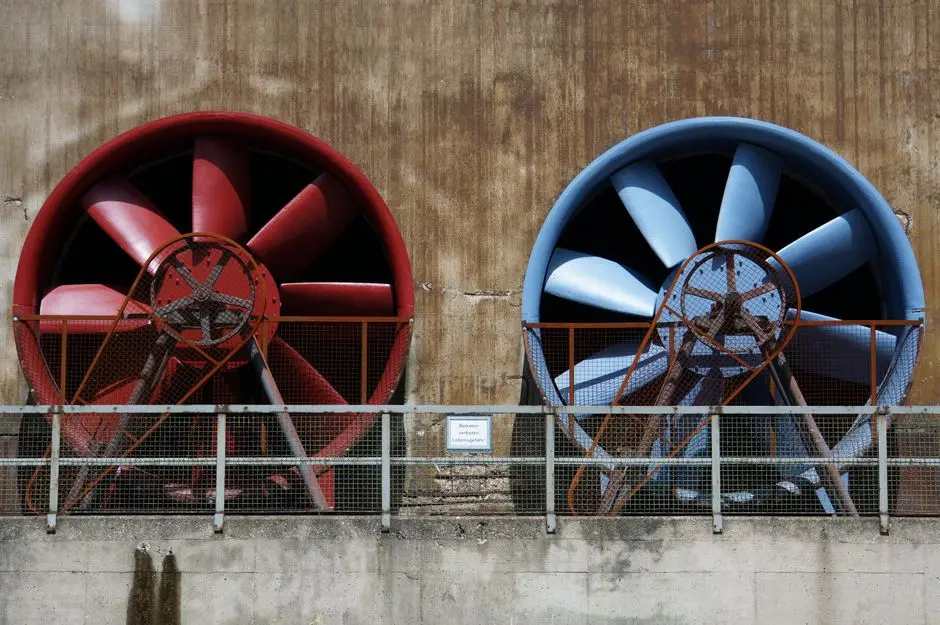
The design flow must come from a metered Cuttack water balance, including peak and transient conditions rather than an imported generic data-center allowance. Meter makeup water, evaporation, blowdown, leakage, maintenance drainage, permeate, reject, reclaimed-water demand and final discharge. Reconcile the totals before equipment sizing and verify the balance again during commissioning.
Cycles of concentration, or CoC, provide a useful check on cooling-water losses. Genesis Water Technologies’ 2026 article gives the theoretical blowdown ratio as 1 divided by CoC minus 1. At 4 CoC, theoretical blowdown is 25% of makeup; at 6 CoC, it is 20%. The same source reports actual blowdown can exceed theory by 15–30% because of unmeasured losses and emergency dumps.
Those percentages do not replace flow measurements. Instrument the actual blowdown, record CoC and operating mode, and identify whether emergency dumps or maintenance events create short-duration loads. Size vessels, pumps and membrane systems from the maximum measured design flow plus the operating margin defined by the bidder. Average daily water use can conceal the event that determines equipment capacity.
IDE’s 2026 article uses a 100 MW facility consuming up to 2 million litres per day only as an illustration. It is not a Cuttack design input. Likewise, the closed-loop figures cited on LinkedIn in 2025—3,000–10,000 litres per MW for initial pipe filling and 100–1,000 litres per MW per year for leakage and maintenance—describe the cited closed-loop service and must not be transferred without confirming the installed cooling design.
- Establish meter points and data ownership.
- Measure makeup, evaporation and actual blowdown across cooling modes.
- Reconcile leakage, maintenance drainage and treatment-plant flows.
- Identify peak, emergency and maintenance-discharge profiles.
- Size the selected train against maximum flow plus its stated operating margin.
Choose a treatment train that protects the reuse destination
Treatment should follow contaminant severity and the final water destination. Suspended solids, colloids and particulates must be removed first because they can foul membranes, instruments and cooling distribution systems. Dissolved-salt removal is needed when the recovered water must meet a cooling-makeup specification; disinfection, pH adjustment and chemical dosing depend on the destination and its microbial and material-compatibility requirements.
| Process step | Applicable duty | Design basis and limitation |
|---|---|---|
| Solids removal | Remove suspended solids, colloids and particulates | Required before RO or where the reuse specification limits TSS |
| Ultrafiltration pretreatment | Reliable solids separation ahead of sensitive downstream processes | HydropureWater catalog data specify 0.03-micron PVDF membranes, feed turbidity up to 300 ppm, automatic backwash and air scour, and 2,000–40,000 L/h capacity. These are catalogue values, not Cuttack performance guarantees. |
| Industrial reverse osmosis | Remove dissolved salts for cooling-makeup reuse | Project recovery from TDS, calcium hardness, silica, temperature, antiscalant strategy and proposed recovery ratio. IDE’s 2026 article reports that conventional BWRO often reaches only 75–80% recovery before scaling becomes unmanageable. |
| Disinfection and chemical control | Control pathogens, pH and treatment residual according to the intended use | Select only after defining residual requirements, storage, distribution and downstream material compatibility |
| Advanced high-recovery treatment | Recover water while controlling sparingly soluble salts | IDE’s 2026 approach uses conservative local RO followed by controlled precipitation of silica, calcium carbonate and other salts in a fluidized-bed reactor. It requires specialist design, pilot validation and an accepted pellet-disposal route. |
For solids separation, evaluate ultrafiltration pretreatment for cooling blowdown against the actual feed, peak flow and fouling risk. The stated PVDF membrane, turbidity and capacity figures come from HydropureWater’s 2026 catalogue information and require verification for the Cuttack duty.
Where lower-TDS permeate is required, evaluate an industrial RO system for cooling-water reuse. HydropureWater’s catalogue recovery of up to 95% is a maximum, not a site guarantee. A bid should not promise 95% unless feed-specific membrane projections and pilot results support it.
High recovery is a separate design problem, not simply a higher RO setting. IDE’s 2026 approach deliberately removes silica, calcium carbonate and other sparingly soluble salts as compact pellets in a fluidized-bed reactor, leaving a brine described as primarily sodium chloride. The engineering burden shifts to precipitation control, pellet handling, materials, controls and residue disposal. The RO membrane system specifications and selection guide provides the broader technical context, while the ultrafiltration operating-cost breakdown helps bidders separate pretreatment costs from membrane-recovery assumptions.
Use pilot evidence to set recovery and performance guarantees

Recovery should be established from representative site evidence rather than catalogue wording. Genesis Water Technologies’ 2026 guidance proposes a trial lasting 3–6 months, or the longest practical operating window. The trial should cover representative cooling modes, seasonal conditions and IT loads and should measure recovery, scaling tendency, permeate quality, chemical demand, membrane-cleaning frequency, concentrate handling and automatic-control response.
IDE’s 2026 industrial example reports around 95% recovery and about 1 mg/L permeate silica. It proves that specialist high-recovery treatment can be engineered, but it is not expected Cuttack performance. The installation combined blowdown from 20 hybrid cooling towers with RO brine and manufacturing wastewater, so its mixed-feed chemistry and operating context differ from an unbodied Cuttack data center.
Translate pilot evidence into enforceable acceptance criteria. At minimum, define:
- Design flow, operating margin and complete water-balance boundaries;
- Permeate and reject quality limits;
- Guaranteed recovery under stated feed conditions;
- Energy and chemical consumption;
- Cleaning frequency and membrane or filter life;
- Automatic-control and fail-safe response;
- Residue handling and equipment availability;
- Membrane projection supported by feed TDS, hardness, silica and temperature.
State which guarantee applies at what feed chemistry and loading. A recovery figure without its operating envelope is not a useful procurement guarantee.
Confirm the Cuttack discharge, reuse and residue route
The applicable Cuttack authority must define the acceptable destination for each stream before the treatment train is finalized. Obtain written acceptance criteria from the relevant Odisha and local authorities and from the receiving utility or sewer operator. The research supplied for this article refers to Maharashtra and foreign regulatory frameworks; none should be imported as a Cuttack legal requirement.
Ask separately about the main effluent and the RO-reject or sludge route. If cooling blowdown may be discharged to a sewer, the operator’s pretreatment and discharge conditions may govern temperature, pH, TDS, suspended solids and chemical additives. These conditions must be confirmed in writing rather than inferred from general industrial-effluent practice.
Reuse creates another design interface. Recovered water for washdown or another non-contact service may require storage, distribution, chemistry control and microbial safeguards. Cooling-makeup reuse additionally needs compatibility with the cooling-water treatment program, including scaling, corrosion and biological control.
Require a documented destination for pellets, sludge and other solid residues. Permeate that meets a reuse specification has no project value if the resulting residue has no accepted handling route. This check should precede vendor selection because it can eliminate otherwise plausible treatment configurations.
Issue a vendor package that compares total operating value
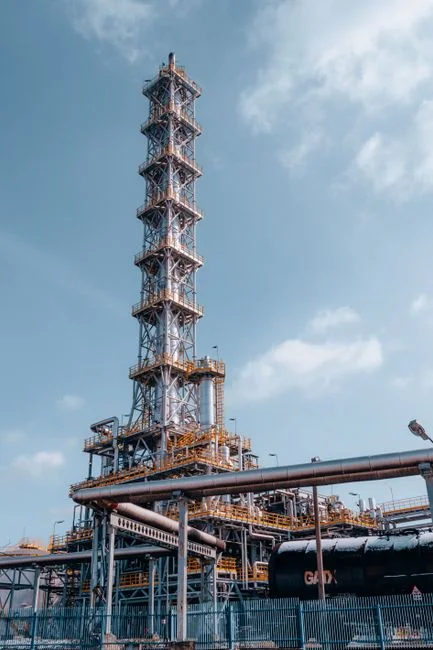
The tender should compare bidders on guaranteed site performance and total operating value, not on a packaged ETP price or a catalogue recovery ceiling. Give every bidder the same measured water balance, feed analyses, operating modes, reuse specification, discharge criteria and pilot requirements.
| Bid item | Information required from every bidder | Acceptance basis |
|---|---|---|
| Design basis | Assumptions, measured peak flow, operating margin, feed chemistry and cooling operating modes | Reconciled to the Cuttack water balance and issued data room |
| Process performance | Projected recovery, permeate and reject quality, chemical consumption, cleaning frequency and availability | Measurable guarantees with defined feed and load conditions |
| Total cost | Equipment, installation, membranes, chemicals, energy, testing, operator time, cleaning, redundancy, spares and concentrate handling | Lifecycle comparison over the buyer’s stated evaluation period |
| Controls and maintenance | Automatic controls, fail-safe response, monitoring, redundancy, maintenance and operator training | Factory and site acceptance tests with documented procedures |
| Residues | Sludge or pellet quantity, characteristics, handling method and destination | Accepted route documented before award |
| Evidence | Relevant pilot data, membrane projections and commissioning test protocol | Technical review and written acceptance criteria |
Include freshwater avoided, discharge avoided, chemical savings, equipment reliability and exposure to water-service disruption in the business case. Genesis Water Technologies’ 2026 analysis reports capital cost per gallon treated can be 3–4 times higher at smaller scales than at hyperscale facilities; this supports right-sizing and modularity rather than importing a hyperscale plant.
Do not compare equipment purchase price alone. A bid that omits membrane replacement, antiscalant, cleaning, operator time, residuals or concentrate handling is not a complete offer. Use the buyer-guide framework for treatment-plant tender evaluation to structure the commercial schedule, but make all technical and regulatory fields specific to Cuttack.
Frequently Asked Questions
Does a closed-loop data center in Cuttack need cooling-blowdown treatment?
Not necessarily. A closed-loop liquid-cooling system may mainly generate leakage and maintenance drainage rather than concentrated evaporative-tower blowdown. The supplier must first receive the cooling configuration, coolant inventory, measured flows, representative analyses and written reuse or discharge criteria. Leakage should not be assumed suitable for cooling reuse if refrigerant- or PFAS-containing fluids could be present.
What treatment and equipment capacity does the facility need?
No defensible Cuttack flow can be stated from the supplied research. Capacity depends on measured maximum blowdown and wastewater flow, cooling modes, feed chemistry, intended reuse, concentrate route and local acceptance criteria. Size equipment from maximum flow plus the required operating margin, and require the bidder to state its assumptions rather than adopting the illustrative 100 MW water-use figure published by IDE in 2026.
Can the RO system guarantee 95% recovery?
No. HydropureWater’s industrial RO recovery of up to 95% is a catalogue maximum, not a Cuttack site guarantee. IDE’s 2026 article reports that conventional brackish-water RO often reaches only 75–80% recovery before scaling becomes controlling. Any higher guarantee should be supported by feed-specific projections and pilot results covering TDS, hardness, silica, temperature and scaling-control strategy.
How should bidders be selected for a Cuttack wastewater package?
Compare relevant pilot evidence, guaranteed recovery and quality, concentrate handling, automatic controls, redundancy, maintenance support and total operating cost. Require a separate commercial price for equipment, installation, membranes, chemicals, energy, testing, operator time, cleaning, spares and residue handling. Do not award on equipment price or catalogue capacity alone.
What will treatment cost, and which approvals are needed?
The supplied research contains no Cuttack quotation, so request current site-based supplier quotations and local freshwater, sewerage, energy and disposal prices before setting the budget. Obtain written acceptance criteria from the relevant Odisha and local authorities and the receiving utility or sewer operator for both the main effluent and RO-reject or sludge route. Foreign discharge examples are not applicable legal standards for Cuttack.