Start with Longview's discharge or reuse requirement
For mining and metals wastewater in Longview, choose an MBR when reliable solids separation, a constrained footprint, or defined water reuse justify its added capital and operating cost; choose conventional activated sludge when the flow is large and dilute, power is inexpensive, no reuse value exists, and serviceable basins remain available. Neither train removes every dissolved metal, so upstream precipitation or another dedicated treatment step is usually required. Begin with the current permit, actual influent chemistry, discharge or reuse target, footprint, and sludge-handling needs. Where metal pulses, low BOD/COD, sulfate, hardness, or high TDS could affect biology, settleability, or membrane flux, validate the decision with a 60–90 day cassette pilot using actual wastewater, as recommended by HydropureWater’s 2026 guidance.
The governing document is the current NPDES permit and its attachment to the route of discharge or reuse. Confirm whether the facility discharges to surface water, a publicly owned treatment works, an injection well, or a reuse system. Then identify the specific selenium, sulfate, metals, flow, and monitoring conditions in the permit. Federal ore-mining and dressing requirements under 40 CFR Part 440 address arsenic, lead, zinc, copper, nickel, and cadmium, but they do not establish Longview’s site limits or receiving-water conditions.
The supplied research is general treatment guidance, not a Longview permit determination. A buyer therefore needs the permit, receiving-water or sewer information, discharge or reuse specification, and applicable pretreatment agreement before assigning greater weight to either process. The mining wastewater pretreatment comparison can help frame whether clarification or another solids-removal step belongs ahead of biology; it cannot replace the site’s permit and chemistry review.
| Longview evidence to obtain | What it controls | Decision consequence |
|---|---|---|
| Current NPDES permit and discharge route | Effluent limits, monitoring, discharge location, reuse conditions | Defines the required duty before comparing equipment |
| Receiving-water, POTW, injection-well, or reuse requirements | Site-specific selenium, sulfate, metals, and flow constraints | Determines whether polishing or pretreatment is mandatory |
| Reuse destination and receiving-equipment specification | Process-water, cooling, boiler-feed, or other quality requirements | Determines whether MBR permeate is sufficient or additional barriers are needed |
| Existing basin and infrastructure condition | Remaining service life and retrofit feasibility | May make CAS economical if serviceable assets remain |
Screen the wastewater before choosing the biological train
HydropureWater’s 2026 screening flags identify BOD/COD below 0.3, hardness in the thousands of mg/L as CaCO3, sulfate above 1,000 mg/L, and TDS above 5,000 mg/L as demanding mining-influent conditions. These are investigation triggers rather than universal design thresholds. They indicate where biological loading, membrane fouling, precipitation chemistry, or sludge handling may require closer review.
Request a site-specific analytical program covering dissolved and particulate metals, pH, salinity, sulfate, hardness, TDS, biodegradable carbon, and cyanide, ammonia, and thiosulfate where cyanidation circuits are present. The latter constituents can produce swings in oxygen demand. Equalization reduces hydraulic and load shocks, but it does not remove dissolved metals. Cyanide, ammonia, and thiosulfate must therefore be evaluated as separate process risks rather than treated as ordinary BOD.
Check diurnal flow, pulse duration, suspended-solids behavior, and floc settleability under actual wastewater conditions. HydropureWater’s 2026 comparison reports that its CAS systems lost 30–60% of removal efficiency during a 24–72-hour window after a metal pulse; this is a field observation, not a universal performance claim, but it demonstrates the sensitivity of clarifier-based separation to short disturbances.
Do not transfer municipal loading assumptions directly to a metals facility. Low biodegradable carbon may leave too little carbon for biological treatment, while salinity and TDS can inhibit nitrifiers. For either train, specify controlled chemistry through an automatic chemical dosing system only after jar and pilot testing establish the chemical sequence and operating envelope.
| Screening parameter | 2026 evidence-based trigger | Information required | Process implication |
|---|---|---|---|
| BOD/COD | Below 0.3 | Current BOD, COD, and biodegradable-carbon profile | Test biological viability and carbon supplementation needs |
| Hardness | Thousands of mg/L as CaCO3 | Full hardness profile and precipitation chemistry | Assess scaling, precipitation, and membrane fouling |
| Sulfate | Above 1,000 mg/L | Sulfate, pH, alkalinity, and loading variability | Assess biological stress and fouling trend |
| TDS and salinity | TDS above 5,000 mg/L | Major-ion analysis and conductivity | Check biological inhibition and osmotic effects |
| Cyanide, ammonia, thiosulfate | Potential oxygen-demand swings | Species-specific testing during relevant circuit operations | Size equalization and define load-control requirements |
| Metals | Dissolved and particulate forms must be separated | Site data by stream and during pulses | Define precipitation and solids-capture duties |
Compare MBR and activated sludge under equal scope
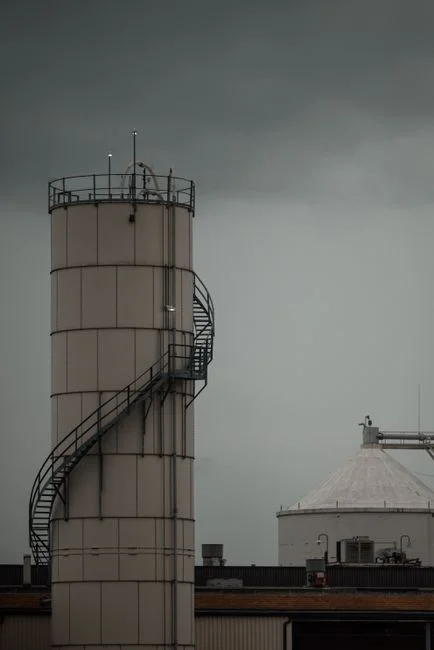
MBR replaces gravity settling of biomass with physical membrane separation, while conventional activated sludge retains biomass through secondary clarification. That distinction becomes decisive when sludge settleability is unreliable, space is constrained, or reuse quality has economic value. Neither process, by itself, removes every dissolved metal; dedicated precipitation remains part of the complete train.
HydropureWater’s 2026 field data report normal MBR operation at 8,000–12,000 mg/L MLSS, compared with 2,000–4,000 mg/L for CAS using the Lamella-clarifier engineering reference. EPA MBR Fact Sheet values cited by HydropureWater in 2026 are 0.01–1.31 NTU turbidity and 0.10–0.72 mg/L BOD5 for the referenced facilities. Those values describe the cited facilities and are not automatic Longview acceptance limits.
For the 1,000 m³/day comparison, MBR capital cost was 20–40% above equivalent-flow CAS and operating cost was 15–30% higher per m³, according to HydropureWater’s 2026 field data and the Lamella-clarifier engineering reference. The same 2026 sources state that MBR can reduce concrete and civil footprint by approximately 60%. These comparisons must remain tied to the stated flow and scope; they are not quotations for a Longview project.
Use the MBR wastewater membrane bioreactor cost per m³ guide as screening evidence, then request equal-scope pricing. Include pretreatment, civil works, electrical work, controls, sludge handling, disposal, cleaning, and replacement. An integrated MBR membrane bioreactor may simplify comparison, but reuse suitability still depends on the destination’s water-quality specification.
| Equal-scope criterion | MBR | Conventional activated sludge | Longview selection rule |
|---|---|---|---|
| Biomass concentration | 8,000–12,000 mg/L MLSS, HydropureWater field data, 2026 | 2,000–4,000 mg/L MLSS, Lamella-clarifier engineering reference, 2026 | Confirm both can sustain treatment under site chemistry |
| Referenced effluent quality | 0.01–1.31 NTU turbidity and 0.10–0.72 mg/L BOD5, EPA MBR Fact Sheet values cited by HydropureWater, 2026 | Depends on biology and secondary-clarifier performance | Set project-specific limits from permit and reuse requirements |
| Capital cost, 1,000 m³/day case | 20–40% above equivalent-flow CAS | Baseline in the cited comparison | Obtain quotations for identical flow, duty, and civil scope |
| Operating cost, 1,000 m³/day case | 15–30% higher per m³ | Baseline in the cited comparison | Model actual power, chemical-cleaning, and replacement assumptions |
| Civil footprint | Approximately 60% less concrete and civil footprint in the cited 2026 sources | Baseline in the cited comparison | Weight this more heavily only where land or reuse construction is constrained |
| Dissolved metals | Requires dedicated precipitation or another removal step | Requires dedicated precipitation or another removal step | Do not credit membrane solids retention as dissolved-metals compliance |
| Reuse quality | Potentially reduces downstream clarification needs | Requires additional clarification and polishing | Check whether any polishing barriers are required |
Build the lifecycle case around sludge and operating risk
The lower civil footprint of an MBR can be offset by membrane, power, cleaning, and replacement costs. Both alternatives should therefore be modeled with fine screening, equalization, controlled chemistry, aeration, solids separation, sludge handling, disposal, electrical demand, maintenance, and eventual equipment renewal. A capital-cost comparison that excludes sludge dewatering or membrane replacement is incomplete.
HydropureWater’s 2026 guidance identifies sulfate above 1,000 mg/L and hardness in the thousands of mg/L as CaCO3 as conditions that can accelerate membrane fouling. Treat these as validation triggers, not proof that the MBR will fail. During pilot testing, compare transmembrane pressure, membrane-normalized flux, cleaning frequency, and recovered performance using actual wastewater.
Fine screening must match the membrane configuration. HydropureWater’s 2026 specification states that MBR systems require 1–3 mm fine screening, with cited cutoffs of 1–2 mm for hollow-fiber modules and 2–3 mm for flat-plate modules. Confirm the applicable module requirement with the supplier and include screen bypass, integrity monitoring, and downstream consequences of screen failure.
MBR waste sludge also requires direct evaluation. HydropureWater states in 2026 that MBR waste sludge can have lower settleability and more colloidal particles than CAS waste activated sludge. Test the resulting sludge rather than selecting a plate-and-frame filter press from nominal capacity alone; capture dry-solids yield, filtrate quality, cake moisture, chemical demand, and handling behavior.
Validate the decision with a site pilot and procurement criteria
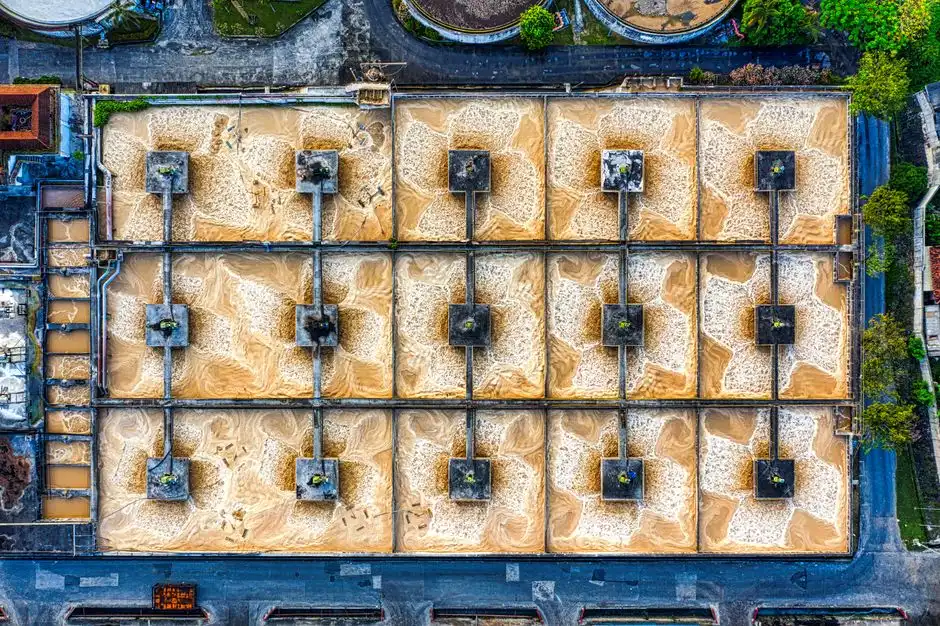
HydropureWater’s 2026 guidance recommends a 60–90 day cassette pilot using actual wastewater. Track solids separation, metals removal, transmembrane pressure, normalized flux, chemical demand, cleaning recovery, and sludge dewatering. The pilot should also capture metal-pulse behavior and the effect of routine operational variation, because a short test on one average sample cannot establish long-term fouling or clarification performance.
Compare MBR and CAS scenarios using the same flow, effluent duty, civil scope, pretreatment, sludge disposal, electricity tariff, cleaning interval, and membrane-replacement assumptions. Require the pilot and permit review to establish acceptance criteria before supplier selection or performance guarantees.
Use a rotary mechanical bar screen as a pretreatment candidate where the influent contains fibrous or coarse material, but size and select it from the wastewater characterization and required screening cut—not from the biological train alone.
| Procurement-stage item | Supplier information to request | Pilot or acceptance evidence |
|---|---|---|
| Influent and duty basis | Actual flow, diurnal profile, metals, BOD/COD, sulfate, hardness, TDS, pH, and toxicity data | Representative sampling across normal operations and relevant pulses |
| Membrane performance | Flux basis, pressure limits, cleaning schedule, warranty exclusions, and replacement assumptions | Normalized flux, transmembrane pressure, cleaning recovery, and operating trend |
| Solids separation | Expected solids capture, sludge properties, and extraction or wasting method | Suspended-solids performance and measured sludge settleability |
| Metals treatment | Chemical sequence, dosing basis, solids-removal step, and residual-metal performance | Dissolved and particulate metals measured before and after treatment |
| Sludge dewatering | Feed characterization, cake target, cycle time, polymer or chemical demand, and filtrate management | Dewatering test and filtrate quality on actual waste sludge |
| Commercial scope | Flow, duty, civil work, controls, utilities, sludge disposal, cleaning, and replacement basis | Equal-scope scenario comparison and signed acceptance criteria |
Frequently Asked Questions
How much more does MBR cost than conventional activated sludge for this comparison?
For the cited 1,000 m³/day case, HydropureWater’s 2026 field data and the Lamella-clarifier engineering reference place MBR capital cost 20–40% above equivalent-flow CAS and operating cost 15–30% higher per m³. Request a site quotation using identical flow, effluent duty, civil scope, sludge handling, electricity, cleaning, and replacement assumptions.
How should a Longview buyer size and select an MBR supplier?
Size from the permit duty, actual flow profile, influent matrix, pretreatment, reuse profile, and redundancy—not peak nominal flow alone. Require documented module-area and membrane-area suitability, pilot data on actual wastewater, and acceptance criteria covering flux, pressure, cleaning recovery, metals, and sludge dewatering before selecting a supplier or module configuration.
Does either biological train guarantee compliance with Longview’s NPDES permit?
No. Membrane solids retention does not establish dissolved-metals compliance, and 40 CFR Part 440 addresses arsenic, lead, zinc, copper, nickel, and cadmium only within its federal scope. The current Longview permit, site analysis, dedicated metals treatment, and pilot results control the final compliance case.
What pilot evidence is required before choosing between MBR and CAS?
Require a 60–90 day cassette pilot with actual wastewater, as recommended by HydropureWater in 2026. Track solids separation, dissolved and particulate metals, transmembrane pressure, normalized flux, chemical demand, cleaning recovery, sludge settleability, and dewatering, then compare both trains under the same permit and reuse duty.