Separate the data center wastewater streams first
An Ajmer data center ETP should be specified stream by stream because cooling-tower blowdown, sanitary sewage, closed-loop leakage, maintenance drainage and RO concentrate have different contaminants, destinations and treatment requirements. Evaporative or hybrid cooling creates concentrated blowdown; closed-loop liquid cooling does not automatically do so. Treatment selection remains provisional until the cooling architecture, measured peak flows, representative chemistry, and accepted reuse or discharge routes are confirmed. For broader stream-separation principles, compare data-center blowdown treatment trains and evaluate data-center water reuse versus discharge.
The first design gate is architectural. A closed-loop liquid-cooling arrangement may generate leakage containing coolant additives or other substances that cannot automatically be diluted or returned to cooling service. Obtain the coolant inventory and check for additives, refrigerants and possible PFAS-containing substances. If compatibility cannot be established, retain specialist recovery or controlled disposal as the selected route rather than assuming reuse.
The second gate is flow. Size equipment from metered peak conditions and operating scenarios: startup dumps, shutdown discharge, peak cooling demand, maintenance events and emergency routes. Average daily water consumption does not represent short-duration discharges. Use this fillable stream profile as the first engineering deliverable:
| Stream | Required measurements and information | Selection gate | Provisional destination |
|---|---|---|---|
| Evaporative or hybrid cooling-tower blowdown | Peak and average flow; cycles of concentration; conductivity or TDS; pH; hardness; silica; TSS; chlorides; sulfate; alkalinity; temperature; residual chemicals | Confirm cooling architecture, representative chemistry and required recovered-water quality | Cooling make-up reuse or accepted discharge |
| Sanitary sewage | Peak flow; COD; BOD; TSS; ammonia; pH; pathogen data | Define biological, solids and disinfection requirements | Accepted sewer or other receiving route |
| Closed-loop leakage | Peak flow; coolant inventory; additives; refrigerants; possible PFAS substances | Establish compatibility with reuse and dilution | Specialist recovery or controlled disposal |
| Maintenance drainage | Peak flow; composition by source; chemical residuals; operational timing | Determine whether segregation or equalization is required | Approved reuse or disposal route |
| RO concentrate | Feed chemistry; projected flow and salinity; antiscalant residuals; constituent profile | Secure an accepted residue route before selecting RO | Accepted discharge, further treatment or specialist residue management |
Build the Ajmer water balance from measured conditions
The theoretical cooling-water relationship is blowdown = 1 ÷ (CoC − 1), which gives blowdown of 25% of makeup at 4 cycles of concentration and 20% at 6 CoC. HydropureWater’s 2026 Bokaro guidance also warns that actual blowdown can exceed that theoretical relationship by 15–30% because of unmeasured losses and emergency dumps. These values are source guidance, not Ajmer field measurements, so they should be used as checks within Indian data-center wastewater design-basis guidance, not as equipment-sizing values.
Build one site water balance around metered makeup, evaporation, blowdown, leakage, maintenance drainage, permeate, concentrate, reclaimed-water demand and final discharge. The balance should preserve the operating assumptions, meter reference and future-load cases so every pump, vessel and storage decision can be traced to an operating condition.
- Confirm the cooling architecture and whether the plant contains an evaporative or hybrid tower.
- Measure makeup, evaporation and blowdown during representative cooling loads.
- Record startup, shutdown, maintenance and emergency-discharge events separately.
- Reconcile measured flows against the CoC relationship and document any unexplained loss.
- Size treatment and storage from the complete operating model, not average daily consumption alone.
IDE Tech’s 2026 illustration states that a 100-megawatt facility can use up to 2 million litres of water per day. That is an illustrative facility-scale figure, not an Ajmer design input. The same distinction applies to recovery claims: conventional operating experience, specialist case-study results, catalogue maxima and contractual project guarantees have different evidentiary status and should not be combined in one comparison.
| Water-balance input | Required record | Use in equipment sizing | Acceptance check |
|---|---|---|---|
| Makeup and evaporation | Metered values by operating mode | Establishes the circulating-water mass balance | Measurement period and calibration method stated |
| Cooling-tower blowdown | Metered flow and measured CoC | Sets feed capacity for pretreatment and RO | Compared with the theoretical CoC relationship |
| Peak and event flows | Startup, shutdown, maintenance and emergency records | Sets hydraulic capacity and equalization | Worst operating case identified |
| Reclaimed-water demand | Hourly and seasonal demand | Defines required recovery and storage | Recovered-water specification accepted |
| Permeate and concentrate | Expected flow and composition | Sets downstream treatment and residue duty | Every reject stream has a destination |
| Final discharge | Accepted flow and quality criteria | Constrains recovery and treatment selection | Written authority or operator acceptance |
Characterize blowdown before choosing membranes
Blowdown treatment should begin with representative chemistry because suspended solids, colloids and dissolved scaling constituents create different treatment duties. Request conductivity or TDS, pH, hardness, silica, TSS, chlorides, sulfate, alkalinity, temperature, cycles of concentration and residual chemical data across representative operating modes. Sampling only during a stable, low-load period will not establish the condition that governs membrane design.
Remove suspended solids, colloids and particles before RO when they could foul membranes, instruments or the cooling distribution system. Hollow-fiber UF pretreatment for cooling blowdown may be appropriate, but filtration alone does not establish microbiological suitability for reuse. The receiving cooling system must also accept the recovered water’s chemistry and operating controls.
Use RO only where the recovered-water specification requires dissolved-salts reduction. Project recovery against feed TDS, calcium hardness, silica, temperature, the antiscalant strategy and site-specific scaling limits. IDE Tech’s 2026 article reports that conventional brackish-water RO commonly reaches 75–80% recovery before scaling becomes unmanageable. That is conventional BWRO operating experience, not an Ajmer guarantee. A specialist case study, catalogue maximum and guaranteed project performance must be presented separately.
The supplied HydropureWater 2026 UF catalogue lists a 0.03-micron PVDF membrane, capacity from 2,000 to 40,000 L/h and feed turbidity up to 300 ppm, with automatic backwash and air scour. These are catalogue limits, not guaranteed Ajmer performance. The selected industrial RO for recovered cooling make-up water should be sized only after peak flow, feed chemistry, required permeate quality, cleaning method and redundancy are verified.
| Parameter | Why it affects selection | Required project evidence | What it cannot establish |
|---|---|---|---|
| Conductivity or TDS | Defines dissolved-solids load and osmotic-pressure constraint | Representative results by operating mode | Ajmer recovery by itself |
| Hardness, silica and alkalinity | Identifies scaling risk and antiscalant requirements | Site-specific scaling analysis | A guaranteed flux or recovery |
| TSS and turbidity | Indicates pretreatment and fouling burden | Peak and representative feed data | Microbiological suitability for reuse |
| Temperature | Influences membrane operation and scaling behavior | Measured operating-temperature range | Catalogue performance under site conditions |
| Residual biocide, antiscalant and corrosion inhibitor | May affect membrane compatibility and concentrate chemistry | Cooling-chemical inventory and residual measurements | Safe reuse without compatibility testing |
| Cycles of concentration | Controls blowdown quantity and concentration of dissolved constituents | Measured operation across representative loads | Discharge acceptance or concentrate disposal |
Match the treatment train to the water destination
The treatment train must follow an accepted destination, not a preferred recovery percentage. For cooling-tower make-up reuse, verify recovered-water quality, storage, distribution, microbial limits, scaling controls and compatibility with cooling chemistry. For direct discharge, obtain written acceptance criteria from the relevant Rajasthan authority or receiving operator for the treated stream’s temperature, chemicals, solids and other applicable parameters. The supplied research does not establish Ajmer-specific legal limits.
Conventional discharge treatment remains an option only when the receiving route accepts the treated stream. A higher-recovery reuse train requires a defined concentrate route; otherwise it merely transfers the treatment problem. Partial ZLD or specialist high-recovery treatment should be compared only after conventional treatment has been shown unable to meet the required recovery or discharge outcome.
IDE Tech’s 2026 MAXH₂O concept combines conservative local RO, controlled precipitation in a fluidized-bed reactor and a brine loop. Its mixed industrial application, treating blowdown from 20 hybrid cooling towers blended with RO brine and manufacturing wastewater, operated at approximately 95% recovery with about 1 mg/L permeate silica. Those results are proof-of-concept evidence for that feed mix, not a universal guarantee for Ajmer.
Saltworks’ 2025 material describes escalation through pretreatment, RO, enhanced recovery, MLD and ZLD. It states that MLD retains a high-salinity, low-volume brine requiring disposal, while ZLD provides zero liquid discharge at the highest cost. Controlled precipitation and crystallisation also create solids that require an approved route. Do not transfer the Najafgarh values of 1,200–6,000 mg/L TDS, 10–50 mg/L TSS or 15–50% RO reject into an Ajmer specification; they describe another location’s design basis and require representative testing and local confirmation.
| Destination-based route | Applicable condition | Evidence required | Residue issue |
|---|---|---|---|
| Conventional treatment and accepted discharge | The receiving authority or operator accepts the treated stream | Written criteria for temperature, chemicals, solids and other applicable parameters | Confirm that the receiving route accepts the selected residuals |
| Filtration, UF and RO for cooling make-up | Recovered-water quality and reuse demand are defined | Feed-specific projection, scaling analysis, pilot evidence and downstream compatibility review | RO concentrate requires a separate accepted route |
| Partial ZLD or brine concentration | Conventional recovery cannot meet the required endpoint | Whole-system mass and energy balance with representative feed data | Assess the remaining brine destination |
| Specialist high-recovery treatment | Scale precipitation or additional separation is technically justified | Representative pilot evidence and performance under stated feed conditions | Precipitated solids require formal acceptance |
| Full ZLD | Liquid discharge is unavailable and the business case supports the added complexity | Complete liquid balance, energy demand and residue-handling plan | Solid residue still requires an approved route |
The concentrate, sludge and precipitated solids scope should not be left as an optional line item. Confirm whether each stream will be discharged, returned to a permitted process, collected for off-site handling or treated further. If that decision is unresolved, the treatment proposal is incomplete.
Turn the design basis into supplier acceptance criteria
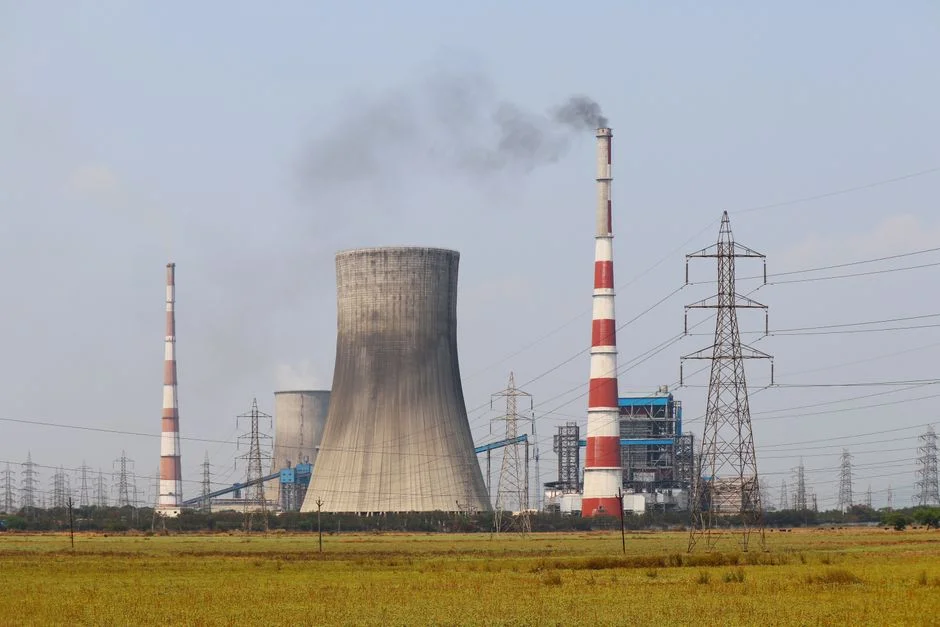
Comparable bids require a common, site-specific scope. Require itemized pricing covering equipment, installation, membranes, chemicals, energy, testing, operator time, cleaning, redundancy, replacement parts and residue handling. The supplier should also provide a feed-specific recovery projection, scaling analysis, control philosophy, representative pilot evidence and a documented route for concentrate, sludge and precipitated solids.
HydropureWater’s 2026 guidance proposes a trial lasting 3–6 months, or the longest practical operating window. During that trial, monitor flow, conductivity, pH, hardness, silica, TSS, the selected biocide residual and differential pressure across membrane or filter stages. Trend cycles of concentration, actual recovery, cleaning frequency, chemical consumption and reuse performance. Convert the results into contractual criteria for recovered-water quality, stable recovery, concentrate handling, cleaning frequency and automatic controls.
No defensible Ajmer price can be derived from the supplied research because it contains no local tariff, measured flow data or quotation. Before requesting a final price, provide measured peak flows, representative chemistry, a recovery target, the reuse route and the concentrate destination. Otherwise, bidders may place unverified assumptions inside an equipment subtotal.
- Submit the completed four-stream design-basis sheet with meter records and representative analyses.
- Identify the recovery calculation basis and every operating assumption.
- Provide pilot evidence under feed conditions representative of the Ajmer design case.
- Submit a scaling analysis covering the proposed antiscalant and RO antiscalant dosing strategy.
- Price the complete operating and residue-handling scope, including cleaning and replacement parts.
- Convert trial observations into measurable acceptance and performance obligations.
Frequently Asked Questions
What will an Ajmer data-center treatment system cost?
No reliable cost can be stated from the supplied research because it contains no Ajmer tariff, measured flow data or quotation. Request an itemized project quotation after supplying peak flows, representative chemistry, recovery target, reuse or discharge route, and residue destination. Check that membrane replacement, chemicals, energy, operator time, cleaning, redundancy and concentrate handling are included rather than quoted as exclusions.
How should a treatment supplier be selected?
Select the supplier that demonstrates feed-specific chemistry, representative pilot evidence, scaling analysis and an accepted residue route. Ask each bidder to separate conventional BWRO operating experience, specialist case-study results, catalogue maxima and proposed contractual guarantees. A catalogue recovery maximum should not be accepted as project performance.
How should treatment capacity be sized?
Size from measured peak conditions and complete operating scenarios, including startup, shutdown, peak cooling, maintenance drainage and emergency dumps. Use the theoretical CoC relationship as a reconciliation check, not as the sole design basis. Submit the resulting water balance for review before accepting equipment capacity.
What compliance evidence is needed for Ajmer?
The supplied research does not establish Ajmer-specific legal discharge limits. Obtain written acceptance from the relevant Rajasthan authority or receiving operator for the selected treated stream and separately for RO concentrate, sludge or precipitated solids. Confirm the current route and applicable criteria before converting the destination into a guaranteed treatment endpoint.
How should recovery claims be evaluated?
Require every recovery claim to identify its evidence basis and operating conditions. Conventional BWRO operating experience, a specialist mixed-feed case study, a catalogue maximum and a guaranteed Ajmer project result are not interchangeable. Accept a project recovery figure only when it is supported by representative feed chemistry, the proposed antiscalant strategy, scaling limits, pilot evidence and a complete residue-handling route.
Related Equipment
- hollow-fiber UF pretreatment for cooling blowdown — specifications, capacity range, and technical data