Separate the two wastewater streams before selecting equipment
Cooling tower blowdown at a data center in Selayang Baru Utara requires treatment as an industrial process stream, separate from sanitary sewage generated by restrooms, kitchens and domestic activities. The immediate choice is direct discharge, pretreatment for discharge, or recovery for cooling-water reuse—not a single generic treatment package. Blowdown must be characterized for pH, temperature, dissolved salts, chlorides, sulfates, phosphates, residual biocides and relevant metals. Research indicates that conventional brackish-water reverse osmosis is commonly limited to 75–80% recovery before scaling becomes unmanageable (IDE Tech, 2026). Because no Selayang Baru Utara sewer limits, surface-water conditions or approval pathways were supplied, the applicable route remains subject to confirmation with the responsible Malaysian authorities and sewer utility.
Begin with a source-by-source inventory rather than a combined wastewater total. Cooling tower blowdown is usually the principal process stream, but RO or water-softener backwash, equipment-cleaning wastewater and air-handling condensate can have different chemistry, flow profiles and permitted destinations. RSP Engineers identifies these as separate utility-coordination inputs and notes that process wastewater and domestic sanitary flow follow different discharge pathways (RSP Engineers, n.d.).
For each source, document average and peak flow, operating duration, temperature, pH, total dissolved solids, the cooling-chemical package, expected cycles of concentration and the proportion entering the blowdown stream. Confirm make-up-water chemistry and any changes in operating mode before assigning treatment. The detailed stream definitions in compare data-center blowdown treatment trains provide a useful framing, but their equipment examples should not be treated as Selayang-specific requirements.
| Stream | Document before route selection | Design implication |
|---|---|---|
| Cooling tower blowdown | Average and peak flow, temperature, pH, TDS, chlorides, sulfates, phosphates, silica, calcium, residual biocide, metals, chemical inventory and cycles of concentration | Evaluate discharge pretreatment and recovery against measured chemistry |
| RO or water-softener backwash | Source, flow, salinity, treatment chemicals and operating sequence | Determine whether it can join blowdown treatment or needs a separate route |
| Equipment-cleaning wastewater | Cleaning agents, batch volumes, temperature and discharge frequency | Assess segregation, neutralization and containment |
| Air-handling condensate | Flow, temperature and any treatment chemicals | Confirm whether its composition and discharge point permit a separate connection |
| Sanitary sewage | Domestic fixtures, kitchen flows and expected loading | Assign to the sanitary sewer route rather than the industrial blowdown train |
Do not assume that process wastewater may enter a stormwater route. The general discharge pathways described by RSP Engineers are a sanitary sewer under an industrial permit or a surface-water discharge under the applicable permit framework (RSP Engineers, n.d.). The Malaysian project team should obtain the actual route, connection conditions and receiving-point constraints from the relevant authorities before drawings assign a discharge point.
Choose the discharge route from the reuse target
Internal reuse requires advanced separation to produce cooling make-up water while controlling scale, whereas disposal may support a shorter treatment train if the confirmed sewer criteria are met. The selection should follow a sequence: establish whether discharge is legally available, identify the quality needed for reuse, characterize the chemistry, and only then compare treatment equipment. This avoids selecting membranes before the utility has defined the discharge route or the mechanical team has defined the recovery target.
RSP Engineers notes that sewer acceptance limits, permitting requirements and monitoring conditions vary by jurisdiction, so they must be confirmed with the local authority rather than imported from another country (RSP Engineers, n.d.). The decision must also address residual concentrate. A system that meets permeate quality can still fail if its concentrate has no lawful receiving point.
| Decision criterion | Permitted discharge | Pretreatment for discharge | Internal cooling-water reuse |
|---|---|---|---|
| Water recovery | Lowest process recovery; water leaves the site | Depends on the confirmed sewer criteria and treatment objective | Designed to recover water for cooling make-up |
| Chemical demand | Depends on the cooling program and any required conditioning | pH adjustment, precipitation or filtration may be needed | Scale control and pretreatment may increase chemical use |
| Monitoring burden | Authority-defined discharge monitoring | Treatment monitoring plus sewer sampling and reporting | Permeate quality, recovery, membrane condition and concentrate monitoring |
| Site footprint | Typically lower equipment demand | Tanks, dosing and filtration still require allocated area | Treatment skids, storage, chemical handling and maintenance access |
| Residual handling | Discharge route must be confirmed | Sludge or precipitate disposition must be defined | RO concentrate and any treatment solids need explicit disposal routes |
Use pH and temperature only as preliminary screening criteria until local acceptance criteria are obtained. RSP Engineers gives a commonly encountered pH range of 6.0–9.0 and uses 150°F as an example temperature threshold, but explicitly presents these as examples rather than universal limits (RSP Engineers, n.d.). They are not Selayang Baru Utara discharge limits. The same source identifies suspended solids, residual chlorine or specific biocides, metals, TDS, chlorides, sulfates and phosphates as constituents that may affect sewer acceptance.
For internal reuse, assess more than permeate chemistry. The recovered water must fit the cooling system’s make-up-water specification, and the proposed recovery must remain compatible with silica, calcium sulfate and other scale-forming chemistry. The reuse and discharge options for a Malaysian data center are useful for comparison, but the supplied research does not establish any Malaysian or Selayang-specific acceptance threshold.
Ask the sewer utility or responsible authority to confirm the permitted receiving point, preliminary acceptance criteria, flow and temperature limits, sampling frequency, reporting format, connection fees or charges, pretreatment requirements and handling of residual concentrate. Until that information is received, all three routes remain conditional.
Match the treatment train to blowdown chemistry
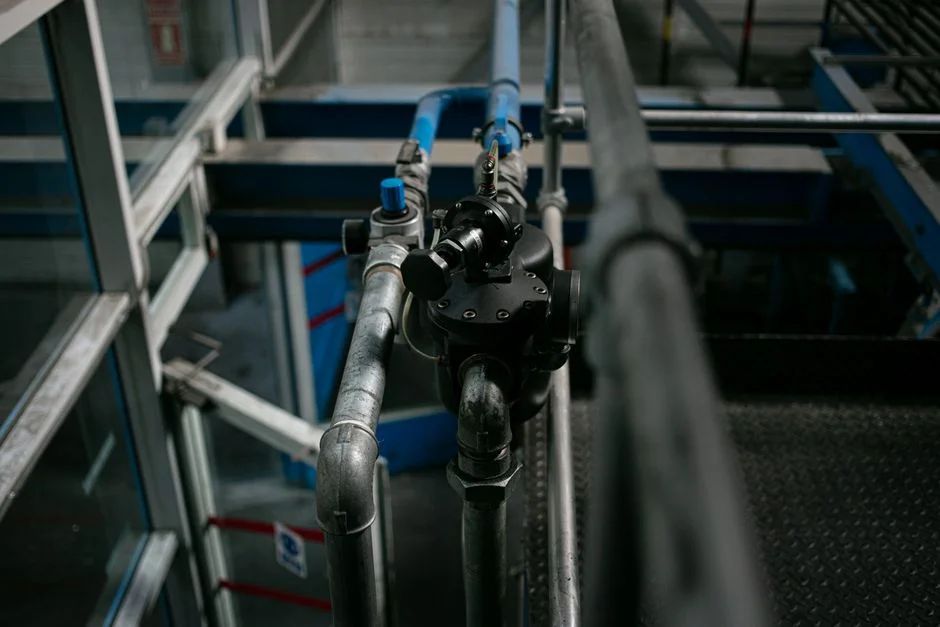
Representative blowdown analysis determines the treatment train because dissolved-salt concentration, scaling compounds, treatment chemicals and suspended material govern equipment selection. Request pH, temperature, TDS, chlorides, sulfates, phosphates, silica, calcium, residual chlorine or biocides and relevant metals. Samples should represent normal cooling operation and identify variability rather than describing only one acceptable operating condition.
Where bacteria, colloids or suspended solids must be removed before reverse osmosis, evaluate ultrafiltration pretreatment for cooling blowdown. The catalogued UF system accepts turbidity up to 300 ppm and operates from 2,000 to 40,000 L/h, but those specifications are equipment limits rather than proof that the stream or flow is suitable. Equipment selection still requires the measured feed quality, required permeate quality and production duty.
| Measured condition or treatment objective | Train to evaluate | Design question to close |
|---|---|---|
| pH outside the confirmed acceptance range | Automatic pH-adjustment stage | Which chemical, control range and discharge or reuse criterion determines the dose? |
| Suspended solids, colloids or microbial risk before RO | UF or another validated pretreatment stage | What are the measured feed turbidity, flow and required pretreatment performance? |
| Silica, calcium sulfate or carbonate scaling | Scale-control strategy followed by RO | What recovery can be demonstrated using the measured concentrate chemistry? |
| Relevant metals requiring removal | Chemical precipitation or other dedicated treatment | Which metals, concentrations and residue-disposal route apply? |
| Residual biocide or chlorine | Dechlorination or chemical-selection review | What compounds are present and what treatment does the receiving route require? |
An automatic chemical-dosing system should be specified only after receiving source-water and blowdown analyses. Chemical identity, dose, tank capacity and control response depend on the actual chemistry. For pH adjustment, coagulation, flocculation or scale control, the supplier should provide calculations tied to the measured feed and confirmed target rather than a generic dose.
For cooling reuse, evaluate an industrial RO system for cooling-water reuse against scale formation. IDE Tech states that conventional brackish-water RO typically plateaus at 75–80% recovery, while an industrial high-recovery arrangement is available up to 95% (IDE Tech, 2026). The latter figure describes an industrial approach, not a guaranteed project recovery or a selection criterion for Selayang Baru Utara.
Require the membrane vendor to demonstrate the proposed recovery against the measured silica and calcium sulfate conditions. The demonstration should address concentrate volume and composition, antiscalant requirements, pretreatment, membrane cleaning, chemical consumption and the final concentrate-disposal route. If high recovery depends on additional stages, booster pumps or recirculation, those impacts should remain visible in the footprint and operating-cost comparison.
Open Engineering Inc’s 2026 life-cycle analysis demonstrates that recovery decisions cannot be judged only by treatment energy. Its UF-plus-RO scenario used more energy than the freshwater case, while improved cycles of concentration reduced blowdown and chemical consumption; the source also notes that chemical production remained a principal contributor in a decarbonized-grid sensitivity analysis (Open Engineering Inc, 2026). The practical comparison is therefore chemical use, scale control, concentrate handling and monitoring—not simply nominal recovery.
Build a design and compliance worksheet before ordering
The equipment order should follow completion of the operating data, discharge-route confirmation and footprint allocation, because late changes to chemistry, reuse demand or permit conditions can invalidate the selected train. Treat each item below as a hold point: the project should not convert it into a procurement assumption without supporting data.
| Worksheet section | Required input or record | Responsible party |
|---|---|---|
| Flow and operating profile | Daily and peak blowdown flow, operating hours, temperature and seasonal variation | Mechanical and facilities teams |
| Water chemistry | pH, TDS, silica, calcium, sulfate, chloride, phosphate, residual biocide and relevant metals | Water-treatment laboratory |
| Cooling-system inputs | Cycles of concentration, make-up-water quality, chemical inventory and anticipated changes | Cooling-water specialist |
| Reuse definition | Intended recovery percentage, reuse demand, storage and required cooling make-up-water quality | Project engineer and mechanical team |
| Authority inputs | Discharge route, preliminary acceptance criteria, sampling, reporting, connection conditions and residual-concentrate handling | Sewer utility or relevant Malaysian authority |
| Site inputs | Skids, tanks, chemical storage, secondary containment, drainage, vehicle access, monitoring and maintenance space | Civil, structural and electrical designers |
| Vendor criteria | Permeate quality, recovery, availability, cleaning, automation, chemical consumption and concentrate disposition | Procurement and treatment supplier |
RSP Engineers warns that treatment footprint is often underestimated and that late utility consultation can force redesign (RSP Engineers, n.d.). Reserve space early for equipment, tanks, chemical delivery, maintenance access, monitoring and drainage. The wastewater plant footprint should be shown on the site plan rather than carried as an unallocated allowance.
Request written confirmation from the sewer utility or relevant Malaysian authority on the discharge route, preliminary limits, sampling and reporting, connection conditions and residual handling. The direct-versus-indirect discharge engineering considerations show how route assumptions affect treatment design, but they do not replace Malaysian approval. A complete permit application should document flow, chemistry, chemicals, pretreatment and monitoring.
For equipment selection, require a guaranteed performance basis tied to the actual feed. The supplier should demonstrate permeate quality, recovery, availability, cleaning method, automation, chemical consumption and concentrate disposition. Obtain separate proposals for discharge pretreatment and internal reuse so the comparison includes treatment scope, storage, controls, footprint, monitoring and residual handling rather than only a headline recovery rate.
Frequently Asked Questions
What does a data center in Selayang Baru Utara need to request when budgeting cooling-blowdown treatment?
Request a route-specific budget with separate line items for equipment, tanks, chemical storage and dosing, secondary containment,
Frequently Asked Questions
What wastewater treatment does a data center in Selayang Baru Utara need?
Data centers in Selayang Baru Utara must implement treatment capable of managing high concentrations of Total Dissolved Solids (TDS), suspended solids, and silica resulting from cooling tower evaporation. The process typically requires a multi-stage approach involving chemical precipitation for hardness removal, followed by membrane filtration to meet the strict effluent quality standards set for industrial zones.
Should cooling tower blowdown be discharged or reused?
Due to environmental regulations and local water scarcity, onsite reuse is highly recommended. By utilizing Ultrafiltration (UF) and Reverse Osmosis (RO) systems, data centers can achieve water recovery rates of 70% to 90%, significantly reducing the volume of wastewater discharged into the municipal sewer system and lowering overall water consumption costs.
How do we size UF and RO equipment for cooling blowdown?
Sizing is determined by the cooling tower's Cycles of Concentration (COC) and the blowdown flow rate, which is typically calculated as a percentage of the evaporation rate. Engineers must specify systems based on the peak daily flow, accounting for seasonal temperature fluctuations in Malaysia, and ensure the RO flux rates remain within 15-20 liters per square meter per hour (LMH) to prevent rapid membrane fouling.
What should we include in a wastewater treatment supplier RFQ?
An effective RFQ must specify the influent water quality analysis, including conductivity, pH, hardness, alkalinity, and silica levels. It should also mandate the inclusion of energy consumption estimates, expected recovery rates, membrane replacement frequency, chemical consumption per cubic meter of treated water, and compliance with local Department of Environment (DOE) discharge standards.
Which discharge requirements must be confirmed with the local Malaysian authority?
Operators must confirm compliance with the Environmental Quality (Industrial Effluent) Regulations 2009, specifically adhering to Standard A or Standard B limits depending on the discharge point location relative to water catchment areas. It is critical to obtain written confirmation from Indah Water Konsortium (IWK) or the relevant local authority regarding the maximum allowable limits for parameters such as BOD, COD, Ammoniacal Nitrogen, and Heavy Metals before finalizing the design.