Start With the Permit and Discharge Route
For mining and metals wastewater in Chandlerville, a membrane bioreactor is generally the stronger choice when reliable solids separation, a constrained footprint, or reuse has measurable value; conventional activated sludge remains competitive for large, dilute flows without a reuse driver when existing aeration and clarification equipment is serviceable. Neither option automatically removes dissolved metals, so precipitation or another dedicated treatment step is still required. The defensible method is to verify the permit and actual wastewater, score both trains against weighted site criteria, and validate the preferred option with an actual-water pilot before procurement.
The current NPDES permit and approved discharge route establish the applicable compliance basis. Confirm whether the facility discharges to surface water, a publicly owned treatment works, an injection well, or a reuse system; the Chandlerville location alone does not determine the requirements. Review site-specific selenium, sulfate, metals, monitoring, and reuse conditions, together with any sewer or industrial-user control documents. The federal framework in 40 CFR Part 440 addresses arsenic, lead, zinc, copper, nickel, and cadmium in ore-mining and dressing discharges, but it does not replace the site permit.
Define acceptance testing around both dissolved and particulate metals. Membrane solids retention can prevent biomass and particulate-bound contaminants from passing through, yet it does not remove every dissolved metal. Ask the permit owner, treatment engineer, and laboratory to specify sampling points, analytical methods, averaging periods, and which constituents require compliance demonstrations. The mining and metals wastewater pretreatment for sewer discharge review provides a useful starting point, but the current permit and receiving authority remain controlling documents.
Match the Wastewater Chemistry to the Treatment Objective
Influent characterization must precede equipment selection because low biodegradable carbon, high dissolved solids, sulfate, and hardness can make either biological train difficult to operate. Request at least 24–72 hours of composite and event-focused sampling for flow, BOD/COD, pH, TDS, sulfate, hardness, metals, turbidity, and settleability. This duration is a proposed sampling protocol, not a regulatory requirement; include production-cycle changes, shutdowns, storm events, and known metal slugs so the dataset captures the conditions the equipment must tolerate.
| Measured condition | Evidence and interpretation | Design implication |
|---|---|---|
| BOD/COD below 0.3 | HydropureWater 2026 field data identify this as a demanding screening condition, not a universal design threshold. | Test biological removability; do not apply municipal loading assumptions without validation. |
| Hardness in the thousands of mg/L as CaCO3 | HydropureWater 2026 field data classify this as a demanding screening condition. | Evaluate precipitation chemistry, sludge characteristics, and fouling potential. |
| Sulfate above 1,000 mg/L and TDS above 5,000 mg/L | HydropureWater 2026 field data identify both as demanding conditions, not automatic exclusion criteria. | Validate biology, membrane flux, cleaning demand, and reuse compatibility on actual water. |
| Cyanide, ammonia, and thiosulfate from cyanidation circuits | HydropureWater 2026 field guidance identifies these inputs as capable of causing oxygen-demand swings. | Provide equalization and conduct event-focused biological testing; equalization does not remove metals. |
Cyanidation circuits introduce specific chemical inputs that complicate biological treatment, requiring a structured approach to process design. Treat the treatment train as separate functions: dissolved-metals precipitation, biological treatment, solids separation, and any reuse polishing.
Use jar and pilot testing to establish chemical sequence, pH control, solids capture, and downstream effects. An automatic chemical dosing system can support controlled addition, but the selected chemical and operating envelope must follow site testing rather than generic instructions. If the discharge route is a sewer, confirm whether the local control authority requires metals pretreatment, monitoring, or a metals-bearing waste concentration limit before comparing biological equipment.
Compare MBR and Conventional Activated Sludge
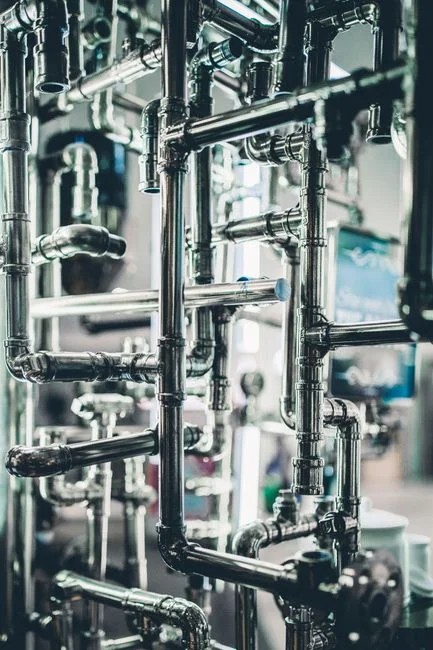
Conventional activated sludge separates biomass by gravity settling, while an MBR separates it through a physical membrane barrier; that difference drives the selection when sludge settleability, footprint, or reuse quality matters. EPA identifies better effluent quality, smaller space requirements, and easier automation as MBR advantages, while also identifying higher capital and operating costs, cleaning, replacement, and potentially slow-settling waste sludge as disadvantages.
| Criterion | Membrane bioreactor | Conventional activated sludge |
|---|---|---|
| Biological solids concentration | Normal MLSS reported as 8,000–12,000 mg/L in HydropureWater 2026 field data. | 2,000–4,000 mg/L in the Lamella-clarifier engineering reference, 2026. |
| Solids separation | Physical membrane retention; insensitive to floc settleability, but susceptible to fouling and scaling. | Secondary clarification depends on floc settling; metal-bearing floc may escape during disturbances. |
| Footprint screening | HydropureWater and the Lamella-clarifier reference, both dated 2026, report approximately 60% less concrete and civil footprint. | Includes aeration, secondary clarification, and associated civil scope. |
| Cost screening | For a 1,000 m³/day example in HydropureWater 2026 field data and the Lamella-clarifier reference, capital cost was 20–40% above equivalent-flow CAS and operating cost was 15–30% higher per m³. | Lower screening cost for the same example and scope. |
| Effluent and reuse | EPA’s 2021 fact sheet reports low bacteria, TSS, and BOD and identifies reuse as an application; additional treatment may still be required. | Effluent quality depends on biological treatment and secondary clarification; polishing depends on the application. |
Comparative cost and footprint figures serve as screening claims rather than project guarantees. The 1,000 m³/day example is not a quotation for this project, and the footprint comparison excludes site-specific civil and installation conditions.
EPA’s 2021 membrane bioreactor fact sheet reports that high-quality MBR effluent can support reuse, but membranes primarily remove solids. Dissolved contaminants require additional treatment steps. Accordingly, neither an integrated MBR membrane bioreactor system nor CAS replaces dissolved-metals precipitation. For MBR sludge, evaluate measured dewatering behavior with a plate-and-frame filter press for MBR sludge rather than selecting it from a generic solids-handling assumption.
Build the Weighted Selection Matrix
A weighted matrix converts competing technology claims into a reviewable decision by assigning site weights before scoring either train. Use a common scale, require evidence for every score, and prohibit a score from substituting for missing permit or wastewater data.
| Criterion | Site weight | MBR score | CAS score |
|---|---|---|---|
| Compliance robustness | Set from permit language and monitoring duty | Record evidence and reviewer | Record evidence and reviewer |
| Dissolved-metals pretreatment | Set from chemistry, discharge route, and reuse destination | Record evidence and reviewer | Record evidence and reviewer |
| Solids-separation reliability | Set from pulse sensitivity and required effluent quality | Record evidence and reviewer | Record evidence and reviewer |
| Footprint and site access | Set from available area and civil constraints | Record evidence and reviewer | Record evidence and reviewer |
| Reuse value | Set from destination, water quality, and avoided cost | Record evidence and reviewer | Record evidence and reviewer |
| Lifecycle cost | Set from equal-scope cash-flow model | Record evidence and reviewer | Record evidence and reviewer |
| Sludge handling | Set from measured solids properties | Record evidence and reviewer | Record evidence and reviewer |
| Operational maturity | Set from staffing, controls, maintenance, and redundancy | Record evidence and reviewer | Record evidence and reviewer |
Select MBR when reliable separation, constrained space, or meaningful reuse value outweigh membrane pretreatment, power, cleaning, and replacement costs. Retain CAS when flows are dilute, power is inexpensive, reuse value is low, and the existing basin and clarifier remain serviceable. HydropureWater’s 2026 screening guidance identifies electricity below about $0.07/kWh as favorable for CAS and an approximately 4–6-year MBR payback condition when make-up water exceeds about $2/m³ or brine disposal has a real cost. These are screening assumptions, not guaranteed project results.
For each criterion, record the evidence, named owner, date, and unresolved assumptions. Permit reviewers, engineers, operations staff, and procurement should approve the same decision basis. The MBR membrane bioreactor cost per m³ guide can support initial screening, but the final model needs the local electricity tariff, water value, duty profile, cleaning interval, replacement assumptions, and disposal cost.
Validate the Preferred Train Before Ordering Equipment
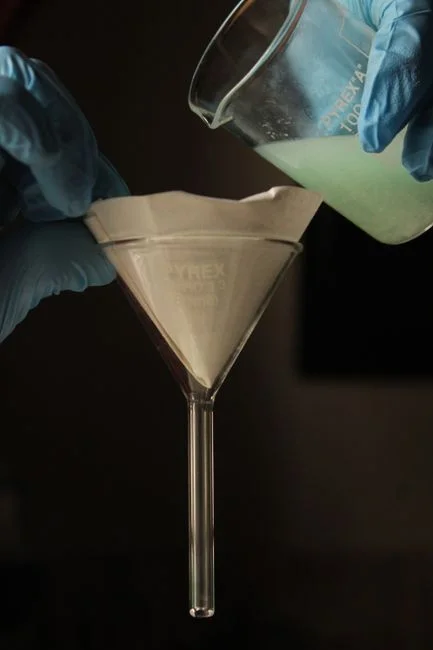
Actual-water pilot testing should decide whether the preliminary matrix survives site chemistry, production pulses, and the selected solids-handling train. When metal pulses, low BOD/COD, sulfate, hardness, or high TDS could undermine biology, settleability, or membrane flux, HydropureWater’s 2026 guidance recommends a 60–90 day cassette pilot using the actual wastewater.
| Pilot area | Required evidence | Procurement consequence |
|---|---|---|
| Solids and metals | Solids separation plus dissolved and particulate metals | Set performance guarantees and acceptance limits. |
| Membrane condition | Transmembrane pressure, normalized flux, cleaning frequency, and recovered performance | Define pretreatment and membrane warranty terms. |
| Operations | Chemical demand, cleaning recovery, and bypass provisions | Price consumables, controls, and maintenance requirements. |
| Residuals | Sludge solids, settleability, and dewatering performance | Select sludge equipment from measured properties. |
| Hydraulics | Flow profile, equalization performance, and peak response | Confirm membrane area, redundancy, and equalization scope. |
EPA specifies 1–3 mm fine screens before MBR membranes: typically 1–2 mm for hollow-fiber and 2–3 mm for flat-plate systems. Require cleaning frequency, bypass provisions, and integrity monitoring in the specification. Where appropriate, a rotary mechanical bar screen can provide fine screening, but the selected configuration must match the wastewater characterization and manufacturer’s screening requirement.
Size from required flow, the actual influent matrix, pretreatment, permit duty, and reuse profile. EPA advises that peak design flow generally should not exceed 1.5–2 times average flow without added capacity or equalization. Request equal-scope pricing for flow, effluent duty, civil work, pretreatment, sludge handling, power, chemical cleaning, and membrane replacement. A lower equipment quotation that omits civil works, equalization, residuals, or replacement membrane is not comparable.
Frequently Asked Questions
How should a buyer compare MBR and conventional activated sludge on cost?
Use the supplied cost figures only as screening evidence. HydropureWater’s 2026 field data and the Lamella-clarifier reference place MBR capital cost at 20–40% above equivalent-flow CAS and operating cost at 15–30% higher per m³ for a 1,000 m³/day example. Request quotations on the same flow, effluent duty, civil scope, pretreatment, sludge handling, power, cleaning, and membrane replacement, then model each option over its replacement cycle.
What information is needed to size an MBR for a Chandlerville site?
Provide the flow profile, actual influent matrix, permit limits, pretreatment design, reuse destination, and operating constraints. EPA advises that peak design flow generally should not exceed 1.5–2 times average flow without added capacity or equalization. Final sizing should follow site-specific pilot flux, pressure, fouling, cleaning, and recovery data rather than nominal equipment capacity.
Frequently Asked Questions
Is MBR better than activated sludge for mining wastewater with high metals?
MBR technology is generally superior for high-metal mining wastewater because it decouples hydraulic retention time (HRT) from solids retention time (SRT), allowing for significantly higher biomass concentrations (8,000–15,000 mg/L MLSS). This high biomass concentration facilitates better adsorption of heavy metals onto floc surfaces and enables the retention of fine metal precipitates that would otherwise escape in the secondary clarifier of a conventional activated sludge (CAS) system.
How much more does an MBR cost compared with conventional activated sludge?
Capital expenditures (CAPEX) for MBR systems are typically 20% to 50% higher than CAS due to membrane module costs and sophisticated aeration requirements. Operating expenditures (OPEX) are also higher, often by 30% to 60%, primarily driven by membrane scouring energy demands, chemical cleaning regimes (CIP), and periodic membrane replacement costs every 5 to 10 years.
How should I size an MBR for a mining wastewater treatment plant?
Sizing should be based on a conservative design flux, typically ranging from 10 to 25 LMH (liters per square meter per hour) for complex mining effluents to account for potential membrane fouling. Engineers must calculate the required membrane surface area by dividing the peak hourly flow by the selected design flux, while ensuring the bioreactor volume is sized to maintain an F/M ratio between 0.05 and 0.15 kg BOD/kg MLSS·d to handle recalcitrant mining compounds.
What wastewater data should I request before choosing MBR or activated sludge?
You must request a comprehensive characterization including the full spectrum of heavy metals (dissolved vs. total), total suspended solids (TSS), oil and grease concentrations, and the presence of scaling ions such as calcium, magnesium, and sulfates. Additionally, obtain a bench-scale membrane flux test or a Modified Fouling Index (MFI) analysis to determine the fouling potential of the specific mining site wastewater.
Will membrane solids retention alone meet metals discharge limits?
While MBR membranes provide a physical barrier to suspended solids and particulate-bound metals, they cannot remove dissolved metals. To meet stringent discharge standards, MBR must be coupled with upstream chemical precipitation, pH adjustment to reach the optimal solubility minimum for specific metals (typically pH 8.5–10.5), and potentially ion exchange or adsorption polishing stages if ionic metal concentrations remain above regulatory limits.