Confirm whether the property needs on-site treatment
A Saint Petersburg hotel or resort generally needs a decentralized biological treatment system sized for its own wastewater flow and site conditions, rather than a one-size-fits-all municipal connection. The leading equipment choices are an underground WSZ package plant for straightforward, automated treatment and an MBR system where membrane filtration, a smaller footprint or near-reuse-quality effluent is valuable. Saint Petersburg's citywide system is substantial: the Northern Wastewater Treatment Plant has capacity for 1,200,000 m³ per day and includes upgraded aeration, sedimentation, chemical precipitation and automation [NIB, October 2018]. That infrastructure does not determine a hotel’s equipment size. Owners must first establish sewer-connection eligibility, permit requirements, peak flow, wastewater characteristics and available land.
The first purchase decision is whether the property can use a permitted Saint Petersburg sewer connection and whether an on-site system is legally and operationally required. Ask the Saint Petersburg water service company, Vodokanal, to confirm connection availability, capacity at the proposed connection point, any discharge restrictions, pretreatment requirements, monitoring obligations and applicable tariffs. Do not infer permission to discharge from the presence of municipal infrastructure.
For a decentralized route, ask the responsible utility or environmental authority to identify the approval path, connection acceptance tests, ownership arrangements, operating qualifications, sludge destination and monitoring requirements. The supplied research does not establish the current Saint Petersburg rules for a hotel-specific treatment plant, so the project team must obtain them in writing.
Screening should also separate wastewater streams that could change the treatment scope. Domestic sewage varies with occupancy and guest-flow patterns. Laundry and kitchen wastewater can arrive in concentrated discharges; cleaning chemicals may affect biological processes; pool and spa discharges may require a separate route rather than dilution. A hotel wastewater sludge dewatering guide can help identify solids-management issues early, but it does not establish discharge eligibility.
NIB’s account confirms that the Northern plant’s expanded capacity was part of the Neva programme, which aimed to end untreated discharges and improve nutrient removal [NIB, October 2018]. This is evidence of significant citywide treatment infrastructure, not proof that an individual hotel may discharge untreated wastewater.
Collect the inputs that control treatment selection
Equipment selection begins with measured or credibly calculated flows and a project-specific effluent basis; occupancy alone is not enough [HydropureWater equipment catalogue]. The pre-design questionnaire below identifies the required input, responsible provider and the decision affected.
| Question or input | Responsible provider | Decision affected |
|---|---|---|
| What are the present and future average daily flow, peak-hour flow, peak-day flow and operating schedule? | Hotel operations, engineering team and wastewater sampling program | Hydraulic capacity, equalization, biological loading and selected equipment range |
| What are pH, suspended solids, biochemical oxygen demand, fats, oils and grease, and relevant cleaning-chemical inputs? | Qualified sampler or laboratory | Process suitability, pretreatment and chemical compatibility |
| Which streams enter the proposed treatment train: domestic sewage, laundry, kitchen, cleaning chemicals, pool or spa? | Property departments and engineering team | Stream segregation and auxiliary treatment |
| What footprint, excavation access, soil, groundwater and frost-protection conditions apply? | Property owner, architect and geotechnical team | Buried installation, civil works, groundwater protection and maintainability |
| What electrical supply, sludge-removal route and maintenance access are available? | Facilities team and local service contractor | Controls, pumping, residuals handling and O&M access |
| Is the required endpoint sewer discharge, irrigation, toilet flushing, laundry or another reuse, and which authority governs it? | Owner, client, utility and reuse authority | Effluent specification and whether MBR is justified |
Operations should provide occupancy assumptions and flow records where available. Engineering should establish whether guest arrivals, meal periods, laundry cycles or seasonal events create peaks beyond the average daily flow. A representative sampling program should identify whether the proposed biological loading and pretreatment assumptions match actual wastewater.
The property team must document available footprint, excavation access, groundwater level, soil permeability, frost-protection requirements, electrical supply and a practical route for sludge removal. Geotechnical information affects tank design and installation; operational information affects pumping, controls and maintenance.
Define the required endpoint with the client before selecting membranes. A compliant sewer-discharge basis may not justify the added process complexity of MBR, while a defined reuse requirement may change the biological, filtration and disinfection train. Confirm the receiving authority’s rules and sampling requirements first.
Compare WSZ package plants with MBR systems
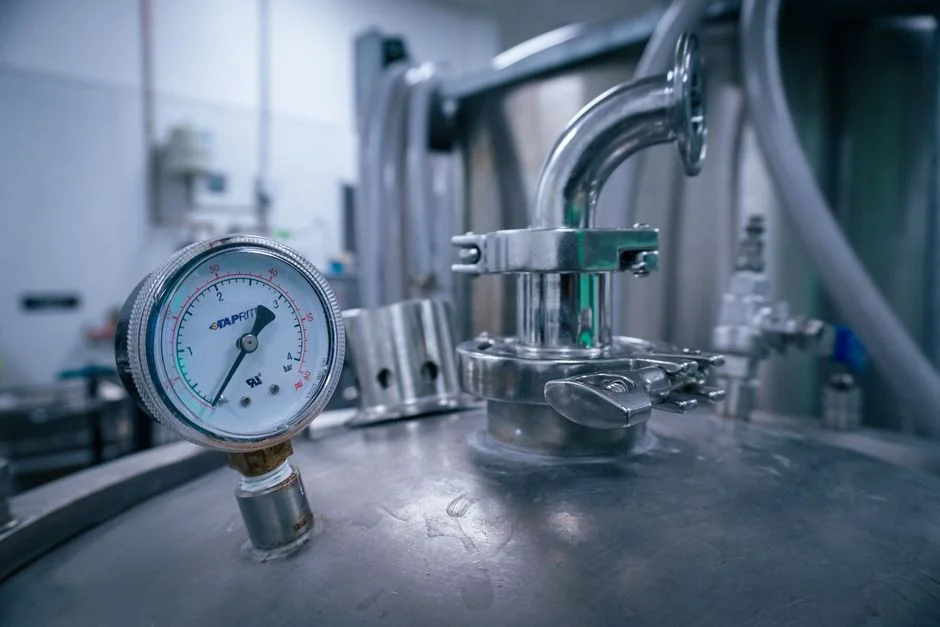
The WSZ package plant integrates anoxic and aerobic biological contact oxidation, sedimentation and disinfection in one buried installation, while the MBR combines activated sludge with submerged PVDF membrane filtration. Their selection should follow the required flow, effluent basis, available space and operating strategy—not the nominal capacity alone.
| Selection factor | WSZ package plant | MBR membrane bioreactor |
|---|---|---|
| Process configuration | Anoxic/aerobic biological contact oxidation, sedimentation and disinfection in one buried package | Activated-sludge process with submerged PVDF membrane filtration |
| Published capacity range | 1–80 m³/h [HydropureWater equipment catalogue] | 10–2,000 m³/day [HydropureWater equipment catalogue] |
| Installation | Installed below grade, with landscaping above | Catalog states a footprint 60% smaller than conventional systems |
| Effluent filtration | Sedimentation and disinfection are integral to the package | PVDF membrane filtration below 1 μm [HydropureWater equipment catalogue] |
| Best fit when | Verified flow is within range, buried installation is feasible, and an integrated treatment train is the priority | Reliable solids separation, compact installation or near-reuse-quality effluent has sufficient operational or reuse value |
| Key checks before ordering | Hydraulic and organic loading, excavation, groundwater, frost protection, controls, residuals and access | Hydraulic and organic loading, membrane configuration, fouling control, sludge handling, redundancy and maintenance access |
The underground WSZ package sewage treatment plant is the practical baseline when the verified peak flow falls within its published 1–80 m³/h range, below-grade installation is feasible and the owner wants an integrated biological treatment train. The catalogue describes automated operation with landscaping above the buried installation [HydropureWater equipment catalogue].
The MBR membrane bioreactor system becomes more compelling when reliable solids separation, a compact installation or near-reuse-quality effluent has a defined value. The catalogue states capacities of 10–2,000 m³/day, filtration below 1 μm and a footprint 60% smaller than conventional systems [HydropureWater equipment catalogue]. These represent product claims, not a Saint Petersburg hotel design approval or a guaranteed reuse result.
Neither system should be selected solely from nominal capacity. Require the supplier to check hydraulic peak load, biological loading, sludge handling, redundancy, maintenance access and the final discharge or reuse specification. An MBR is not justified simply because wastewater reuse is mentioned in a master plan; the responsible authority must confirm the receiving use and required quality.
Match the treatment train to the hotel's waste streams
A stable load at the biological unit is more important than adding pretreatment that the wastewater does not justify. Hotel and resort streams should be surveyed individually before the process flow diagram is fixed.
Plan separate equalization where occupancy, laundry and kitchen flows vary independently. Equalization should smooth the hydraulic and organic load presented to the selected WSZ or MBR process. It also creates an opportunity for controlled sampling and prevents a short discharge event from determining equipment performance.
Assess kitchen oil and grease before biological treatment. The dissolved-air flotation machine should be used only if characterization shows suspended solids, fats, oils and grease, oil or colloidal loads that justify it [HydropureWater equipment catalogue]. A visual assessment of the kitchen stream is not a substitute for sampling. Hydraulic connection to the DAF unit, recovered-solids handling and the resulting wastewater characteristics still need design.
Use the GX rotary mechanical bar screen where continuous fine screening is needed to remove solids, rags, plastics and fibrous debris that could damage pumps or downstream biological processes [HydropureWater equipment catalogue]. Confirm the required screen aperture, solids extraction route, washdown provision and how screenings will be contained and removed.
Plan sludge stabilization, storage and dewatering in parallel with treatment selection. Effluent performance alone does not establish operability. The plate-frame filter press may need evaluation if the selected process generates a dewaterable residual volume, but cake handling, polymer use and disposal route must be included. As the hotel wastewater sludge dewatering guide explains, dewatering equipment selection starts with the actual solids and residual-management basis.
Set acceptance criteria before ordering equipment
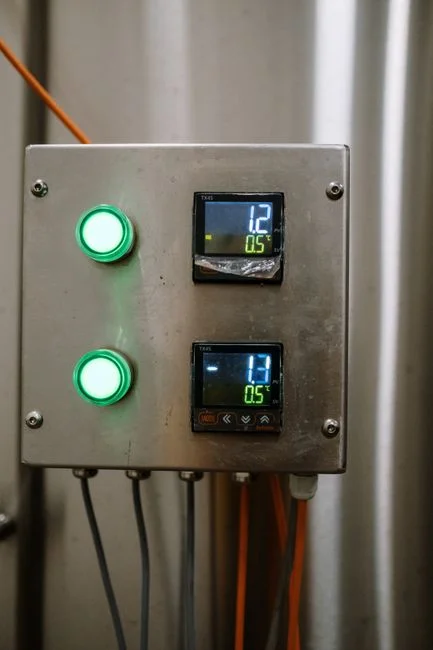
A defensible quotation identifies the design basis, treatment objectives and scope of supply; it should not merely name a package and a nominal capacity. The owner should define acceptance criteria before comparing vendors.
| Procurement item | Required information or deliverable | Acceptance check |
|---|---|---|
| Design basis | Average and peak flows, wastewater characterization, operating schedule and required endpoint | Equipment capacity and loading calculations use the project data, not generic hotel assumptions |
| Quotation scope | Hydraulic capacity, treatment objectives, power requirements, controls, civil interfaces, commissioning, training and exclusions | Scope is stated clearly enough for like-for-like comparison |
| Selection memorandum | Proposed WSZ or MBR configuration and explanation of deviations | Any departure from the reference configuration has a technical rationale |
| Testing | FAT, installation checks, wet commissioning and performance testing | Sampling method, parameters, responsible party and acceptance criterion are assigned in advance |
| Operations and service | Control options, maintenance intervals, operator training, spare parts, O&M support and warranty | Service responsibility and local support are contractually defined |
| Programme and compliance | Lead time after design approval, authority documentation and local certification evidence where applicable | Any Saint Petersburg certification claim is supported by current documents |
Require each supplier to state the design basis, hydraulic capacity, treatment objectives, power requirements, control philosophy, installation drawings, commissioning tests and included services. Request an equipment selection memorandum explaining any deviation from the stated WSZ or MBR configuration. Specify the verified wastewater and reuse basis instead of accepting a generic hotel treatment package.
Include factory acceptance testing, installation verification, wet commissioning and performance testing against project-defined criteria. Assign sampling, laboratory analysis and acceptance responsibilities before contract award. Do not accept “completion” without a defined method for demonstrating the required performance.
Lead time, spare-parts availability, remote or local controls, operator training, maintenance intervals and written O&M support are procurement inputs, not verified market averages. Request a credible programme only after flow data, site surveys, treatment basis and scope are complete.
Finally, align supplier documentation with the authority requirements identified by the owner. The supplied research does not establish Saint Petersburg-specific certification for these products, so imported or non-local equipment should not be presumed acceptable without current documentary verification.
Frequently Asked Questions
How much does a hotel sewage treatment plant cost in Saint Petersburg?
No defensible price can be stated from the supplied research because it contains no Saint Petersburg hotel-equipment quotation. Request a site-specific price covering the verified design flow, wastewater characteristics, treatment endpoint, civil works, power, controls, commissioning, sludge handling, authority submissions and O&M support. Compare lifecycle cost rather than purchase price alone, including membrane replacement or fouling control for MBR and routine maintenance for WSZ.
How should a buyer select and size a WSZ or MBR supplier?
Start with a supplier selection memorandum that demonstrates how the proposed equipment handles the project
Frequently Asked Questions
How do I size a wastewater treatment system for a hotel in Saint Petersburg?
Sizing is determined by calculating the daily hydraulic load based on the Saint Petersburg building code (SNiP) standards for hotel occupancy. Typically, a standard hotel guest generates between 150 and 250 liters of wastewater per day, though this must be adjusted based on the presence of laundry facilities, restaurants, and spa services.
Engineers must also account for peak flow factors, as hotels experience significant diurnal variations in water usage. The system capacity should be calculated using the peak hourly flow rate to ensure the retention time in the aeration and settling tanks meets the required biological treatment standards without hydraulic overloading.
Is WSZ or MBR better for a resort with a small footprint and reuse requirements?
MBR (Membrane Bioreactor) technology is significantly superior for sites with limited space and water reuse goals. MBR systems eliminate the need for large secondary clarifiers because the membrane filtration module acts as a physical barrier, allowing for a much smaller footprint—often 30% to 50% less than a conventional WSZ (Wastewater Treatment Plant with activated sludge).
Furthermore, MBR systems consistently produce high-quality effluent that meets stringent sanitary requirements for non-potable reuse, such as toilet flushing or landscape irrigation. WSZ systems typically require additional tertiary treatment stages, such as sand filtration or UV disinfection, to achieve the same water quality level, which increases both complexity and space requirements.
What should I ask a wastewater equipment supplier before comparing quotations?
Request a detailed process flow diagram and a guarantee on effluent quality parameters, specifically BOD5 (biochemical oxygen demand), TSS (total suspended solids), and NH4-N (ammonia nitrogen), ensuring they comply with local Russian environmental regulations for discharge into water bodies or municipal sewers.
Additionally, ask for a comprehensive list of energy consumption per cubic meter of treated water, the expected lifespan of membranes or diffusers, and the availability of local technical support in the Leningrad Region. You should also demand a breakdown of the materials used for tanks and internal piping to ensure they are rated for the local climate and corrosive wastewater characteristics.
Can a hotel in Saint Petersburg discharge treated wastewater to the municipal sewer?
Yes, hotels can discharge to the municipal sewer system, but they must enter into a contract with the local water utility (Vodokanal of Saint Petersburg) and comply with maximum permissible concentration (MPC) standards for pollutants. If the wastewater quality exceeds these limits, the hotel may face significant financial surcharges.
Even if discharging to a municipal sewer, a pre-treatment system is often necessary to remove fats, oils, and grease (FOG) from kitchen waste, as well as to balance the pH levels. Failure to install adequate pre-treatment can lead to pipe clogging and regulatory fines from municipal inspectors.
What determines the cost and lead time of a packaged hotel wastewater treatment system?
The primary cost drivers include the treatment technology (MBR vs. WSZ), the material of construction (reinforced polypropylene, carbon steel with epoxy coating, or stainless steel), and the level of automation included in the control system. Systems requiring cold-climate insulation or specialized climate-controlled housing for the equipment will also incur higher capital expenses.
Lead times are largely dictated by the availability of specialized components, such as membrane modules or high-precision blowers, which are often imported. Generally, a custom-packaged system for a medium-sized hotel requires 12 to 20 weeks from the finalization of the technical design to delivery, though site-specific civil works and installation timelines must be calculated separately.