
Define the factory's treatment and reuse objective
Textile wastewater treatment in Bangladesh should be selected as a complete process train, not as a single machine. A review of effluent data from 2005–2014 reported COD of 41–2,430 mg/L, TSS of 24.9–3,950 mg/L and pH from 3.9 to 14, confirming substantial variation. For solids- and colloid-rich streams, DAF is a practical pretreatment option before biological treatment; UASB and biofiltration have also been operated successfully at two Gazipur factories. If reuse is the objective, factory flow, water quality and reuse tests must be verified because reported reuse performance is project-specific.
Begin by separating dyeing, washing, bleaching and other process streams. A composite daily average can conceal the COD, colour, solids, temperature or salinity of the stream that controls equipment duty. Identify where batch dumps enter the drainage system and whether streams are diluted before discharge or equalization.
Request current flow, production and operating-hour records. A design based only on average daily flow can miss peak flow, batch discharges and differences between production days. The design basis should distinguish average flow, peak-hour flow, maximum batch volume, operating hours and expected expansion.
The objective must also be explicit. A discharge-compliance project requires applicable authorization limits and a receiving route; production reuse requires process-specific water-quality criteria and the consequences of contamination in dyeing or washing. Replacing process makeup water, cooling-water demand or another use cannot share one acceptance standard without defining each application.
The scale of the decision is significant. The World Bank reports that Greater Dhaka generates an estimated 5.3 million m³ of wastewater daily, with nearly 70% coming from water-intensive processing industries. The A4R alliance, launched in May 2025, targets a 20% reduction in Greater Dhaka wastewater generation through reuse and recycling of roughly 350 million m³ annually. For individual plants, use remote monitoring for Bangladesh textile wastewater plants to capture operating changes between sampling campaigns.
Characterize the effluent across operating conditions
The worst credible operating condition should determine pretreatment capacity, chemical demand, biological loading and final polishing. Historical data provide a screening envelope, but they cannot size a current factory ETP.
A review covering 2005–2014 reported textile-effluent temperature of 25–65°C, pH of 3.9–14, TDS of 90.7–5,980 mg/L, DO of 0–7 mg/L, COD of 41–2,430 mg/L, BOD of 10–786 mg/L, TSS of 24.9–3,950 mg/L and EC of 250–63,750 μS/cm. These values come from Resources and Environment, published in 2015, and span a decade of reported studies rather than one standardized factory dataset.
Use that information to select sampling locations, not as guaranteed design loads. Request raw and treated samples from each segregated stream and from the combined inlet. Include COD, BOD, TSS, colour, pH, temperature, salinity or TDS, oil and grease, and the identities and dosing rates of process chemicals. Record dyehouse changes, batch timing and dilution practices because intermittent loads can govern equalization and control requirements.
| Site-data item | Why it controls equipment selection | Information to request |
|---|---|---|
| Flow and production | Determines hydraulic capacity and peak-load exposure | Average flow, peak-hour flow, maximum batch, operating hours and expansion plan |
| COD and BOD | Sets organic loading and biological pretreatment needs | Raw and treated concentrations by stream, with production context |
| TSS, colour and oil and grease | Indicates solids, colloid and fouling load | Composite and grab samples during representative batches |
| pH, temperature, TDS and DO | Controls biological activity, chemical use and corrosion | Diurnal range, not only a single laboratory result |
| Batch and discharge behaviour | Defines equalization and upset-management needs | Dyehouse schedule, batch volumes, drain routing and dilution practices |
Complete the request list using the wastewater treatment planning framework. Require the sampling plan, laboratory method, detection limits and operating conditions so the buyer can distinguish a representative result from an unrepresentative grab sample.
Select pretreatment that protects the biological stage
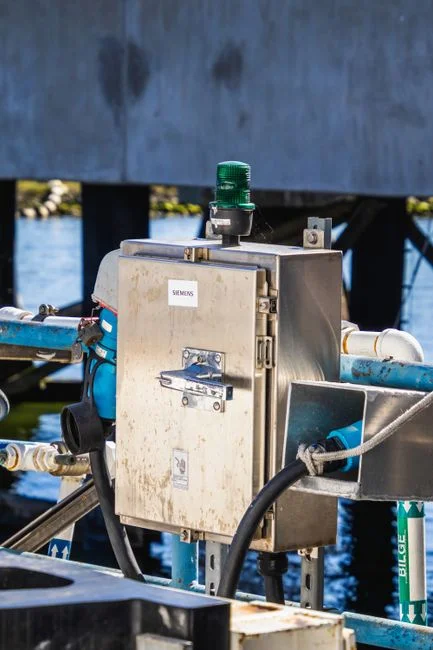
DAF is justified when current data show suspended solids, oil and grease, or colloidal material that would interfere with biological treatment or final clarification. It should be selected by verified flow and solids duty, not by the presence of a textile project label.
HydropureWater specifies a DAF range of 4–300 m³/h across 13 models and identifies textile applications involving suspended solids, oil and grease, and colloidal matter. These are catalogue specifications, not field-performance evidence from Bangladesh. Obtain the proposed model’s hydraulic loading, solids capacity and guaranteed performance at the factory’s actual water quality.
The historical TSS range of 24.9–3,950 mg/L reported by Resources and Environment in 2015 demonstrates why solids characterization is essential, although it does not show that every factory needs DAF. Compare the proposed duty with measured TSS, settleable solids, oil and grease and colloid behaviour. If those results do not support DAF, consider whether equalization, screening, pH adjustment or another solids-control step provides the required protection.
Provide equalization and pH control where operating data confirm the variability indicated by the review’s pH range of 3.9–14. Automatic dosing should be linked to flow and measured pH rather than a fixed timer. The control narrative must define high-pH, low-pH, chemical-out-of-service and batch-discharge responses.
A Bangladesh study by the Bangladesh Academy of Sciences reported combined anaerobic treatment, UASB and biofiltration operating at Dalas Fashion Ltd and Liz Fashion Ltd in Gazipur without chemical treatment. That demonstrates biological treatment can form part of a local treatment strategy; it does not establish that every stream is suitable for the same configuration.
| Observed site condition | Pretreatment decision | Information to verify before purchase |
|---|---|---|
| High suspended or settleable solids | Evaluate DAF for solids removal before biology | TSS, settleable solids, hydraulic peak and flotation solids duty |
| Colloids or oil and grease | Evaluate DAF with the proposed chemical condition | Oil and grease, colloid characterization, chemical compatibility and sludge output |
| Wide pH range | Provide equalization and automatic pH adjustment | Continuous pH record, target range, probe location and chemical demand |
| Intermittent batch releases | Provide controlled equalization and upset management | Batch volume, release duration, drain routing and emergency operating response |
For a DAF-based proposal, request the textile wastewater DAF pretreatment package scope, including recycle compression, aeration, solids withdrawal, control interlocks and performance boundaries. Chemical dosing must be defined by an automatic chemical dosing system sized from measured demand and tank working volume, not from a generic percentage feed rate.
Match biological treatment and clarification to performance goals
Biological capacity should reflect the actual organic load and required effluent quality. Anaerobic treatment can be appropriate where the stream contains sufficient biodegradable organic load, provided that feeding, temperature, solids removal and colour performance are controlled. Aerobic polishing may be required where the reuse specification demands lower residual organic load.
The lab-scale HUASB study published by Bangladesh Journals Online used textile wastewater mixed with glucose as food and reported COD removal of 25% and colour removal of 56.4%. This is a result for that laboratory context, not a full-scale guarantee for a Bangladeshi dyeing ETP. It does not establish performance for textile wastewater without glucose or under the factory’s batch and temperature regimes.
Size biological equipment from current loads and peak production. The 2005–2014 Bangladesh review reported COD of 41–2,430 mg/L and BOD of 10–786 mg/L, but those historical bounds cannot replace load calculations using present flow and analytical data. Check hydraulic retention, organic loading, temperature correction where relevant, sludge inventory and treatment stability against the selected production schedule.
Where compact solids separation is required after biological treatment, evaluate a lamella clarifier against the required clarified-water quality and sludge handling route. HydropureWater states surface loading rates of 20–40 m/h and up to 30% lower chemical consumption for its high-efficiency sedimentation tank. These are manufacturer specifications; the buyer should require the actual design loading, settling area, feed distribution, sludge-removal performance and test boundary in the proposal.
| Treatment objective | Process to evaluate | Key procurement condition |
|---|---|---|
| Recover energy or reduce soluble organic load before aerobic polishing | Anaerobic reactor with controlled feeding and solids separation | Guarantee the stated COD and solids duties under defined influent and operating conditions |
| Meet a stricter aerobic effluent or reuse specification | Aerobic biological stage followed by clarification | Provide load calculations, aeration demand, sludge production and stable treated-water parameters |
| Compact solids separation after biology | Lamella clarification | State design surface loading, feed type, solids removal duty and sludge withdrawal arrangement |
| Reuse requires low suspended solids or stringent separation | Consider MBR when justified | Define membrane configuration, fouling control, cleaning, backup and replacement obligations |
For clarification, request a compact lamella clarifier for textile ETP solids proposal with performance tied to actual feed characteristics. Consider an MBR integrated treatment system only when the reuse specification, available footprint and membrane-fouling management justify the added process complexity. MBR selection should include membrane area, design flux, cleaning method, downtime provisions and acceptance criteria.
Validate reuse performance and prepare the procurement package
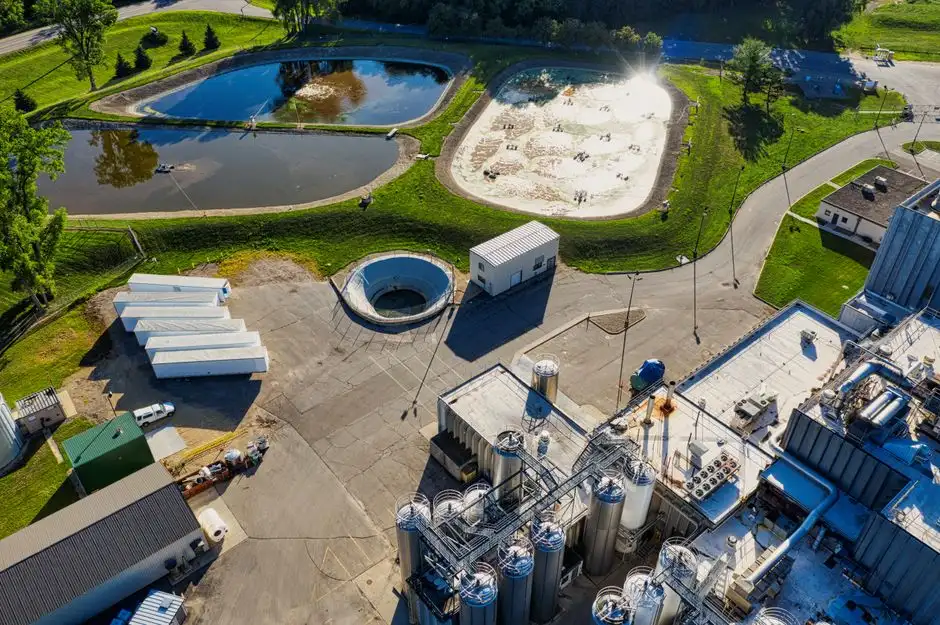
Factory-scale acceptance testing must connect the selected equipment to normal production variation. Historical effluent ranges cannot serve as guaranteed influent or effluent limits.
The World Bank reports that the Fakir Knitwears project involved a US$1.7 million investment, enabled annual reuse of 438,000 m³ of treated water and returned more than 22% of total effluent—around 1.2 million litres per day—to production. The project demonstrates a reuse route, but its performance belongs to that factory and cannot be transferred automatically to another site.
Require each supplier to state guaranteed flow, process-stage duties, utilities, control philosophy, footprint, sludge output and performance-test boundaries. Define representative influent and effluent parameters for the proposal. A credible test must state sampling frequency, duration, analytical methods, production conditions, chemical dosing and the treatment of invalid or interrupted runs.
Request a mass balance covering sludge volume, solids concentration, thickening, dewatering and the selected final disposal route. The plate press must not be treated as an automatic solution: its duty depends on sludge properties, polymer use, cake target and operating cycle. The plate and frame filter press option should be evaluated against measured sludge characteristics and the factory’s handling constraints.
| Procurement package item | Information the buyer must receive | Acceptance basis |
|---|---|---|
| Process guarantee | Guaranteed flow, stage duties, utilities and control sequence | Defined influent envelope and representative production schedule |
| Performance test | Sampling plan, methods, duration and parameter limits | Factory-scale test with chemical dosing and batch variation recorded |
| Sludge balance | Volume, solids concentration, thickening, dewatering and disposal route | Mass balance covering each generated residue stream |
| Commercial terms | Equipment scope, installation, utilities, service, spares and warranty | Clear exclusions, dependencies and document schedule |
| Compliance and reuse | Applicable authorization and application-specific reuse criteria | Separate discharge and reuse acceptance requirements |
Before final selection, check the factory’s actual discharge authorization, receiving route and any proposed reuse requirement. If reuse is part of the scope, define which process receives the treated water and whether the return point requires additional monitoring or treatment. Include the wastewater treatment planning framework in the contractual document schedule.
Frequently Asked Questions
How much should a textile wastewater treatment system cost in Bangladesh?
Equipment price and payback cannot be calculated reliably without factory peak flow, current effluent characterization, the selected reuse route and local operating-cost inputs. Ask each supplier for a priced bill of quantities covering equipment, civil works, installation, chemicals, power, sludge handling, controls, commissioning and maintenance. Do not compare a machine quotation with a complete ETP quotation as if they cover the same scope.
How should a buyer select and size a textile ETP supplier?
Select the supplier on guaranteed process performance, site-relevant references, control scope, service capability and acceptance testing—not catalogue capacity alone. Request references that handled comparable textile streams, then ask for test data, drawings, operating manuals and performance boundaries. Final sizing requires measured peak flow and current effluent data even when equipment is available in a published capacity range.
Is DAF or UASB more suitable for Bangladesh textile wastewater?
Neither option is universally preferable. Evaluate DAF when current measurements show suspended solids, oil and grease or colloids that need removal before biological treatment; evaluate anaerobic treatment when the wastewater has sufficient biodegradable organic load and the proposed reactor controls cover temperature, feeding and solids inventory. The HUASB laboratory study by Bangladesh Journals Online achieved 25% COD removal and 56.4% colour removal only with textile wastewater mixed with glucose, so that result cannot be used as a full-scale guarantee.
What should be tested before treating textile effluent for factory reuse?
Define acceptance criteria for the specific reuse application, such as process makeup water or cooling water, rather than relying on a general reuse label. During factory-scale testing, verify the required COD, BOD, TSS, colour, pH, temperature and salinity or TDS parameters under the normal batch schedule. Record production variation, chemical dosing, interruptions and sludge generation, and obtain the factory’s discharge authorization and receiving-route requirements separately.