
Choose the treatment route before pricing the MBR
The 2026 Al Qaraa life-cycle study compared decentralized low-cost membrane bioreactor treatment with centralized extended-aeration activated-sludge treatment for a Saudi community of 1,300 people, including a 49 km wastewater-transport route to Al-Bukayriyah. The decentralized scenario performed better in 13 of 15 selected midpoint impact categories; normalized endpoints showed 8% lower human-health impacts and 60% lower resource-depletion impacts, according to Membranes, 22 February 2026. These results support route evaluation, but they are not a plant quotation or a Saudi-wide price benchmark.
Choose decentralized MBR treatment where sewer access is absent or limited, a local reuse destination exists, and on-site land and operating capability are available. Compare it against centralized transport only after quantifying the sewer connection, pumping, tanker movements, receiving-plant charges and handling of septic or tanker waste. A hybrid route may be appropriate where phased development makes immediate full-scale MBR capacity uneconomic or where an existing sewer remains available during construction.
Before requesting a price, establish wastewater source and flow, available footprint, access for delivery and maintenance, effluent destination, sludge disposal route, expansion strategy and the required operating period. The MBR cost-per-m3 guide provides a framework, but the quoted cost must still be tied to this project’s treatment scope and site assumptions.
| Decision input | Decentralized MBR route | Centralized sewer or transport route |
|---|---|---|
| Wastewater movement | Treatment occurs at the development site | Collection, pumping and transport may continue to a central facility |
| Capital and operating boundary | Plant, pretreatment, tertiary treatment, sludge handling, power and site works | Connection works, pumping, transport, receiving treatment and disposal |
| Reuse opportunity | Treated effluent can be routed directly to an identified reuse demand | Reuse depends on the receiving plant and return-distribution infrastructure |
| Principal risk to price | Understated treatment scope, site works and lifecycle obligations | Unpriced tanker movements, route constraints and future sewer connection charges |
| Al Qaraa evidence | LC-MBR scenario performed better in 13 of 15 selected midpoint categories | EA-ASP scenario included a 49 km transport route |
Define the treatment scope that changes the cost
An MBR quotation is only comparable when suppliers are pricing the same process boundary. A membrane bioreactor combines biological degradation with membrane separation: microorganisms reduce biodegradable organics, while the membrane retains biomass and solids. The integrated MBR membrane bioreactor system described in the verified product catalog combines activated-sludge treatment with submerged PVDF membrane filtration and is offered for 10–2,000 m³/day applications. That range is a catalog application range, not a design guarantee for an unspecified Saudi project.
Define the treatment train in the RFQ. State whether the supplier must include screening, primary clarification, flow equalization, biological treatment, membrane separation, tertiary treatment, disinfection, sludge handling or only the membrane bioreactor package. An industrial MBR system may also require project-specific pretreatment for contaminants or process variables that are not defined by a municipal design basis.
The Al Qaraa comparison demonstrates why treatment boundaries must remain visible. Its LC-MBR scenario included coagulation and granular activated carbon for tertiary treatment, while the study reported that materials used in low-cost membrane fabrication affected relative land-occupation impacts, according to Membranes, 22 February 2026. Tertiary treatment can change both the treatment objective and the environmental comparison; it should not be hidden inside a generic package price.
| Scope item | Supplier must state | Why it affects comparison |
|---|---|---|
| Front-end treatment | Screening, grit removal, clarification and equalization duties | Determines membrane protection and included civil works |
| MBR process | Biological design, membrane material, module quantity, design flow and controls | Defines the equipment basis and performance guarantee |
| Tertiary treatment | Coagulation, activated carbon, filtration and disinfection duties | Separates basic treatment from reuse-ready performance |
| Sludge handling | Thickening, dewatering, storage and disposal route | Creates operating, equipment and logistics costs |
| Site integration | Tanks, foundations, drainage, power, controls, access and installation | Prevents an equipment-only quotation from appearing complete |
Build the Saudi-specific cost model
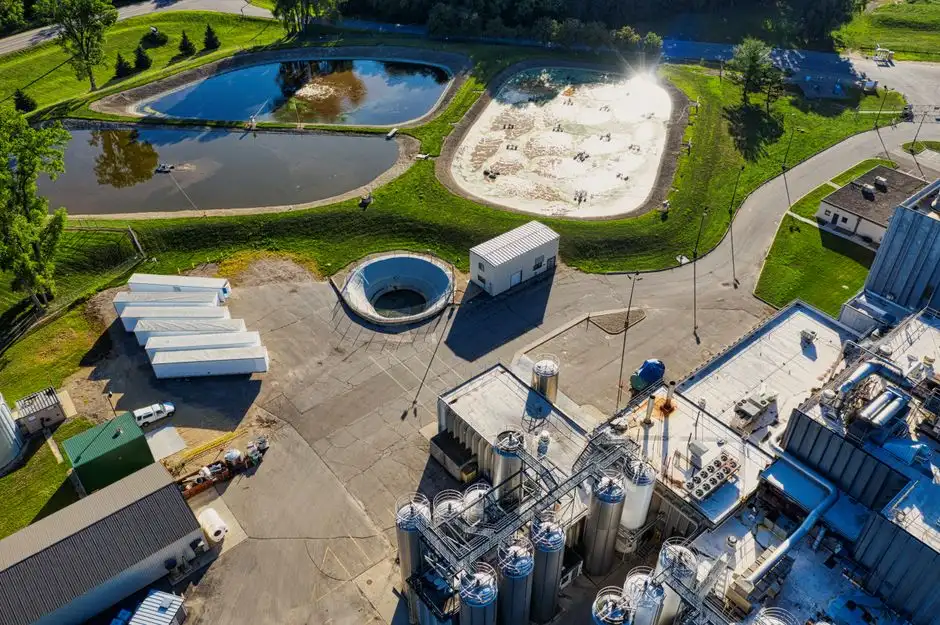
The supplied Saudi evidence does not provide a defensible capital cost or tariff for an MBR wastewater treatment plant cost in Saudi Arabia. The Al Qaraa study reports life-cycle environmental impacts for a specific community and process configuration; it is not a supplier quotation and does not support a generic SAR figure. Build the budget from priced equipment, works and operating assumptions instead.
Request separate capital line items for membrane equipment, biological reactors, tanks, civil works, installation, electrical systems, controls, pretreatment, tertiary treatment, sludge management, commissioning and operator training. This separation exposes omissions and prevents a low membrane-skid price from being mistaken for an installed treatment cost.
Request operating line items for energy, membrane cleaning, chemical cleaning, replacement membranes, labor, sludge transport, preventive maintenance and the assumed service period. Membrane replacement cost should appear as a stated lifecycle assumption, including replacement timing or the conditions that trigger replacement. Do not accept a quote that labels replacement membranes as included without defining their scope and quantity.
Give suppliers the site conditions that affect pricing: wastewater temperature; salinity or industrial contaminants; access for delivery and maintenance; available power; drainage route; reuse destination; future capacity expansion; soil and excavation conditions; and sludge-disposal arrangements. The 49 km transport route in the Al Qaraa study shows why avoided logistics can affect a whole-system comparison, but it is a case-specific distance, not a factor to apply across Saudi Arabia.
| Cost group | Required quote detail | Buyer check |
|---|---|---|
| Equipment and treatment | Each process item, quantity, material and module basis | Is the biological and membrane package complete? |
| Civil and installation | Foundations, tanks, piping, drainage, electrical, controls and installation | Are site works and interfaces priced separately? |
| Operations | Energy, cleaning, labor, maintenance and sludge handling | Are consumption assumptions stated? |
| Lifecycle | Membrane replacement, parts and assumed service period | Are replacement timing and scope explicit? |
| Exclusions | Civil, power, commissioning, disposal, freight, duties and permits | Can missing items be reconciled before comparison? |
Issue an RFQ that suppliers can price consistently
A wastewater treatment RFQ should provide enough project data for suppliers to define the treatment objective, design basis and commercial exclusions. Send one controlled data sheet to every bidder and require deviations to be listed explicitly. This reduces the risk that each quotation assumes a different boundary.
- Provide design flow, average flow, peak flow, wastewater source, influent COD, BOD, TSS, oil and grease, temperature, pH and salinity.
- Define the discharge or reuse target, including the receiving requirement and any proposed reuse application.
- Provide tank and plant footprint, soil and excavation conditions, road access, available power, effluent route, sludge-disposal route and required commissioning dates.
- Ask each supplier to state the guaranteed flow, module quantity, membrane area, process stages, materials, controls, testing, warranty, spares, energy assumptions, membrane life, replacement assumptions, exclusions and quotation-validity period.
Do not infer plant capacity from module specifications alone. The DF flat-sheet MBR membrane modules are specified in the supplied product information at 80–225 m², with production of 32–135 m³/day. Each bidder must state its actual design flow, operating mode, number of modules and any redundancy because a module’s catalog production range is not a project guarantee.
Require priced alternatives for base MBR treatment and for MBR combined with tertiary treatment or disinfection. Add pretreatment items such as rotary mechanical bar screening and plate-and-frame sludge filtration only where the project design requires them; each alternative should identify interfaces and exclusions.
| RFQ data sheet field | Buyer entry | Supplier response |
|---|---|---|
| Design and peak flow | Project values | Guaranteed flow and sizing calculation |
| Influent and reuse/discharge target | Laboratory data and receiving requirement | Process stages, guarantees and deviations |
| Site and utilities | Footprint, access, power, drainage and sludge route | Included works, exclusions and site interfaces |
| Commercial schedule | Service period and required dates | Equipment, installation, commissioning, spares, warranty and validity |
| Lifecycle schedule | Evaluation period | Energy, cleaning, maintenance, labor and membrane replacement assumptions |
Verify performance and supplier claims before award
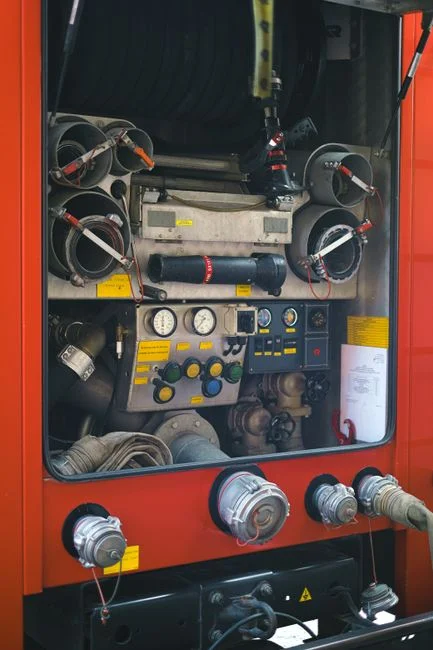
Performance guarantees should convert the process scope into measurable contractual obligations. Require guarantees for design flow, treated-water quality, product recovery, energy use and membrane-cleaning frequency, each tied to the stated influent and effluent conditions. Where a guarantee depends on seasonal temperature or incoming contaminant concentration, state the boundary conditions rather than leaving them implied.
Saudi-specific operating evidence is relevant but should not be treated as a substitute for project testing. One Saudi MBR plant was assessed over nine months for viral diversity, viral load and infectious-capacity reduction, and the study reported successful reduction in viral diversity, according to Water, 2024. This supports biological and membrane treatment as a verification subject; it does not establish the performance of a different plant, module or wastewater profile.
Make factory testing, site acceptance testing, operator training, membrane-replacement terms, spare-parts availability and performance guarantees explicit contractual deliverables. Evaluate the proposed test methods and acceptance limits before award, including how the buyer will sample influent and effluent and what happens when a guarantee cannot be met. For local application and housing context, see Saudi packaged sewage treatment options for Doha housing.
Frequently Asked Questions
What is the cost of an MBR wastewater treatment plant in Saudi Arabia?
The supplied research does not contain a defensible Saudi MBR capital price, so a buyer should not use a generic online figure as a budget. Request separate prices for equipment, civil works, installation, pretreatment, tertiary treatment, sludge handling, commissioning and the stated operating period. Use the project flow, wastewater profile, reuse target and site constraints to obtain comparable quotations.
Is a decentralized MBR cheaper than tanker transport in remote Saudi communities?
It cannot be established from a headline price. In Al Qaraa, the decentralized LC-MBR scenario performed better in 13 of 15 selected midpoint categories than centralized treatment with a 49 km transport route, and the Membranes study dated 22 February 2026 reported 8% lower human-health and 60% lower resource-depletion endpoints. The buyer should still request a route-specific cost comparison covering tanker movements, pumping, receiving charges, plant operation, sludge handling and reuse value.
How much wastewater flow should an MBR plant be sized for?
Size the plant from the project design flow and operating conditions, not a supplier’s general application range. Provide average and peak flow, wastewater source, water-quality data and expansion requirements. Require each bidder to state guaranteed flow, module quantity, membrane area, operating mode and redundancy; the supplied DF module information gives production of 32–135 m³/day, but that range does not determine project sizing.
What should a Saudi MBR supplier quotation include?
Require one priced scope covering process stages, membrane modules, reactors, tanks, pretreatment, tertiary treatment, sludge management, civil works, electrical and control systems, installation, commissioning, training, testing, warranty, spares and exclusions. Include a separate operating schedule with energy, cleaning, labor, maintenance and membrane-replacement assumptions, plus quote validity and payment milestones. Ask the bidder to identify any design dependency that remains unresolved.
Which Saudi project conditions can increase MBR operating cost?
The relevant conditions are wastewater temperature, salinity, industrial contaminants, cleaning demand, available power, access for maintenance and the sludge-disposal route. A reuse target may also add tertiary-treatment and disinfection duties. Require suppliers to state which conditions