
Determine Whether the Development Needs a Packaged Plant
The right packaged sewage treatment plant for a housing development in Doha is determined by sewer availability, residential flow and loading, available space, outlet requirements and the intended reuse of treated effluent. An underground A/O package is a candidate where excavation and civil works are feasible; an integrated MBR is a candidate where compact siting or a more demanding approved effluent or reuse specification justifies membrane treatment. Before procuring equipment, the project civil engineer should verify the connection point, receiving-system capacity, pretreatment requirements and regulatory route with the relevant authorities.
Biocell Water identifies two conditions that can require residential treatment: no access to public sewerage, or local rules requiring pretreatment before discharge (Biocell Water, Residential Development Wastewater Treatment, undated). Both conditions must be confirmed rather than assumed from the development’s location.
The public network is a material feasibility input. The Doha South Sewage Infrastructure Programme includes a main trunk sewer extending for more than 45 km and is intended to accommodate projected population growth over 80 years (Jacobs, Managing the delivery of critical infrastructure for Doha’s growth, undated). Its infrastructure conveys sewage to Doha South Sewage Treatment Works, where water is reclaimed as treated sewage effluent and returned to the Doha area for irrigation (Jacobs, undated). However, network investment does not establish that every parcel has a usable connection or adequate receiving capacity.
Ask the civil engineer to identify the available connection point, confirm receiving-system capacity, establish whether pretreatment is required and determine whether treated effluent may enter the network. Then define the outlet before selecting technology. Sewer discharge, controlled discharge, irrigation reuse and another approved application create different process and documentation bases.
Treated sewage effluent is a potential resource rather than automatically a disposal liability. Jacobs states that DSSIP returns reclaimed sewage effluent to the Doha area for irrigation, while MEED reports that Doha South includes SBR units combined with ultrafiltration and planned use of ultrafiltrated water for district cooling (MEED, Power & Water Project of the Year: Doha South Sewage Treatment Works Phase 2 Expansion, undated). A development considering reuse should investigate the receiving network and end-use requirements rather than assume those applications are locally available.
The comparison of packaged sewage treatment options for housing developments is useful only after the sewer and discharge pathway has been resolved.
Build a Site-Specific Design Basis
The tender must be based on simultaneous flow, pollutant, effluent and site constraints; a population estimate alone is not a sufficient design basis. Biocell Water warns that residential wastewater flow varies substantially, with morning, late-afternoon and evening peaks occurring alongside low-flow periods, and that ammonia and COD may be high because of disinfectants, cleaning products and houses without grease traps (Biocell Water, undated). Those conditions belong in the process calculations.
Prepare the following information before requesting proposals:
- Current and phased occupancy, design horizon, daily wastewater volume and defensible peak-flow estimates.
- Ammonia and COD loading, including the effects of cleaning practices, grease-trap provision and any abnormal discharges.
- The approved outlet requirement, intended reuse and sampling or monitoring requirements.
- Usable footprint, excavation depth, groundwater and geotechnical conditions, landscaping, vehicle access and outlet location.
- Inlet works, sludge-removal route, odor controls, backup power, maintenance access and separation from occupied buildings.
The following envelopes are initial screening references, not a substitute for design calculations:
| Configuration | Stated screening envelope | Information the bidder must demonstrate |
|---|---|---|
| Underground WSZ package | 1–80 m³/h | Selected duty point, peak handling, buried civil arrangement and outlet compliance |
| Integrated MBR system | 10–2,000 m³/day | Daily average and peak hydraulic response, membrane design flow and effluent basis |
| DF flat-sheet module | 32–135 m³/day in 80–225 m² configurations | Complete-plant footprint, module count, duty cycle, recovery, controls and ancillary equipment |
These figures come from the supplied product information and should be checked against the bidder’s current technical data, process calculations and proposed configuration. The research does not provide Qatar-specific loading rates or numerical discharge limits. Require the selected supplier to state the governing design inputs, calculation method, peak-flow approach, treatment objectives and performance guarantees.
Also define how incoming wastewater reaches the package and how sludge, screenings, reject water and odor are managed. A treatment module may occupy only part of the works; the completeness of the package must be explicit in the tender schedule.
Compare A/O, MBR and Containerized Treatment
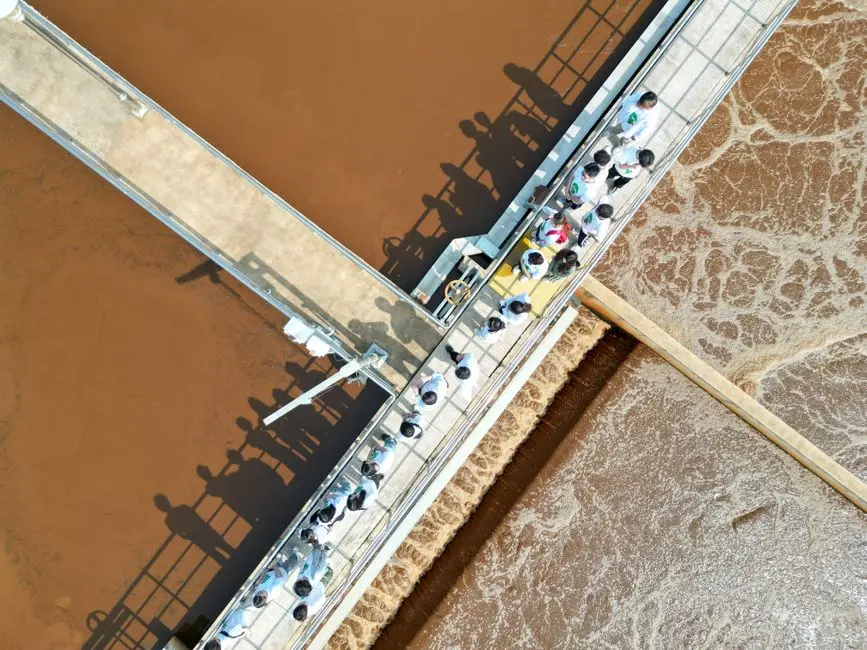
Underground A/O, integrated MBR and flat-sheet MBR configurations have different process and site implications. The correct comparison starts with the required effluent duty and available footprint, then tests whether the claimed envelope can accommodate the development’s verified flow.
The underground WSZ packaged sewage treatment plant combines anoxic/aerobic biological contact oxidation, sedimentation and disinfection in one buried package. The supplied product information describes it as fully automated, requiring no resident operator, with landscaping possible above the installation. This arrangement consolidates several treatment steps below grade, but it transfers more responsibility to excavation, structural works, access and buried-system commissioning.
The integrated MBR wastewater treatment system combines activated-sludge treatment with submerged PVDF membrane filtration. Its supplied specification states filtration below 1 μm and a footprint 60% smaller than conventional systems. These are supplier-product claims, not a project guarantee. The buyer still needs an approved effluent specification against which to demonstrate performance.
The DF flat-sheet MBR membrane module uses 0.1 μm PVDF membranes, integrates aeration for membrane scouring and provides individually replaceable elements. Its stated production range is 32–135 m³/day in configurations occupying 80–225 m². That range may suit a smaller development, but module production capacity alone does not establish suitability for the complete plant.
| Decision factor | Underground A/O package | Integrated or flat-sheet MBR | Containerized or plug-and-play arrangement |
|---|---|---|---|
| Primary selection driver | Buried treatment with integrated clarification and disinfection | Membrane-grade separation or a more demanding approved reuse duty | Modularity, phased installation and restricted excavation |
| Main civil-work implication | Excavation, tank or associated civil works, access and landscaping | Depends on whether the MBR is buried or above ground | Foundations, service connections, weather protection, lifting access and clearances |
| Maintenance emphasis | Access to buried process components and site servicing | Membrane cleaning, replacement and spare-element planning | Container access, odor control and serviceability |
| Phasing potential | Depends on the selected tank and module arrangement | Can suit staged modules subject to hydraulic design | Biocell Water identifies phased installation as a modular-system advantage |
| Compliance basis | Approved outlet duty demonstrated by the process design | Approved outlet duty demonstrated including membrane performance | Complete process train and local approvals, not containerization alone |
Use an above-ground containerized system where modular installation, restricted excavation, compact siting, phased growth or a stringent reuse objective outweighs the additional process and service complexity. Use the underground A/O arrangement where a simpler buried layout and integrated treatment stages are more important than membrane-grade solids separation.
Major operating experience is relevant but not transferable without design adaptation. The Doha South expansion uses SBR with ultrafiltration and PLC/SCADA automation, and MEED reports that the plant has capacity to treat 241 million litres per day (MEED, undated). That large municipal installation demonstrates biological treatment followed by membrane polishing; it does not establish the flow, loading or cost of a housing package.
Plan Installation, Controls and Lifecycle Maintenance
Installation and maintenance obligations can exceed the quoted equipment cost, so they must be priced and scheduled with the package. Biocell Water notes that below-ground MBBR or SBR solutions require an underground concrete tank and associated civil works, while above-ground solutions are commonly containerized or supplied as plug-and-play modules (Biocell Water, undated).
For an underground plant, allocate responsibility for excavation, dewatering, tank construction, access covers, installation, commissioning, landscaping and groundwater management. For a containerized plant, show foundations, incoming and outgoing services, odor control, weather protection, lifting access, working clearances and drainage on the site plan. The supplier should state precisely which civil and electrical works are included.
Controls should support unattended operation without hiding failures. Biocell Water states that its components have alarms, that GSM alarm dial-out is available and that its SCADA package supports continuous monitoring (Biocell Water, undated). A Doha development should specify the monitored parameters, alarm destinations, local data retention, power-failure response and manual operating arrangements. The SCADA monitoring guidance for packaged wastewater plants can support the specification, but it should be adapted to the residential system.
Maintenance access is a design input. Biocell Water highlights designs without submerged moving parts, routine servicing without emptying or entering tanks, and operation by non-specialist maintenance companies (Biocell Water, undated). For membrane systems, also require the cleaning method, membrane-recovery procedure, replacement interval basis, spare strategy and access requirements.
The whole-life scope should identify sludge or solids removal, membrane cleaning, consumables, operator training, remote support, spare-parts availability and response times. Request an energy-use calculation based on the proposed duty cycle, aeration or scouring arrangement and local power conditions. Do not compare packages using generic equipment-efficiency figures because civil works and process strategy affect the project result.
Use a Scenario-Based Selection Framework
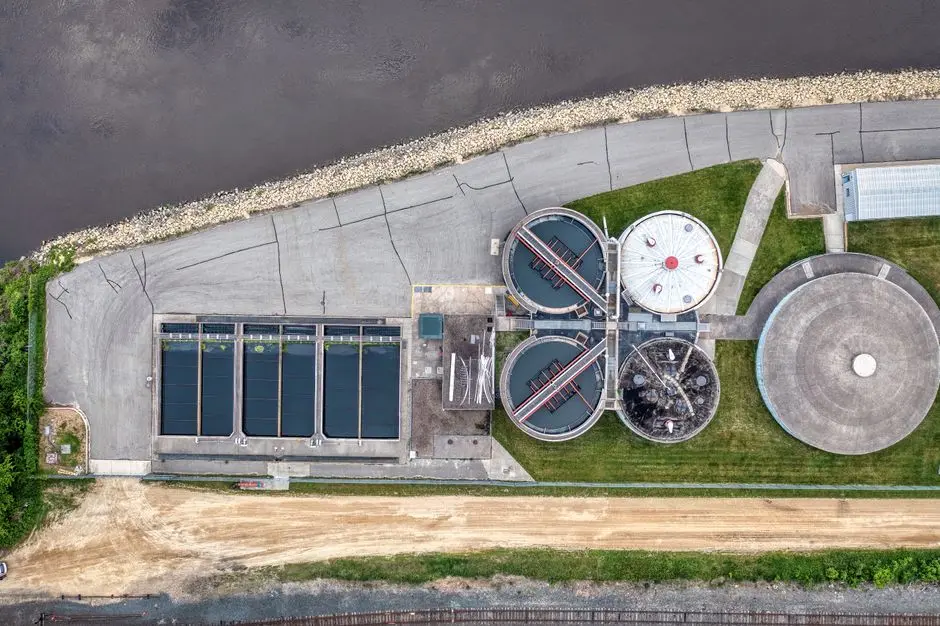
A defensible shortlist follows from the design basis, not from technology preference. Each scenario below identifies the first configuration to investigate; the final selection still requires verified flows, local approval and site-specific calculations.
| Development scenario | Configuration to shortlist | Mandatory checks before selection |
|---|---|---|
| Phased master-planned community with available excavation depth | Underground WSZ A/O package | Confirm preliminary duty falls within 1–80 m³/h; verify peak handling, buried civil works, landscaping and that the outlet does not require membrane-grade solids separation |
| Compact or above-ground site with a stringent approved reuse target | Integrated MBR | Confirm preliminary flow falls within 10–2,000 m³/day; demonstrate membrane performance, controls, recovery and reuse compliance |
| Smaller development with a limited footprint | DF flat-sheet MBR module | Check the 32–135 m³/day range and 80–225 m² configurations; calculate complete-plant area, duty cycle, recovery and ancillary equipment |
| Site near or connected to Doha’s expanding sewer network | Public sewer connection and pretreatment alternatives retained during feasibility | Verify connection availability, receiving capacity, pretreatment requirements and whether treated effluent can enter the network |
Issue one information sheet to every bidder. It should require a statement of design flow, peak-flow method, process configuration, outlet basis, civil-work exclusions, controls, performance guarantees, commissioning tests, O&M scope and delivery schedule. The same inputs must be used for every technical and commercial offer.
Do not approve a plant from house count or population alone. Require the civil engineer and process designer to reconcile wastewater flow, peak loading, effluent duty, site geometry and the regulatory pathway. Where the development is phased, confirm that each installed module can pass through the initial and final operating conditions without creating a hydraulic or treatment bottleneck.
A practical selection sequence is:
- Verify sewer connection and regulatory route.
- Define the approved outlet and reuse objective.
- Calculate average, peak and pollutant loading.
- Screen A/O, integrated MBR and flat-sheet MBR configurations.
- Compare civil works, controls, maintenance and lifecycle obligations.
- Approve the selected configuration only after site-specific design and bidder checks.
Frequently Asked Questions
Which packaged sewage treatment plant is best for a housing development in Doha?
There is no universal model.
Frequently Asked Questions
Which packaged sewage treatment plant is best for a housing development in Doha?
For housing developments in Doha, Membrane Bioreactor (MBR) technology is the industry standard due to the high effluent quality it produces, which is essential for complying with Ashghal’s treated sewage effluent (TSE) standards for irrigation. Systems utilizing integrated Moving Bed Biofilm Reactor (MBBR) processes are also preferred for their ability to handle fluctuating organic loads while maintaining a compact footprint suitable for desert environments.
How much does a packaged sewage treatment plant cost for a residential project in Qatar?
Capital costs for packaged sewage treatment plants in Qatar typically range from QAR 1,500 to QAR 3,500 per cubic meter of daily treatment capacity, depending on the level of automation and the quality of stainless steel or epoxy-coated carbon steel materials used. Operational expenditure (OPEX) should be budgeted at approximately QAR 1.50 to QAR 3.00 per cubic meter of treated water, covering electricity, membrane cleaning chemicals, and sludge disposal.
What flow capacity does a housing-development sewage treatment plant need?
Capacity requirements are calculated based on the Qatar Design Manual for Sanitary Engineering, which typically estimates an average daily water consumption of 250 to 300 liters per capita per day (lpcd). For a housing development, engineers use a peak factor of 2.5 to 3.0 to ensure the plant can handle hydraulic surges during morning and evening peak hours, ensuring the system capacity aligns with the projected peak occupancy.
Is an MBR system necessary for a Doha residential development?
An MBR system is highly recommended and often required by local authorities if the treated effluent is intended for unrestricted landscape irrigation or reuse within the development. While conventional Extended Aeration systems are cheaper to install, they often fail to meet the stringent turbidity and fecal coliform limits required by the Ministry of Environment and Climate Change for reuse, whereas MBR technology consistently achieves turbidity levels below 0.2 NTU.
How do I compare sewage treatment suppliers for a Doha housing project?
When evaluating suppliers, verify their registration with the Public Works Authority (Ashghal) and confirm their ability to provide local technical support within a 24-hour response window. Compare proposals based on the specific power consumption (kWh per cubic meter of treated water), the availability of spare parts for membrane modules, and the supplier's track record in maintaining systems under Qatar’s high-ambient-temperature conditions, which can accelerate mechanical wear.