Define the separation objective before selecting equipment
A decanter centrifuge can be a practical solid-liquid separation step for seafood processing wastewater, but flow rate alone cannot select or size it. Seafood streams may combine wash water with tissue, skin, viscera, bones, scales, shell fragments, proteins, lipids and minerals, so each source stream needs representative characterization. Choose a two-phase unit when the goal is one solids-rich cake and one liquid stream; use a three-phase unit when two immiscible liquids must be separated. Upstream oil control may justify DAF, while the centrate still requires downstream treatment. Final configuration, capacity and acceptance criteria should be established through pilot testing with the least favorable representative feed.
Begin by mapping the required outputs rather than naming a machine. Dewatering requires a transportable solids-rich cake; clarification requires liquid meeting a stated downstream standard; oil or liquid-phase recovery requires separated liquid phases suitable for collection or further treatment. These objectives may lead to different configurations and acceptance tests.
Separate washdown, floor cleanup, blood water, viscera handling, shellfish processing and shell or scale removal during sampling. The seafood-processing waste described by Frontiers in Sustainable Food Systems in 2021 includes shell, head, bones, intestine, fin and skin, while Marine Drugs in 2026 identifies heads, viscera, skin, bones, scales and shells as processing residues. The design implication is not that every stream contains every listed component; it is that source segregation is needed to identify which constituents actually enter each duty.
| Decision field | Record for procurement | Selection consequence |
|---|---|---|
| Primary objective | Cake dewatering, liquid clarification, oil recovery or combined separation | Sets output definitions and pilot measurements |
| Stream scope | Washdown, floor cleanup, blood water, viscera, shellfish and shell/scale streams | Prevents an averaged feed from concealing the governing duty |
| Liquid destination | Next biological, membrane or discharge treatment stage | Defines centrate-quality requirements |
| Solids destination | Recovery, rendering, further dewatering or disposal | Defines cake-moisture and usability criteria |
| Configuration | Two-phase or three-phase | One solids-rich cake plus one liquid, or solids plus two immiscible liquids |
Build a representative seafood wastewater sample
The feed must be characterized source by source because seafood effluent can change with product mix, operating schedule and cleaning practices. A composite sample can hide an oily production period, a high-shell cleanup or a salt-bearing washdown that controls machine duty. Campaign data should therefore accompany any grab sample used for equipment selection.
Document the stream origin, flow profile, solids characteristics, oil content, particle distribution, salt content, temperature and cleaning-chemical exposure. Use the constituent lists in Frontiers in Sustainable Food Systems (2021) and Marine Drugs (2026) to check that the sampling plan addresses tissue, skin, viscera, bones, scales, shell, proteins, lipids and minerals where the plant process makes them relevant.
Do not convert published centrifuge limits into a seafood duty without a representative feed and the intended conditioning method. “High solids” is not a sizing parameter: the supplier needs the physical form of the solids, oil contribution, expected variability and treatment history. The 2026 Decanter Centrifuge for Seafood Wastewater design guide also warns that wastewater-rated hydraulic capacity can be substantially higher than capacity for thick waste oil; its illustrated oil duty is not seafood performance data.
| Fillable field | Buyer entry | Evidence or method required |
|---|---|---|
| Stream and sampling point | Origin, collection point and segregation status | Plant drawings and operating-shift observations |
| Flow profile | Average, peak, duration and batch discharge pattern | Campaign flow records; do not use nominal plant flow alone |
| Solids description | Tissue, skin, viscera, bone, scale, shell or mixed residue | Physical inspection and source process information |
| Oil content and phase form | Free oil, emulsified oil, or absence of a separate phase | Defined analytical method |
| Particle distribution | Size fractions relevant to screening, wear and solids handling | Representative sample analysis |
| Salt and cleaning chemicals | Concentration, product and dosing practice | Batch records and laboratory analysis |
| Temperature | Normal and maximum feed temperature | Campaign measurements |
| Conditioning | Screening, equalization, DAF or other proposed method | Process trial data or stated design assumption |
Set pretreatment and downstream acceptance criteria
A centrifuge should not absorb unresolved upstream oil loads or substitute for downstream treatment. The appropriate treatment train begins with stream segregation and screening, followed by equalization where variability requires it. Evaluate DAF when free oil or floatable material is present, then establish whether conditioning materially reduces the decanter’s solids-handling duty.
HydropureWater’s published DAF system for upstream oil and floatable-solids control covers 4–300 m³/h across 13 standard models. That is equipment availability data, not a seafood-duty calculation; the supplied research provides no verified seafood flow or contaminant loading against which to size it. For the liquid leaving the centrifuge, define the next biological, membrane or discharge route and its required inlet quality before specifying centrate quality.
For recovered solids, compare the downstream route with the plant’s existing dewatering and disposal arrangements. A plate and frame filter press for final sludge dewatering can be relevant after a centrifuge, while a DAF-plus-filter-press train may also be a duty-matched alternative to the centrifuge itself. The decision should compare total treatment-train requirements rather than assume that the centrifuge is the central unit.
| Gate | Evaluate before purchase | Pass condition |
|---|---|---|
| Segregation and screening | Which streams are combined, and what removable material is present? | Feed basis and screen duty are documented |
| Equalization | Can flow, solids and oil loading be smoothed? | Pilot and design case use an identified condition |
| DAF | Is free oil or floatable material present? | Measured benefit is credited to the overall train |
| Centrate | What must the downstream unit accept? | Quality limit and analytical method are agreed |
| Solids | Is cake further dewatered, recovered or disposed? | Moisture, handling and destination requirements are agreed |
Select the decanter configuration from operating evidence
A decanter separates by density under centrifugal force: denser solids migrate toward the rotating bowl wall, the less-dense liquid forms an inner layer, and a screw rotating at a different speed conveys solids toward discharge. A two-phase centrifuge is appropriate when the required outputs are one solids-rich cake and one liquid stream. A three-phase centrifuge is appropriate when solids and two immiscible liquids must be separated, such as an oil-bearing feed with a recoverable liquid-oil phase.
Do not select three-phase separation merely because the plant handles seafood. First establish that two liquid phases exist and that separate collection has a defined destination. Likewise, two-phase equipment is unsuitable if the procurement objective requires independent oil recovery but the proposed train cannot deliver the required phase quality.
Specify abrasion-resistant protection for wear-prone areas when shell, scale or bone fragments may reach the machine. Alfa Laval’s commercial decanter information identifies the feed zone, solids-discharge zone, bowl and scroll as wear-prone areas and describes abrasion-resistant materials selected for the process. It also identifies bowl speed, auger speed, pond depth and other operating adjustments as separation controls. Torque-responsive differential-speed control can adjust screw speed as loading changes, protecting the machine while adjusting cake dryness.
As equipment context, Alfa Laval states that its centrifuges can generate centrifugal force up to 4,000 times gravitational force. This is not evidence of seafood performance, cake moisture, centrate quality or recovery. Use it to understand the separation mechanism, not as an acceptance metric.
| Configuration or feature | Selection evidence | Verification required |
|---|---|---|
| Two-phase centrifuge | One solids-rich cake and one liquid are sufficient | Pilot centrate and cake results |
| Three-phase centrifuge | Two immiscible liquids require separate recovery | Phase identification, recovery and contamination checks |
| Wear protection | Shell, scale or bone fragments are credible feed constituents | Material specification and wear inspection plan |
| Adjustable controls | Feed variability requires controlled solids conveyance | Tested settings under representative loading |
| Torque-responsive control | Variable solids loading could overload the conveyor | Control response, operating limits and alarm records |
Prove performance with pilot testing and acceptance criteria
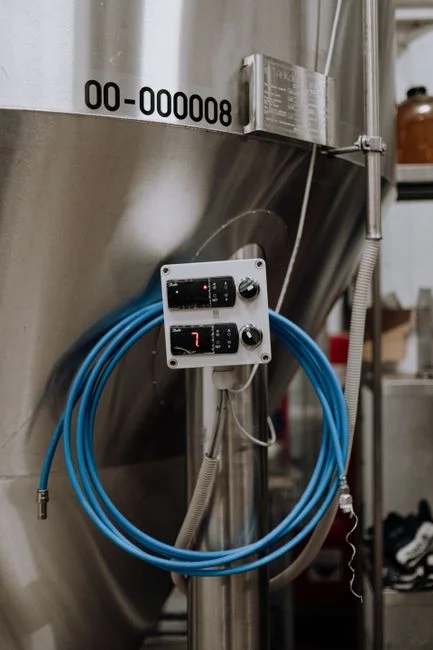
Pilot performance must be demonstrated with the least favorable representative seafood wastewater, the intended conditioning method and the proposed two- or three-phase configuration. This is the defensible bridge between equipment selection and final sizing; flow rate alone leaves the governing solids and phase behavior undefined.
Measure hydraulic throughput and solids-handling capacity separately. A machine can process the wastewater flow while lacking enough capacity for the associated solids or thick waste oil. The 2026 seafood design guide identifies this distinction explicitly, while its referenced oil example remains equipment guidance rather than seafood test data.
Agree acceptance criteria before selecting the supplier. The contract should define centrate quality, cake dryness or moisture, any recovered-material usability requirement, torque limits, energy use, wear expectations and operating stability. It should also identify the test method, sampling point, feed-conditioning assumption and responsibility for every missing datum.
| Pilot acceptance item | Minimum agreement | Supplier evidence required |
|---|---|---|
| Representative feed | Least favorable source, campaign period and conditioning method | Sampling record and constituent analysis |
| Hydraulic throughput | Tested flow range and duration | Continuous flow record |
| Solids-handling capacity | Tested loading independent of water throughput | Mass balance and loading calculation |
| Centrate quality | Agreed parameter, method and limit | Laboratory results from the pilot |
| Cake moisture | Agreed measurement basis and limit | Representative cake samples |
| Recovered material | Defined destination or usability requirement | Sample disposition and impurity assessment |
| Machine protection | Torque, energy, wear and stability criteria | Trend data, inspection records and exceptions |
Compare the decanter with duty-matched alternatives
A decanter is justified only if it meets the defined separation objective at lower whole-train burden than practical alternatives. Compare capital cost, footprint, labor, chemicals, energy, wear, recovered-material value and downstream treatment requirements for each route.
Include a DAF-plus-filter-press train as a comparable process option, not merely as equipment around a preselected centrifuge. If oil removal, clarification and final sludge dewatering are the main requirements, that train may satisfy the duty without a decanter. Conversely, continuous solids handling, recovered-oil segregation or a required cake route may justify a two- or three-phase decanter after suitable pretreatment.
Do not accept a universal seafood-system price. The supplied research contains no verified price, universal equipment capacity, seafood-specific cake moisture, centrate specification or recovery percentage. Request a quotation tied to the representative feed, selected configuration, pilot results, construction requirements, accessories, installation scope, warranty and downstream performance obligations.
| Comparison field | Decanter route | DAF-plus-filter-press route |
|---|---|---|
| Primary function | Continuous solids-liquid separation; phase recovery where applicable | Floatable-material removal followed by solids dewatering |
| Feed evidence needed | Solids loading, phase behavior, oil form and abrasivity | Floatable load, solids capture and final cake requirement |
| Operating burden | Energy, torque control, wear and maintenance | DAF operation, chemical use, plate labor and press cleaning |
| Output uncertainty | No verified seafood cake-moisture or centrate specification in the research | No verified seafood performance or price in the research |
| Commercial basis | Request configuration-specific quotation | Request duty-specific quotation |
Frequently Asked Questions
Why can seafood effluent not be sized from flow rate alone?
Seafood effluent can combine wash water with tissue, skin, viscera, bones, scales, shell fragments, proteins, lipids and minerals. These constituents affect flow behavior, oil phase separation, abrasion and solids handling differently. Request source-by-source flow and constituent data plus campaign samples before using the supplier’s sizing calculation.
How should a buyer request sizing data and pilot acceptance criteria?
Require the supplier to state the feed basis, conditioning assumption, test method and every missing datum. Request separate hydraulic-throughput and solids-handling results, with agreed limits for centrate quality, cake moisture, torque, energy, wear and stability. The pilot should use the least favorable representative seafood wastewater and the proposed phase configuration.
Why is there no defensible universal price for a seafood decanter system?
The supplied research contains no verified seafood-system price, universal capacity or comparable seafood duty. A meaningful quotation requires the feed characterization, configuration decision, pilot basis, construction specification, installation scope and downstream acceptance criteria. Ask suppliers to identify exclusions and any performance assumptions rather than compare headline prices.
When should three-phase separation and upstream DAF be evaluated?
Evaluate three-phase separation when the feed contains two immiscible liquids and both require separate collection or treatment. Evaluate upstream DAF when free oil or floatable material could interfere with feed conditioning or decanter separation. Pilot both stages in sequence and credit measured oil removal before setting centrifuge duty.