Why Seafood Wastewater Complicates Decanter Selection
Seafood effluent is a variable mixture of wash water, tissue, skin, viscera, bones, scales, shell fragments, lipids, proteins, and minerals, so nominal flow rate alone cannot define decanter duty. Meat-processing wastewater COD removal design provides a useful comparison discipline, but seafood streams require their own characterization. The practical objective is to recover or manage a usable solids stream while producing liquid that is suitable for the next agreed treatment stage; centrifugation alone is not complete wastewater treatment.
Frontiers in Sustainable Food Systems identifies seafood processing discards and effluent containing shell, head, bones, intestine, fin, and skin. It also notes that seafood waste contains proteins, amino acids, lipids, and minerals, linking wastewater treatment with potential resource recovery. Marine Drugs lists heads, viscera, skin, bones, scales, and shells among seafood-processing residues. These forms matter because soft tissue can carry high organic and oil loads, while shell and scale fragments create wear and feed-distribution problems.
Changes in product mix, production campaigns, cleanup practices, and blood-water flows can therefore alter separation behavior, cake dryness, torque loading, and wear. A project team should map those variables rather than describe the feed simply as “high solids.” The feed-characterization requirements resemble those used in a broader food-processing wastewater COD treatment comparison, but constituent sampling must reflect the seafood plant’s own streams.
Build the Feed Characterization Before Choosing a Decanter
A decanter bid should begin with representative feed data, not with a selected flow rate. Sampling must cover operating shifts and product campaigns because diluted washdown can hide the peak solids and FOG load encountered during viscera handling or intensive cleanup.
Document the origin of each stream: washdown, floor cleanup, blood water, viscera handling, shellfish processing, and shell or scale removal. Segregating these streams may simplify the train: a relatively dilute wash stream may not require the same solids-handling capacity as a concentrated process-water stream. Rotary mechanical bar screening can fit upstream protection where gross shell and debris require removal, while an automatic chemical-dosing system is relevant only where a tested conditioning requirement has been established.
Dolphin Centrifuge, in its commercial decanter guidance last reviewed in October 2026, warns that wastewater-rated capacity can be substantially higher than capacity for thick waste oil. Its fluid-specific illustration is not a seafood sizing value, but the engineering lesson is valid: hydraulic throughput and solids-handling capacity are different limits.
| Design input | Information to obtain | Why it affects selection |
|---|---|---|
| Flow and variability | Total flow by shift and campaign; peak and minimum flows | Defines hydraulic load, equalization needs, and operating envelope. |
| Solids | Total solids, suspended solids, settleable solids, and particle-size distribution | Influences solids-handling demand, cake formation, and separation efficiency. |
| Oil and organics | FOG, free oil, and relevant organic characterization | Determines whether oil pretreatment or three-phase separation is justified. |
| Process conditions | pH, temperature, salinity, and cleaning-chemical exposure | Sets materials, corrosion allowances, and operating constraints. |
| Wear risk | Presence, size, and frequency of shell, scale, and grit | Drives screening, feed-zone protection, and maintenance provisions. |
| Treatment objective | Dewatering, recovery, bulk-waste reduction, or biological pretreatment | Sets the required phase configuration and output targets. |
Request representative samples or a representative test program rather than relying on a manufacturer’s generic particle-range claim. The data package should support pilot testing, final sizing, and a measurable acceptance protocol.
Match Two-Phase and Three-Phase Separation to the Treatment Objective

A two-phase decanter separates a solids-rich cake from one liquid stream, while a three-phase decanter separates solids and two immiscible liquids. The choice should follow the required products—not the number of available outlet pipes. Alfa Laval describes denser solids moving toward the rotating bowl wall, an inner liquid layer, and solids transported along the conical beach by a screw or conveyor operating at a differential speed.
Alfa Laval also identifies adjustable pond depth as a means of matching process conditions and explains that differential speed transports solids along the beach for discharge. In a three-phase arrangement, the oil-rich and aqueous phases must be collected without cross-contamination. Before choosing that configuration, verify that an oil-recovery objective exists and that the oil, water, and solids phases have suitable properties for the proposed separation.
Two-phase separation is normally the direct choice when the main objective is dewatering solids into one liquid stream and the feed does not require separate oil recovery. Three-phase separation becomes relevant when oil recovery has a defined destination or value and the feed contains enough immiscible oil to justify the added complexity. The supplied research contains no verified seafood-application cake moisture, centrate quality, or oil-recovery percentage, so these outputs must be established through representative testing.
| Decision point | Prefer two-phase separation when | Consider three-phase separation when |
|---|---|---|
| Primary objective | One solids stream and one liquid stream are required. | A distinct oil-rich liquid product is required. |
| Feed condition | Oil is limited or can be managed upstream. | Immiscible oil remains significant after justified pretreatment. |
| Outputs | Recovered solids cake and clarified liquid. | Recovered solids cake, oil-rich phase, and aqueous phase. |
| Complexity | Simpler collection, controls, and maintenance are priorities. | Oil recovery justifies phase-specific collection and verification. |
| Acceptance evidence | Feed and centrate solids, cake dryness, and flow are tested on representative feed. | Those measurements are supplemented by phase-specific oil and water-quality checks. |
Design the Pretreatment and Treatment Train Around the Centrifuge
The centrifuge should occupy a defined position in the treatment train, not be used as a substitute for upstream oil control or downstream polishing. A practical sequence is stream segregation and screening, optional equalization, DAF where free oil and floatable material warrant it, justified feed conditioning, decanter separation, downstream treatment, and final sludge dewatering or recovery.
The oil and grease pretreatment DAF system is documented in 13 standard models with capacities from 4 to 300 m³/h and is intended to address suspended solids, FOG, oil and grease, and colloidal matter. These are published equipment ranges, not a seafood-plant duty calculation. Actual flow, solids loading, recycle requirements, chemical use, and required separation still require project-specific verification.
DAF can remove free oil and floatable material before the centrifuge. That may reduce FOG loading and help avoid feeding an unstable oil phase to a three-phase machine, but the project must demonstrate that DAF is necessary and that its own recovered oil or scum has a management route. An integrated MBR treatment system can be evaluated downstream only after solids and oil loads have been managed; the supplied research does not establish a seafood-specific MBR output.
| Train position | Function | Selection question |
|---|---|---|
| Segregation and screening | Remove shell, scales, and gross debris; keep unlike streams separate. | Is the screen size appropriate for the observed shell and scale fragments? |
| Equalization | Reduce campaign-driven hydraulic and solids peaks. | Does the feed data justify additional equalization volume? |
| DAF | Remove applicable free oil, FOG, and floatable material. | Will upstream DAF reduce the required centrifuge duty enough to justify the added equipment? |
| Decanter | Separate a solids-rich cake from liquid, with an oil phase only where justified. | Has the unit been selected and verified for solids handling on representative feed? |
| Downstream polishing | Provide biological treatment or another agreed polishing stage. | What centrate quality is required, and can the upstream train deliver it? |
| Final dewatering | Produce or further dewater the recovered sludge or cake. | Is a plate-and-frame sludge dewatering alternative better suited to batch operation, footprint, or the cake objective? |
The filter-press catalog offers filtration areas from 1 to 500 m². That range permits a duty comparison, but the selected machine still needs solids holding volume, cycle time, cake transport, washdown, and feed-conditioning requirements.
Specify Materials, Controls, Hygiene, and Wear Protection
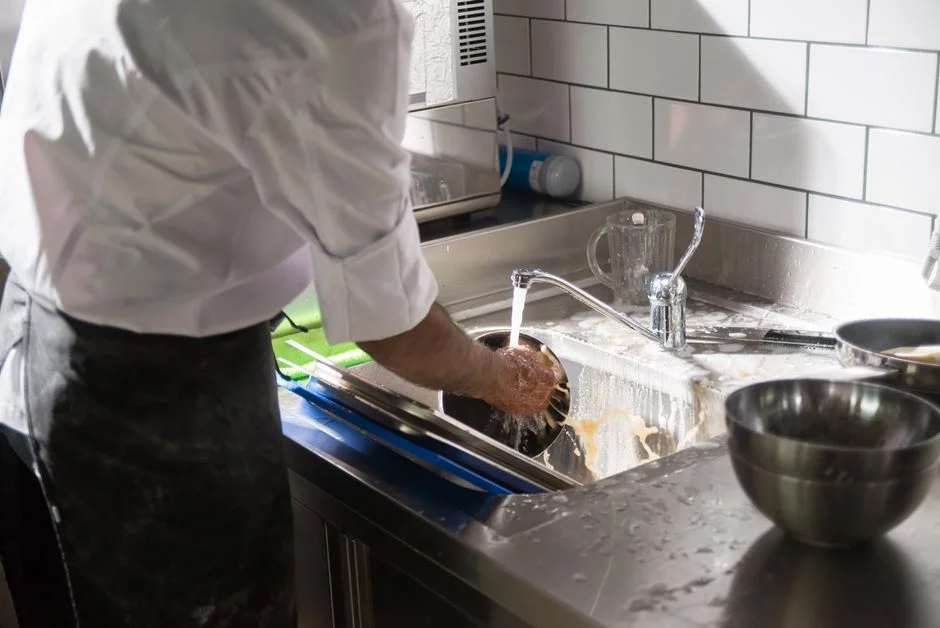
Seafood plants combine washdown, salt, organic residues, and possible shell or scale fragments, so construction and wear protection should be specified from the actual process environment. Require process-contact components in stainless steel, with the grade verified against salinity, temperature, cleaning chemicals, and corrosion risk. Alfa Laval identifies stainless-steel process-contact construction and abrasion-resistant protection for the feed zone, solids-discharge zone, bowl, and scroll as reference features, not universal specifications.
Controls should respond to real feed variation. Alfa Laval describes automatic conveyor differential-speed adjustment through a variable-frequency drive combined with torque control, allowing reduced differential speed under lighter loading and adjustment when solids loading rises. Include torque trends, vibration monitoring, differential-speed limits, and an overload response in the control and maintenance scope.
Hygiene is equally important. Require clean-in-place access, drainability, removable or accessible wear components, sanitary covers, safe cleaning routes, and defined procedures for product changeover and shutdown. Alfa Laval’s spring-loaded hinged cover provides a useful access reference. Dolphin Centrifuge reports decanter noise in the 70–80 dB(A) range, so equipment-room noise, vibration, containment, odor control, and washdown drainage should be addressed during layout review.
| Specification area | Minimum procurement requirement | Verification |
|---|---|---|
| Materials | Defined process-contact grade and corrosion basis | Confirm compatibility with the documented feed and cleaning chemicals. |
| Wear protection | Specified protection in feed, bowl, conveyor, and discharge areas | Review the proposed shell and scale wear case. |
| Controls | VFD differential-speed control, torque monitoring, and fault handling | Witness functional tests across the pilot operating range. |
| Hygiene | Drainable layout, cleaning access, removable wear parts, and containment | Complete a cleaning and maintenance walkdown before award. |
| Maintenance | Inspection intervals, spare-parts list, wear-part limits, and service support | Obtain written local-service and parts commitments. |
Spares, local service, and inspection access are procurement requirements. A machine specified only by bowl diameter, motor power, and nominal flow is not a complete operating specification.
Pilot Test, Size, and Validate Performance Before Purchase
Pilot testing should use the least favorable representative seafood wastewater, the intended feed-conditioning method, and the proposed phase configuration. Measurements should cover feed and separated-liquid solids, oil content where applicable, particle distribution, recovered-cake dryness, flow rate, motor load, differential-speed response, and centrate quality. The test should also expose startup, shutdown, shock loading, and campaign variability.
Size for verified solids-handling demand, not only nominal water flow. Dolphin identifies auger pitch, beach-cone angle, gearbox ratio, bowl speed, and auger speed as factors affecting decanter sizing. Published centrifuge limits should therefore be treated as a reference envelope rather than evidence of seafood-application performance.
Commercial pricing also needs careful interpretation. Dolphin reports that new decanters start at approximately $50,000 for a small-capacity unit and can exceed $1 million for a large-capacity machine; remanufactured machines cost roughly 50%–60% of comparable new-machine costs, according to its commercial guidance last reviewed in October 2026. These are market-orientation points, not seafood-system budgets. They exclude site-specific feed preparation, pumps, controls, installation, downstream equipment, and the cost of shell-induced wear.
Require written acceptance criteria tied to measured feed conditions and defined output targets. Include centrate quality, cake dryness, oil-phase quality where relevant, operating stability, and corrective-action limits. A guarantee expressed only as flow rate or solids removal is not adequate.
A Procurement Checklist for a Seafood Wastewater Decanter
Comparable bids require a common feed package, pilot protocol, operating envelope, and acceptance criteria. Give every bidder the same characterization data and require a response against each item. This prevents a technically broader machine from being compared with a machine offered only for nominal liquid throughput.
| Bid item | Supplier response required | Buyer check |
|---|---|---|
| Phase configuration | Two-phase or three-phase, with defined products | Does each output have a treatment or recovery route? |
| Throughput basis | Hydraulic and solids-handling limits at documented feed conditions | Is the sizing tied to pilot results rather than peak water flow alone? |
| Separation design | Bowl, conveyor, pond-depth adjustment, and outlet arrangement | Are adjustment range and control logic included? |
| Materials and wear | Process-contact grade, protected areas, and expected inspection items | Has shell and scale exposure been addressed? |
| Drive and controls | Motor rating, VFD, torque control, monitoring, and fault response | Can outputs be witnessed during a representative run? |
| Mass balance | Liquid, oil-rich liquid if applicable, and recovered cake | Are flow and solids balances internally consistent? |
| Operations | Startup, cleaning, shutdown, maintenance, spares, warranty, and local service | Are service and wear-part commitments enforceable? |
| Utilities and site | Power, water, chemicals, drainage, footprint, floor loading, and access | Do stated demands match the available plant infrastructure? |
Compare the centrifuge against a DAF-plus-filter-press train and other duty-matched alternatives using recovered-material value, footprint, labor, chemicals, energy, wear, and downstream treatment needs. Make site constraints explicit: floor loading, service access, washdown environment, odor controls, utilities, and future expansion. The DAF system and plate-and-frame filter press should therefore appear as comparable process options, not merely as accessories to a preselected centrifuge.
Frequently Asked Questions
What is the best decanter centrifuge design for seafood processing wastewater?
There is no defensible universal model because seafood effluent composition and campaign variability determine the duty. Select a two- or three-phase configuration only after representative sampling and pilot testing establish solids handling, phase behavior, wear risk, and required product quality.
When is a two-phase decanter sufficient, and when is three-phase separation needed?
A two-phase decanter is sufficient when the objective is one solids-rich cake and one liquid stream. Three-phase separation is justified when a separate oil-rich product has a defined recovery route and the feed contains sufficient immiscible oil; phase properties and outputs must still be verified on representative feed.
How much does a seafood wastewater decanter centrifuge system cost?
No defensible seafood-system price can be stated from the supplied research. Dolphin’s October 2026 market reference places new decanters from approximately $50,000 to more than $1 million and remanufactured units at roughly 50%–60% of comparable new-machine costs. Request itemized quotations covering the centrifuge, feed preparation, pumps, controls, installation, downstream equipment, and wear protection.
Should a DAF system or filter press be installed before or after the centrifuge?
DAF generally belongs upstream when testing shows that free oil or floatable material would impair the centrifuge. A plate-and-frame press may be downstream for final sludge dewatering or may replace the centrifuge when batch operation and a defined cake objective fit the duty better. Decide this from the feed analysis, phase-recovery objective, and pilot mass balance.
What should be included in a supplier's pilot-test and performance-guarantee request?
Require testing with the least favorable representative feed and intended conditioning method. Include feed and centrate solids, oil where applicable, particle distribution, cake dryness, flow, motor load, differential-speed response, startup and shutdown behavior, and stability under variable loading. Tie the guarantee to those measured conditions and defined outputs rather than nominal capacity alone.