Determine Whether the Seafood Sludge Is a Belt-Press Fit
A belt filter press can be suitable for seafood-processing wastewater sludge when the solids are flocculated, compressible and predominantly organic, but the feed must be characterized before sizing. The press removes water through gravity drainage followed by progressive squeezing between moving porous belts, producing a handleable cake and separated filtrate. Seafood plants must also specify the effects of fats, oils, solids and fibrous material, establish a target cake dryness and request testing on the actual sludge. Published results for sewage and similar organic sludges show 15–20 percent solids for full-scale belt and press filtration installations, but this is not a seafood-plant guarantee.
Feed compressibility and organic-solids behavior are the first feasibility tests. CEC Mining Systems describes a belt filter press as a continuous machine that squeezes flocculated slurry between two moving porous belts through gravity drainage and rising mechanical pressure. It is suited to compressible organic sludge, including food-processing sludges, rather than granular, abrasive mineral material (CEC Mining Systems, 2026). That distinction must be verified rather than assumed: fish-processing solids may contain proteinaceous material, fibrous matter, fish scales and FOG, while shellfish streams can carry shell fragments and grit.
Before requesting a selection or quotation, obtain particle-size distribution, compressibility, settling behavior, filterability, oil-and-grease characteristics, solids concentration and pH. Also define the required cake moisture or solids concentration, expected feed variation, permitted filtrate quality and the operating schedule. Generic sewage-sludge performance cannot establish suitability for a seafood stream. Use the results to classify the feed and identify where additional separation or conditioning is required.
| Seafood-process feed characteristic | Implication for belt-press suitability | Information required before selection |
|---|---|---|
| Predominantly organic, compressible solids | Supports use of mechanical squeezing after flocculation. | Filterability, compressibility and pilot dewatering results on the actual sludge. |
| Oil, grease or soluble proteins | May interfere with floc formation, cloth drainage or filtrate quality; determine whether upstream removal is required. | Oil-and-grease characteristics, soluble-protein data and filtrate-solids results. |
| Fibrous material, scales or shell fragments | Can cause poor distribution, blinding, wear or excessive cake moisture. | Particle-size distribution, solids shape and observations during pilot testing. |
| Granular or abrasive grit | Weakens the basis for mechanical squeezing and increases wear risk. | Mineral-content and abrasivity assessment. |
| Unstable solids concentration or polymer demand | Makes a fixed machine duty less reliable without upstream control. | Feed variation data, thickening assessment and chemical-demand range. |
| Defined handling or disposal requirement | Determines whether the test must target cake solids, moisture, solids recovery or another acceptance basis. | Target cake condition, permitted reuse route and filtrate discharge criteria. |
Use this belt filter press selection guide for organic wastewater sludge as a secondary framework, but keep the seafood-process sample as the controlling evidence. A plate-and-frame sludge dewatering alternative may warrant testing when batch operation, capture of variable feed or containment of difficult solids is important.
Map the Belt-Press Process from Feed to Cake
A belt press operates as a conditioned-feed separation process, so its performance depends on what happens upstream and downstream. Alfa Laval identifies sludge, effluent or slurry as typical feed and notes that flocculant pretreatment is commonly used to improve separation. Pressed water exits as clarified filtrate, while the retained solids leave as press cake (Alfa Laval, accessed 2026).
- Characterize and equalize the feed. Confirm solids loading, oil-and-grease content, particle characteristics, pH and the variability entering the press.
- Remove material that interferes with conditioning. Depending on the stream, upstream solids removal may be required before sludge reaches the belt. A dissolved-air flotation system for food-processing streams is relevant where suspended solids, FOG, oil and grease or colloidal matter must be removed before dewatering.
- Condition the sludge. Add and mix polymer to form flocs that release water during drainage and squeezing. An automatic flocculant and coagulant dosing system should be specified against measured chemical demand and feed-flow changes.
- Drain and squeeze the flocs. Gravity drainage precedes progressive mechanical compression between the belts.
- Recover the outputs. Route filtrate to the appropriate treatment step and discharge or process the cake under its permitted route. Alfa Laval states that cake repurposing may be possible, depending on local regulations and sludge quality (Alfa Laval, accessed 2026).
Evaluate the complete line rather than the press alone. CEC Mining Systems identifies solids capture, cake solids and polymer use per ton of dry solids as practical operating measures (CEC Mining Systems, 2026). A supplier should therefore define how each output is sampled, how dry-solids consumption is calculated and where filtrate returns to the treatment process. Without those boundaries, a performance claim can omit the costs or treatment burdens that determine the actual outcome.
Choose the Right Alternative When the Feed Does Not Behave Like Sewage Sludge
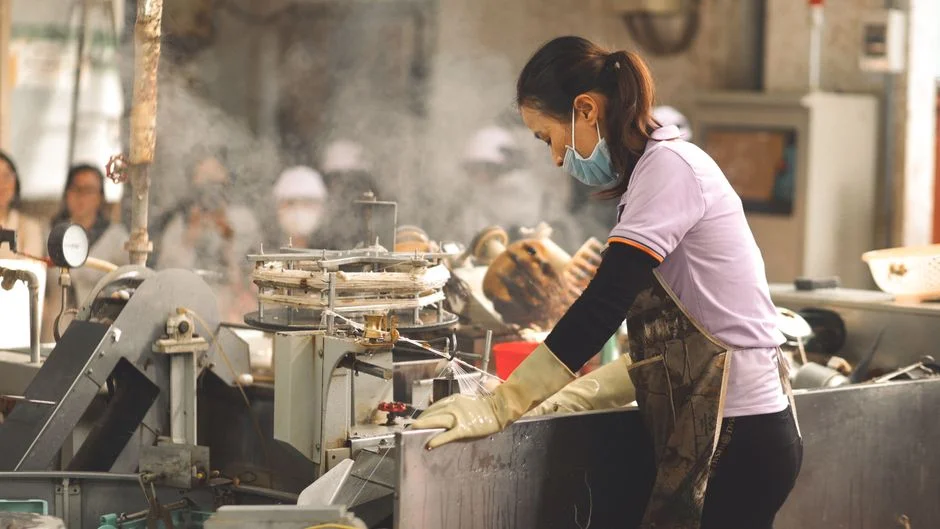
Compressible organic sludge supports a belt press or centrifuge; granular mineral slurry points toward vacuum or ceramic membrane filtration, according to CEC Mining Systems (2026). That distinction provides the starting rule for a seafood-process comparison. A belt press is a continuous option for flocculated organic and fibrous sludges and applies mechanical pressure without relying on a large heat load. A centrifuge may suit continuous high-throughput separation where the solids response and capital requirement justify it.
| Selection condition | Technology to evaluate | Reason | Buyer action |
|---|---|---|---|
| Flocculated, compressible organic sludge; continuous operation required | Belt filter press | Uses gravity drainage and progressive mechanical squeezing. | Test actual sludge and compare cake condition, filtrate solids, recovery and polymer demand. |
| Continuous operation with a different hydraulic and capture profile | Centrifuge | Alternative for compressible organic solids where its separation mechanism is better suited to the feed. | Run comparative testwork using the same target cake condition and filtrate requirement. |
| Intermittent or batch sludge dewatering | Plate-and-frame press | Supports batch operation and can be appropriate for difficult or variable feed quantities. | Obtain a plate-and-frame sludge dewatering alternative quotation based on batch cycle time and actual sludge quantities. |
| Granular, abrasive or non-compressible material | Vacuum belt or ceramic disc filtration | These technologies address mineral-style separation rather than sewage-sludge squeezing. | Confirm the solids are genuinely mineral-like before changing the process basis. |
| Highly fibrous or distribution-sensitive feed | Equipment options require separate testing | Uneven feed distribution can impair both belt presses and other filtration systems. | Use representative pilot feed and include distribution observations in acceptance testing. |
The plate-and-frame option has a documented scope of 1 m² to 500 m² of filtration area and manual, hydraulic or fully automatic PLC-controlled operation in the HydropureWater catalog (HydropureWater catalog, accessed 2026). These figures describe available configuration, not a recommended seafood-plant size. Selection still depends on the batch quantity, cycle time and cake target.
Ask every supplier to quote against one performance basis. Sewage sludge results are stated as percent solids, while mineral cake is commonly described by moisture content; CEC Mining Systems states that these figures should not be compared directly (CEC Mining Systems, 2026). Use a belt filter press selection guide for industrial wastewater to structure the comparison, but replace generic feed assumptions with seafood-process samples and the plant’s actual target cake condition.
Specify Conditioning, Monitoring and Pilot-Test Acceptance
Polymer conditioning is a process requirement, not a minor accessory. CEC Mining Systems explains that flocculant binds fine particles into larger flocs that release water more readily; poor conditioning can produce wet cake or solids loss with the filtrate. Mixing intensity is as important as dosage because excess shear can break flocs before they reach the press (CEC Mining Systems, 2026).
Run jar tests whenever the feed or polymer changes and record the dose producing the best combination of cake dryness and solids capture. If solids loading or chemical demand fluctuates, evaluate thickening and a stable dosing arrangement upstream. Alfa Laval provides a practical benchmark: its testing laboratory determines sludge-thickening and dewatering results, with pilot testing also available (Alfa Laval, accessed 2026). The pilot should use the actual seafood-processing sludge rather than a municipal substitute.
Define acceptance criteria before opening the equipment order. At minimum, require agreement on how cake solids or moisture, filtrate suspended solids, solids recovery, polymer consumption, continuous operating stability and cleaning access will be demonstrated. The automatic flocculant and coagulant dosing system should be tied to the tested dose range, feed measurement and control response. Where the supplier is using a general belt filter press selection guide for industrial wastewater, require the seafood sample and target to be substituted before test results are accepted.
| Acceptance item | Required information | Procurement requirement |
|---|---|---|
| Cake condition | Target solids percentage or moisture basis, sampling method and end point. | State the numerical target, if established, and define the test duration and sampling frequency. |
| Filtrate solids capture | Feed and filtrate suspended-solids data under steady test conditions. | Define the measurement method and acceptable result for the plant’s treatment route. |
| Solids recovery | Method for calculating recovered solids from feed, filtrate and cake. | Require the calculation basis and reconciliation method. |
| Polymer consumption | Product, concentration, dose, dry-solids throughput and chemical volume. | Report consumption per ton of dry solids, as identified by CEC Mining Systems (2026). |
| Continuous stability | Feed condition, operating period, interruptions and feed distribution. | Define what qualifies as stable continuous operation for the pilot. |
| Cleaning and maintenance | Cloth-wash access, nozzle inspection, belt tracking and spare-belt provisions. | Include the required cleaning regime and maintenance scope in the equipment specification. |
After commissioning, track cake solids and filtrate quality on a fixed schedule. Inspect wash-water nozzles and belt alignment, and keep spare belts available. CEC Mining Systems identifies belt blinding, uneven feed distribution and tracking faults as common causes of unplanned stops (CEC Mining Systems, 2026). These checks matter more in a seafood plant if organic deposits, FOG or fibrous material can accelerate cloth blinding.
Control Capital, Operating and Compliance Risk
Dewatering creates value by reducing sludge volume and the associated hauling and handling effort, but the saving depends on the plant’s sludge quantity, disposal route and operating reliability (CEC Mining Systems, 2026). A procurement comparison should therefore include chemical use, power, wash water, belt and cloth replacement, labor, downtime and the cost of the final cake route. It should not treat a catalogue price as the operating cost.
Life-cycle planning also affects the replacement decision. Alfa Laval states that targeted rebuilds and upgrades can extend equipment life, improve performance and reliability, and reduce operating costs at a fraction of the cost of new technology (Alfa Laval, accessed 2026). Ask the supplier to define which wear parts, drives, rollers, cloth, controls and filtration sections can be maintained or replaced, and to price those items separately.
Compliance begins with the destination of both outputs. Confirm the permitted filtrate route and whether the cake may be reused, disposed of or requires further treatment. A food and beverage wastewater pretreatment comparison can help define upstream scope, but local discharge and reuse permissions remain controlling requirements. Alfa Laval specifically conditions potential cake repurposing on local regulations and sludge quality (Alfa Laval, accessed 2026).
Redundancy is site-specific. Virginia regulations require a second belt press or an approved backup dewatering method when one belt press runs 60 hours or more within five consecutive days, and also when average daily treatment-works flow equals or exceeds 4 million gallons per day (Commonwealth of Virginia, 2026, as cited by CEC Mining Systems, 2026). These are Virginia requirements, not seafood-industry standards. A seafood buyer should confirm local rules, discharge permit conditions and the consequences of a press outage before deciding whether a standby unit is necessary. The belt filter press selection guide for organic wastewater sludge should therefore be read as an equipment reference, not a compliance authority.
Frequently Asked Questions
What sludge data should a seafood plant provide to size a belt filter press?
Provide representative samples and operating history covering solids concentration, particle-size distribution, compressibility, settling behavior, filterability, oil and grease, pH, feed variability and the required cake condition. Include the proposed operating schedule and filtrate destination. These inputs are needed for jar tests, pilot work, equipment sizing and the water and solids balance; sewage-sludge results cannot substitute for seafood-process testing.
How much does a belt filter press for seafood wastewater cost?
No supported quotation is available for this application, so a responsible price cannot be stated. Request itemized pricing for the press width and configuration, pretreatment equipment, dosing and controls, wash-water provisions, installation, commissioning, spare cloth and maintenance. Also request the operating inputs needed to calculate whole-life cost: sludge quantity, chemical demand, power, wash water, expected downtime and cake-disposal cost.
How do I compare a belt press with a centrifuge or plate-and-frame press?
Test each candidate on the same representative sludge against one target cake condition and filtrate requirement. Compare solids recovery, cake condition, filtrate solids, chemical use, throughput, continuous stability, cleaning access and capital and operating cost. Use continuous operation as the principal reason to investigate a belt press, and batch duty as a reason to evaluate a plate-and-frame sludge dewatering alternative.
What polymer and pretreatment equipment is required?
Polymer type and dose must be established through jar tests on the actual sludge because fats, oils, proteins and fibrous material can change conditioning response. Specify mixing, contact time, dose control and feed-paced adjustment, and determine whether DAF or another solids-removal step is needed first. Procurement should include the automatic flocculant and coagulant dosing system required by the tested operating range.
When is a backup dewatering system a compliance consideration?
Check the local permit, treatment-works rules and any operating-hours or flow thresholds before accepting a single-press arrangement. The Virginia thresholds cited here are specific to that jurisdiction and cannot be applied to a seafood plant elsewhere. Request the applicable rule, required standby capacity, maximum permissible downtime and the approved alternative method from the local authority and permitting consultant.