Separate the Wastewater Streams Before Selecting Equipment
A Cabinda data center should normally separate cooling-tower blowdown from sanitary and process wastewater. Blowdown needs solids and colloid removal before UF and, where reuse justifies it, RO or nanofiltration; sanitary wastewater generally needs biological treatment such as MBR. The supplied Luanda guide cites Angola Decree 7/09 screening values of COD below 250 mg/L, TSS below 60 mg/L and pH 6–9, but Cabinda permit conditions must be verified locally. Blowdown at 4 cycles of concentration is 25% of makeup, versus 20% at 6 CoC. A project matrix should therefore select treatment only after measuring flow, conductivity, pH, TSS, COD, BOD, hardness, silica and biocide use.
The controlling decision is chemistry compatibility, not total wastewater volume. Cooling blowdown is concentrated circulating water and may contain biocide, corrosion products, airborne dust and scaling species. Humidification bleed-off may join it only after its flow and chemistry are established. Sanitary wastewater normally carries the greater BOD and COD loading per cubic metre, while process wastewater can add surfactants, oils or other site-specific contaminants.
IDE Tech (2026) reports that a 100 MW facility can use up to 2 million litres per day for evaporative cooling alone. This is only an order-of-magnitude reference: Cabinda demand will depend on climate, cooling configuration, IT load, operating hours and water controls. The broader data-center wastewater treatment and reuse guide provides a useful engineering framework, but no Luanda value should be transferred to Cabinda without local measurements.
| Source stream | Controlling characteristics | Preliminary route | Measurements required before sizing |
|---|---|---|---|
| Cooling-tower blowdown | Concentrated salts, biocide, colloids, suspended solids, hardness and silica | Side-stream filtration, clarification, then UF with RO or NF if recovered as makeup | Flow, conductivity, pH, TSS, COD, BOD, hardness, silica, temperature and biocide use |
| Humidification bleed-off | Flow and chemistry may differ from tower purge | Blend with blowdown only after testing; otherwise treat separately | Flow, conductivity, pH, TSS, COD, BOD, hardness, silica, temperature and biocide use |
| Sanitary wastewater | Relatively high BOD and COD loading | Biological treatment; MBR where reuse quality or footprint justifies it | Flow, COD, BOD, TSS, pH, nutrients, temperature and discharge or reuse target |
| Process wastewater | Potential surfactants, oils, cleaning chemicals and other contaminants | Source-specific pretreatment followed by biological treatment if required | Flow, COD, BOD, TSS, pH, oils, surfactants, toxicity, temperature and reuse target |
| Construction fill-and-flush water | Cleaning chemicals and variable quality | Separate approval and disposal route | Flow, pH, COD, residual chemicals and receiving-system acceptance |
Set the Water Balance, Reuse Target and Compliance Route
The blowdown relationship is makeup divided by cycles of concentration minus one, so the water balance must precede equipment sizing. Genesis Water Technologies (2025), as cited in the supplied Luanda guidance, gives 25% blowdown at 4 CoC and 20% at 6 CoC. That is a 20% relative reduction from the 4-CoC case, not a 50% reduction. HydropureWater’s 2026 Luanda engineering guide reports actual blowdown commonly running 15–30% above theoretical because of leakage and emergency dumps; use that allowance for preliminary sizing, then replace it with measured operating data.
The preferred recovery sequence is cooling-tower makeup first, lower-grade process or non-potable reuse second, and zero liquid discharge only where liquid discharge is unacceptable. This hierarchy follows the supplied Luanda guidance. It also prevents an unnecessarily complex thermal-concentration train from being selected before leakage control, cooling optimization, membrane recovery and discharge alternatives have been assessed.
For preliminary compliance screening, the same Luanda guide cites Angola Decree 7/09 values of COD below 250 mg/L, TSS below 60 mg/L and pH 6–9. These are not confirmed Cabinda permit conditions. The responsible route is to identify the applicable Cabinda authority, confirm whether discharge is to sewer or a receiving water, establish permit and monitoring requirements, and verify reuse specifications with the cooling operator. A regional cooling-blowdown treatment guide provides a useful sequence for checking reuse and discharge alternatives, but local approval remains decisive.
| Decision point | Selection rule | Evidence or verification needed |
|---|---|---|
| Reduce losses first | Repair leaks and tune cooling controls before increasing treatment capacity | Measured makeup, evaporation and blowdown over representative operating periods |
| Increase cooling tower cycles of concentration | Evaluate 4–6 CoC with silica scaling control, corrosion control and appropriate biocide regime | Makeup chemistry, hardness, silica, conductivity, temperature and biocide records |
| Recover blowdown | Prefer reuse as cooling makeup when water value and permit route support recovery | Site water balance, recovery objective, scaling calculation and permeate blending criteria |
| Discharge directly | Permit only after treatment and receiving requirements are confirmed | Local permit, receiving-system criteria, sampling plan and compliance points |
| Use zero liquid discharge | Reserve for sites where liquid discharge is unacceptable and energy, waste and thermal integration are available | Confirmed discharge restriction, concentrate chemistry, available waste heat and disposal routes |
Choose Pretreatment That Protects the Recovery Membranes
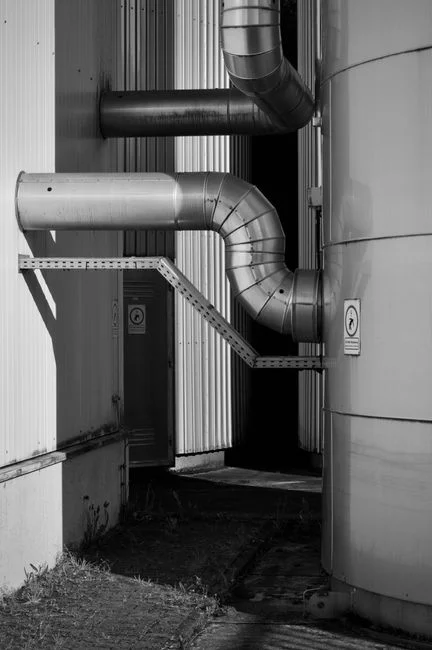
The supplied Luanda train begins with 10–25 µm side-stream filtration to reduce blowdown TSS below 15 mg/L before clarification and membrane treatment. That sequence controls colloidal loading before UF or RO, but it does not establish a Cabinda equipment size. Solids loading, particle characteristics, side-stream flow, chemical programme and the condition of the cooling system determine the pretreatment configuration.
Neither device should be selected from Luanda intake assumptions. Laterite-related solids data from Luanda cannot be transferred to Cabinda without testing the actual makeup and blowdown sources. First establish the side-stream flow and solids load, then decide whether filtration alone is sufficient, whether DAF is justified, or whether lamella sedimentation provides the required solids capture in the available footprint. The DAF versus lamella clarifier comparison is useful for structuring that decision, but Cabinda wastewater data must remain the acceptance basis.
| Candidate stage | Best-supported application | Design inputs to obtain | Acceptance criteria to request |
|---|---|---|---|
| Side-stream filtration | Removing colloids and suspended solids before clarification and membranes | Filtrate flow, particle size, TSS, dust ingress, side-stream flow and cleaning method | Filtrate TSS and particle condition; verified cleaning cycle and differential-pressure limit |
| DAF | Variable solids, colloidal matter, FOG, oil and grease | Hydraulic flow, solids loading, oil and surfactant content, chemical demand and sludge handling | Guaranteed solids and contaminant removal against the measured influent basis |
| Lamella clarification | Compact solids separation with sludge recirculation | Surface loading basis, flocculation requirements, solids inventory and sludge-removal route | Turbidity or TSS, hydraulic capacity, sludge consistency and operating availability |
| UF | Final solids and colloid barrier before RO or NF | Feed turbidity, TSS, flow, recovery target and cleaning-water availability | Permeate quality, recovery, normalized flux and cleaning performance |
Select UF, NF or RO for Cooling Makeup Recovery
Membrane selection should follow the binding contaminant and required recovery, not conductivity alone. Hardness, silica, calcium carbonate, calcium sulfate, corrosion chemistry and the acceptable blend quality determine whether NF or RO is appropriate. The supplied Luanda comparison gives RO at 150–400 psi and 50–85% recovery, typically 75–80% on silica-rich blowdown, while NF operates at 75–150 psi with 70–85% recovery and is preferred when hardness rather than total TDS limits reuse.
The supplied UF information specifies 0.03-micron PVDF membranes, feed turbidity up to 300 ppm and removal of bacteria, colloids and suspended solids before RO. A hollow-fiber UF system for cooling-blowdown pretreatment should therefore be evaluated as a protective barrier and recovery stage, not as proof that the feed chemistry is acceptable.
IDE Tech (2026) identifies silica, calcium carbonate and calcium sulfate as principal scaling constraints and reports that conventional BWRO commonly plateaus at 75–80% recovery. If silica controls, the design must calculate the saturation limit and cap recovery accordingly. If hardness controls, NF may deliver the required makeup quality at lower pressure. For a first-of-kind project, the supplied Luanda guidance favors conservative BWRO, with MVC concentration only if zero liquid discharge is required. Controlled salt precipitation is a later high-recovery option because it introduces additional process and waste-management requirements.
Disinfection is separate from membrane salt removal. The supplied Luanda guidance cites chlorine dioxide at 0.2–1.0 mg/L or UV at 30–40 mJ/cm² for reuse-water microbial control. Selection must account for residual requirements, cooling chemistry compatibility, contact or reactor performance and the site’s validation protocol.
| Question | RO selection basis | NF selection basis | Verification required |
|---|---|---|---|
| What limits recovery? | Silica, calcium carbonate or calcium sulfate scaling | Calcium and magnesium hardness | Full water analysis and concentration-factor projection |
| What operating range is stated? | 150–400 psi; 50–85% recovery, typically 75–80% on silica-rich Luanda blowdown | 75–150 psi; 70–85% recovery | Confirm actual feed, temperature, recovery and scaling calculation |
| What is the treatment sequence? | Filtration, clarification, UF, RO, disinfection and optional concentrate treatment | Filtration, clarification, UF, NF and disinfection | Define hydraulic and performance guarantees for each stage |
| When is zero liquid discharge considered? | When liquid discharge is unacceptable and concentrate can be managed thermally | Only if NF cannot meet the confirmed reuse or discharge basis | Permit constraint, energy availability, concentrate chemistry and waste route |
Use MBR for Sanitary and Contaminated Process Wastewater
Sanitary wastewater should enter a biological treatment train when discharge or reuse criteria require organic removal. The supplied Luanda engineering guide reports COD of 250–600 mg/L and BOD of 150–350 mg/L for sanitary or process wastewater. These are source-specific screening values, not Cabinda measurements. Process wastewater should not be assigned directly to the same MBR if it contains surfactants, oils, toxic chemicals or cleaning residues that could inhibit biology or damage the membrane.
The same catalogue states a 60% smaller footprint than conventional systems, but the comparison basis must be verified. Ask the bidder to define the conventional reference, exclude or include equalization and sludge handling, and demonstrate that the complete skid fits the available footprint with safe access. Also compare power demand, aeration, membrane cleaning, standby strategy and spare-parts support.
Where confirmed discharge quality can be met with a lower-intensity biological route, MBR may not be necessary. The decision depends on actual COD, BOD, nutrients, temperature, variability, reuse requirements and land availability. Conversely, MBR becomes more compelling when the effluent must be reused, the flow is variable, or footprint and operational control have greater value than minimum energy use.
Build the Cabinda Procurement and Acceptance Checklist
A defensible supplier brief starts with separate design flows for blowdown, sanitary wastewater, process wastewater, humidification bleed-off and construction fill-and-flush water. No bidder should size a common treatment plant until those flows and their water chemistry have been measured. The brief should also state whether the objective is discharge, cooling makeup reuse, lower-grade reuse or zero liquid discharge.
Require guaranteed performance for flow, recovery, permeate quality, TSS, COD, pH, energy use, availability and automatic controls against a site-specific influent and reuse basis. Guarantees must identify sampling points, test methods, test duration, feed conditions and remedy for non-compliance. Controls should cover feed screening, flux or solids-loading limits, backwash and cleaning, chemical dosing, permeate blending, off-spec diversion and fail-safe discharge.
The supplied Luanda benchmark gives CAPEX of $1.2M–$8.5M for 50–500 m³/h packages and identifies a 15–25% logistics premium for imported skids. These are Luanda benchmarks, not Cabinda quotations. Request a Cabinda-specific price that includes freight, customs, port handling, road transport, rigging, foundations, utilities, commissioning, training, spares and local service support. The regional cooling-blowdown treatment guide supports a site-specific verification approach rather than importing a capital estimate.
| Before award | Document or result required | Reason for the check |
|---|---|---|
| Local compliance | Permit pathway, receiving-system requirements, sampling plan and responsible authority confirmation | Luanda screening values do not establish Cabinda permission to discharge |
| Source characterization | Representative testing of makeup, blowdown, humidification bleed-off, sanitary and process streams | Defines the controlling chemistry and design basis |
| Water balance | Measured makeup, evaporation, blowdown, leaks and emergency dumps | Replaces theoretical and allowance-based sizing |
| Recovery design | Hardness, silica, scaling projection, recovery and permeate blend calculation | Distinguishes NF, RO and concentrate treatment |
| Residuals and waste | Sludge, membrane cleaning waste, chemical storage and concentrate disposal routes | Confirms that reuse does not transfer the burden to unapproved waste streams |
| Commercial execution | Cabinda logistics plan, import lead time, spares, local support and commissioning responsibilities | Converts a Luanda benchmark into an executable Cabinda offer |
Frequently Asked Questions
Why should preliminary sizing include 15–30% above theoretical blowdown?
HydropureWater’s 2026 Luanda engineering guide reports actual blowdown commonly running 15–30% above theoretical because of leakage and emergency dumps. The allowance protects preliminary equipment selection from under-sizing, but it is not a final design flow. Replace it with measured makeup, evaporation and blowdown data, including leakage and emergency operating conditions, before issuing a performance guarantee.
Can the $1.2M–$8.5M package benchmark be used as a Cabinda budget?
No. The supplied 2026 Luanda benchmark covers 50–500 m³/h packages and excludes Cabinda-specific logistics, site utilities, foundations, import handling and service scope. Ask each bidder for a Cabinda quotation broken down by equipment, freight, customs, civil works, installation, commissioning, utilities, chemicals, spares, support and warranties. Compare offers only after confirming that the flow and treatment boundaries are equivalent.
Which measurements and permit documents should be requested before selecting UF, RO, NF or MBR?
Request source flow, conductivity, pH, TSS, COD, BOD, hardness, silica, temperature, biocide use, oil and surfactant data as applicable, plus the complete cooling water balance. Obtain the permit pathway, receiving-system criteria, discharge limits, monitoring requirements and confirmed reuse specification. Then require bidders to demonstrate the selected membrane against the measured chemistry, scaling projection, recovery target and site-specific acceptance tests.
When does zero liquid discharge become relevant for a Cabinda data center?
Reserve zero liquid discharge for a confirmed restriction on liquid discharge or a site decision that accepts its capital, energy and maintenance burden. The supplied Luanda guidance places it after cooling makeup recovery and lower-grade reuse. A supplier should not price an MVC or crystallizer train until the waste-heat source, concentrate chemistry, operational availability and residual-disposal route have been confirmed for Cabinda.