
Separate the wastewater streams before selecting equipment
A data center in Lubango generally needs separate treatment for cooling-tower blowdown, sanitary and process wastewater, and construction fill-and-flush water. The blowdown train should remove suspended solids and colloids, control scaling chemistry, and use UF plus RO or NF when permeate is reused for cooling makeup. The sanitary/process train usually requires biological treatment such as MBR because its organic loading is much higher. Construction flushing water must be sampled and accepted by the receiving utility before discharge. Angola Decree 7/09 cited in the supplied Luanda guidance requires COD below 250 mg/L, TSS below 60 mg/L and pH 6–9, but Lubango permit conditions must be verified locally.
Cooling-tower blowdown is the purge from an evaporative cooling system. Evaporation leaves dissolved salts and treatment chemicals behind, so a controlled purge removes accumulated solids, corrosion products, biofilm, airborne dust and chemicals. Humidification bleed-off is a separate cooling-water discharge that may be blended with blowdown after its chemistry and flow have been established. Sanitary sewage and process wastewater are different streams: they generally carry the higher BOD and COD load, while process wastewater may also contain surfactants, food oils or other site-specific contaminants.
The design basis must come from the Lubango site. Confirm flow, conductivity, pH, TSS, COD, BOD, hardness, silica and biocide data rather than transferring Luanda values without validation. For comparison, the supplied HydropureWater Luanda guidance reports cooling blowdown with relatively low COD but biocide additions, and sanitary or process wastewater with COD of 250–600 mg/L and BOD of 150–350 mg/L. Those figures describe the Luanda example, not a Lubango design assumption.
| Stream | Principal contaminants | Treatment logic | Procurement hold point |
|---|---|---|---|
| Cooling-tower blowdown | Concentrated salts, corrosion products, biofilm, dust and treatment chemicals | Filtration and clarification; UF plus RO or NF where permeate is reused | Cooling water balance and site chemistry |
| Sanitary and process wastewater | Higher BOD/COD; possible oils, surfactants and nutrients | Biological treatment, with MBR where the design requires it | Flow, load and reuse specification |
| Construction fill-and-flush water | Residual pipe-cleaning chemicals and contaminants | Sampling, utility approval or off-site disposal | Written acceptance from the receiving utility |
Construction flushing should not be assumed to enter the operating WWTP. E&E News reports that Loudoun Water requires developers to test fill-and-flush water before discharge and has sometimes directed it to an appropriate disposal facility because cleaning chemicals may not suit the receiving wastewater system. Obtain the equivalent rule from the Lubango authority before the flushing programme is priced.
Build the cooling-water balance and size the treatment duty
The blowdown relationship is defined by cycles of concentration: blowdown equals makeup divided by cycles of concentration minus one. Genesis Water Technologies (2025), as cited in the supplied guidance, gives 25% blowdown at 4 CoC and 20% at 6 CoC. Moving from 4 to 6 CoC therefore reduces blowdown by 20% relative to the 4-CoC case, not 50%.
Do not size the treatment train from that theoretical ratio alone. HydropureWater’s 2026 Luanda engineering guide reports actual blowdown commonly running 15–30% above theoretical because of leakage and emergency dumps. Include these operating losses in preliminary equipment sizing, then verify them through makeup, evaporation and blowdown measurements.
IDE Tech (2026) gives a scale indicator of up to 2 million litres per day for evaporative cooling alone at a 100 MW facility. This is not a universal Lubango flow. A 100 MW installation in Lubango could differ materially because of climate, cooling configuration, IT load, operating hours and water-management controls.
- Measure makeup at the incoming water meter and evaporation from the cooling-water balance.
- Measure continuous and intermittent blowdown, leakage and emergency discharge.
- Record conductivity, pH and TSS at makeup and blowdown locations.
- Confirm the number, configuration and operating mode of cooling towers.
- Size filtration, clarification and membrane systems against measured peak and sustained duties.
| Cooling-system condition | Theoretical blowdown relationship | Design implication |
|---|---|---|
| 4 cycles of concentration | Makeup divided by 4 minus 1, equivalent to 25% of makeup | Baseline treatment flow after adding an allowance for measured losses |
| 6 cycles of concentration | Makeup divided by 6 minus 1, equivalent to 20% of makeup | 20% less theoretical blowdown than the 4-CoC case |
| Actual site operation | Theoretical relationship plus leakage and emergency dumps | HydropureWater’s 2026 Luanda guide reports 15–30% above theoretical |
The equipment specification should follow the cooling-tower blowdown reuse with reverse osmosis basis once the water balance is stable. For membrane selection, use the supplied brackish-water RO specifications to check pressure, recovery, scaling and pretreatment constraints. Do not convert the 2-million-litre-per-day indicator into a Lubango bid quantity without a verified facility water balance.
Determine the reuse target and applicable discharge route
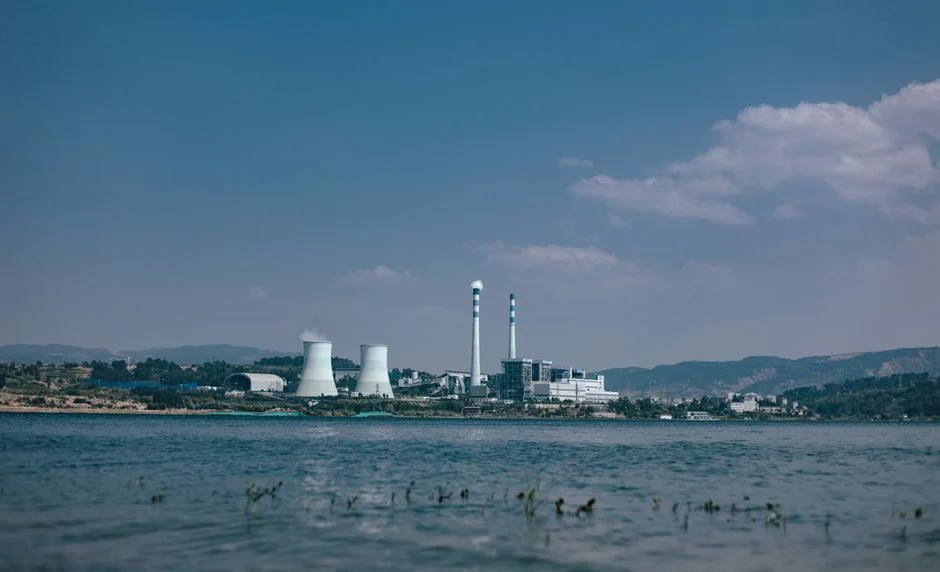
The supplied Luanda guidance establishes a clear reuse hierarchy: use recovered blowdown for cooling-tower makeup first, apply lower-grade process or non-potable reuse second, and reserve full zero liquid discharge for sites where liquid discharge is unacceptable. This order follows water value and avoids installing a thermal-concentration plant when a feasible internal reuse route remains.
For a preliminary compliance check, the same guidance cites Angola Decree 7/09 limits of COD below 250 mg/L, TSS below 60 mg/L and pH 6–9. The Lubango receiving authority must confirm whether these criteria apply to each discharge point and whether site-specific limits, monitoring conditions or additional parameters are required.
Non-compliance has financial consequences, but the Luanda example must not be transferred as a Lubango penalty assumption. HydropureWater’s 2026 Luanda engineering guide reports a $250,000 fine for repeated Decree 7/09 COD exceedance at a Luanda refinery, with estimated production losses of $10,000 per hour during the resulting shutdowns. For Lubango, ask the authority and insurers to confirm the applicable enforcement mechanism and interruption exposure.
Reuse quality depends on the destination. Cooling-tower makeup must be assessed against the site’s cycles of concentration, hardness, silica, corrosion chemistry, biocide regime and scaling tendency. Sanitary reuse may require a more stringent BOD criterion; the supplied Luanda guidance gives BOD below 10 mg/L for irrigation reuse. Neither that criterion nor the Decree 7/09 values should be adopted without written local confirmation.
The P&ID should therefore show separate compliance points: a controlled blowdown discharge or recovery outlet, a sanitary/process effluent outlet, and a construction-flushing approval route. This avoids designing every outlet to the least demanding requirement or assuming that all streams can share one final polishing step.
Select the treatment train that matches each contaminant
Cooling blowdown generally needs solids removal before membrane treatment, while sanitary and process wastewater generally need biological treatment before disinfection or reuse. The supplied Luanda train uses 10–25 µm side-stream self-cleaning filtration to target blowdown TSS below 15 mg/L, followed by DAF or a lamella clarifier and then membrane treatment.
Use side-stream filtration where the objective is to remove discrete solids, biofilm and corrosion debris before it reaches heat-transfer surfaces. Use DAF when buoyant or emulsified contaminants require clarification; use a lamella clarifier where settleable solids and a compact clarification footprint are the main design drivers. The final choice depends on the Lubango chemistry and the reuse specification, not on the process name alone.
For RO pretreatment, the supplied specification uses hollow-fibre UF at 0.01–0.1 µm, 10–30 psi and 90–95% recovery. The hollow-fibre ultrafiltration pretreatment range supports 2,000–40,000 L/h, uses 0.03 µm PVDF membranes and accepts feed turbidity up to 300 ppm. Confirm that the quoted capacity matches Lubango feed temperature, turbidity, oil content and recovery conditions.
For low-TDS reuse, NF operates at 75–150 psi and 70–85% recovery and can suit cases limited by hardness rather than total dissolved solids. BWRO operates at 150–400 psi and 50–85% recovery; the supplied silica-rich Luanda application typically uses 75–80% recovery. An industrial RO system for cooling blowdown reuse should therefore be selected against hardness, silica and scaling calculations, not only feed conductivity.
| Duty | Process | Supplied design basis | Selection condition |
|---|---|---|---|
| Blowdown solids control | Side-stream self-cleaning filter | 10–25 µm; target TSS below 15 mg/L | Use before clarification and membrane protection |
| Blowdown clarification | DAF or lamella clarifier | Process choice determined by contaminant character | Match flotation or settling performance to feed chemistry |
| RO pretreatment | Hollow-fibre UF | 0.01–0.1 µm; 10–30 psi; 90–95% recovery | Verify feed turbidity and temperature |
| Low-TDS reuse | NF | 75–150 psi; 70–85% recovery | Preferred when hardness is the controlling constraint |
| Low-TDS reuse | BWRO | 150–400 psi; 50–85% recovery; typically 75–80% in the Luanda application | Required when silica or broader salt removal controls reuse |
| Sanitary/process treatment | MBR | Supplied source reports 5–10 times the BOD/COD loading per cubic metre, even when flow is one-tenth of blowdown | Use biological treatment before final disinfection |
| Reuse-water microbial control | Chlorine dioxide or UV | 0.2–1.0 mg/L ClO₂ or 30–40 mJ/cm² UV | Subject to the final reuse specification |
For sanitary and process wastewater, the supplied source reports 5–10 times the BOD/COD loading per cubic metre even when its flow is one-tenth of the blowdown flow. That supports MBR selection where the required footprint and effluent quality justify it. Further operating detail is available in the supplied guide to MBR membrane bioreactor operation.
For disinfection, chlorine dioxide at 0.2–1.0 mg/L or UV at 30–40 mJ/cm² can provide microbial control, subject to the final reuse specification. Higher-recovery salt precipitation should remain a second-phase option: IDE Tech (2026) reports approximately 95% recovery and about 1 mg/L permeate silica in an industrial MAXH₂O application, but the supplied guidance recommends conventional BWRO with an MVC finish as the more conservative first build for Luanda.
Compare discharge, partial reuse and zero liquid discharge
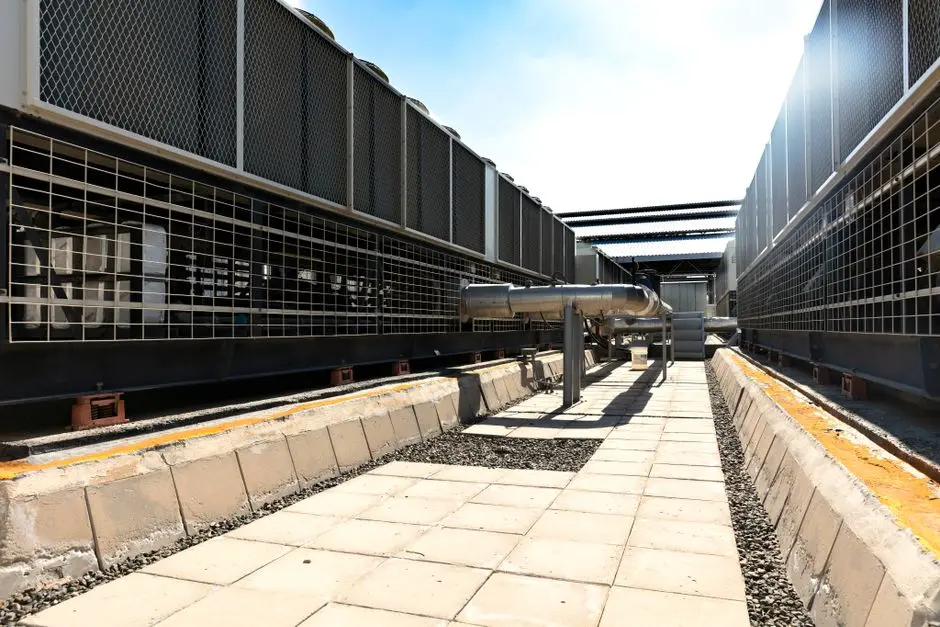
Direct compliant discharge has the lowest treatment complexity, partial reuse reduces freshwater demand while retaining a residual purge, and zero liquid discharge closes the liquid balance at the highest capital and energy exposure. Selection should follow the permitted discharge route and reuse target rather than a predetermined preference for ZLD.
The supplied Luanda planning comparison gives MBR energy use of 0.8–1.2 kWh/m³ and BWRO use of 0.4–0.6 kWh/m³. These values belong to the cited Luanda comparison and are not guaranteed Lubango utility rates. Obtain local electricity tariffs, generator runtime and load data before completing the operating-cost model.
HydropureWater’s 2026 Luanda guide reports 95–99% overall recovery for BWRO at 70–80% recovery followed by MVC. It gives ZLD capital cost of $3 million–$8 million and operating cost of $5–15 per 1,000 gallons. MVC energy is reported at 15–25 kWh per 1,000 gallons of distillate. These are Luanda benchmarks, not Lubango quotations.
| Scenario | Process | Technical consequence | Evidence available for planning |
|---|---|---|---|
| Direct compliant discharge | Filtration and clarification, followed by discharge treatment as required | Simplest liquid balance; remains dependent on permit acceptance | Decree 7/09 benchmarks cited in HydropureWater’s 2026 Luanda guide |
| Partial reuse with residual purge | UF plus RO or NF, permeate blending and controlled residual discharge | Reduces freshwater demand while controlling scaling and concentration | BWRO at 75–80% recovery in the supplied Luanda application |
| Zero liquid discharge | BWRO, MVC and crystallisation | Highest recovery; concentrate becomes a solid-handling duty | 95–99% overall recovery; $3 million–$8 million CAPEX; $5–15 per 1,000 gallons OPEX in the 2026 Luanda guide |
Generator waste-heat integration is the principal ZLD operating-cost opportunity identified in the supplied guidance. Before selecting an MVC thermal skid, obtain generator exhaust temperatures, operating loads, availability and the generator OEM’s confirmation that waste heat can support the required process. Without that verification, include standalone boiler or electrical heating alternatives in the comparison.
A lifecycle comparison should include energy, antiscalant, membrane replacement, cleaning chemicals, crystalliser chemicals, sludge handling, operator labour, disposal fees and the avoided cost of freshwater and discharge. Do not rely on a capital-cost comparison alone: the thermal finish can dominate operating cost even when it leaves the main membrane duty unchanged.
Build a phased delivery and procurement plan
The supplied Luanda sequence provides a useful template for Lubango: baseline monitoring in months 0–3, cooling-system optimisation in months 3–6, filtration and clarification during months 6–12, UF and RO plus disinfection during months 12–18, and optional MVC and crystallisation during months 18–24. The dates are planning phases, not evidence of a Lubango permitting schedule.
Begin the permit process before freezing the mechanical design. HydropureWater’s 2026 Luanda guide reports that the Luanda Municipal Water Authority discharge-permit process typically takes 6–12 months. The responsible Lubango authority must confirm its own process, and the P&ID should identify the discharge point, receiving medium, sampling requirements and reuse destination before equipment bids are accepted.
Price logistics explicitly. HydropureWater’s 2026 Luanda guidance identifies a 15–25% premium for imported skids and recommends seven days of on-site chemical storage. Apply those figures only as Luanda benchmarks; obtain current Angola import, road-transport, port-handling, customs and fuel-supply quotations for Lubango.
| Phase | Primary work | Release or acceptance criterion |
|---|---|---|
| Months 0–3 | Baseline monitoring and source characterisation | Measured water balance and complete chemistry dataset |
| Months 3–6 | Leak repair, cooling-control tuning and chemistry review | Verified operating cycles of concentration and blowdown |
| Months 6–12 | Side-stream filtration and DAF or lamella clarification | Filtrate or clarified-water quality accepted |
| Months 12–18 | UF plus RO or NF and disinfection | Permeate, concentrate and microbial-control tests passed |
| Months 18–24, optional | MVC and crystallisation | Thermal integration and liquid-balance acceptance |
Commissioning acceptance should test permeate quality, concentrate composition, energy consumption, automatic controls, chemical storage, redundancy and cross-connections. Include a site water balance at commissioning and a defined correction for leakage and emergency dumps. For sanitary treatment, add biological performance and disinfection checks against the approved reuse or discharge specification.
Require each supplier to quote separately: site chemistry and recovery basis; permeate and concentrate guarantees; electrical demand; chemical consumption; membrane replacement assumptions; controls scope; commissioning evidence; spare parts; training; and delivery to Lubango. This prevents equipment comparisons based on headline flow or headline recovery alone.
Frequently Asked Questions
How much treatment capacity does a Lubango data center need?
Calculate capacity from actual makeup, evaporation, measured blowdown, leakage and peak operating demand. The supplied HydropureWater 2026 Luanda benchmark is 50–150 m³/h at 10 MW, 150–300 m³/h at 25 MW and 300–500 m³/h at 50 MW. These are Luanda planning benchmarks, not guaranteed Lubango capacities; request the site water balance and peak-flow measurement before procuring equipment.
What treatment system is best for cooling-tower blowdown reuse?
The practical baseline is side-stream solids control, clarification, UF and then RO or NF. Choose NF when hardness controls reuse and BWRO when silica or broader salt removal does. Reserve ZLD for a site where no liquid discharge is acceptable and the thermal, energy and solids-handling consequences are accepted.
Should the sanitary wastewater and cooling blowdown share one treatment plant?
They may share monitoring, control rooms and some receiving infrastructure, but not necessarily the core treatment train. The supplied evidence reports substantially higher BOD/COD loading per cubic metre in sanitary and process wastewater, supporting biological treatment such as MBR, while cooling blowdown requires filtration, clarification and membrane-based salt control.
How much does a Lubango data-center treatment system cost?
No verified Lubango price is supplied. HydropureWater’s 2026 Luanda benchmark gives $1.2 million–$8.5 million for a 50–500 m³/h turnkey WWTP. A Lubango budget should separately price site-specific engineering, local permits, import logistics, electrical infrastructure, chemical storage, commissioning and validated treatment scope.
What should a wastewater-treatment supplier guarantee in Angola?
Require site-chemistry acceptance, treatment capacity, recovery, permeate and concentrate quality, energy use, chemical consumption, control-system functionality, commissioning evidence, spare parts and delivery support. Confirm Lubango delivery scope and logistics separately from any imported skid price, and review the guarantees against the locally issued permit and reuse specification.
Related Equipment
- industrial RO system for cooling blowdown reuse — specifications, capacity range, and technical data