What Makes Punta Cana Sewage Treatment Different?
Domestic sewage treatment in Punta Cana must protect a permeable groundwater system while accommodating tourism-driven, variable wastewater loads and coastal exposure. Phys.org reported that groundwater is the sole source of fresh water in Punta Cana, while Veron soils were unsuitable for waste treatment and its hydrogeology did not provide ideal natural groundwater protection (2015-01). The same report documented sewage discharge through ground-directed pipes and unlined pit latrines, E. coli and elevated nitrate in Veron well water, and porous limestone through which wastewater could move readily (2015-01).
These findings make groundwater the first design constraint, not a late-stage environmental-review item. A decentralized sewage treatment system must be assessed against the actual groundwater elevation, seasonal water table, soil permeability, flood level, subsurface utilities and route to the receiving environment. The buyer should also define whether the discharge will enter a receiving water, be reused, or require an approved disposal route.
Tourism development adds a second layer. A University of Toronto dissertation based on more than one year of fieldwork and 97 semi-structured interviews described Bávaro-Punta Cana as “resort urbanism,” with tourism development, fragmented governance and informality shaping urban development (Ossenbach Sauter, 2014). That governance research is useful context for coordination and infrastructure risk, but it does not establish hydraulic parameters, treatment performance or a universal plant design.
Before comparing domestic sewage treatment in Punta Cana options, use the hydrogeological context to define what discharge route is permissible and how much containment the project must provide. This also frames the need to examine nature-based wastewater treatment options against engineered package systems rather than assuming either is suitable.
Define the Design Basis Before Selecting Equipment
A treatment plant can only be sized correctly when the wastewater flow and quality are measured against the intended service and discharge objective. Request a measured wastewater profile rather than accepting occupancy multiplied by a generic design factor, and distinguish sanitary sewage from hotel kitchens, laundry, pools and other high-FOG or high-salt streams. The design must also state whether the project serves a residence, residential community, hotel, hospital, factory or rural development.
- Establish the service population and contributing wastewater streams.
- Measure average, peak and seasonal flows and characterize BOD, suspended solids, fats, oils and grease, nutrients and relevant salts.
- Define the receiving-water route, irrigation or reuse objective, and required effluent quality.
- Document groundwater levels, soil conditions, rainfall and flood exposure, available footprint and underground utilities.
- Require the supplier to calculate process duties, equalization, solids handling, controls and residual solids disposal from that approved basis.
The underground WSZ sewage treatment plant has a published flow range of 1–80 m³/h and is listed for residential communities, hotels, hospitals, factories and rural applications (HydropureWater verified product catalog). Treat that range only as a catalog screening limit. It does not establish that a proposed unit can pass the verified peak flow, accommodate the wastewater composition or meet the project’s effluent and reuse requirements.
| Design-basis input | Evidence required from the buyer or supplier | Decision affected |
|---|---|---|
| Wastewater flow | Measured average, peak and seasonal profile by service area | Plant capacity and equalization |
| Wastewater composition | FOG, solids, BOD, nutrient and salt characterization | DAF pretreatment and biological process selection |
| Groundwater and soil | Water levels, permeability, flood elevation and subsurface constraints | Containment, footprint and discharge route |
| Effluent or reuse objective | Required quality and intended destination | WSZ, MBR, SBR and polishing requirements |
| Solids route | Expected solids mass, dewatering need and disposal destination | Complete project scope and operating cost |
The supplied research provides no hydraulic loading rates, detention-time criteria, minimum land requirements or project lead times. Those items must be calculated and documented by the supplier rather than inferred from product capacity.
Compare WSZ, MBR, SBR and DAF-Assisted Treatment
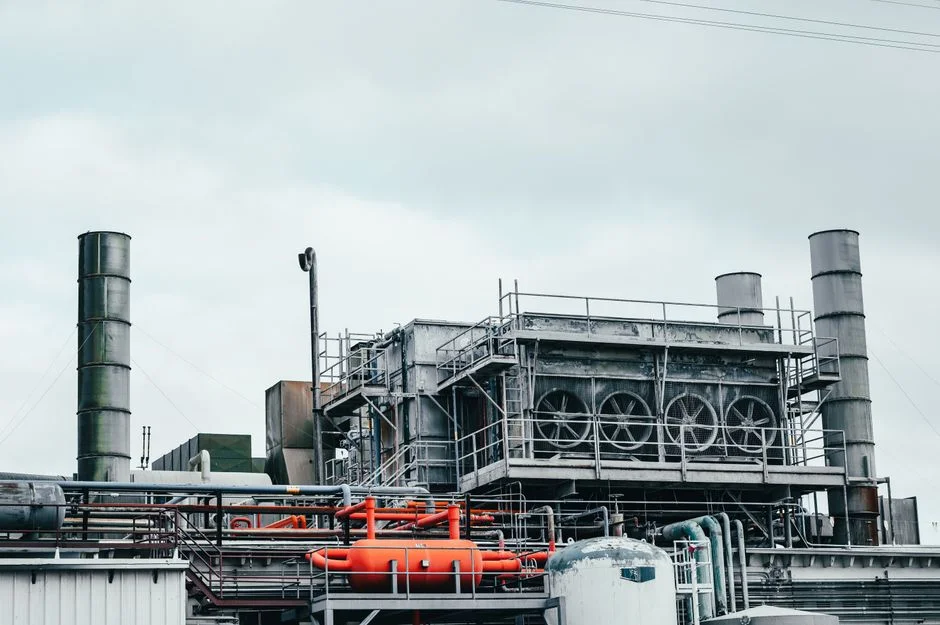
WSZ, MBR and SBR are biological treatment architectures with different footprint, control and effluent characteristics, while DAF usually functions as pretreatment rather than a complete biological treatment train. The correct comparison begins with verified flow, FOG concentration, reuse goals, footprint constraints and required effluent values.
| Option | Published configuration or performance | Primary selection issue |
|---|---|---|
| WSZ package plant | Buried, automated anoxic/aerobic contact oxidation, sedimentation and disinfection; 1–80 m³/h; no routine operator required (HydropureWater verified product catalog) | Confirm that peak flow, FOG loading, footprint and required effluent fit the integrated package |
| MBR | Submerged PVDF membranes with filtration below 1 μm; stated as 60% smaller in footprint than conventional systems (HydropureWater) | Request guaranteed BOD, TSS, ammonia and reuse-relevant values |
| SBR | BOD reported at 20–50 mg/L, with equalization needed to manage resort load spikes (HydropureWater, 2026) | Determine whether variable effluent is acceptable or polishing is required |
| DAF pretreatment | Catalog coverage of 4–300 m³/h for suspended solids, FOG, oil, grease and colloidal matter (HydropureWater) | Base selection on measured FOG and downstream solids handling |
The MBR membrane bioreactor combines activated sludge with submerged membrane filtration. HydropureWater’s 2026 Punta Cana article states that MBR can achieve BOD and TSS below 10 mg/L (HydropureWater, 2026); these are supplier-reported performance values, not a guarantee for an unverified project. Its stated filtration below 1 μm and 60% footprint reduction are also supplier claims that should appear in the supplier’s technical submission.
SBR may be appropriate where simpler biological operation is preferred and its effluent quality can be accommodated, but HydropureWater reports BOD typically ranging from 20–50 mg/L and identifies equalization as necessary for resort spikes (HydropureWater, 2026). It is therefore less straightforward where the project requires the sub-10 mg/L BOD target attributed to MBR.
The DAF pretreatment system is relevant when characterization identifies material FOG that could impair downstream biological treatment. For demanding resort applications, HydropureWater identifies a hybrid DAF-plus-biological configuration at $1.2 million–$1.8 million, compared with its broader $800,000–$1.5 million estimate for a 200-room resort plant (HydropureWater, 2026). These ranges are preliminary commercial benchmarks, not quotations or universal process prices.
Build a Treatment Train for the Actual Wastewater
A defensible treatment train protects downstream biological and solids-handling equipment from the materials that can impair it. The process sequence should follow the wastewater characterization rather than a generic collection of packaged products.
- Control gross solids. Use screening or grit removal where rags, plastics or fibrous debris could overload pumps or biological processes.
- Remove material FOG where justified. Use DAF ahead of biological treatment when the influent contains FOG, oil and grease requiring separation. The supplier should define the DAF duty and downstream solids route from the design calculation.
- Provide biological treatment and solids separation. A WSZ application combines anoxic/aerobic contact oxidation, sedimentation and disinfection in one buried unit (HydropureWater verified product catalog). An MBR application combines activated sludge with submerged PVDF membrane filtration (HydropureWater).
- Disinfect and route the effluent. The receiving-water or reuse destination determines the required treatment and disinfection sequence; it must be fixed before equipment selection.
- Manage residual solids. Require the selected process’s solids mass, dewatering requirement and disposal route. Do not assume a generic sludge volume or that the wastewater disappears after treatment.
Screening equipment should be specified around the actual debris load and pump arrangement; a mechanical bar screen is an equipment option, not a complete hydraulic design. Similarly, a plate-and-frame filter press can be evaluated for dewatering only after the process mass balance identifies the solids quantity, moisture target and disposal method.
The Veron horizontal wetland pilot illustrates why site-specific containment matters. Phys.org described a gravity-fed, lined wetland installed to reduce pathogens recharged into the aquifer, with a bed liner required because surrounding soil was highly permeable (2015-01). It is an example of a constructed system responding to local hydrogeology, not evidence that wetlands are appropriate for every Punta Cana site.
Budget for the Full Punta Cana Project
An equipment quotation is not an installed-project budget. HydropureWater’s $800,000–$1.5 million figure is an indicative CAPEX range for sewage treatment equipment serving a 200-room resort in Punta Cana (HydropureWater, 2026). It should be used as a screening benchmark only, because a residence, community or differently configured hotel may have a different treatment scope.
| Budget component | What the quotation must identify |
|---|---|
| Process equipment | Process duty, selected configuration, materials, controls and included accessories |
| Civil and site works | Excavation, foundations, tanks, access, roads, drainage and installation |
| Balance of plant | Equalization, pretreatment, biological treatment, solids handling, disinfection and controls |
| External works | Power distribution, force mains, collection system and discharge or reuse infrastructure |
| Delivery and performance | Currency, taxes, freight, commissioning, training, warranty, exclusions and acceptance tests |
HydropureWater states that coastal corrosion can add 10–15% to material costs in Punta Cana (HydropureWater, 2026). Separately, its Cap Cana case example associates effective management of high-FOG loads with an additional $100,000–$300,000 in CAPEX (HydropureWater, 2026). Neither figure should be copied automatically into a project estimate; both require supplier scope and a quotation tied to the verified design.
Compare bids by complete treatment train, guaranteed duty and included documentation rather than by package price alone. The technical review should apply the approach in this engineering specification and supplier selection guide, while adapting the regulatory and environmental basis to Punta Cana.
Require quotations to state currency, taxes, freight, civil works, installation, commissioning, training, warranty, spare parts, performance tests and exclusions. A lower equipment price can produce a higher installed cost if pretreatment, equalization, solids handling or discharge infrastructure is omitted.
Verify Compliance, Materials and Supplier Capability
Supplier documentation must demonstrate compliance with the applicable Dominican regulatory basis and the project’s receiving-water or reuse requirement. HydropureWater identifies NORDOM 43:2018 and reports target limits of BOD below 30 mg/L and ammonia below 10 mg/L (HydropureWater, 2026). The buyer should obtain the governing requirements applicable to the specific discharge and require the supplier to map each proposed parameter to its compliance evidence.
| Due-diligence item | Evidence to request before award |
|---|---|
| Regulatory basis | Applicable Dominican requirement, permitted discharge route and proposed compliance matrix |
| Guaranteed performance | Proposed effluent values for BOD, TSS, ammonia and other project-relevant parameters |
| Materials | 316L stainless steel for specified critical wetted components, with project-specific suitability confirmed |
| Automation | NEMA 4X enclosures, humidity-resistant controls and PLC/control narrative |
| Design and testing | General arrangement, P&IDs, process calculations, data sheets and FAT or SAT records |
| Operations | O&M manual, training scope, warranty terms and spare-parts support |
| References | Punta Cana, Dominican Republic or comparable tropical coastal references, verified directly |
HydropureWater’s Punta Cana page calls for 316L stainless steel and NEMA 4X enclosures for critical wetted and electrical components (HydropureWater, 2026). Those specifications should appear explicitly in the enquiry and quotation; “stainless steel” without a grade is insufficient.
Reference projects should be checked for comparable wastewater characteristics, coastal exposure, treatment objectives and delivered scope. The wider equipment-manufacturer reliability guide provides a broader due-diligence structure, but academic findings and general supplier guidance cannot substitute for site-specific approval or vendor-specific performance evidence.
Choose a Technology and Procurement Path
The shortest defensible procurement path begins with flow and wastewater characterization, then applies the effluent objective before considering equipment brands or package prices. Occupancy and a catalog capacity range are screening inputs, not proof that a proposed system fits.
- If substantial FOG is present: evaluate DAF or another suitable pretreatment ahead of biological treatment, then confirm downstream solids handling and the overall treatment train.
- If compact, integrated and automated treatment is the priority: evaluate the underground WSZ sewage treatment plant against the verified flow range, groundwater conditions, footprint and effluent requirements.
- If very low solids and BOD are needed for reuse-sensitive applications: evaluate an MBR membrane bioreactor and require guaranteed effluent values rather than relying on general performance claims.
- If a simpler biological route is preferred: evaluate SBR with equalization and establish whether its projected effluent requires additional polishing.
- If constructed wetlands are proposed: require a site-specific hydrogeological and liner assessment. The Veron pilot required a bed liner because its surrounding soil was highly permeable (Phys.org, 2015-01).
The final shortlist should contain two or more technically credible routes where procurement conditions allow. For each route, require a design basis, process calculation, general arrangement, P&ID, performance commitment, materials schedule, control narrative, commissioning plan, O&M documentation, warranty and complete installed-price schedule. This turns technology selection into an auditable engineering decision rather than a catalogue comparison.
Frequently Asked Questions
How much does domestic sewage treatment in Punta Cana cost for a residence or hospitality project?
HydropureWater’s indicative CAPEX range for sewage treatment equipment serving a 200-room resort in Punta Cana is $800,000–$1.5 million, with coastal corrosion stated to add 10–15% to material costs (HydropureWater, 2026). A residence, community or differently configured hotel cannot be priced from that benchmark alone. Request a complete quotation covering process equipment, civil works, pretreatment, solids handling, discharge infrastructure, installation, commissioning and exclusions.
What size WSZ sewage treatment plant should be specified for Punta Cana?
The WSZ catalog covers 1–80 m³/h and includes applications such as residential communities, hotels, hospitals, factories and rural areas (HydropureWater verified product catalog). That range is only a screening basis. The supplier should select and demonstrate duty against measured average and peak flow, wastewater characteristics, equalization requirements, groundwater and flood constraints, and the required effluent quality.
Which materials and documents should a buyer request from a sewage treatment supplier?
Request 316L stainless steel for critical wetted components and NEMA 4X enclosures for electrical and automation equipment, as identified in HydropureWater’s 2026 Punta Cana guidance. The submission should also contain guaranteed effluent values, process calculations, general arrangements, P&IDs, equipment data sheets, PLC/control narratives, FAT or SAT records, O&M manuals, warranty terms and spare-parts support. Generic “compliant” statements are not a substitute for project-specific evidence.
When is MBR preferable to WSZ or SBR for a Punta Cana project?
MBR is the stronger candidate when the project requires very low solids and BOD or has a tight footprint constraint. HydropureWater states that its MBR can achieve BOD and TSS below 10 mg/L and uses submerged PVDF membranes, while WSZ is a buried integrated package and SBR is reported at BOD of 20–50 mg/L (HydropureWater, 2026). No process is universally compliant: the comparison must end with the applicable discharge or reuse requirement and a guaranteed duty.
Is DAF required for resort wastewater treatment in Punta Cana?
DAF is required only when the wastewater characterization and process design show that material FOG, oil and grease must be removed before biological treatment; it is pretreatment, not a replacement for the complete treatment train. Use the DAF selection guidance for FOG and TSS to define the required removal duty, then verify downstream biological treatment and solids disposal.
Further Reading
- decentralized sewage treatment system comparison