Why Punta Cana’s Sewage Treatment Costs Are 25% Higher Than Mainland Projects
For a 200-room resort in Punta Cana, sewage treatment equipment CAPEX ranges from $800K to $1.5M, with coastal corrosion adding 10–15% to material costs. NORDOM 43:2018 requires effluent BOD <30 mg/L and ammonia <10 mg/L, achievable with MBR systems (<10 mg/L BOD/TSS) or DAF pre-treatment for high-FOG loads. Suppliers must provide 316L stainless steel, NEMA 4X enclosures, and humidity-resistant automation to avoid premature failure in Punta Cana’s tropical climate.
Punta Cana's unique environmental and regulatory landscape significantly impacts the cost of sewage treatment equipment compared to mainland projects. The pervasive salt spray from the Caribbean Sea accelerates corrosion, demanding higher-grade materials. This corrosive environment adds an estimated 10–15% to material costs, as standard 304L stainless steel quickly succumbs to pitting and crevice corrosion. To combat this, 316L stainless steel is often specified for tanks, piping, and structural components, offering superior resistance to chloride-induced stress corrosion cracking. Testing standards like ASTM B117 salt spray testing are crucial to validate the corrosion resistance of materials and coatings.
the Dominican Republic's environmental regulations, particularly NORDOM 43:2018, impose stringent effluent limits. These standards require BOD levels below 30 mg/L and ammonia levels below 10 mg/L, often necessitating advanced tertiary treatment stages. Implementing these advanced treatment processes can increase Capital Expenditure (CAPEX) by 20–30% compared to projects in regions with less demanding standards. These limits are generally stricter than many baseline EPA or EU standards, demanding more robust and reliable treatment systems.
The high humidity, frequently reaching 80–90% Relative Humidity (RH), presents another significant challenge. This pervasive moisture accelerates electrical component degradation. Consequently, automation and electrical systems must be housed in NEMA 4X enclosures, which provide superior protection against water ingress and corrosion. Failure to specify such enclosures can lead to premature failure of PLCs, sensors, motor windings, and control panels, resulting in costly downtime and repairs. Protective coatings, such as epoxy or zinc-rich primers, are also essential for metal components not constructed from stainless steel.
Finally, the nature of resort operations in Punta Cana often leads to significant fluctuations in wastewater characteristics. High-strength BOD loads, frequently ranging from 500–1,200 mg/L, can originate from kitchens, laundry facilities, and high occupancy rates. These BOD spikes can overwhelm standard biological treatment systems. To manage these surges, systems may require oversized aeration capacity or the implementation of pre-treatment steps like Dissolved Air Flotation (DAF) to remove fats, oils, and grease (FOG) and suspended solids. As noted in a case study from Cap Cana, effectively managing these high-FOG loads can add $100K–$300K to the CAPEX, underscoring the need for robust pre-treatment solutions.
| Factor | Punta Cana Impact | Mainland Comparison | Estimated Cost Increase |
|---|---|---|---|
| Coastal Corrosion (Salt Spray) | High (316L SS, NEMA 4X) | Moderate (304L SS common) | 10–15% on materials |
| NORDOM 43:2018 Effluent Standards | Strict (BOD <30, NH3 <10) | Less Strict (BOD <30-50, NH3 <10-20) | 20–30% on CAPEX (tertiary treatment) |
| High Humidity (80-90% RH) | Requires NEMA 4X enclosures, corrosion-resistant coatings | Less demanding enclosures | 5–10% on automation/electrical |
| Resort BOD Spikes (500-1200 mg/L) | Requires oversized aeration or DAF pre-treatment | More stable influent | $100K–$300K CAPEX for pre-treatment |
MBR vs. DAF vs. SBR: Which Technology Fits Punta Cana’s Wastewater Challenges?
Selecting the appropriate wastewater treatment technology is paramount for addressing Punta Cana's specific challenges, balancing effluent quality requirements with space constraints and operational costs. Membrane Bioreactor (MBR) systems offer superior effluent quality, achieving BOD and Total Suspended Solids (TSS) levels below 10 mg/L, making them ideal for meeting NORDOM 43:2018 standards. Their compact footprint is a significant advantage for resorts or developments with limited land availability. However, MBR systems come with higher operational expenditures (OPEX), typically ranging from $0.50–$1.00 per cubic meter, largely due to membrane replacement costs. For resorts with space constraints, MBR systems for Punta Cana’s space-constrained resorts are an excellent, albeit more capital-intensive, solution.
Dissolved Air Flotation (DAF) systems excel in pre-treatment, particularly for facilities dealing with high concentrations of fats, oils, and grease (FOG) and suspended solids, achieving 92–97% removal. With OPEX between $0.20–$0.40 per cubic meter, DAF is an efficient and cost-effective first step for resorts or food processing plants. DAF systems are best employed as a pre-treatment stage, followed by a biological process like SBR or MBR to achieve the stringent NORDOM 43:2018 effluent limits. For facilities like those in Punta Cana with high-FOG loads, DAF pre-treatment for Punta Cana’s high-FOG loads is a critical component of an effective treatment train.
Sequencing Batch Reactor (SBR) systems offer a lower CAPEX, typically $600K–$1M for a 200-room resort, making them an attractive option for budget-conscious projects. However, SBR effluent quality can be more variable, with BOD levels often ranging from 20–50 mg/L, potentially requiring further polishing to meet NORDOM 43:2018. SBR systems also necessitate equalization tanks to manage the BOD spikes characteristic of resort wastewater. A case study from Pasteurizadora Rica highlighted the successful implementation of SBR technology for wastewater treatment.
For projects facing both high FOG loads and space limitations, a hybrid approach combining DAF pre-treatment with an MBR system offers a comprehensive solution. This dual-stage approach ensures efficient removal of FOG and solids, followed by advanced biological treatment to meet strict effluent standards. While this hybrid system represents a higher CAPEX, typically between $1.2M–$1.8M, it provides a robust and compliant solution for the most demanding scenarios in Punta Cana.
| Technology | Typical Effluent Quality (BOD/TSS mg/L) | Footprint | CAPEX Range (200-room resort) | OPEX Range ($/m³) | Best For |
|---|---|---|---|---|---|
| MBR | <10 | Small | $900K–$1.5M | $0.50–$1.00 | Space-constrained sites, strict compliance |
| DAF (Pre-treatment) | 92–97% FOG/TSS removal | Medium | $100K–$300K (as pre-treatment) | $0.20–$0.40 | High FOG/TSS loads |
| SBR | 20–50 | Medium-Large | $600K–$1M | $0.30–$0.60 | Budget-conscious projects, stable influent |
| DAF + MBR (Hybrid) | <10 | Small-Medium | $1.2M–$1.8M | $0.60–$1.20 | High FOG, space constraints, strict compliance |
Punta Cana Sewage Treatment Equipment Suppliers: 2026 Comparison Matrix
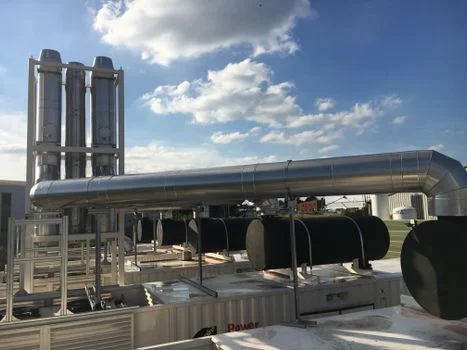
When sourcing sewage treatment equipment for projects in Punta Cana, evaluating suppliers based on their understanding of local conditions and regulatory requirements is crucial. This comparison matrix highlights key differences between local and international providers, focusing on critical factors like corrosion resistance, NORDOM 43:2018 compliance, and relevant project experience. Readers can use this to make an informed decision, avoiding common pitfalls associated with equipment failure in tropical coastal environments.
Local suppliers, such as Tecnoagua and DIKLAA, often offer advantages in faster permitting processes and potentially lower labor costs due to their established presence and familiarity with local authorities and supply chains. However, they may not always offer the most advanced treatment technologies or the highest specifications for corrosion resistance as standard. International suppliers, including companies like San Lan and HydropureWater, typically provide access to a wider range of advanced technologies, such as cutting-edge MBR or highly automated DAF systems, and often adhere to stricter international standards for materials and construction, including superior corrosion resistance. The trade-off for these benefits can include longer lead times due to import logistics and potentially higher CAPEX, often with a 10–20% premium to account for shipping, duties, and international service coordination.
When evaluating suppliers, look for red flags such as a lack of specific project references in Punta Cana or the Dominican Republic, vague material specifications that don't clearly define corrosion resistance (e.g., specifying "stainless steel" without a grade), or an inability to provide clear documentation demonstrating NORDOM 43:2018 compliance. A reputable supplier will readily share detailed technical specifications, material certifications, and case studies relevant to your project's environment and regulatory needs.
| Supplier | Origin | Corrosion Resistance (316L/NEMA 4X) | NORDOM 43:2018 Compliance | Project Experience (Resorts/Municipal) | CAPEX Range (Relative) | OPEX ($/m³) |
|---|---|---|---|---|---|---|
| Tecnoagua | Local | Variable (Requires specific inquiry) | Demonstrated (Project references) | High (Resorts) | Medium | Medium |
| DIKLAA | Local | Variable (Requires specific inquiry) | Demonstrated (Project references) | Medium (Municipal focus) | Medium-Low | Medium-Low |
| AquaTec Solutions DR | Local | Variable (Requires specific inquiry) | Demonstrated (Project references) | High (Resorts) | Medium | Medium |
| San Lan Technologies | International | High (Standard offerings) | Demonstrated (Supplier claims) | Medium (International focus) | High | Medium-High |
| HydropureWater | International | High (Standard offerings) | Demonstrated (Supplier claims) | Medium (Global focus) | High | Medium-High |
2026 CAPEX Breakdown: Sewage Treatment Plants in Punta Cana
Accurate budgeting for sewage treatment plants in Punta Cana requires a granular understanding of CAPEX, extending beyond the equipment purchase price to include crucial elements like civil works, automation, and regulatory compliance. For a typical 200-room resort, the total CAPEX can range from $800,000 to $1.5 million. This figure is segmented across several key areas: civil works, which typically account for $300,000 to $500,000, encompassing site preparation, tank construction, and piping installation; mechanical equipment, representing $400,000 to $700,000 of the budget, covering the core treatment units; automation and control systems, budgeted at $100,000 to $200,000, vital for efficient operation and monitoring; and regulatory fees, which can range from $50,000 to $100,000, covering permits, environmental impact assessments, and approvals.
For larger municipal projects serving 5,000 to 10,000 Population Equivalents (PE), the CAPEX escalates significantly, ranging from $3 million to $6 million. The breakdown for these larger facilities shows a proportional increase in all categories: civil works often range from $1.5 million to $2.5 million; mechanical equipment from $1 million to $2 million; automation and control systems from $300,000 to $500,000; and regulatory fees from $200,000 to $400,000. These figures are estimates and can vary based on specific site conditions, chosen technology, and the complexity of the treatment process required to meet NORDOM 43:2018 standards.
A critical "hidden" cost in Punta Cana projects is the investment in corrosion protection. This includes specifying 316L stainless steel for wetted parts, using NEMA 4X enclosures for electrical components, and applying specialized protective coatings. These measures can add $80,000 to $200,000 to the overall project cost for a resort-sized plant, reflecting the 10–15% material cost increase cited for coastal environments. Operational Expenditure (OPEX) also varies considerably, with resorts typically facing $0.30–$1.00 per cubic meter, while municipal plants may operate at $0.15–$0.50 per cubic meter. OPEX includes energy consumption, chemical supply, labor costs, maintenance, and, notably for MBR systems, the recurring cost of membrane replacement.
| Category | 200-Room Resort (Estimate) | 5,000-10,000 PE Municipal (Estimate) |
|---|---|---|
| Civil Works | $300,000 – $500,000 | $1,500,000 – $2,500,000 |
| Mechanical Equipment | $400,000 – $700,000 | $1,000,000 – $2,000,000 |
| Automation & Control | $100,000 – $200,000 | $300,000 – $500,000 |
| Regulatory & Permitting Fees | $50,000 – $100,000 | $200,000 – $400,000 |
| Corrosion Protection (Added Cost) | $80,000 – $200,000 | $200,000 – $500,000 |
| Total Estimated CAPEX | $830,000 – $1,700,000 | $3,200,000 – $6,900,000 |
Step-by-Step: Selecting Sewage Treatment Equipment for Punta Cana Projects
To ensure a zero-risk selection of sewage treatment equipment for projects in Punta Cana, a systematic approach is essential. This framework guides engineers and developers through the critical decision-making process, mitigating risks associated with corrosion, compliance failures, and under-sizing. Following these steps will lead to a robust, compliant, and long-lasting wastewater treatment solution.
Step 1: Define Influent Parameters and Effluent Targets. Thoroughly characterize your wastewater influent, focusing on BOD, FOG, TSS, and other relevant contaminants. Concurrently, establish your target effluent quality based on NORDOM 43:2018 standards, which mandate BOD <30 mg/L and ammonia <10 mg/L, among other parameters. This foundational step ensures that the selected technology will be capable of meeting regulatory requirements.
Step 2: Match Technology to Influent and Site Constraints. Based on your influent characteristics and site limitations, select the most appropriate treatment technology. For high FOG loads, DAF pre-treatment is recommended. For space-constrained sites demanding high effluent quality, MBR systems are ideal. For projects with tighter budgets and more stable influent, SBR systems may be suitable. Consider hybrid systems (e.g., DAF + MBR) for complex challenges. A decision tree flowchart can be invaluable here to visualize these choices.
Step 3: Specify Corrosion-Resistant Materials and Testing. Given Punta Cana’s corrosive coastal environment, explicitly specify 316L stainless steel for all critical wetted components and NEMA 4X enclosures for all electrical and automation equipment. Request detailed material certifications and ASTM B117 salt spray test reports from potential suppliers to validate their corrosion resistance claims. This proactive measure prevents premature equipment failure.
Step 4: Validate Supplier Experience and Compliance Documentation. Scrutinize supplier proposals for specific project references in Punta Cana or similar tropical coastal environments. Demand clear documentation demonstrating their understanding and capability to meet NORDOM 43:2018 compliance. Request detailed effluent test data from past projects and case studies that align with your project's scale and challenges.
Step 5: Budget for Hidden Costs and Redundancy. Beyond the initial equipment and civil works, factor in the costs of permitting, environmental studies, and ongoing compliance monitoring. Crucially, allocate budget for robust corrosion protection measures and consider incorporating automation redundancy where critical. The additional 25% cost premium for coastal projects, as highlighted, should be integrated into your financial planning to avoid budget overruns and ensure system reliability.
Frequently Asked Questions
What are the NORDOM 43:2018 effluent limits for Punta Cana sewage treatment plants?
NORDOM 43:2018 sets strict effluent limits for sewage treatment plants in the Dominican Republic. Key parameters include BOD <30 mg/L, ammonia <10 mg/L, and TSS <30 mg/L. Additionally, fecal coliforms should be <1,000 CFU/100mL. Meeting these standards is critical for environmental protection and regulatory compliance.
How much does a 200-room resort sewage treatment plant cost in Punta Cana?
The Capital Expenditure (CAPEX) for a sewage treatment plant serving a 200-room resort in Punta Cana typically ranges from $800,000 to $1.5 million. Coastal corrosion issues can add an estimated 10–15% to material costs. Operational Expenditure (OPEX) for such facilities generally falls between $0.50–$1.00 per cubic meter, depending on the technology and operational efficiency.
Which sewage treatment technology is best for Punta Cana’s high-FOG loads?
For high FOG (fats, oils, and grease) loads common in resort wastewater, Dissolved Air Flotation (DAF) systems are highly recommended for pre-treatment. DAF can achieve 92–97% removal of FOG and suspended solids. Following DAF pre-treatment, technologies like MBR or SBR are used for subsequent biological treatment to meet stringent effluent standards. A case study from Cap Cana highlights the effectiveness of such combined approaches.
What materials should be used for sewage treatment equipment in Punta Cana?
Given the highly corrosive tropical coastal environment, 316L stainless steel is the preferred material for tanks, piping, and structural components exposed to wastewater. For electrical and automation equipment, NEMA 4X enclosures are essential to protect against humidity and salt spray. Protective epoxy coatings are also recommended for steel structures not made of stainless steel. These specifications are critical to prevent premature equipment failure and extend service life.
How do I choose between local and international sewage treatment suppliers in Punta Cana?
Local suppliers may offer advantages in faster permitting and potentially lower initial costs due to reduced logistics. However, they might have less access to the most advanced technologies or specialized corrosion-resistant materials as standard. International suppliers often provide higher specifications for corrosion resistance, advanced automation, and a broader range of treatment technologies. The choice depends on balancing factors like project timeline, budget, technology requirements, and the supplier's proven experience with local conditions and regulations. Be wary of vague material specifications and ensure clear NORDOM 43:2018 compliance documentation regardless of the supplier's origin.
Further Reading
Explore these in-depth articles on related wastewater treatment topics: