In 2025, KPK Pakistan’s sewage treatment equipment market is dominated by suppliers offering MBBR, SBR, and MBR systems to meet NEQS discharge limits (<30 mg/L BOD, <100 mg/L COD). Local challenges—power fluctuations, space constraints, and influent variability—demand tailored solutions. This guide provides engineering specs (flow rates: 1–200 m³/h, removal efficiencies: 92–98% TSS), cost breakdowns (PKR 2.5M–15M for 50–500 m³/day systems), and a decision framework to select suppliers based on compliance, scalability, and after-sales support.
Why KPK Pakistan Needs Localized Sewage Treatment Solutions
KPK’s urban and industrial centers generate approximately 1.2 million cubic meters of wastewater daily from Peshawar, Mardan, and Abbottabad alone, based on Pakistan Bureau of Statistics 2024 data extrapolated for regional growth. This substantial volume necessitates effective sewage treatment equipment to prevent environmental degradation and protect public health. The National Environmental Quality Standards (NEQS) for KPK, enforced by the KPK EPA, mandate strict discharge limits: biological oxygen demand (BOD) must be less than 30 mg/L, chemical oxygen demand (COD) under 100 mg/L, and total suspended solids (TSS) below 10 mg/L for municipal discharge by 2025. Failure to meet these NEQS compliant sewage treatment plant standards can result in significant penalties, as illustrated by a Peshawar textile factory fined PKR 1.8 million in 2024 for consistent non-compliance, according to a KPK EPA report. Beyond regulatory pressures, KPK faces unique operational challenges for wastewater treatment infrastructure. Daily power outages, averaging 4–6 hours (World Bank 2023), severely impact continuous treatment processes, demanding power-efficient wastewater treatment solutions or robust backup systems. Additionally, limited land availability in densely populated urban areas and industrial zones, particularly in Peshawar, necessitates compact or underground sewage treatment plant for KPK’s space-constrained sites. Influent variability, especially from mixed industrial discharges (textile dyeing, dairy processing) in areas like Hattar and Nowshera, presents a complex challenge for treatment plant design, requiring systems capable of handling fluctuating pollutant loads and how COD/BOD ratios affect KPK’s NEQS compliance.
Sewage Treatment Plant Processes: Engineering Specs for KPK Conditions
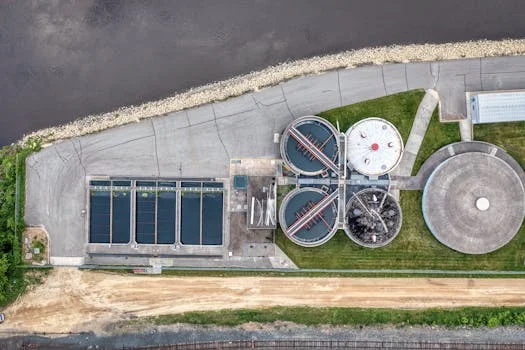
Effective sewage treatment plant processes for KPK conditions integrate robust physical, biological, and chemical stages, each with specific engineering specifications designed to address local challenges. Primary treatment, the initial stage, focuses on removing large solids and grit. Mechanical bar screens with 6–25mm spacing are standard, capable of handling flow rates from 1 to 300 m³/h, preventing damage to downstream equipment. Grit removal systems typically achieve 85–95% efficiency for particles larger than 0.2mm, crucial for protecting pumps and reducing sludge volume in areas with high inorganic solid content. Secondary treatment, the core biological stage, is where the majority of organic pollutants are removed. Options like Moving Bed Biofilm Reactors (MBBR), Sequencing Batch Reactors (SBR), and Membrane Bioreactors (MBR) are prevalent. MBR systems, such as the MBR system for NEQS-compliant discharge in KPK’s industrial zones, offer superior removal efficiencies, achieving 95% BOD and TSS removal, with a compact footprint of approximately 0.5 m²/m³ of treated water, making them ideal for urban KPK sites with space constraints. In contrast, MBBR systems typically achieve 90% BOD removal, while SBR systems offer around 92% BOD removal, but require larger footprints (1.2 m²/m³ for SBR). Tertiary treatment is often required to meet stringent NEQS discharge limits or for water reuse applications. Disinfection is critical, and chlorine dioxide disinfection for KPK’s power-variable sites, with a 99.9% kill rate for E. coli, is often preferred over UV systems due to its lower energy consumption and efficacy during power fluctuations. UV disinfection, while effective, is more energy-intensive and less suitable for areas with unreliable power. Sludge handling, the final stage, processes the byproduct of wastewater treatment. Plate and frame filter presses are common, with filtration areas ranging from 1 to 500 m², producing cake solids content of 30–40%, which significantly reduces disposal volumes and costs for industrial facilities in Peshawar. These engineering specifications are critical for designing systems that are not only compliant but also resilient and cost-effective in KPK.
| Treatment Stage | Process | Key Engineering Specs | Removal Efficiency / Output | Suitability for KPK |
|---|---|---|---|---|
| Primary Treatment | Bar Screen | Spacing: 6–25mm; Flow Rate: 1–300 m³/h | Removes >90% of solids >6mm | Protects downstream equipment from debris |
| Primary Treatment | Grit Removal | Particle Size: >0.2mm | 85–95% efficiency | Reduces abrasion, prevents accumulation |
| Secondary Treatment | MBBR | Footprint: 1.5 m²/m³ | ~90% BOD removal | Robust against influent variability, moderate footprint |
| Secondary Treatment | SBR | Footprint: 1.2 m²/m³ | ~92% BOD removal | Flexible operation, adaptable to flow changes |
| Secondary Treatment | MBR | Footprint: 0.5 m²/m³ | ~95% BOD, >98% TSS removal | High effluent quality, compact for urban sites |
| Tertiary Treatment | Chlorine Dioxide | Dosage: 0.5–2 mg/L | 99.9% E. coli kill rate | Energy-efficient disinfection, effective during power outages |
| Sludge Handling | Plate & Frame Filter Press | Filtration Area: 1–500 m² | 30–40% cake solids | Reduces sludge volume, lower disposal costs |
Technology Comparison: MBBR vs SBR vs MBR for KPK’s Industrial and Municipal Needs
Selecting the optimal sewage treatment technology in KPK hinges on specific site conditions, influent characteristics, and compliance requirements, with MBBR, SBR, and MBR systems offering distinct advantages. Influent variability tolerance is a critical factor for industrial facilities in KPK, where discharge quality can fluctuate significantly. MBBR systems generally handle COD loads ranging from 50–500 mg/L, making them suitable for moderately variable municipal or light industrial wastewater. SBRs offer greater flexibility, tolerating COD ranges of 300–800 mg/L due to their batch operation, which allows for process adjustments based on influent quality. MBR systems, with their advanced membrane filtration, can manage highly variable industrial influents from 200–1,000 mg/L COD, providing a stable effluent quality regardless of upstream fluctuations. Power consumption is paramount given KPK’s frequent power outages. MBBR systems are typically the most power-efficient, consuming 0.4–0.6 kWh/m³ of treated water, making them a strong candidate for power-efficient wastewater treatment. SBRs follow closely at 0.5–0.7 kWh/m³, while MBR systems have the highest power demand, ranging from 0.8–1.2 kWh/m³, primarily due to membrane aeration and pumping requirements. This makes MBR less ideal for sites without reliable generator backup. Footprint is another key consideration, particularly for urban projects or space-constrained industrial zones. MBR systems are the most compact, requiring only about 0.5 m²/m³ of daily flow, making them highly suitable for sites in Peshawar or Abbottabad. SBRs require approximately 1.2 m²/m³, while MBBRs, despite their efficiency, demand a larger footprint of about 1.5 m²/m³ due to their attached-growth biological process. Operational complexity also varies: SBRs often require more manual intervention for sludge wasting and process adjustments, while MBBRs feature automated biofilm carriers for easier operation. MBRs, while highly automated, necessitate regular membrane cleaning and replacement, adding a specialized maintenance component. Regarding NEQS compliance, MBR systems consistently achieve the most stringent discharge standards, often producing effluent with less than 10 mg/L TSS, making them the safest choice for strict KPK EPA enforcement. SBRs typically achieve 20–30 mg/L TSS, and MBBRs range from 30–50 mg/L TSS, potentially requiring additional tertiary treatment to meet the <10 mg/L TSS NEQS limit for municipal discharge. For industrial applications requiring water reuse, MBR's superior effluent quality is often a prerequisite.
| Feature | MBBR (Moving Bed Biofilm Reactor) | SBR (Sequencing Batch Reactor) | MBR (Membrane Bioreactor) |
|---|---|---|---|
| Influent Variability Tolerance (COD) | Moderate (50–500 mg/L) | High (300–800 mg/L) | Very High (200–1,000 mg/L) |
| Power Consumption | Low (0.4–0.6 kWh/m³) | Moderate (0.5–0.7 kWh/m³) | High (0.8–1.2 kWh/m³) |
| Footprint | Large (1.5 m²/m³) | Medium (1.2 m²/m³) | Compact (0.5 m²/m³) |
| Operational Complexity | Automated biofilm carriers, less manual | Batch operation, manual sludge wasting | Automated, requires membrane cleaning |
| NEQS Compliance (TSS) | 30–50 mg/L (May require tertiary) | 20–30 mg/L (May require tertiary) | <10 mg/L (Consistently meets) |
| Effluent Quality | Good | Very Good | Excellent (suitable for reuse) |
Cost Breakdown: Sewage Treatment Plant Budgets for KPK Projects (2025 Data)
Budgeting for a sewage treatment plant in KPK involves more than just equipment costs; it encompasses installation, operational expenses, and potential hidden costs, all influenced by local economic factors. Equipment cost ranges for a typical sewage treatment plant in Pakistan vary significantly based on technology and capacity. For a 50 m³/day MBBR system, the equipment cost, including civil works for underground sewage treatment plant for KPK’s space-constrained sites (WSZ Series specs), can start from PKR 2.5 million. A larger 500 m³/day MBR system, offering superior effluent quality and a smaller footprint, might range up to PKR 15 million. These figures include the primary treatment units, biological reactors, clarification, disinfection, and sludge dewatering components. Installation costs typically account for 20–30% of the equipment cost in KPK, reflecting local labor rates which average PKR 1,200–1,800 per day per skilled worker, depending on the complexity of the project and site accessibility. Operational and maintenance (O&M) costs are a recurring expense, estimated at PKR 0.5–1.5 per cubic meter of treated water. MBR systems generally incur higher O&M costs, primarily due to membrane replacement every 5–7 years (per product catalog) and higher power consumption compared to MBBR or SBR systems. For industrial applications, an ROI calculator often shows a payback period of 3–5 years, particularly for facilities that can reuse treated wastewater in processes like textile dyeing or dairy washing, thereby reducing freshwater procurement costs. For municipal discharge, the ROI is often longer, 7–10 years, primarily driven by compliance savings (avoiding NEQS penalties) and environmental stewardship. Hidden costs can significantly impact the total budget. A reliable generator backup system, essential for KPK’s power outages, can cost approximately PKR 800,000 for a 50 kVA unit suitable for a medium-sized plant. Regular NEQS testing, mandated by the KPK EPA, costs around PKR 25,000 per sample, requiring monthly or quarterly checks. Understanding these components is crucial for accurate budget planning for any sewage treatment plant cost in Pakistan.
| Cost Category | Description | Estimated Range (PKR) | Notes for KPK Projects |
|---|---|---|---|
| Equipment Cost (50 m³/day MBBR) | Includes primary, secondary, tertiary, sludge handling | 2.5M - 4M | Lower initial investment, larger footprint |
| Equipment Cost (500 m³/day MBR) | Includes primary, secondary (MBR), tertiary, sludge handling | 12M - 15M | Higher initial investment, compact, high effluent quality |
| Installation Costs | Civil works, mechanical/electrical installation | 20–30% of Equipment Cost | Based on KPK labor rates (PKR 1,200–1,800/day) |
| O&M Costs (per m³) | Power, chemicals, labor, spare parts | 0.5–1.5/m³ | MBR typically higher due to membrane replacement |
| Generator Backup (50 kVA) | Essential for power outages | 800,000 | Critical for continuous operation in KPK |
| NEQS Testing (per sample) | Compliance monitoring | 25,000 | Mandatory monthly/quarterly by KPK EPA |
| ROI Payback Period (Industrial Reuse) | Savings from reduced freshwater intake | 3–5 years | Applicable for textile, dairy, other industrial sectors |
| ROI Payback Period (Municipal Discharge) | Savings from avoided NEQS penalties | 7–10 years | Longer payback, but ensures compliance |
Supplier Decision Framework: How to Evaluate KPK’s Sewage Treatment Equipment Providers
Evaluating sewage treatment equipment suppliers in KPK requires a structured approach that prioritizes local compliance, operational resilience, and long-term support to ensure a successful project. The first critical step is to verify NEQS compliance. Prospective buyers must request detailed test reports from the supplier for existing installations, demonstrating consistent achievement of <30 mg/L BOD and <100 mg/L COD discharge limits under typical operating conditions. These reports should ideally be from KPK-based projects or similar climatic/influent conditions. Step 2 involves assessing local support capabilities. A reliable supplier should have established KPK service centers in major cities like Peshawar or Abbottabad, guaranteeing a response time of less than 24 hours for emergencies and routine maintenance. This local presence is crucial for minimizing downtime. Step 3 focuses on evaluating power resilience, a unique challenge in KPK. Inquire about equipment features designed to withstand power fluctuations, such as integrated UPS backup systems capable of providing continuous power for critical components during outages, or systems engineered for quick restart (<10 seconds) after power restoration. Step 4 is to review scalability. For growing municipalities or expanding industrial facilities, modular systems, like the underground sewage treatment plant for KPK’s space-constrained sites (WSZ Series specs), that can be expanded from 50 to 500 m³/day without major overhauls are highly advantageous. Finally, Step 5 requires checking training programs. Suppliers should offer comprehensive operator certification and training for local staff, alongside options for remote monitoring and technical assistance, ensuring sustainable operation. Be wary of red flags in the KPK supplier decision framework: avoid suppliers who cannot provide verifiable KPK references, offer vague warranty terms (e.g., less than 2 years on major components), or lack a readily available spare parts inventory within Pakistan, as these indicate potential long-term support issues.
Frequently Asked Questions
Prospective buyers of sewage treatment equipment in KPK frequently have specific questions regarding compliance, costs, and operational suitability. Here are some of the most common inquiries:
What are the NEQS discharge limits for KPK in 2025?
For municipal discharge in KPK, the National Environmental Quality Standards (NEQS) in 2025 mandate biological oxygen demand (BOD) <30 mg/L, chemical oxygen demand (COD) <100 mg/L, and total suspended solids (TSS) <10 mg/L. Stricter limits may apply for industrial reuse applications, as per KPK EPA 2025 guidelines.
How much does a 100 m³/day sewage treatment plant cost in KPK?
A 100 m³/day sewage treatment plant in KPK can cost approximately PKR 5 million to 7 million for an MBBR system, and PKR 8 million to 10 million for an MBR system. These figures typically include equipment, civil works, and installation. Operational and maintenance (O&M) costs will add PKR 0.8–1.5 per cubic meter of treated water.
Which technology is best for KPK’s power outages?
MBBR or SBR systems are generally more resilient to KPK's power outages due to lower power consumption and simpler restart procedures. However, any system will require a reliable generator backup to ensure continuous operation and prevent process upsets. MBR systems, while highly efficient, require stable power for membrane aeration and pumping, making robust backup essential.
Can sewage treatment plants be installed underground in KPK?
Yes, underground sewage treatment plants are an excellent solution for space-constrained urban sites in KPK. Systems like the WSZ Series can handle flows from 1–80 m³/h and are designed for subsurface installation, allowing for landscaping or parking above the plant, which is ideal for hospitals, hotels, and residential complexes.
What after-sales support should I expect from KPK suppliers?
Expect a 24/7 technical helpline, a local spare parts inventory within KPK (e.g., Peshawar or Abbottabad), and comprehensive operator training programs. Reputable suppliers should also offer routine maintenance contracts and remote monitoring options. Avoid suppliers lacking a physical service presence or clear warranty terms in Pakistan.
Further Reading

Explore these in-depth articles on related wastewater treatment topics: