Wastewater Treatment Plant Cost in Idaho 2025: Engineering Breakdown, Local Data & ROI Calculator
In 2025, wastewater treatment plant costs in Idaho range from $70,000 for DEQ-funded rural upgrades to $200 million for large municipal expansions like Nampa’s. Key cost drivers include flow rate (e.g., $5–$15 per gallon/day capacity), technology choice (MBR vs. conventional), and Idaho DEQ compliance requirements. For example, Idaho Falls’ $128,738 BPA incentive for energy-efficient screw presses reduced annual costs by $21,248—demonstrating how operational savings offset capital expenses. Use this guide’s engineering breakdown and ROI calculator to align your project with Idaho’s funding programs and cost benchmarks.
Why Idaho’s Wastewater Treatment Costs Are Rising in 2025
Idaho’s wastewater treatment costs are experiencing upward pressure in 2025 due to a confluence of rapid population growth, stringent regulatory updates, and the need to address aging infrastructure. The state’s population has grown approximately 2.5% annually since 2020 (U.S. Census), leading to increased wastewater volumes; for instance, Sandpoint saw an 18% increase and Victor a 22% increase in wastewater volume (per DEQ 2024 reports). This surge necessitates larger capacities and more robust treatment solutions.
the Idaho Department of Environmental Quality (DEQ) is implementing stricter nutrient limits through its 2025 NPDES permit updates, particularly for discharges into the Snake River. These new requirements mandate total nitrogen (TN) levels below 3 mg/L and total phosphorus (TP) below 0.1 mg/L, often requiring the addition of tertiary treatment processes. Such advanced nutrient removal can add $2–$5 million to the capital costs for a 1 MGD (million gallons per day) plant (HydropureWater analysis, 2025). This regulatory shift is a primary driver for upgrades and expansions across the state, impacting nutrient removal strategies for DEQ compliance.
Aging infrastructure also contributes significantly to rising expenditures. Approximately 42% of Idaho’s 300+ municipal wastewater treatment plants are over 30 years old (EPA 2023), requiring substantial investments for rehabilitation or replacement. Sandpoint’s recent $130 million bond vote, for example, was largely driven by the failure and obsolescence of equipment dating back to the 1970s. Idaho’s unique climate challenges, including severe freeze-thaw cycles and high total suspended solids (TSS) from agricultural runoff, further complicate equipment selection and increase operations and maintenance (O&M) costs, as systems must be designed to withstand these environmental stressors.
Idaho Wastewater Treatment Plant Cost Drivers: Engineering Parameters That Move the Needle
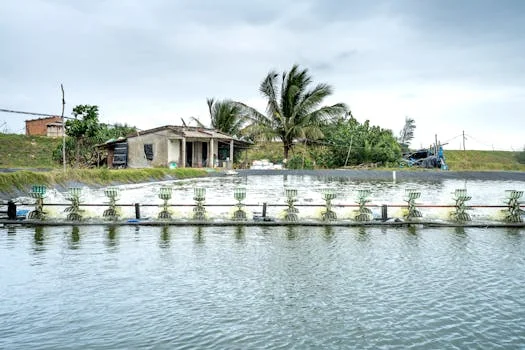
The capital and operational costs of an Idaho wastewater treatment plant are primarily dictated by specific engineering parameters, allowing for scalable cost estimation based on project specifics. Understanding these drivers is crucial for accurate budgeting and stakeholder justification.
Flow Rate: The most significant determinant of plant size and cost is the design flow rate, typically measured in million gallons per day (MGD). Costs per gallon/day capacity for Idaho plants in 2025 range from $5 for conventional activated sludge systems to $15 for advanced membrane bioreactor (MBR) technology (data from DEQ permit applications). This metric provides a benchmark for initial capital expenditure (CAPEX) estimates.
| Design Flow Rate (MGD) | Conventional Activated Sludge (CAPEX $/gallon/day) | MBR Technology (CAPEX $/gallon/day) | Example Idaho Project (Approx.) |
|---|---|---|---|
| 0.1 MGD (100,000 GPD) | $5 - $8 | $12 - $15 | Rural DEQ-funded upgrade (e.g., Orofino) |
| 1 MGD (1,000,000 GPD) | $6 - $10 | $13 - $16 | Mid-sized municipal plant (e.g., smaller cities) |
| 10 MGD (10,000,000 GPD) | $5 - $9 | $10 - $14 | Large municipal expansion (e.g., Nampa) |
Influent Quality: The characteristics of the incoming wastewater directly influence the required pretreatment and primary treatment processes. Influent with total suspended solids (TSS) exceeding 300 mg/L or biochemical oxygen demand (BOD) greater than 250 mg/L, common in Idaho’s dairy and food processing zones, often necessitates specialized units like DAF systems for Idaho’s industrial wastewater pretreatment or chemical dosing. These additions can increase capital costs by $1–$3 million for a 1 MGD plant (per 2024 DEQ cost models).
Technology Choice: The selection of treatment technology presents a trade-off between CAPEX and operational expenditure (OPEX). Conventional activated sludge systems typically have the lowest initial capital investment but higher energy and chemical consumption over their lifecycle. MBR systems for Idaho’s nutrient removal requirements, while having approximately twice the capital cost, offer a significantly smaller footprint (up to 30% reduction) and produce higher quality effluent suitable for reuse. Lagoon systems remain the most cost-effective option for rural areas with ample land availability and low flow rates, though they have limitations regarding effluent quality and land use.
Energy Efficiency: Implementing energy-efficient equipment can substantially reduce long-term operational costs. Idaho Falls’ screw press upgrade, for example, resulted in $21,248 in annual energy savings. Technologies such as variable frequency drives (VFDs) on pumps and blowers, high-efficiency blowers, and anaerobic digestion for biogas production can reduce OPEX by 15–30% by minimizing electricity consumption. These upgrades often qualify for incentives, further enhancing their financial viability.
Permitting and Land: The regulatory process and land acquisition are critical cost components. Idaho DEQ permit processing, including necessary environmental impact assessments, typically takes 12–18 months and can incur $50,000–$200,000 in engineering and consulting fees. Land costs vary dramatically across Idaho; in urban centers like Boise or Nampa, land can be three times more expensive than in rural areas (per 2025 Idaho Realtors data), significantly impacting overall project budgets, especially for land-intensive technologies like lagoons or conventional activated sludge.
Idaho Wastewater Treatment Plant Cost Breakdown: Real Project Examples (2023–2025)
Examining recent Idaho wastewater treatment projects provides tangible benchmarks for capital and operational expenditures, along with insights into funding strategies and lessons learned.
- Victor, ID ($35M New Plant, 2025): This project for approximately 5,000 residents represents a significant investment in new infrastructure. The breakdown included an estimated $28 million for construction, $4 million for engineering design and oversight, and $3 million allocated for DEQ permitting and regulatory compliance. Funding was secured through a $25 million municipal bond, complemented by a $10 million State Revolving Loan Fund (SRF) loan at a favorable 2% interest rate.
- Sandpoint, ID ($130M Upgrade, 2025): Serving 9,000 residents, Sandpoint’s comprehensive upgrade addresses aging infrastructure and new regulatory demands. The project includes $40 million specifically for tertiary treatment to achieve stringent nutrient removal strategies for DEQ compliance, $30 million for modernizing headworks with advanced screening and grit removal (rotary mechanical bar screens), and $20 million for energy-efficient blowers. Funding primarily comes from a $100 million voter-approved bond, supplemented by $30 million in DEQ grants.
- Idaho Falls, ID ($1.2M Energy Efficiency Retrofit, 2024): This project focused on operational cost reduction. The city received a $128,738 incentive from the Bonneville Power Administration (BPA), covering approximately 60% of the costs for new screw presses and Variable Frequency Drives (VFDs). The retrofit delivered $21,248 in annual energy savings, resulting in a favorable 6-year payback period for the investment.
- DEQ Grant Example (Rural District, 2025): A rural Idaho district received a $75,000 DEQ grant for a $70,000 project, demonstrating significant state support for smaller communities. These grants typically require a 50% local match and cover eligible expenses such as planning, design, and equipment procurement. Application deadlines are usually in March and September.
- Nampa, ID ($200M Expansion, 2025 Completion): As one of Idaho’s largest municipal projects, Nampa’s expansion addresses substantial growth. The budget allocated $150 million for construction, $30 million for engineering, and $20 million for contingency. Funding included a $120 million municipal bond and $80 million from stacked state and federal grants. The expansion incorporated chemical dosing for Idaho’s nutrient compliance and MBR technology for water reuse.
| Project | Total Cost (Est.) | Primary Purpose | Key Components/Technology | Funding Sources | Lessons Learned |
|---|---|---|---|---|---|
| Victor, ID | $35M | New Plant | Conventional treatment, growth capacity | $25M Bond, $10M SRF | Early planning for growth is critical. |
| Sandpoint, ID | $130M | Major Upgrade | Tertiary nutrient removal, headworks, energy-efficient blowers | $100M Bond, $30M DEQ Grants | Aging infrastructure requires comprehensive, multi-faceted solutions. |
| Idaho Falls, ID | $1.2M | Energy Retrofit | Screw presses, VFDs | BPA Incentive ($128K), City Funds | Operational savings can quickly justify CAPEX. |
| Rural DEQ Grant | $70K | Rural Upgrade | Small-scale equipment, planning | $75K DEQ Grant, 50% Local Match | DEQ grants are vital for small communities. |
| Nampa, ID | $200M | Large Expansion | MBR for reuse, increased capacity | $120M Bond, $80M State/Federal Grants | Stacking funding sources is essential for large projects. |
Funding Your Idaho Wastewater Treatment Plant: Grants, Loans, and Incentives (2025 Guide)
Securing adequate funding is a critical hurdle for any wastewater treatment plant project in Idaho. Fortunately, several state and federal programs offer grants, low-interest loans, and energy efficiency incentives that can significantly reduce the financial burden.
DEQ Planning Grant Program: The Idaho Department of Environmental Quality offers grants ranging from $50,000 to $100,000 to assist communities with feasibility studies, environmental reviews, and preliminary design work. These grants typically require a 50% local match. For 2025, application deadlines are set for March 1 and September 1. The DEQ prioritizes projects that demonstrate a clear need, incorporate energy efficiency measures, or serve disadvantaged communities, making a strong application crucial.
BPA Energy Efficiency Incentives: The Bonneville Power Administration (BPA), in partnership with local utilities like Idaho Falls Power, provides significant incentives for energy-saving upgrades. These incentives range from $0.10–$0.25 per kilowatt-hour (kWh) saved annually, potentially covering up to 70% of eligible project costs. Idaho Falls’ $128,738 incentive, for instance, was based on verified annual savings of 472,191 kWh. To estimate potential incentives, facilities can calculate expected energy reductions from equipment upgrades (e.g., replacing old blowers with high-efficiency models or installing VFDs on pumps) and consult their local utility for specific program details and application processes.
Idaho State Revolving Loan Fund (SRF): Administered by the DEQ, the SRF offers low-interest loans for the construction, expansion, or upgrade of wastewater treatment facilities. Interest rates for 2025 typically range from 1–3%, with loan terms extending up to 20 years. Disadvantaged communities often qualify for the lowest rates (e.g., 2%), while others might receive 3%. The SRF application timeline can be extensive, often requiring 12–18 months from initial application to loan disbursement, necessitating proactive planning.
USDA Rural Development Grants: For communities with populations under 10,000, the U.S. Department of Agriculture (USDA) Rural Development program offers grants up to $500,000 for water and wastewater infrastructure. The 2025 focus areas for these grants include projects that enhance nutrient removal capabilities and improve energy efficiency. A comprehensive USDA application checklist typically includes a project narrative, engineering report, environmental review, and demonstrated financial need.
Local Funding: Beyond state and federal programs, local funding mechanisms are often essential, especially for large-scale projects. Sandpoint’s $100 million bond, for example, required voter approval. Building public support through transparent cost-benefit analyses, community meetings, and clear communication about the necessity and benefits of the project (e.g., public health, environmental protection, economic development) is crucial for successful bond initiatives.
ROI Calculator: How to Justify Your Idaho Wastewater Treatment Plant Investment
Justifying a significant investment in wastewater treatment infrastructure requires a robust financial analysis, moving beyond initial capital costs to consider operational savings and long-term value. This ROI calculator provides a framework for Idaho decision-makers.
Step 1: Estimate Capital Expenditure (CAPEX). Begin by estimating your project's initial capital cost using flow rate benchmarks. For example, a 1 MGD MBR plant in Idaho might have a CAPEX of $10 million (based on the earlier table's $10-$14/gallon/day range for 1 MGD MBR capacity). This includes design, construction, equipment, and permitting fees.
Step 2: Estimate Operational Expenditure (OPEX). Calculate ongoing annual operational costs. For Idaho, conventional plants typically incur $0.50–$1.20 per 1,000 gallons treated, while MBR systems, with higher energy but often lower chemical needs, range from $0.80–$1.50 per 1,000 gallons (2025 DEQ benchmarks). This includes energy, chemicals, labor, and maintenance.
Step 3: Calculate Energy Savings. Quantify potential energy cost reductions from efficiency upgrades. Idaho Falls achieved $21,248 in annual savings from a $128,738 project, demonstrating a 6-year payback.
Energy Savings Formula: (Old Equipment kWh/year - New Equipment kWh/year) * Electricity Cost ($/kWh) = Annual Energy Savings. For example, installing VFDs on blowers or upgrading to efficient screw presses can yield substantial savings. If a new high-efficiency blower saves 200,000 kWh/year at $0.10/kWh, that's $20,000 in annual savings.
Step 4: Factor in Funding. Incorporate grants and incentives. DEQ grants can cover up to 50% of planning costs, and BPA incentives can cover up to 70% of energy efficiency upgrades. Stacking these funding sources significantly reduces the net CAPEX. For instance, a $10 million plant might secure $3 million in grants and incentives, reducing net CAPEX to $7 million.
Step 5: Calculate Payback Period and Lifecycle Cost. The payback period indicates how long it takes for operational savings and grants to offset the initial investment. Lifecycle cost analysis considers all costs over the plant's operational life (typically 20-30 years), including CAPEX, OPEX, and future replacement costs.
Payback Period Formula: (Net CAPEX - Grants & Incentives) / (Annual OPEX Savings + Annual Revenue from User Fees/Byproducts)
Example: For a $10M MBR plant with $3M in grants, if annual OPEX savings are $200K (e.g., from energy efficiency) and annual user fees contribute $100K towards cost recovery, the calculation would be: ($10,000,000 - $3,000,000) / ($200,000 + $100,000) = $7,000,000 / $300,000 = 23.3 years payback. This demonstrates how how Idaho’s costs compare to other U.S. states, where funding and energy costs vary.
| Metric | Conventional Plant (1 MGD) | MBR Plant (1 MGD) | Energy Retrofit (Idaho Falls Example) |
|---|---|---|---|
| Estimated CAPEX (Net) | $7M (after $3M grants) | $10M (after $3M grants) | $1.2M (net $1.07M after BPA) |
| Annual OPEX (without savings) | $365,000 ($1/1000 gal) | $438,000 ($1.2/1000 gal) | N/A (focus on savings) |
| Annual OPEX Savings | $50,000 (e.g., VFDs) | $75,000 (e.g., VFDs, optimized blowers) | $21,248 |
| Annual Revenue (User Fees/Byproducts) | $100,000 | $150,000 (e.g., higher reuse potential) | N/A |
| Payback Period (Years) | (7M) / (50K+100K) = 46.7 | (10M) / (75K+150K) = 44.4 | (1.07M) / (21.2K) = 6 |
Choosing the Right Wastewater Treatment Technology for Idaho’s Conditions
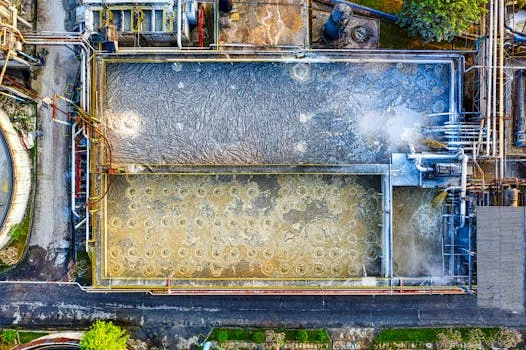
Selecting the optimal wastewater treatment technology in Idaho involves balancing flow rate, influent quality, land availability, and stringent effluent requirements, especially with DEQ’s 2025 nutrient limits. Each technology offers distinct advantages and cost profiles.
- Conventional Activated Sludge: This technology remains a robust choice for large municipal plants treating 1–10 MGD with moderate influent quality (TSS < 300 mg/L, BOD < 250 mg/L). Its capital expenditure (CAPEX) typically ranges from $5–$10 per gallon/day capacity, with operational expenditure (OPEX) between $0.50–$1.00 per 1,000 gallons. While requiring a larger footprint, conventional systems are well-understood and reliable, though they may require tertiary upgrades to meet new nutrient limits.
- Membrane Bioreactor (MBR) Systems: MBRs are ideal for sites with limited land availability, such as dense Boise suburbs, or for projects requiring high-quality effluent suitable for reuse applications. CAPEX for MBRs is higher, typically $12–$18 per gallon/day capacity, and OPEX ranges from $0.80–$1.50 per 1,000 gallons due to increased energy for membrane filtration. However, MBRs offer a smaller footprint (up to 30% less than conventional) and superior effluent quality, making them suitable for Nampa’s $200M expansion which incorporates MBR for irrigation reuse. HydropureWater provides advanced MBR systems for Idaho’s nutrient removal requirements.
- Lagoon Systems: For rural Idaho communities with low flow rates (typically < 0.1 MGD) and abundant land, lagoon systems offer the lowest CAPEX ($1–$3 per gallon/day capacity) and OPEX ($0.20–$0.50 per 1,000 gallons). These systems rely on natural processes but may require significant upgrades or hybrid solutions to meet stricter DEQ nutrient limits. An example is DEQ-funded lagoon upgrades in Orofino (2024).
- Dissolved Air Flotation (DAF) Systems: DAF systems are particularly effective for industrial wastewater streams, such as those from food processing or dairy facilities, which often contain high concentrations of fats, oils, grease (FOG), or TSS. CAPEX for DAF units typically ranges from $200,000–$2 million for 0.1–1 MGD applications, with OPEX between $0.30–$0.80 per 1,000 gallons. Chobani’s Twin Falls plant utilizes DAF systems for Idaho’s industrial wastewater pretreatment to manage its high-strength influent.
- Energy Efficiency Upgrades: Regardless of the primary treatment technology, investing in energy-efficient components is crucial for reducing OPEX. Variable Frequency Drives (VFDs), high-efficiency screw presses, and anaerobic digestion can collectively reduce energy consumption by 15–30%. Idaho Falls’ $1.2M retrofit, which saved $21K/year, exemplifies how strategic upgrades can yield significant financial returns, with payback periods often justifying the initial investment. This also applies to modular solutions for Idaho’s rural communities looking to optimize energy.
| Technology | Best For | CAPEX ($/gallon/day) | OPEX ($/1,000 gallons) | Footprint | Key Advantage |
|---|---|---|---|---|---|
| Conventional Activated Sludge | Large Municipal, Moderate Influent | $5 - $10 | $0.50 - $1.00 | Large | Proven, reliable, lower initial CAPEX |
| MBR Systems | Small Footprint, Reuse, Nutrient Removal | $12 - $18 | $0.80 - $1.50 | Small | High effluent quality, compact design |
| Lagoon Systems | Rural, Low Flow, Available Land | $1 - $3 | $0.20 - $0.50 | Very Large | Lowest CAPEX, simple operation |
| DAF Systems | Industrial Pre-treatment (FOG, TSS) | $200K - $2M (for 0.1-1 MGD) | $0.30 - $0.80 | Medium | Effective for high-strength industrial waste |
Frequently Asked Questions
Decision-makers evaluating wastewater treatment plant projects in Idaho often have common questions regarding costs, timelines, and optimization strategies.
What is the average cost per gallon for a wastewater treatment plant in Idaho?
The average cost per gallon for a wastewater treatment plant in Idaho typically ranges from $5–$15 per gallon/day capacity for new construction, depending heavily on the chosen technology. Conventional activated sludge systems are on the lower end ($5–$10), while advanced MBR (Membrane Bioreactor) systems are higher ($12–$18). Idaho’s 2025 DEQ benchmarks indicate that projects requiring tertiary treatment for stringent nutrient removal can push costs to $15–$20 per gallon/day capacity.
How long does it take to build a wastewater treatment plant in Idaho?
Building a new wastewater treatment plant or undertaking a major upgrade in Idaho typically takes 2–5 years from initial planning to completion. This timeline includes 12–18 months for Idaho DEQ permitting and environmental reviews, 6–12 months for detailed engineering design, and 12–24 months for actual construction. For example, Sandpoint’s $130 million project is projected to take 4 years from its planning phase to completion (2021–2025).
What are the most common funding sources for Idaho wastewater treatment plants?
The most common funding sources for Idaho wastewater treatment plants include DEQ Planning Grants (up to $100,000 for feasibility studies with a 50% match), BPA Energy Efficiency Incentives (covering up to 70% of eligible energy-saving upgrades, as seen with Idaho Falls’ $128,000 incentive), the Idaho State Revolving Loan Fund (low-interest loans at 1–3%), and USDA Rural Development Grants (up to $500,000 for communities under 10,000 residents). Many projects successfully stack multiple funding sources to minimize local financial impact.
How do I reduce operational costs for my Idaho wastewater treatment plant?
To reduce operational costs for an Idaho wastewater treatment plant, focus primarily on energy efficiency and automation. Implementing Variable Frequency Drives (VFDs) on pumps and blowers, upgrading to high-efficiency screw presses for dewatering, and exploring anaerobic digestion for biogas production can reduce energy consumption by 15–30%. Automation through PLC-controlled chemical dosing for Idaho’s nutrient compliance also optimizes chemical usage. Idaho Falls’ $1.2 million retrofit, which reduced energy use by 472,191 kWh/year and saved $21,000 annually, demonstrates the impact of such upgrades. DEQ’s 2025 energy efficiency guide recommends starting with a comprehensive energy audit.
What are the biggest mistakes to avoid when building a wastewater treatment plant in Idaho?
The biggest mistakes to avoid when building a wastewater treatment plant in Idaho include underestimating the time required for DEQ permitting (which can take 12–18 months), failing to account for the increased costs associated with meeting DEQ’s 2025 nutrient limits (adding an estimated $2–$5 million for 1 MGD plants), and neglecting energy efficiency measures that offer significant long-term operational savings (Idaho Falls’ $21,000/year savings exemplify this). Always include a 10–20% contingency in the budget to address unexpected challenges, particularly those related to Idaho’s harsh freeze-thaw cycles and high TSS influent from agricultural areas.