What Makes Baghdad Trade Waste Difficult to Treat?
Baghdad factory wastewater cannot be designed from COD concentration alone because the treatment train must also control flow shocks, suspended solids, oil and grease, pH, temperature, and industry-specific contaminants. The 2024 peer-reviewed review Waterborne Diseases and Wastewater Treatment in Iraq reports that Iraqi treatment plants are often poorly maintained or overloaded. That operating reality makes equalization, bypass prevention, available spares, and operator support core design requirements rather than optional additions.
Start with representative sampling across production shifts, cleaning cycles, batch discharges, and weather-related variation. The characterization should separately establish COD, BOD5, suspended solids, FOG or oil, pH, flow variability, temperature, and contaminants such as metals, color, or process chemicals. These results determine whether DAF, biological treatment, chemical dosing, or further filtration is justified.
A 2005 University of Baghdad study reported 75% oil removal from actual Al-Duara refinery wastewater using pulverized walnut shell, while also reporting up to 96% removal from synthetic wastewater in laboratory tests. This was an adsorption study, not evidence that walnut-shell media should replace DAF, biological treatment, or established pretreatment. Use the DAF selection checklist for FOG and TSS to define the pretreatment duty, and review the oil-refinery wastewater DAF guide before treating refinery evidence as a transferable performance guarantee.
The Treatment Train Used for High-COD Effluent
A workable factory wastewater process train progresses from coarse screening through equalization, solids or oil pretreatment, biological treatment, conditional polishing, and sludge dewatering. Screening protects pumps and downstream equipment from debris. Equalization then stabilizes flow and concentration changes before they upset biological treatment. These steps establish the hydraulic and contaminant buffer that the rest of the process depends on.
- Coarse screening: Remove rags, packaging fragments, and other debris with a rotary bar screen or equivalent device.
- Equalization: Balance peak flow and pollutant concentration before biological dosing and pumping.
- Solids and oil pretreatment: Apply DAF when suspended solids, FOG, oil, or colloidal material could interfere with biological treatment or downstream equipment.
- Biological treatment: Use activated sludge or MBR to reduce soluble and biodegradable colloidal organics.
- Conditional polishing: Add chemical dosing, filtration, or disinfection only where the discharge route or reuse application requires it.
- Sludge handling: Remove, store, dewater, and dispose of DAF float, biological sludge, and chemical precipitate under separate management plans.
| Stage | Primary job | Design input to confirm |
|---|---|---|
| Screening and equalization | Remove debris and buffer flow and concentration variation | Peak flow, batch discharge pattern, screen type, detention arrangement |
| DAF or targeted pretreatment | Remove suspended solids, oil, FOG, and colloidal matter where present | FOG, TSS, oil content, required recovery, skimming arrangement |
| Activated sludge or MBR | Biologically reduce soluble and biodegradable organic load | COD, BOD5, temperature, nutrient needs, solids-retention requirement |
| Polishing | Address specific contaminants or reuse requirements | Discharge destination, permit conditions, intended reuse water quality |
| Sludge treatment | Reduce sludge volume for storage and disposal | Sludge volume, solids content, dewatering method, disposal route |
HydropureWater’s commercial catalog covers DAF units from 4 to 300 m³/h across 13 standard models; these are catalog selections, not a site-size recommendation. Its MBR catalog covers 10 to 2,000 m³/day and describes submerged PVDF membranes with filtration below 1 μm. An rotary mechanical bar screen, an industrial DAF system, and an MBR wastewater treatment system address different stages and should not be treated as direct substitutes.
What Baghdad Refinery Data Shows About COD Removal
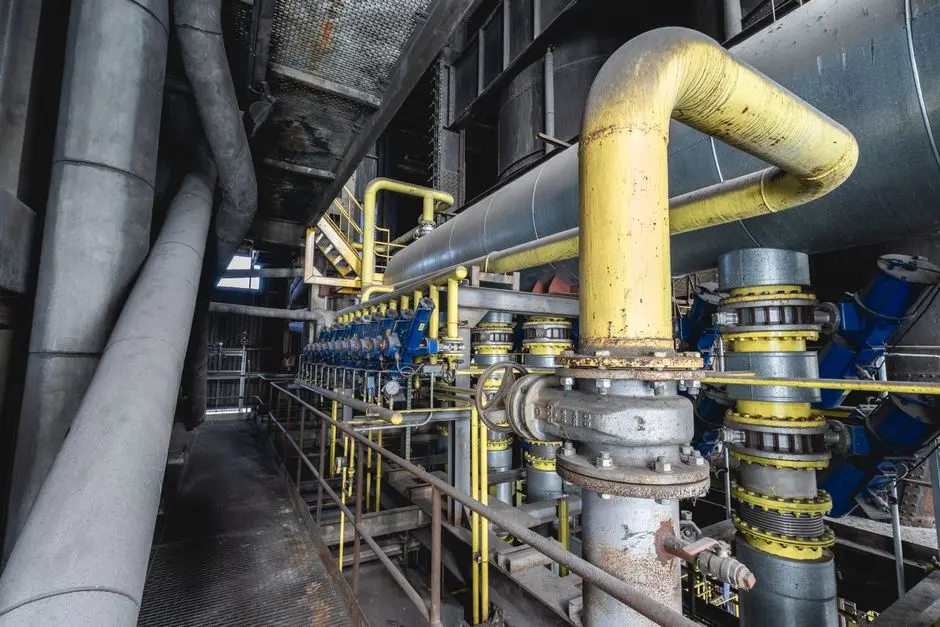
The Al-Dora Refinery study demonstrates that a Baghdad industrial treatment train can achieve substantial COD reduction without implying that every factory will obtain the same outlet quality. The study collected samples before and after successive treatment units and reported COD and BOD5 sequences for summer and winter.
| Measurement | Summer sequence, ppm | Winter sequence, ppm | Overall removal |
|---|---|---|---|
| COD | 399.6 → 383.2 → 187.2 → 72.8 → 55.4 | 324.4 → 310.2 → 115 → 46 → 42.6 | 86% summer; 87% winter |
| BOD5 | 180.8 → 175.2 → 111 → 43 → 37 | 106.8 → 99.6 → 81.2 → 33.8 → 31 | 79% summer; 71% winter |
These figures come from Industrial Wastewater Efficiency Assessment of Al-Dora Refinery, published in The Iraqi Geological Journal in 2024. The researchers attributed the higher summer BOD5 concentrations to evaporation and increased pollutant concentrations. The result supports seasonal design and performance testing rather than a single “normal” influent assumption.
Removal percentage is insufficient for a discharge decision because the final concentration remains the direct compliance variable. Reported final COD values were 55.4 ppm in summer and 42.6 ppm in winter, while final BOD5 values were 37 ppm and 31 ppm. Confirm the route and current limits before selecting polishing.
DAF or MBR: Choose by Treatment Job
DAF is the stronger pretreatment choice when suspended solids, FOG, oil and grease, or colloidal material threaten biological systems and downstream equipment. MBR is the stronger biological and solids-retention choice when low suspended solids, compact equipment, and reuse-oriented treatment are priorities. These technologies often function as a combined train when influent requires oil and solids removal before membrane biological treatment.
| Decision factor | DAF | MBR |
|---|---|---|
| Primary job | Remove suspended solids, FOG, oil, and colloidal material | Biologically reduce organics and retain solids |
| Best fit | High oil or solids load requiring pretreatment | Biological treatment with low separated TSS and reuse priorities |
| Commercial removal benchmark | HydropureWater’s 2026 Baghdad commercial guide states 92–97% COD and BOD5 removal for DAF and MBR systems; this is not a guaranteed Baghdad result | |
| Commercial installed-cost benchmark | $120,000–$180,000 for 50 m³/h | $200,000–$300,000 for 50 m³/h |
| Commercial operating-cost context | $0.50–$0.80/m³ | $0.70–$1.20/m³ |
All cost and removal figures in this table come from HydropureWater’s commercial guide Industrial Wastewater Treatment in Baghdad: Costs, Technologies, and Compliance (2026). They are planning benchmarks, not quotations or guarantees. Actual operating cost depends on power, chemicals, labor, sludge handling, and maintenance. The equipment decisions should follow the MBR versus activated-sludge comparison and the supplier’s performance basis.
Use the industrial DAF system when the immediate removal objective is oil, FOG, and suspended solids. Use the MBR wastewater treatment system when biological treatment, solids retention, and compact reuse-oriented treatment must be combined. If the wastewater is biodegradable and the required effluent is less demanding, conventional activated sludge may avoid unnecessary membrane complexity.
Turn Treatment Goals into a Procurement Checklist
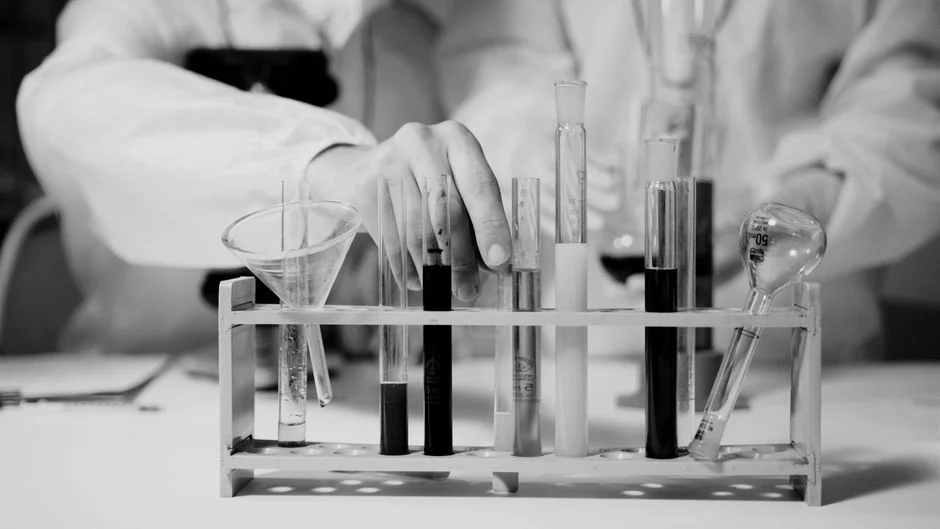
A defensible equipment proposal begins with representative wastewater testing and identifies peak flow, average flow, COD load, BOD5, TSS, FOG, and pH as separate design inputs. Asking each bidder to show that calculation makes it possible to distinguish a correctly sized treatment train from a package selected only to match nominal flow.
- Define the influent envelope: State the sampled production conditions, minimum and maximum flows, seasonal temperatures, and contaminant concentrations used in sizing.
- Define each stage’s objective: Ask what every stage removes, what it cannot remove, and how the stages function as a combined train.
- Require outlet guarantees: Tie guaranteed parameters to the declared influent envelope and identify which parameters were tested or modeled.
- Request operating evidence: Ask for evidence covering DAF skimming, biological aeration, membrane cleaning, chemical dosing, and sludge dewatering under Baghdad conditions.
- Separate CAPEX and OPEX: Request itemized equipment, civil works, installation, commissioning, chemicals, power, operator training, spare parts, and sludge-disposal costs.
- Test maintainability: Evaluate local service capability, critical spares, operator requirements, failure modes, response time, and preventive-maintenance obligations.
- Confirm compliance before polishing: Establish the sewer or receiving-water destination and applicable current permit conditions before selecting filtration, disinfection, or reuse equipment.
Use the supplied commercial comparison for budget structure, not as a substitute for a site-specific offer. The relevant engineering questions are what wastewater is actually being treated, what the bidder guarantees for that wastewater, and who will support the plant after commissioning.
Reuse, Sludge and Operational Risks
Reuse suitability is application-specific: the relevant question is whether treated water meets the intended process, cooling, or irrigation requirement, not simply whether its COD is low. A buyer should define the end use and required water-quality parameters before adding equipment. An MBR may support reuse-oriented treatment, but filtration, disinfection, or additional controls should follow the selected application.
Sludge is not a residual detail. DAF float, biological excess sludge, and chemical precipitate have different compositions and disposal requirements. HydropureWater’s commercial plate-and-frame press catalog covers filtration areas from 1 to 500 m²; an industrial plate-and-frame sludge filter press must be selected from measured sludge characteristics and the disposal route.
The principal failure points are shock loading, ineffective equalization, oil carryover, biological upset, membrane fouling, and inconsistent chemical dosing. An automatic chemical dosing system requires calibration and verification that the selected chemical remains appropriate for the actual wastewater.
Maintain an operating log covering flow, pH, COD, BOD5, TSS, FOG where relevant, biological-stage dissolved oxygen, membrane condition, and sludge-generation rates. The 2024 review’s maintenance and capacity concerns support a formal operator-training, preventive-maintenance, and critical-spares plan rather than treating commissioning as completion of the implementation.
Frequently Asked Questions
Should a Baghdad factory choose DAF, MBR, or both?
Choose DAF when measured oil, FOG, suspended solids, or colloidal material require removal before biological treatment. Choose MBR when the biological and solids-retention duties justify membrane separation, particularly for a defined reuse application. Choose both when DAF pretreatment protects the MBR from excessive oil or solids loading.
What measurements are required to size the treatment equipment?
Request representative COD, BOD5, TSS, FOG, pH, temperature, and flow data, including average and peak conditions across production and discharge cycles. The bidder should convert those results into flow and pollutant-load design inputs rather than select capacity from nominal flow alone.
How should DAF and MBR costs be compared for the budget?
Use HydropureWater’s 2026 commercial benchmarks only as planning context: $120,000–$180,000 installed for 50 m³/h DAF and $200,000–$300,000 for 50 m³/h MBR, with operating-cost contexts of $0.50–$0