What Published POME Research Says About DAF
A DAF system for palm oil mill wastewater can remove oil, fat, suspended solids, and colloidal material after chemical conditioning, but the available research does not establish one universal operating condition or performance guarantee. Palm oil mill effluent contains high COD, BOD, colour, oils, fats, and suspended material, so flotation is normally a physical-separation step within a broader treatment train. The strongest starting point is therefore a project-specific wastewater characterization, followed by jar testing, pilot validation where needed, and engineering of the downstream process—not selection from a generic removal percentage.
The Palm Oil Mill Effluent Treatment—Liquid-Solid Separation with Dissolved Air Flotation study published in 1987 by Water Research investigated laboratory-scale DAF for POME. Ng and co-workers reported 90% TSS removal and 80% BOD removal at 560 kPa (81.22 psi). The result is valuable evidence that DAF can work, but it remains a laboratory result associated with that study’s wastewater and operating conditions.
More recent work in Jurnal Serambi Engineering, “Reduction of TSS, COD, Oil and Fat in Palm Oil Mill Waste Using Dissolved Air Flotation Method,” used a series of DAF and flotation tanks with Poly Aluminum Chloride (PAC). Batches were processed while air flowed upward through the DAF tank, and pressure and wastewater-air contact time were varied to examine TSS, COD, oil, and fat reduction. This is a laboratory study, not a full-scale demonstration or a universal performance guarantee.
The evidence must therefore be read by scope:
| Evidence source | Scale and treatment configuration | Condition or variable studied | Reported result and engineering limit |
|---|---|---|---|
| Water Research, 1987 | Laboratory-scale DAF for POME liquid-solid separation | 560 kPa (81.22 psi); flocculation and solids-loading effects also investigated | 90% TSS and 80% BOD removal; quality deteriorated when TSS loading exceeded 1650 kg m−2 h−1 |
| Jurnal Serambi Engineering, “Reduction of TSS, COD, Oil and Fat in Palm Oil Mill Waste Using Dissolved Air Flotation Method” | Laboratory DAF and flotation-tank series with PAC; batch operation | Pressure and wastewater-air contact time | Examines TSS, COD, oil, and fat reduction; no universal mill-specific setpoint is established |
| BioMed Research International, 2015 | Pilot-scale anaerobic EGSB reactors with DAF-assisted sludge recycling | PAM addition to DAF and partial sludge recycle | Performance belongs to the integrated anaerobic system, not to DAF alone |
Where DAF Fits in a Palm Oil Mill Treatment Train
DAF belongs after equalization and contaminant characterization, but its location relative to biological treatment depends on whether the objective is oil and solids recovery, pretreatment of a biological reactor, or integration with an anaerobic system. A workable POME process sequence is collection; screening or grit control; equalization; characterization; coagulation and flocculation; DAF flotation; recovered-sludge handling; and downstream biological treatment, discharge preparation, or land-application assessment.
Equalization is not an administrative step. It stabilizes flow and contaminant concentrations before chemical dosing, while characterization establishes the oil, fat, TSS, COD, particle distribution, and pH conditions that determine flotation duty. DAF then separates conditioned oil, fat, colloids, and floatable suspended solids from the clarified liquid. The recent Jurnal Serambi Engineering work specifically evaluated PAC-assisted DAF for palm oil mill waste, which supports that sequence for physical separation.
DAF does not, by itself, demonstrate compliance with a biological, discharge, or land-application requirement. Much of the biodegradable organic load remains soluble or finely dispersed, so a biological stage may still be necessary. A buyer should define the treatment-train boundary before requesting equipment: DAF outlet quality, downstream process, final reuse or discharge route, and whether DAF liquor or recovered sludge is recycled.
The pilot EGSB arrangement in BioMed Research International (2015) shows one integrated alternative: half of the sludge was recycled through DAF while the anaerobic biological stage remained central to COD reduction. This arrangement can redistribute solids and reduce the solids burden entering a downstream stage, but its hydraulic, sludge, and mass-balance implications must be engineered for the mill.
For initial commercial screening, HydropureWater’s verified catalog lists an industrial dissolved air flotation system covering 4–300 m³/h across 13 standard models. Those are catalog availability figures, not POME hydraulic-loading recommendations and not evidence of mill-specific suitability.
Coagulation, Flocculation, and Pressure Control
The newer Jurnal Serambi Engineering study evaluated PAC and varied pressure and wastewater-air contact time, making chemical conditioning and flotation transfer two linked design areas rather than independent controls. The 560 kPa (81.22 psi) condition reported by Ng and co-workers in the 1987 Water Research study is a documented test point, not a default setpoint for every POME stream.
POME characteristics change with fruit composition, process conditions, dilution, and mill operation. Coagulant and flocculant selection should therefore begin with jar testing on representative wastewater. Jar tests can compare pH adjustment, coagulant type and dose, flocculant type and dose, mixing conditions, contact time, and the resulting floatability and sludge characteristics. PAC is one evaluated option in the newer palm oil mill study; it is not proof that PAC is universally optimal.
The 2015 BioMed Research International EGSB study reports a PAM dose of 30 mg/L in DAF. The supplied excerpt is incomplete, so that figure should remain a documented study condition. It should not be presented as the expected mill dose or linked to an unverified removal rate.
Pressure changes air generation and the transfer of saturated recycle water into the flotation tank. Recycle ratio affects both floc protection and hydraulic loading; excessive recycle can impose practical and economic constraints, as noted in the 1987 Water Research study. Contact time, sludge-blanket management, and skimming determine whether the float is removed before it breaks down or interferes with downstream equipment.
These variables require coordinated control. A PLC-controlled chemical dosing system can execute a tested dosing sequence, but the controller cannot substitute for valid wastewater characterization and equipment sizing.
| Control or design variable | What the published evidence establishes | Value or setting required before procurement |
|---|---|---|
| Coagulant and flocculant | PAC was evaluated in the 2022 Jurnal Serambi Engineering laboratory study; PAM was used in the 2015 EGSB DAF arrangement | Type, dose, pH, and mixing from POME-specific jar testing, with pilot validation where justified |
| Saturation pressure | The 1987 study reported 90% TSS and 80% BOD removal at 560 kPa (81.22 psi) | Supplier design and test results; not the 1987 value by default |
| Wastewater-air contact time | Varied in the 2022 Jurnal Serambi Engineering laboratory study | Selected from flotation testing and the selected hydraulic configuration |
| Recycle flow and ratio | High recycle ratios may create practical and economic constraints, according to the 1987 Water Research study | Calculated from recycle duty, treated-water capacity, and loading review |
| Sludge-blanket depth and skimming | The supplied research identifies flotation and sludge-recycle integration but does not provide universal operating setpoints | Vendor operating envelope, site trials, and recovered-sludge handling requirements |
Sizing a DAF System for POME Without Guessing
A defensible DAF sizing calculation requires representative wastewater data, average and peak flow, contaminant loads, removal targets, and a defined downstream treatment boundary. One clean sample cannot characterize a mill whose effluent changes with throughput, fruit composition, process water, and operating upset.
Collect samples across normal production, peak mill throughput, upset conditions, and relevant operating seasons. Test TSS, oil and grease, COD, pH, and the particle-size distribution needed to assess floatability. Where biological treatment follows, also characterize the soluble organic load because DAF performance cannot be translated into final effluent quality without the downstream process.
- Establish average and peak design flows, including the basis for equalization and the treated-water capacity required by the recycle system.
- Convert TSS and oil-and-fat concentrations into hourly mass-loading calculations for each design case.
- Compare those loads with the flotation configuration proposed by the equipment designer.
- Add recycle duty and confirm that flocculation, saturation, contact time, and flotation area remain valid under peak conditions.
- Calculate recovered-sludge mass and water content, then check thickening, recycle, discharge, or dewatering capacity.
- Define outlet targets for the downstream process before converting DAF performance into an equipment guarantee.
The 1987 Water Research study reported that effluent quality deteriorated when TSS loading exceeded 1650 kg m−2 h−1. That finding demonstrates why hydraulic and solids loading must be assessed together, but it should not be transplanted into a current design as a universal threshold without validation. The same study also notes that high recycle ratios can create field constraints.
The DAF selection for FOG and TSS framework is useful only after the project inputs are populated. The flotation area, recycle capacity, solids-handling duty, and chemical system should be calculated and warranted by the designer using project-specific data.
| Mandatory buyer input | Why it affects DAF sizing | Resolution needed |
|---|---|---|
| Representative flow series | Determines hydraulic loading and treated-water capacity | Mill production and equalization records |
| TSS and oil-and-fat concentrations | Determine contaminant mass loading and float removal duty | Representative sampling program |
| COD and particle distribution | Indicate soluble-load limits and floatability characteristics | Wastewater analysis and coagulation trials |
| Average and peak flow | Separates nominal equipment capacity from peak operating duty | Agreed design cases and operating philosophy |
| Removal targets and downstream route | Defines the DAF guarantee boundary | Permit, reuse, or process-interface requirements |
| Recycle and sludge route | Affects hydraulics, solids inventory, and operating cost | Vendor mass balance and site disposition plan |
| Chemical assumptions | Affect dose, equipment, and operating cost | Jar-test results and guaranteed consumption basis |
DAF for Anaerobic POME Treatment and Sludge Recovery
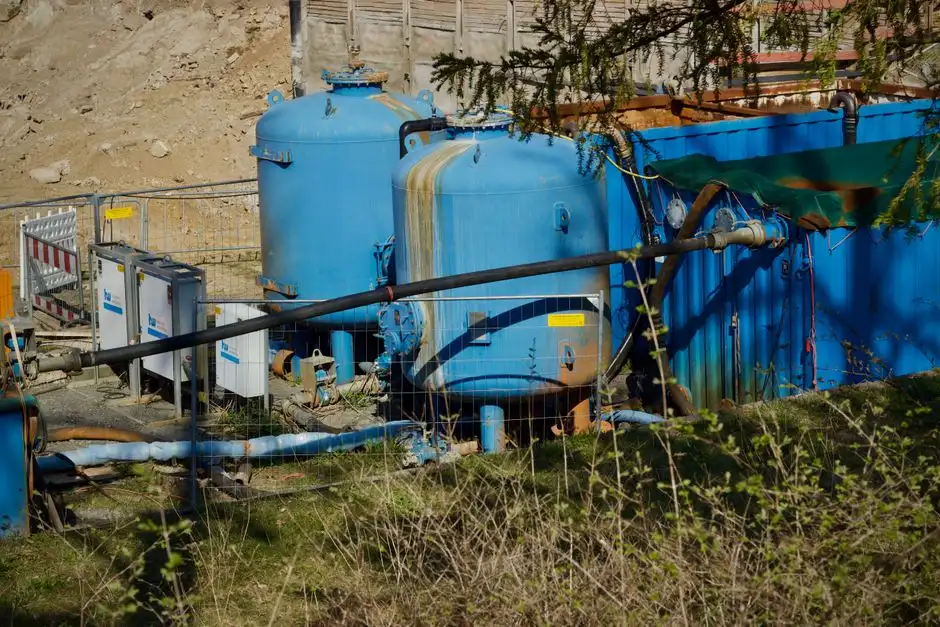
The 2015 BioMed Research International pilot EGSB study demonstrates DAF as part of an integrated anaerobic POME system rather than as the primary COD-removal mechanism. Two pilot-scale anaerobic expanded granular sludge bed reactors operated continuously for one year at a hydraulic retention time of 9.8 days, and half of the sludge was recycled through DAF.
The study reported a COD change from 71,179 mg/L to 12,341 mg/L. Its average effluent COD was 3,587 mg/L, with a consistent COD removal efficiency of 94.89%. These results must be attributed to the integrated anaerobic treatment system; they do not demonstrate that DAF alone produced the COD reduction. The anaerobic stage and its operating conditions were central to the reported outcome.
Recycling half the sludge through DAF changes the process mass balance. It may reduce the solids burden entering a downstream biological stage, but it also creates a recycle stream whose flow, solids concentration, polymer demand, and tendency to accumulate must be considered. The arrangement is only transferable if the mill’s sludge characteristics and reactor inventory are compatible.
For equipment selection, the buyer should trace recovered solids through every destination: direct recycle, thickening, biological-stage return, sludge treatment, or disposal. A plate-and-frame filter press can be evaluated where dewatering is required, but its selection depends on sludge volume, solids concentration, moisture target, and disposal or reuse route. Dewatering duty must be included in the whole-plant mass balance rather than added after the DAF equipment has been ordered.
The practical question is therefore not simply whether DAF can remove sludge. It is whether the integrated recycle configuration lowers net solids handling and biological loading without creating hydraulic, chemical, or inventory constraints that transfer cost and risk elsewhere.
Choosing Between DAF, Clarification, and Biological Pretreatment
DAF, lamella clarification, and biological pretreatment perform different functions in a POME treatment train, so selection should follow the required separation and organic-load removal rather than a generic efficiency claim. DAF is particularly relevant where conditioned oil, fat, colloids, and low-density solids must be separated. Lamella clarification captures clarified solids through plate settling, while anaerobic or aerobic biological treatment addresses biodegradable organic load.
HydropureWater’s lamella clarifier catalog lists a surface-loading range of 20–40 m/h and claims chemical-consumption reduction of up to 30%. These are commercial comparison points, not POME design values or guarantees. They do not establish that a lamella unit will match DAF performance for floatable oil and fat.
Use the following decision logic:
| If the primary requirement is… | Evaluate first… | Key qualification |
|---|---|---|
| Removal of conditioned oil, fat, colloids, and floatable solids | DAF | Requires coagulation, flocculation, recycle, and sludge handling to be engineered together |
| Capture of clarified settleable solids | Lamella clarification | Confirm POME settling behavior, surface loading, and chemical demand through project testing |
| Removal of biodegradable organic load | Anaerobic or aerobic biological treatment | DAF may be pretreatment or an integrated solids-management step |
| Combined solids and organic-load reduction | Integrated physical and biological train | Define each process boundary and the final discharge or reuse route |
The comparison also depends on recovered-sludge route and footprint. If oil-rich float requires separate handling, DAF’s process advantage may be offset by downstream sludge management. If the mill already has an anaerobic reactor and needs solids capture, DAF may support that arrangement rather than replace biological treatment. Request an high-efficiency sedimentation tank as part of an alternative-process comparison, not as an isolated unit selected from catalog surface-loading data.
Operating Controls, Troubleshooting, and Performance Acceptance
A DAF unit should be monitored through one operating loop linking flow, pressure, recycle ratio, chemical dose, pH, sludge-blanket depth, float quality, and skimming performance. These variables interact: a change in wastewater characteristics can require a different chemical condition even when equipment settings remain unchanged.
Oil carryover can indicate inadequate conditioning, poor floc formation, disturbed sludge blanket, excessive loading, or unsuitable skimming conditions. TSS breakthrough calls for checking chemical dose, recycle performance, saturation, contact time, and hydraulic and solids loading. Sludge accumulation calls for reviewing the recycle route, blanket depth, skimming frequency, and downstream thickening or dewatering capacity.
The 1987 Water Research finding about deterioration above 1650 kg m−2 h−1 TSS loading is a diagnostic prompt, not a universal alarm limit. Operators need a site-specific loading basis that the supplier has calculated and warranted.
Acceptance testing should use project-specific inlet and outlet TSS, oil and grease, and any other permit or reuse parameters. The literature figures of 90% TSS and 80% BOD removal from the 1987 laboratory study provide context, but they should not appear as an unverified guarantee. The DAF operating troubleshooting guide is more useful when tied to a defined control and response plan.
| Observed condition | Checks to perform | Required evidence |
|---|---|---|
| Oil carryover | Coagulation, flocculation, recycle, saturation, contact time, blanket condition, and skimming | Inlet and outlet oil measurements with operating logs |
| TSS breakthrough | Chemical condition, hydraulic and solids loading, recycle delivery, and float removal | Representative sampling and load calculations |
| Excess sludge inventory | Blanket depth, recycle balance, skimming, thickening, and dewatering route | Sludge mass balance and handling records |
| Performance decline during peak production | Equalization, feed composition, chemical demand, and peak-capacity margin | Production-linked sampling and verified flow records |
| High chemical consumption | POME variability, dose control, mixing, and downstream organic load | Jar-test basis, calibrated pumps, and consumption records |
Acceptance should occur during representative production. Require confirmation of chemical consumption, recovered-sludge moisture and handling rate, sampling methods, operating conditions, and any deviations. A credible guarantee links results to defined inlet conditions rather than removing the mill’s variability from the test.
What to Require from a DAF Supplier
A comparable DAF quotation must state the design basis and performance boundary; otherwise, bidders may be comparing different hydraulic duties, guarantees, and scopes. Ask each supplier to identify design flow, TSS-loading basis, oil-and-fat loading, recycle ratio, pressure basis, treated-water capacity, and the sludge-disposal calculation.
The guarantee should define inlet conditions, sampling methods, outlet parameters, test duration, production representativeness, and remedies for non-compliance. Require corrosion-resistant construction appropriate to POME, pump and blower arrangements, controls, electrical requirements, and spare-part availability. Also ask whether chemical storage, preparation, and dosing are included and what operating assumptions support the consumption estimate.
HydropureWater’s verified DAF catalog lists 4–300 m³/h across 13 standard models, with micro-bubble technology and automatic skimming. Those are supplier-range facts only. They do not prove suitability for a particular POME stream, and they do not replace a mill-specific duty calculation.
| Procurement item | Information to request | Reason for comparison |
|---|---|---|
| Design basis | Average and peak flow; TSS, oil, and fat loads; recycle and pressure basis | Confirms that bids address the same duty |
| Performance guarantee | Inlet conditions, outlet parameters, sampling, duration, and remedies | Prevents transfer of unlimited site variability to the owner |
| Equipment scope | Tank, pumps, blower, saturation system, controls, skid, and electrical requirements | Reveals exclusions and interface assumptions |
| Chemical system | Dosing concept, storage, preparation, consumption assumptions, and inclusion in price | Connects operating cost with process performance |
| Materials and corrosion protection | Construction specification and POME suitability rationale | Supports durability and maintainability |
| Sludge handling | Float recovery rate, moisture or solids concentration, and discharge or recycle calculations | Completes the whole-plant mass balance |
| Commissioning and support | Acceptance test, training, manuals, spare parts, and technical-support pathway | Defines implementation and after-sales accountability |
Finally, request references for comparable POME or oily industrial wastewater, not only generic industrial installations. The technical file should reconcile the selected chemical system, test evidence, guarantees, and downstream treatment boundary.
Frequently Asked Questions
How should a DAF system be sized for palm oil mill wastewater?
Size it from representative wastewater tests, average and peak flow, TSS and oil-and-fat loads, agreed removal targets, recycle duty, and the downstream treatment boundary. The designer should then calculate flotation area, treated-water capacity, chemical demand, and recovered-sludge handling. Do not use the 1987 laboratory threshold of 1650 kg m−2 h−1 or the 560 kPa test point as universal design values.
What should a buyer include when comparing DAF budget and price?
Request quotations normalized around treated capacity, materials, pumps and blower arrangement, controls, chemical storage and dosing, sludge handling, installation, commissioning, training, and performance guarantees. Also request the chemical-consumption assumptions. The supplied research contains no defensible quotation for a POME DAF system, so the buyer must provide the design inputs and ask each bidder to state its exclusions and operating-cost basis.
How can a buyer assess a DAF supplier’s technical capability?
Ask for project-specific design calculations, evidence from comparable wastewater, the basis of every performance claim, commissioning acceptance criteria, and documentation for operators and maintenance staff. Review how the supplier defines inlet conditions, sampling, test duration, sludge output, and remedies for non-compliance. Catalog capacity and model count do not demonstrate POME design capability.
What is the main compliance risk when selecting DAF for POME?
The main risk is confusing equipment removal efficiency with final regulatory compliance. DAF performance must be linked to the complete treatment train and the mill’s permit or land-application requirements, which must be confirmed for the receiving jurisdiction. Require the supplier to define what it guarantees and identify which obligations remain with downstream treatment and final-use controls.
Should PAC or PAM be used, and is 30 mg/L PAM an appropriate starting dose?
Do not prescribe a dose from the literature alone. Run POME-specific jar tests to compare PAC, PAM, or other approved conditioning options, then validate the selected combination through pilot or site work. PAC was evaluated in the 2022 Jurnal Serambi Engineering laboratory study, while the 2015 BioMed Research International EGSB study reports 30 mg/L PAM in its DAF arrangement. Those documented conditions are not universal recommendations.