What Makes Dominican Republic Textile Wastewater Different?
Textile wastewater treatment in the Dominican Republic must be designed around the production stages, pollutants, flow variability, and applicable permit—not color alone. Dyeing and washing can raise color, BOD, COD, pH, and metal concerns; a 2023 critical review reports that approximately 20% to 30% of dye may remain in wastewater. The reviewed literature is international, while the regional evidence concerns textile-to-textile capacity and recycling, not Dominican discharge law. Characterization therefore has to determine which unit, chemical, and discharge standard applies at the individual mill.
Effluent chemistry follows the production sequence. Desizing releases starch and BOD. Alkaline scouring and caustic mercerizing can increase pH. Bleaching introduces hypochlorite, peroxide, peracetic acid, or enzymes. Dyeing may add color and metals used in dye fixation, while washing contributes surfactants, detergents, enzymes, acids, and BOD. The 2023 review found a minimum denim-wastewater BOD of 9.8 mg/L with a biodegradability index of 0.009, while another study reported a BI of 0.69. That contrast confirms that process stage and chemistry must be checked rather than assumed.
Manufacturing growth and nearshoring increase the need for disciplined wastewater decisions, but they do not establish current textile-specific limits in the Dominican Republic. The CAFTA-DR textile-recycling study evaluated five capabilities—waste and collection sorting, recycled fiber production, yarn manufacturing, fabric manufacturing, and garment manufacturing. These describe circular-material infrastructure, not treatment capabilities, and should not be confused with a wastewater compliance pathway.
| Production source | Principal wastewater concerns | Design implication |
|---|---|---|
| Desizing | Starch and BOD | Assess biodegradability and biological load |
| Scouring and mercerizing | High-pH alkaline wastewater | Neutralize and segregate before equalization |
| Bleaching | Oxidants and residual chemistry | Define compatible treatment and residual targets |
| Dyeing | Color, BOD, COD, and possible metals | Test for recalcitrant color and relevant metals |
| Washing | Surfactants, detergents, enzymes, acids, and BOD | Quantify load and prevent hydraulic shocks |
Regional manufacturing context should therefore inform project planning, while site data determines the treatment train. This distinction is also important when comparing Dominican Republic industrial wastewater infrastructure with international textile treatment studies.
Build the Treatment Train from the Wastewater Up
A defensible textile treatment train begins with source control and segregation, then equalization, screening, chemical conditioning, clarification, biological treatment, polishing where required, and sludge handling. Each step has a distinct job. Screening protects downstream equipment; equalization limits batch shocks; DAF removes physical contaminants; biological treatment addresses biodegradable organics; and polishing addresses residuals that remain after those barriers.
The sequence should be established from the wastewater rather than from a preferred machine. Concentrated dye baths, alkaline scouring streams, bleach rinses, and wash waters should be identified separately where segregation is practical. The 2023 review identifies dyeing as the most contaminated stage because a large portion of dye is not retained by the fabric; its reported 20% to 30% not retained raises color, BOD, and COD. The reviewed wastewater color value of 3,000 Pt–Co units is evidence that color can be substantial, but it is not a Dominican discharge limit.
- Control and segregate: prevent incompatible process streams from mixing and recover reusable chemicals where operationally justified.
- Equalize: blend batch discharges and establish the peak flow, load, pH, and temperature entering treatment.
- Screen: remove fibres, lint, and other solids that could foul pumps or clog equipment.
- Condition: use jar-tested coagulants, flocculants, and pH adjustment for the actual wastewater.
- Clarify: apply DAF for suspended solids, colloids, oil, grease, and floatable material.
- Remove biodegradable organics: provide biological treatment with the required hydraulic retention and loading basis.
- Polish or reuse: add filtration, advanced oxidation, membranes, or disinfection only against a defined residual requirement.
- Handle residuals: characterize and dewater sludge before its final disposal route is selected.
DAF should sit before biological treatment when it removes the suspended and colloidal load that would otherwise interfere with biological operation. A textile wastewater DAF pretreatment system also requires compatible chemicals and confirmation of the resulting sludge. An PLC-controlled chemical dosing system automates reagent addition, but the recipe must come from jar testing and site analysis—not the control-system architecture.
Advanced oxidation should be evaluated against a defined residual color target. The 2023 review reported overall color removal of 95% in synthetic wastewater and 97% in real textile wastewater for advanced oxidation processes, with photocatalysis and Fenton reactions identified as the most efficient processes in the reviewed studies. Chromium, copper, zinc, and manganese also require quantification because the review found inconsistent reporting; their presence cannot be inferred for every Dominican mill without testing.
| Process step | Primary treatment job | Evidence or decision requirement |
|---|---|---|
| Equalization | Buffer flow and concentration variation | Use measured batch discharge profiles |
| Screening | Remove fibres and coarse solids | Match openings to generated solids |
| Chemical conditioning | Destabilize colloids and support floc formation | Confirm by jar testing and residual chemistry testing |
| DAF | Remove suspended solids, colloids, FOG, and oil | Verify hydraulic loading and sludge characteristics |
| Biological treatment | Reduce biodegradable organics | Confirm load, biodegradability, temperature, and residence time |
| Advanced oxidation | Polish residual or recalcitrant color | Define the residual target and site-water test method |
| Filtration or membranes | Provide a defined solids or reuse-quality barrier | Assess fouling, concentrate, cleaning, and end use |
Compare Treatment Options by the Job They Perform
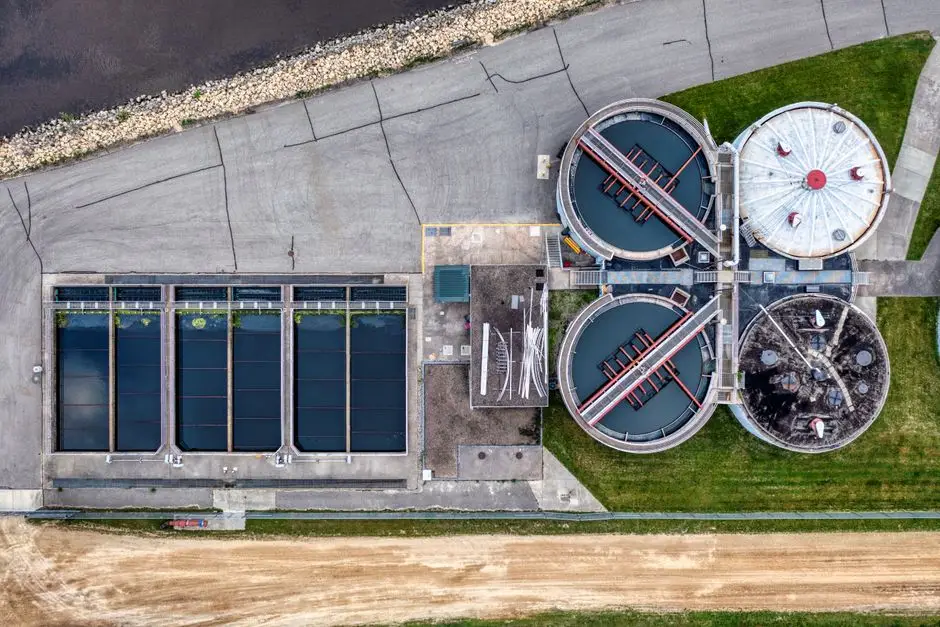
No single technology performs every required function, and laboratory color-removal results should not be treated as industrial guarantees. Biological treatment, DAF, filtration, advanced oxidation, and membranes each address different pollutants and require different operating controls.
Biological treatment is the central option for biodegradable organics because it can reduce BOD and COD without relying entirely on chemical addition. However, the 2023 review reported 78.4% color removal in real textile wastewater for biological processes. That result supports biological treatment as part of a train, while showing why residual dye color may still need a dedicated barrier.
DAF is primarily a physical clarification and recovery step. It removes suspended solids, colloidal material, oil, grease, and floatable contaminants; it should not be presented as a complete solution for dissolved color and metals. The DAF selection guide for FOG and suspended solids separates those selection duties from biological treatment.
Filtration provides a solids barrier before reuse or as part of polishing. Advanced oxidation addresses residual color and selected recalcitrant compounds; the 2023 review identified photocatalysis and Fenton reactions as the most efficient processes in its reviewed literature. Membranes provide a controlled separation barrier, but concentrate handling, fouling, cleaning, and replacement remain engineering obligations.
The same 2023 review reported 100% color removal by nanofiltration and reverse osmosis in textile wastewater. It also found that the revised works did not clearly demonstrate energy savings, carbon-footprint reductions, waste-generation reductions, or industrial upscaling. Those omissions do not invalidate the laboratory results, but they prevent treating them as proof of commercial plant economics. Buyers should require full-scale references, site-water acceptance criteria, concentrate handling, and documented operating costs.
| Technology | Target function | Strength | Buyer must verify |
|---|---|---|---|
| Biological treatment | BOD, COD, and biodegradable organics | Core organics-removal barrier | Real textile load, biodegradability, color residual, sludge |
| DAF | Suspended solids, colloids, FOG, and oil | Removes physical contamination before biology | Hydraulic loading, chemicals, float sludge |
| Filtration | Residual solids | Supports polishing or reuse | Fouling, backwash, solids destination |
| Advanced oxidation | Residual or recalcitrant color | Targeted color-removal barrier | Site-water performance, oxidant use, by-products, energy |
| Nanofiltration or reverse osmosis | High-quality separation barrier | Reported complete color removal in reviewed studies | Full-scale evidence, concentrate, membranes, lifecycle cost |
None of these technologies, individually or in combination, guarantees legal discharge compliance in the Dominican Republic until the governing requirements and site performance are established.
Size the System Using Plant Data, Not a Generic Flow Rate
Equipment sizing should begin with measured plant data because textile wastewater varies by process, batch, product, and operating schedule. Required inputs include hourly and daily flow, the batch discharge profile, pH range, temperature, color, BOD, COD, TSS, oil and grease, relevant metals, toxicity characteristics, the reuse target, operating hours, and planned production changes.
The sampling plan must separate routine production wastewater from concentrated side streams and identify peak equalization demand. A mechanical bar screen for textile solids removal should be selected around actual fibre and debris characteristics, not only nominal treatment flow.
Production-based estimates require validation. The 2023 review cites water use of approximately 50 to 2,600 L per kg of fabric, illustrating how widely production-based flow estimation can vary. Metered plant history is more defensible than applying that range directly to a facility.
HydropureWater’s available DAF range is 4 to 300 m³/h across 13 standard models, with automatic skimming. That range can frame a supplier discussion, but selection still requires confirmation of hydraulic loading, flocculation chemistry, equalization duty, and waste-sludge characteristics for the selected application. The available dissolved air flotation configurations should be matched to the measured duty, not selected from peak flow alone.
The Automatic Chemical Dosing System supports PLC-controlled injection of coagulants, flocculants, pH adjusters, and specialty chemicals. Chemical selection must follow jar testing and site-water analysis, including residual chemical and dosing range. The PLC-controlled chemical dosing system provides delivery and control, but it cannot establish the correct recipe.
Sludge handling belongs in sizing. HydropureWater’s Plate and Frame Filter Press options extend from 1 m² to 500 m² filtration area, with manual, hydraulic, or automatic PLC-controlled operation. An industrial sludge filter press should be selected using expected solids generation, moisture response, operating hours, filtrate destination, and disposal route—not simply the DAF flow.
| Sizing input | Minimum evidence requested | Equipment consequence |
|---|---|---|
| Hydraulic profile | Hourly, daily, and batch discharge records | Equalization and treatment capacity |
| Pollutant load | Representative pH, color, BOD, COD, TSS, FOG, and metals | Process selection and chemical demand |
| Operational limits | Temperature, operating hours, and future production changes | Equipment redundancy and controls |
| Residual route | Permit or reuse specification | Polishing and disinfection scope |
| Sludge | Solids generation, chemistry, and disposal route | Thickening and dewatering capacity |
Plan for Compliance, Reuse, and the Supply Chain
The supplied research does not establish current Dominican Republic textile-specific discharge limits, so no equipment should be approved against an inferred international limit. The buyer must confirm the governing permit with the facility’s environmental authority and the receiving sewer or receiving-water authority. This is a compliance gate, not a document to finalize after equipment selection.
Supplier proposals should identify the governing permit, sample point, averaging period, analytical methods, color units, pH range, BOD and COD limits, metal limits, TSS limits, monitoring obligations, and any reuse conditions. Ask how each requirement will be demonstrated: laboratory result, site-water trial, continuous monitoring, or contractual acceptance test. The high-COD industrial wastewater treatment workflow illustrates how treatment steps should be tied to measurable duties, but its performance cannot establish Dominican compliance.
Water reuse also requires a defined specification. HydropureWater’s MBR integrated wastewater treatment system provides filtration below 1 μm and near-reuse-quality effluent, but reuse remains conditional on residual contaminants, health requirements, process chemistry, and the client’s end-use specification.
Textile recycling and wastewater treatment require separate plans. Post-industrial textile scraps may be sorted and recycled, while contaminated process water must be treated before any discharge or reuse decision. The CAFTA-DR five-criterion recycling framework concerns waste sorting, recycled fiber production, yarn, fabric, and garment manufacturing; it does not reduce the treatment requirements for dye baths or wash water.
Compare bids on the whole lifecycle: treatment performance, chemical use, energy, sludge handling, controls, operator training, commissioning, chemical supply, spare membranes, remote monitoring, emergency bypass conditions, maintenance, and guarantees. Require full-scale industrial evidence and acceptance protocols tied to actual site water. The 2023 review’s evidence gap—limited demonstration of industrial upscaling, energy savings, carbon reduction, and waste-generation reduction—means generic efficiency claims are insufficient.
| Procurement check | Evidence to request | Decision enabled |
|---|---|---|
| Local compliance | Current permit and written authority confirmation | Define discharge or reuse boundary |
| Performance | Site-water testing and contractual acceptance criteria | Assign performance risk |
| Technology transfer | Full-scale references and operating experience | Assess scale-up credibility |
| Lifecycle scope | Chemical, energy, sludge, maintenance, and membrane costs | Compare bids on total scope |
| Supply chain | Training, spares, local support, controls, and emergency bypass | Assess operability and continuity |
| Sludge | Residue testing and disposal-route confirmation | Close the residuals loop |
Supplier selection should therefore reward verifiable performance and complete execution scope. The industrial wastewater equipment supplier evaluation guide provides a broader comparison framework, while project-specific acceptance data remain the decisive evidence.
Frequently Asked Questions
Can DAF alone treat an entire textile mill wastewater stream?
Not reliably. DAF’s strongest role is removing suspended solids, colloids, oil, grease, and floatable material before biological treatment. A complete train also addresses biodegradable organics, residual color, required metals, and sludge. The final configuration depends on measured effluent and the discharge or reuse specification.
Why are laboratory samples insufficient for final equipment sizing?
One-litre samples may miss batch peaks, changing pH, surfactants, dye chemistry, and sludge behavior. Request flow histories, composite and event samples, production-stage characterization, operating hours, and expected future changes before sizing equalization, DAF, biological, polishing, or dewatering equipment.
Which supplier credentials reduce technology-transfer risk?
Request full-scale references, site-water acceptance data, control narratives, O&M support, operator training, commissioning plans, and guarantee conditions. Treat a 100% laboratory color-removal claim as evidence of a tested condition—not proof of industrial hydraulics, energy use, fouling performance, or lifecycle cost.
What Dominican Republic requirements must be verified locally?
Confirm the governing permit, discharge point, averaging period, analytical methods, color units, pH, BOD, COD, metals, TSS, monitoring, and reuse conditions with the relevant environmental and receiving authorities. International textile studies do not establish current Dominican limits.
How should buyers compare bids without relying on equipment price alone?
Request a whole-lifecycle cost covering treatment performance, chemicals, energy, sludge, controls, guarantees, commissioning, training, maintenance, and spare parts. Use the same site-water acceptance protocol for each bidder and state which costs are measured, estimated, or excluded.