Choose by contaminant fraction, not equipment name
Mining and metals wastewater should not be assigned to dissolved air flotation or a clarifier as an interchangeable equipment choice. A lamella plate clarifier is generally the primary unit for dense, rapidly settling mineral fines, tailings, and metallurgical solids, while DAF is better suited to conditioned oils, colloids, flotation-reagent residues, and low-specific-gravity precipitates. DAF is poorly suited to heavy silt or clay loads that do not float. Combined streams generally justify clarification followed by DAF polishing; single-fraction streams may support a simpler train.
Begin by separating the influent into dense and rapidly settling mineral solids, colloidal clays, oils and greases, flotation-reagent residues, and dissolved or precipitated heavy metals. A gravity clarifier addresses only the settleable fraction. DAF depends on chemical conditioning to produce floc that microbubbles can attach to and lift. Dissolved metals cannot be removed by flotation or settling until an appropriate chemical treatment converts them into a removable precipitate.
This distinction matters because a mining facility may combine tailings-thickener overflow, mill discharge, equipment runoff, and acid-mine-drainage overflow within one treatment system. The governing fraction can change with production, rainfall, reagent carryover, and pH. Equipment selection should therefore follow stream-specific characterization rather than a plant-wide assumption that one mechanism handles every contaminant.
How gravity clarification and DAF separate different solids
Gravity clarification removes particles whose specific gravity exceeds that of water under the tank’s surface overflow rate, while a lamella clarifier adds effective settling area without changing the underlying separation mechanism. DAF instead uses pressurized air in recirculated clarified effluent, then releases that stream so microbubbles attach to conditioned floc; a skimmer removes the resulting float. The mechanisms address different fractions, so their respective loading limits should be stated separately in an RFQ.
Clearwater Industries reports microbubble diameters of 30–50 µm for its DAF systems and a 15–45 second flash-mix range in flocculation tubes. Those values describe the cited equipment practice, not a universal mining design basis. Oil droplets, fine precipitates, biological flocs, and loose polymer floc still require suitable conditioning, and Clearwater Industries states that the contact time and chemical dose must be established empirically through jar testing (Clearwater Industries, 2026-04-27).
For a combined train, the clarifier removes bulk mineral solids before the DAF receives a more favorable solids load. The DAF then captures the remaining conditioned colloidal and buoyant material. For a DAF-focused review, use the DAF selection checklist for FOG and TSS as a separate procurement reference.
| Selection factor | Clarifier or lamella plate | DAF |
|---|---|---|
| Primary mechanism | Gravity sedimentation; lamella plates increase effective settling area. | Microbubble flotation of conditioned floc. |
| Preferred contaminants | Dense mineral fines, tailings, and metallurgical solids that settle under the applicable surface overflow rate. | Conditioned oils, colloids, flotation reagents, biological flocs, and low-specific-gravity precipitates. |
| Principal limitation | Colloidal, buoyant, and dissolved fractions can pass through. | High silt or clay loads are not well suited to flotation, according to Fluence. |
| Conditioning | Performance depends principally on settleability, surface overflow rate, and sludge withdrawal design. | Coagulant, pH adjustment, and flocculant must be optimized for the stream. |
| Recovered solids | Bottom underflow for thickening or dewatering. | Surface float removed by a skimmer; heavier solids may accumulate at the bottom. |
| Equipment references | High-efficiency lamella clarifier for mineral solids. | Industrial DAF system for mining wastewater polishing. |
Match each plant stream to the right treatment train
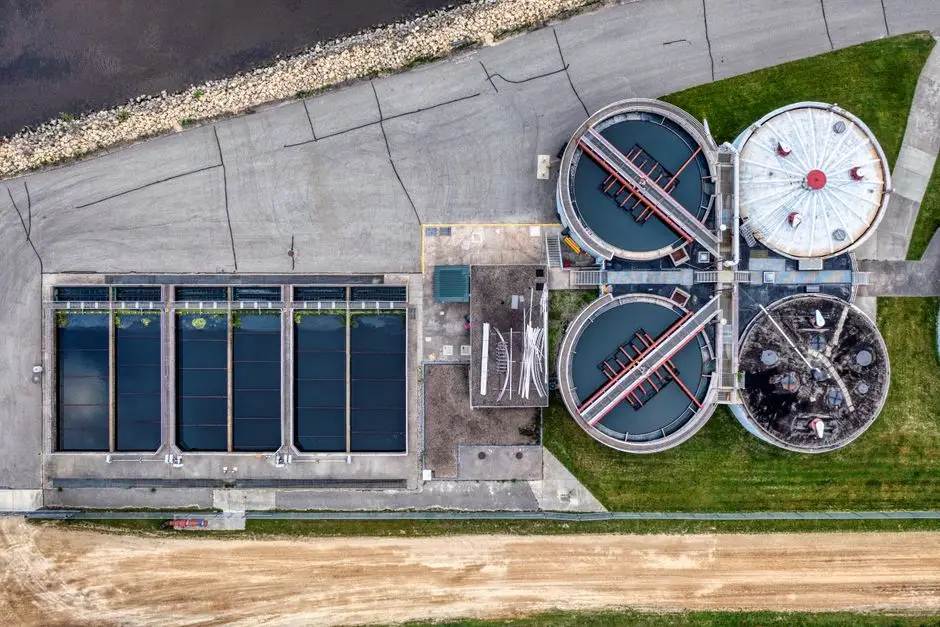
The most defensible treatment train follows the contaminant fraction in each plant stream. Tailings-thickener overflow dominated by dense mineral fines calls for a clarifier or thickener as primary solids removal, with its underflow directed to sludge dewatering. Mill discharge presents a different problem because residual flotation reagents, oils, and fine precipitates may remain after mineral solids are removed; a lamella clarifier followed by conditioned DAF is a more complete train.
Mobile-equipment runoff needs an oil-specific decision. Free oil may respond to physical separation or gravity treatment, but emulsified oil may not settle reliably and should be evaluated for chemical conditioning followed by DAF. For acid-mine-drainage neutralization overflow, first establish whether metal hydroxides have formed and whether the target metals remain dissolved. Valid precipitation chemistry must precede clarification or flotation; neither mechanism removes metals that remain in solution.
A high-silt or high-clay stream should not be assumed to be liftable by DAF. Fluence specifically identifies high levels of non-floating silt and clay as a boundary for DAF, so upstream solids removal may be necessary to protect the treatment train. For process-water recycling, Fluence documents DAF as a means of recycling process water and materials in mining-waste treatment. That does not establish final reuse quality: filtration or membrane treatment may still be needed before reuse or discharge.
| Plant stream | Dominant fraction to verify | Practical train to evaluate | Critical RFQ evidence |
|---|---|---|---|
| Tailings-thickener overflow | Dense mineral fines | Clarifier or thickener, followed by sludge dewatering. | Settleability, underflow target, flow variation, and solids characterization. |
| Mill discharge | Reagent residues, oils, and fine precipitates | Lamella clarification followed by conditioned DAF. | Particle-size distribution, reagent carryover, oil content, and jar-test results. |
| Mobile-equipment runoff | Free or emulsified oil | Characterization, suitable conditioning, and DAF evaluation. | Emulsion characteristics, pH, temperature, and separated oil results. |
| Acid-mine-drainage overflow | Dissolved metals and metal hydroxide precipitate | Neutralization and precipitation chemistry before clarification or DAF. | Speciation, pH profile, precipitation performance, and dissolved-metal analyses. |
| High-silt or high-clay stream | Non-floating mineral particles | Upstream solids removal, then a downstream polishing step where justified. | Particle-size distribution and settleability testing. |
| Process-water recycling | Remaining colloidal and suspended solids | DAF with downstream filtration or membrane treatment where required. | Reuse objectives, final water-quality basis, and downstream polishing scope. |
Size the system with site-specific testing
A defensible equipment size requires influent data from the actual stream and season, not a generic mining application. The RFQ should include flow, TSS, particle-size distribution, pH, temperature, and dissolved-metal concentrations such as copper, lead, and zinc. Seasonal flow and contaminant variation should be represented rather than reduced to one average-day sample. These inputs determine which mechanism dominates and whether a combined train is justified.
Bench-scale jar testing should establish coagulant and flocculant doses and verify DAF performance. The Logan, Utah wastewater-treatment-plant study recorded an optimum aluminum sulfate dose of 30 mg/L for algae and phosphorus removal from lagoon effluent (Elder, Utah State University, 2011). That result demonstrates why a chemical dose must be application-specific; it is not a mining or metals design value.
Clarifier selection depends on particle settleability, surface overflow rate, sludge withdrawal, and the required underflow condition. DAF selection depends on conditioned floc characteristics, bubble contact, solids loading, and the applicable hydraulic configuration. Clearwater Industries lists FPAC for small-to-medium flows with high contaminant loads, FPBC for low-to-medium loads and low overflow rates, and FPHF for large flows with medium-to-large loads (Clearwater Industries, 2026-04-27).
HydropureWater’s catalog lists DAF models from 4–300 m³/h and lamella clarifier surface loading rates of 20–40 m/h. These are catalog figures, not final project sizing. Confirm them against the selected stream, tested floc characteristics, equipment configuration, hydraulic constraints, and final process design. A PLC-controlled chemical dosing skid should be scoped alongside the treatment unit, while settled solids may require a filter press for mining wastewater sludge.
Compare installed cost, sludge handling, and supplier scope
The supplied research does not provide a 2026 unit price for DAF or a clarifier and does not support a Marinette-specific price. A budgetary quotation must therefore be tied to the actual flow, TSS, contaminant fractions, operating schedule, materials, conditioning requirements, and sludge-handling scope. The supplied commercial estimate of $150,000 to more than $1.5 million should not be repeated as a current 2026 market price because the underlying research explicitly states that current unit pricing is unavailable.
Conventional clarifiers generally require more civil space because their settling area is defined by tank geometry. Lamella designs multiply effective settling area within a smaller footprint, but they do not remove colloidal, buoyant, or dissolved contaminants. A DAF unit has a different civil and operating profile: the flotation tank, recycle system, air saturation, skimmer, controls, and chemical-conditioning equipment must all be included.
Solids handling changes the installed-cost comparison. Clarifier underflow normally goes to thickening or dewatering. Properly conditioned DAF can produce a thick float that may require little further dewatering, according to Clearwater Industries (2026-04-27). That can reduce downstream handling requirements, but the benefit must be demonstrated using the project’s actual solids rather than assumed from equipment literature.
Ask bidders to quote the treatment unit, chemical-conditioning skid, controls, sludge-dewatering step, utilities, commissioning, and applicable compliance work as one train. Require references from comparable metallurgical or metal-bearing effluents, pilot evidence where available, and support for automatic dosing commissioning.
| Cost comparison item | Clarifier-led train | DAF-led or combined train |
|---|---|---|
| Civil footprint | Conventional units generally require more space; lamella units reduce footprint through added settling area. | Requires space for flotation, recycle, air-saturation, skimming, and conditioning equipment. |
| Recovered solids | Underflow requires thickening or dewatering. | Conditioned float may need little further dewatering, subject to project testing. |
| Chemical scope | Clarifier performance is primarily governed by settleability and hydraulic design. | Coagulant, pH adjustment, and flocculant are central to performance. |
| Quotation basis | Flow, settleable solids, underflow target, footprint, and dewatering needs. | Flow, conditioned solids, oil or colloid load, footprint, controls, and dewatering needs. |
| Best comparison method | Price the complete treatment train and disclose every design assumption and exclusion. | |
Build an RFQ that vendors can price consistently
A comparable RFQ begins with separate stream-by-stream flow and contaminant profiles. Include design-flow ranges, seasonal variability, operating hours, and the reuse or discharge objective. Require each bidder to define the proposed unit as primary clarification, flotation polishing, or a combined train, then state the basis for every sizing parameter. The industrial DAF system for mining wastewater polishing and the high-efficiency lamella clarifier for mineral solids should therefore be evaluated against the same stream-specific process basis.
The guaranteed process basis should include removal targets, underflow or floated-sludge consistency, chemical-consumption assumptions, operating duty point, controls scope, and downstream polishing requirements. Vendors should identify whether pilot testing is needed because of variable stream chemistry, new reagents, or uncertain metal-precipitate behavior. Any supplied performance evidence must identify the wastewater type, test conditions, and parameter being demonstrated.
Materials selection should follow the actual chemistry. pH, abrasiveness, temperature, and process reagents must be established before specifying corrosion-resistant materials or coatings. The RFQ should also identify applicable permits, local pretreatment requirements, documentation to be provided, commissioning responsibilities, operator training, and chemical-system support. Equipment selection establishes treatment capability; it does not by itself establish regulatory compliance.
- Submit stream-specific flow, TSS, particle-size, pH, temperature, oil, and dissolved-metal data.
- Provide representative seasonal samples and bench-scale jar-test results.
- Define the treatment role, removal targets, duty point, and downstream requirements.
- Require comparable references, pilot evidence where appropriate, and complete scope documentation.
- Compare bids against the same process basis, including conditioning and sludge handling.
Frequently Asked Questions
What will a DAF or clarifier cost for mining wastewater in Marinette in 2026?
No defensible universal 2026 price can be stated from the supplied research, and no Marinette-specific price is supported. Request a budgetary quotation tied to flow, TSS, particle-size distribution, contaminant fractions, operating hours, materials, chemical conditioning, controls, and sludge dewatering. Ask bidders to identify exclusions so that the clarifier, DAF, dosing skid, and filter press can be compared as a complete train.
How should DAF and lamella clarifier capacity be selected?
Do not use the HydropureWater catalog range of 4–300 m³/h for DAF or the 20–40 m/h lamella surface-loading rates as final sizing. Those values identify catalog limits; final selection requires stream-specific flow and solids data, particle settleability, jar-test results, hydraulic configuration, and underflow or floated-sludge targets. For uncertain floc behavior, require pilot testing before finalizing the duty point.
What should a buyer require when selecting an equipment supplier?
Require evidence from comparable metallurgical or metal-bearing effluents, pilot data where stream variability could affect performance, and documentation of chemical-system and commissioning support. The proposal should also identify the proposed treatment role, sizing basis, controls scope, operating assumptions, materials, and exclusions. A general equipment catalog or a performance claim from an unrelated wastewater is not enough.
Does choosing DAF or a clarifier establish discharge compliance?
No. Equipment selection must be checked against the facility’s current permit, local pretreatment requirements, receiving-water conditions, and site-specific analytical data. A treatment train may require additional filtration, membrane treatment, or other polishing before reuse or discharge. Obtain a written compliance basis from the applicable authority and supplier rather than treating equipment selection as regulatory approval.