What Jakarta’s 2026 wastewater context means for factories
Jakarta manufacturers typically treat high-COD trade waste through a staged train: equalization, removal of floating oils and suspended solids, biological COD reduction, and final clarification or membrane separation. DAF is often used upstream when FOG, oil or light solids are present; MBR or another biological system handles biodegradable organic load. Electrocoagulation is an alternative investigated for difficult high-COD streams. The correct route depends on measured flow, COD, BOD, pH, nutrients, toxicity and the receiver’s pretreatment limits—not on COD alone.
Indonesia’s wastewater infrastructure gap makes receiver-specific pretreatment essential. The peer-reviewed 2022 review Domestic wastewater in Indonesia: generation, characteristics and treatment estimated urban domestic, commercial and industrial wastewater plus stormwater runoff at 14.3 km³/year, against municipal wastewater-treatment capacity of 0.3 km³/year. That comparison describes the national urban context rather than a Jakarta factory’s discharge limit, but it shows why factories cannot assume downstream capacity will absorb uncontrolled loads.
The receiving destination changes the project. A factory discharging to an industrial-estate WWTP, municipal sewer or other permitted receiver must obtain that operator’s current influent acceptance requirements before selecting equipment. The East Jakarta Industrial Park precedent is instructive: its central WWTP is designed around BOD, suspended solids and COD, with a stated capacity of 14,400 tons per day. That is a site-specific facility figure, not a universal sizing rule for Jakarta factories.
Accordingly, the practical 2026 answer is not a stand-alone “COD remover.” It is a site-specific treatment train connected to an equalization strategy, biological or electrochemical COD-reduction stage, solids separation, sludge handling and documented acceptance testing. The Indonesia MBR engineering, cost and compliance guide provides additional plant-level context, but it does not replace a site survey or licensed compliance assessment.
Build a representative wastewater profile
Equipment selection should begin with a time-resolved wastewater characterization, not a single laboratory COD result. The minimum dataset should cover average and peak flow, discharge duration, batch versus continuous operation, COD, biological oxygen demand, suspended solids, pH, oil and grease, nutrients, toxicity indicators and process temperature where relevant.
The Cawang home-industry study demonstrates why sampling time matters. Aji and Jailani’s 2020 case study reported its highest BOD at 45.827 and highest COD at 95.923 in nighttime samples from mixed home-industry activities, including laundry, food, printing and photocopying. These are site-specific case-study results—not national limits or universal design values—but they support day/night and production-period sampling for mixed industrial discharges.
Concentration alone cannot size the plant. COD concentration must be paired with verified flow and operating hours to establish mass load, while sampling must capture production, shutdown and cleaning cycles. A diluted sample collected away from a discharge peak can materially understate the treatment requirement.
| Input | Why the buyer needs it | Evidence still required |
|---|---|---|
| Flow and operating profile | Defines hydraulic treatment and equalization requirements. | Verified flow record, peak discharge, batch schedule and operating hours. |
| COD and BOD | Distinguishes total chemical oxidation demand from biodegradable organic load. | Representative concentration and paired mass-load calculation; biodegradability test where needed. |
| Suspended solids and oil and grease | Indicates solids separation, FOG capture and biological protection requirements. | Total and settleable solids, emulsified or free oil, FOG composition and settling behavior. |
| pH, nutrients and temperature | Influences chemical dosing, biological activity and process control. | Operating ranges, nutrient balance and temperature during production and discharge. |
| Toxicity and metals | Identifies inhibition risks and treatment barriers. | Site-specific toxicity indicators, contaminant identity and biological inhibition assessment. |
| Discharge destination | Sets the required treatment and documentation basis. | Receiver pretreatment rules, permit conditions, sampling protocol and applicable wastewater standard. |
Several inputs cannot responsibly be replaced with assumptions. These include biodegradability, nutrient balance, contaminant toxicity, FOG content, settling behavior and the final sewer or effluent destination. The industrial effluent testing and compliance guide is useful for developing the sampling scope; the receiving authority or permit holder must determine the binding criteria.
Route the effluent through a treatment train
A defensible high-COD treatment train sequences the unit processes according to the contaminants they remove. The usual sequence is equalization and flow balancing, FOG or solids pretreatment, biological COD reduction, solids separation or membrane polishing, disinfection where required, and sludge management.
Equalization prevents variable production discharges from creating hydraulic or organic shock loads. It also gives operators time to inspect batches and adjust chemical dosing before the wastewater reaches the biological stage or sewer.
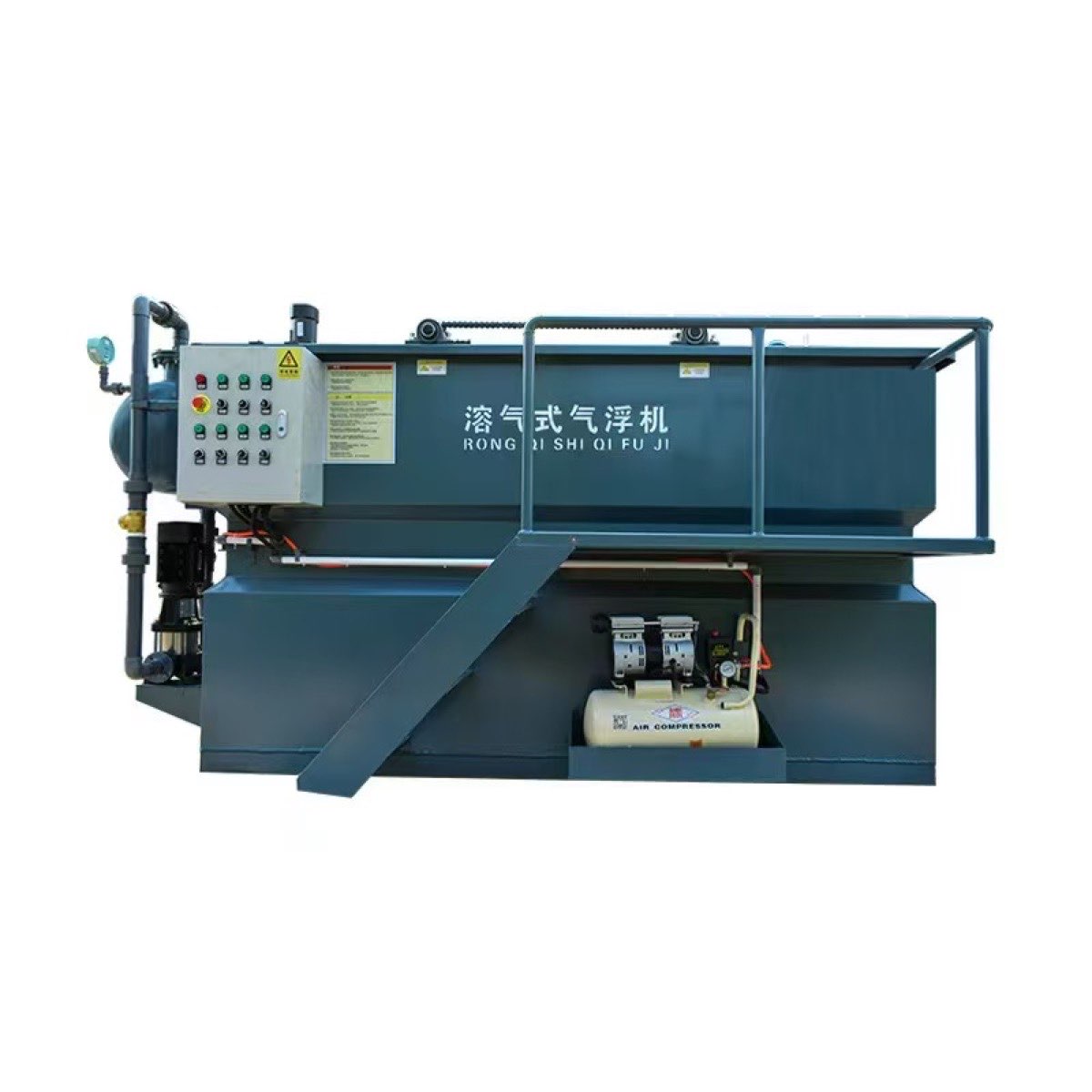
DAF belongs mainly at the front end when FOG, oil and grease, colloids or light solids could interfere with biological treatment. It captures material that must not enter the downstream biological process and produces skimmings plus flotation sludge. Equipment selection should follow the DAF selection checklist for FOG and TSS, including hydraulic loading, recycle performance, skimmings removal and control strategy. A DAF system for FOG and suspended-solids pretreatment should therefore be evaluated as part of a train, not as a stand-alone COD solution.
Biological treatment addresses biodegradable COD and BOD. MBR combines biological treatment with membrane separation in a compact process and is suitable where the project requires combined organic-load reduction and fine solids separation. The Indonesia MBR engineering, cost and compliance guide covers plant-level economics and compliance considerations, but neither compact footprint nor membrane separation alone establishes a universal reuse grade.
Electrocoagulation is a specialized option rather than a default high-COD route. A 2023 MDPI study investigated electrocoagulation for mineral-processing wastewater from a Pb/Zn sulfide flotation plant with an initial COD of 424.29 mg/L. Its operating conditions and effluent results cannot be transferred automatically to food, textile or chemical effluents because anode material, current density, initial pH, additives and wastewater composition are central to performance.
Every route creates residuals that require a parallel design. Flotation sludge, excess biological sludge and chemical precipitates need collection, thickening, dewatering and a documented disposal route. The high-FOG treatment reference provides a relevant process example, but sludge volume and moisture content must come from the selected route and verified waste data.
Compare DAF, biological treatment and electrocoagulation
DAF, biological treatment and electrocoagulation remove different contaminants and should be compared by dominant wastewater characteristic, not by their ability to produce a single impressive COD result. The 2022 Indonesian review also reinforces the need to control untreated flow: grey-water quantity was one to four times black-water quantity, while untreated grey-water quantity was three to six times untreated black water. Those domestic-wastewater findings support a broader hydraulic-control principle, not a factory design factor.
| Decision factor | DAF | Biological treatment, including MBR | Electrocoagulation |
|---|---|---|---|
| Primary function | Separates FOG, oil, colloids and floatable solids. | Reduces biodegradable organic load; MBR also separates solids through membranes. | Uses electrically generated coagulant species to destabilize contaminants for separation. |
| Best-fit application | FOG- and solids-rich effluent requiring biological protection. | Biodegradable high-COD effluent requiring COD and BOD reduction, with MBR selected where fine solids separation and compact equipment are priorities. | Case-specific streams requiring demonstrated treatment under defined chemistry and electrical conditions. |
| Principal constraint | Captured contaminants become skimmings or flotation sludge; DAF alone does not provide general biological COD reduction. | Requires suitable biodegradability, nutrient and pH conditions, biological control and appropriate hydraulic loading. | Performance depends on wastewater-specific chemistry and operating parameters; electricity, electrodes and sludge handling must be evaluated. |
| Sludge implication | Skimmings and flotation solids require handling and dewatering. | Excess biological solids require separation, concentration and dewatering. | Chemical precipitates or coagulated solids require removal and disposal. |
| Key sizing inputs | Peak flow, FOG and solids load, oil type, recycle ratio and skimmings removal. | Flow profile, COD and BOD mass load, biodegradability, nutrients, temperature and membrane configuration. | Initial COD and pollutant chemistry, pH, current density, anode material, additives and separation method. |
| Evidence boundary | Not supported as a stand-alone high-COD treatment by the supplied research.MBR performance must be demonstrated against the project’s influent and receiving requirements. | The supplied study concerns Pb/Zn sulfide mineral flotation wastewater with initial COD of 424.29 mg/L. |
Use a simple decision sequence. If FOG or floatable solids dominate, assess DAF before biological treatment. If the organic load is biodegradable, assess biological treatment and determine whether MBR’s integrated separation is required. If toxicity, difficult chemistry or non-biodegradable constituents limit biological treatment, obtain treatability evidence and assess case-specific alternatives. If the stream contains combinations of these characteristics, combine unit processes rather than forcing a single technology to solve every problem.
Turn the treatment route into a supplier-ready equipment brief

Comparable proposals require vendors to size against the same verified influent and receiver requirements. The brief should state design flow, operating hours, peak-flow treatment strategy, influent design basis, guaranteed treatment objective and the applicable sewer, permit or effluent criteria. Concentration and load must remain separate: suppliers should document the hydraulic calculation and COD mass-load calculation used for their equipment selection.
Each proposal should also identify materials of construction, utility demand, automation, redundancy, installation footprint, O&M requirements, start-up support and operator training. These omissions often appear only after commercial comparison, when they affect installation, staffing and lifecycle cost.
| Equipment | Questions the supplier must answer | Commercial items to compare |
|---|---|---|
| DAF | How are FOG, skimmings and solids removed? How does recycle performance respond to variable flow and load? What controls and safeguards apply? | Surface-area basis, recycle requirement, skimmings handling, controls, cleaning and maintenance access. |
| MBR | What membrane configuration is proposed? How are membranes cleaned, how is solids concentration managed, and how can membranes be accessed or replaced? | Module arrangement, cleaning chemicals, spare strategy, replacement access, controls and footprint. |
| Sludge dewatering | What sludge moisture content and dewatering duty does the proposal assume? How will filtrate and cake enter the disposal route? | Machine selection basis, cake handling, filtrate return, auxiliary utilities, containment and disposal scope. |
Sludge must be included in the commercial comparison, not treated as an incidental item. Ask for expected sludge volume, moisture content, dewatering method, disposal route, operating labor and consumables. The DAF system for FOG and suspended-solids pretreatment, integrated MBR wastewater treatment system and plate-frame filter press should be evaluated against one common influent dataset and one receiving standard.
Where variable industrial waste, toxicity or uncertain biodegradability makes scale-up uncertain, require a representative sample test or site trial. The trial should use the intended waste, production-cycle variability and the proposed operating range—not a benign water sample.
Verify performance before the factory accepts the system
Commissioning proves operation; acceptance should prove the agreed treatment performance. Define test limits around COD, BOD, suspended solids, pH and every receiver-specific parameter. Sampling must cover representative production and cleaning cycles, with documented calibration, operating logs, alarm tests and operator training.
Peraturan Menteri Lingkungan Hidup Republik Indonesia Nomor 5 Tahun 2014 tentang Baku Mutu Air Limbah provides national wastewater-quality context, but it does not replace the project’s site permit, sewer rules or receiving facility’s acceptance criteria. The responsible authority should confirm which requirements apply and how compliance will be demonstrated.
Operational controls should include a documented contingency for bypasses, equalization overflow, power interruptions, abnormal pH, toxic batches and exhausted sludge-removal capacity. Automatic chemical dosing must be linked to measured flow and water quality rather than operated as an uncontrolled fixed-dose function. A chemical dosing system with flow-paced control should be evaluated against the complete treatment train and the consequences of over- or under-dosing.
Use the 2026 wastewater-limit and standards guide to organize the compliance review, then reconcile it with the actual permit, sewer agreement and receiver’s current pretreatment criteria.
Frequently Asked Questions
Can DAF alone treat high-COD wastewater?
DAF is primarily a front-end process for removing FOG, oil, colloids and floatable solids. Unless project testing establishes that it also meets the required COD reduction, a biological or other validated COD-reduction stage is still needed. The correct sequence depends on the measured contaminants and the receiver’s acceptance criteria.
How should a DAF or MBR system be sized?
Size from verified flow, operating hours, peak-discharge behavior, COD mass load, BOD, suspended solids, FOG, pH, biodegradability and receiver requirements. Do not request a generic equipment size based only on COD concentration. Ask the supplier to show its hydraulic and mass-load calculations, including how the design handles batch or variable discharges.
How can procurement teams compare supplier proposals on cost and performance?
Give every bidder the same verified influent dataset, operating profile, receiver criteria and required performance tests. Compare capital scope, utilities, chemical consumption, sludge handling, installation, controls, redundancy, start-up support, maintenance, consumables and replacement access. Request a quotation that states its assumptions; if a price is unavailable, require the bidder to identify the missing inputs rather than present an unsupported figure.
Which compliance documents should be requested before purchase?
Request the applicable national or local wastewater standard, site environmental permit, sewer pretreatment rules and the receiving facility’s current influent acceptance criteria. Confirm which authority administers each requirement and which parameters, sampling methods and reporting procedures govern acceptance. These documents must be reconciled into one compliance basis for vendor pricing and guarantees.
When is a pilot trial warranted?
Require a representative trial when industrial waste varies by batch or production cycle, biodegradability is uncertain, toxicity may inhibit biological treatment, constituents change substantially, or pilot-scale results cannot reliably represent full-scale behavior. The trial should test the proposed treatment route and operating range using representative waste. The 2026 high-COD factory treatment reference provides a related decision framework, while Jakarta project design still requires local waste, receiver and permit data.
Related Equipment
- DAF system for FOG and suspended-solids pretreatment — specifications, capacity range, and technical data